Lawrence H. Keith - Böcker
Visar alla böcker från författaren Lawrence H. Keith. Handla med fri frakt och snabb leverans.
6 produkter
6 produkter
5 249 kr
Tillfälligt slut
This database, available in print and electronic form, provides information on chemical, physical, and toxicological properties of known and suspected environmental endocrine disruptors in a convenient easy-to-use format. Much of the research on EEDs has focused on the effects of these chemicals on wildlife, linking certain compounds to birth defects and abnormal development of immune and reproductive systems.
3 304 kr
Skickas inom 7-10 vardagar
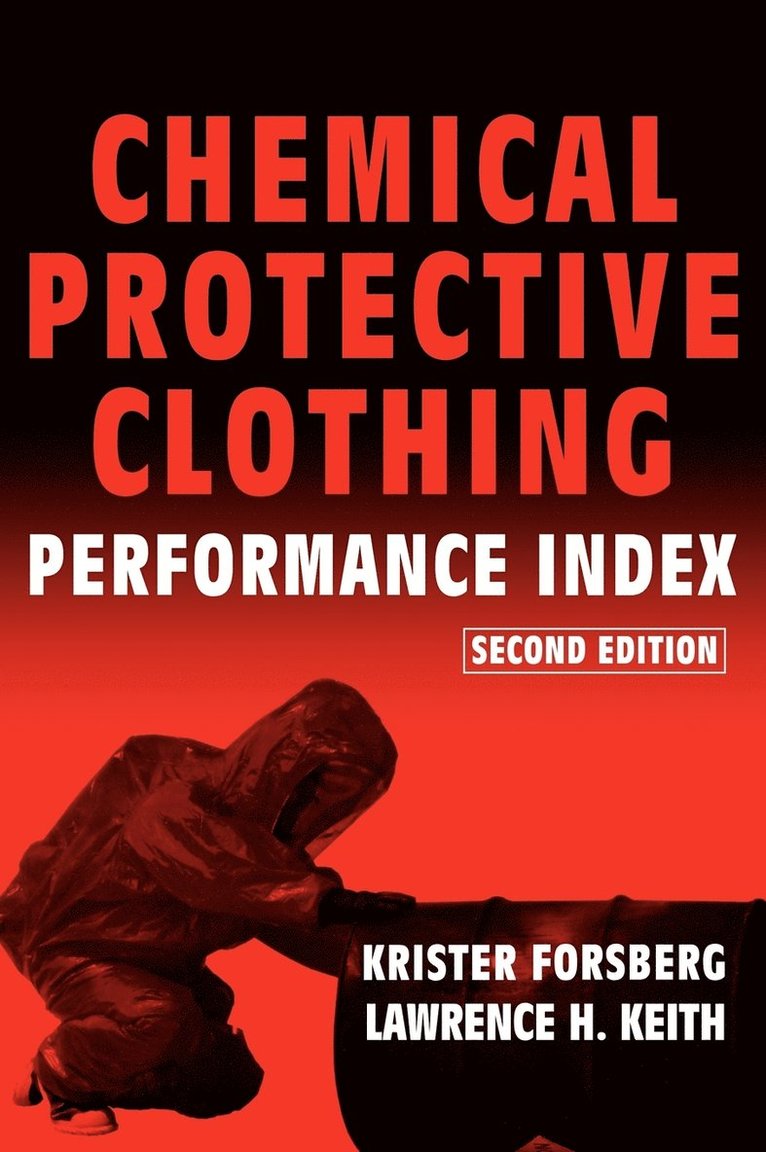
The world's most comprehensive source of performance data onchemical protective clothing The Performance Index providesindustrial hygienists and workplace safety professionals with themost complete, up-to-date, reliable resource for making informeddecisions on chemical protective clothing (CPC). Painstakinglycompiled and evaluated by internationally recognized expertsKrister Forsberg and Lawrence Keith, this new and expanded editionpresents virtually all available data on the resistance of CPC to awide variety of chemicals. Coverage spans test records frommanufacturers worldwide, including CPC permeation and degradationdata obtained with ASTM methods as well as other regulatorystandards. Organized by chemical name and CAS Number, the newedition features:* Over 10,500 chemical permeation tests--more than double thenumber of the 1989 edition* An additional 3,000+ chemical degradation tests* Coverage of 860 chemicals and mixtures--200 more than in the lastedition* Information on more than 350 different types and models of CPC,including gloves, hazmat suits, boots, visors, and more* Roughly 50,000 data entries on such subjects as test material,thickness, permeation rates, breakthrough times, permeation indexnumbers, and references--twice as many as in the last editionAlso available from Wiley . Quick Selection Guide to ChemicalProtective Clothing Third Edition by Krister Forsberg and S. Z.Mansdorf 0-471-28797-0 Based on data from the Performance Index,this bestselling guide includes information on 600 chemicals and 16representative barrier materials used in gloves, suits, and otheritems of protective clothing. It offers the same recommendations asthe excellent and comprehensive Performance Index, yet in aconcise, readily accessible format.
2 578 kr
Skickas inom 10-15 vardagar
This concise book covers all the critical aspects of environmental sampling and analysis. Extensively peer-reviewed by scientists from the U.S. Environmental Protection Agency and other government agencies, industry and academia, it is packed with practical advice and tips from renowned experts.Planning, sampling, analysis, QA/QC, and reporting are discussed for air, water, solid liquid, and biological samples, with emphasis on the interdependence between sampling and analytical activities. Special requirements for sampling devices, containers, and preservatives are provided with convenient checklists for sampling plans and protocols.New and revised recommendations involving method detection levels, reliable detection levels, and levels of quantitation are discussed in conjunction with laboratory reports and user presentations of data near analytical detection limits.This is a valuable and comprehensive reference book for chemists, technicians, consultants, lawyers, regulators, engineers, quality control officers, news and information managers, teachers, and students.
7 323 kr
Skickas inom 10-15 vardagar
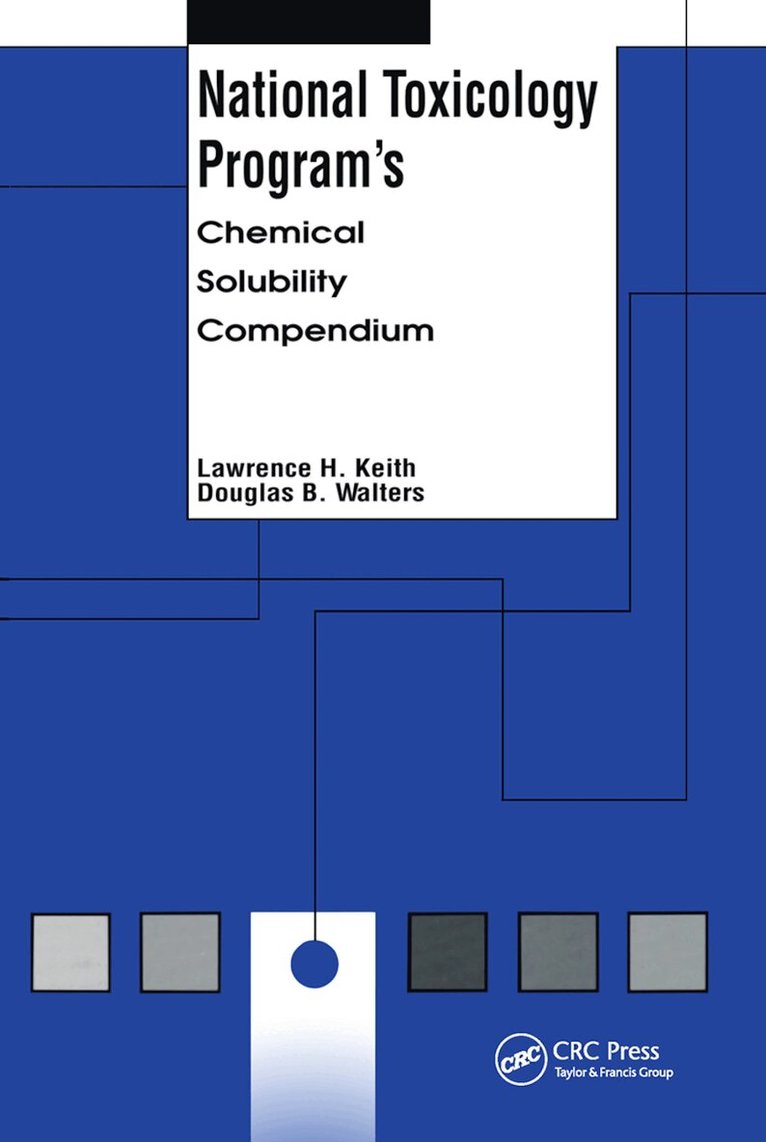
This book is a compilation of experimentally determined solubility ranges of over 1,700 compounds in the National Toxicology Program's Chemical Repository. Each compound's solubility was determined in a consistent manner in one to six solvents. Solvents chosen were those most commonly used for toxicology studies, spill cleanups, and chemical synthesis or chemical reaction experiments. These solvents include acetone, 95% ethanol, water, dimethyl sulfoxide, methanol, and toluene. Data for many of the research and industrial chemicals featured in this volume do not exist anywhere else. If you are a toxicologist, safety professional, industrial hygienist, or chemist, this book is a valuable reference tool you'll find yourself using every day.
3 728 kr
Skickas inom 10-15 vardagar
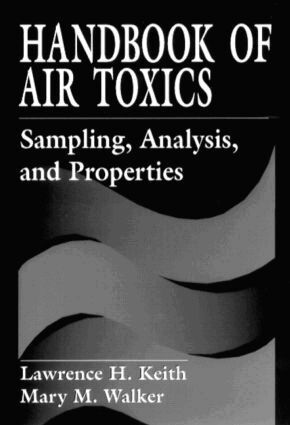
The Handbook of Air Toxics compiles, defines, and clarifies several methods and concepts of airborne toxic substances found in the environment. This comprehensive reference helps regulators, consultants, and other environmental professionals meet the challenges of sampling and analysis, emissions reductions, and health and safety issues related to human exposure. It is an important reference addressing the ongoing concern about the consequences of air pollution, and the implementation and modification of the Environmental Protection Agency's (EPA) Clean Air Act.Some of the methods described in the Handbook of Air Toxics include fluorescence, thermal desorption, selected ion monitoring, ion chromatography, light microscopy, specific electrode analysis, titration, colorimetry, atomic absorption, and spectrophotometry. It also covers the use of isokinetic sampling trains, midget impingers, carbon molecular sieves, and sampling canisters in the analysis of air toxics. The Handbook also contains recommendations from the EPA for analytical methods for those air toxics where methods do not already exist and provides advance information on future method development by the EPA.
7 517 kr
Skickas inom 10-15 vardagar
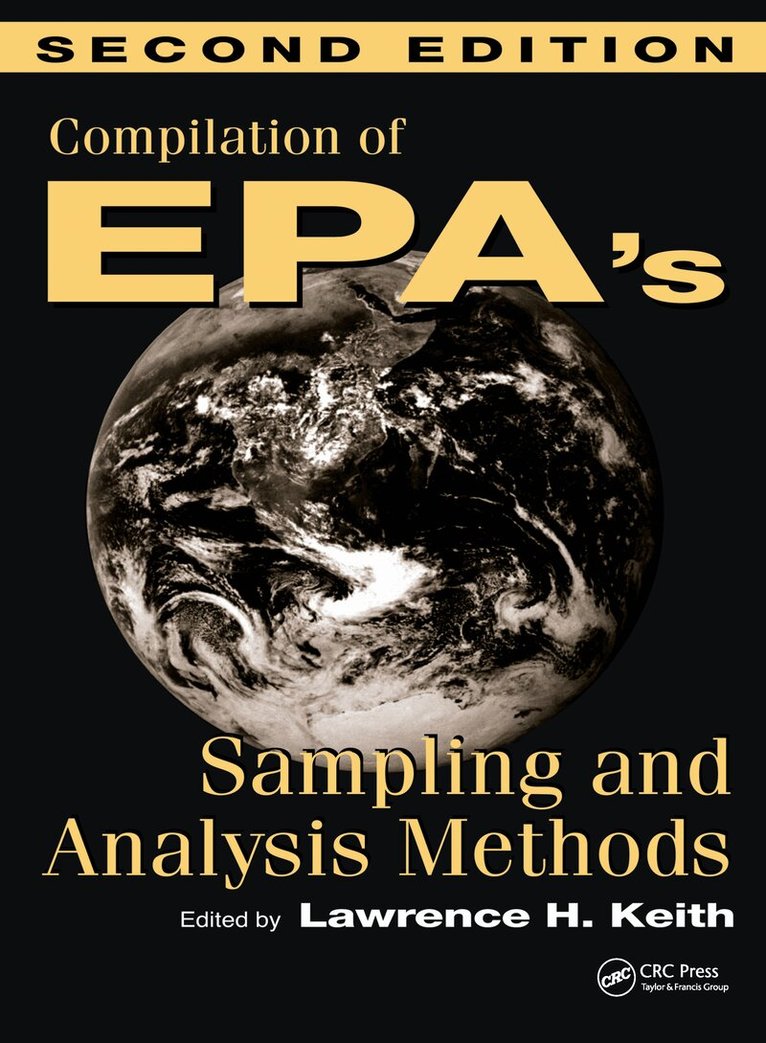
The popular first edition of this book contained approximately 600 analyte/method summaries. This new edition contains twice as many new EPA-approved methods for testing and analyzing industrial chemicals, pesticides, herbicides, dioxins, and PCBs and is a printed version of the EPA's Sampling and Analysis Methods Database.Each analyte/method summary contains all of the information required to stand alone as a reference. Thus, in addition to a brief summary of each method, descriptions include required instrumentation, interferences, sampling containers, preservation techniques, maximum holding times, detection levels, accuracy, precision, quality control requirements, EPA reference, and, when available, EPA contacts with phone numbers. Each summarized report is a "stand-alone" document.