Lea Stirling – författare
Visar alla böcker från författaren Lea Stirling. Handla med fri frakt och snabb leverans.
5 produkter
5 produkter
E-bok
Engelska, 20101 515 kr
Läs direkt efter köp
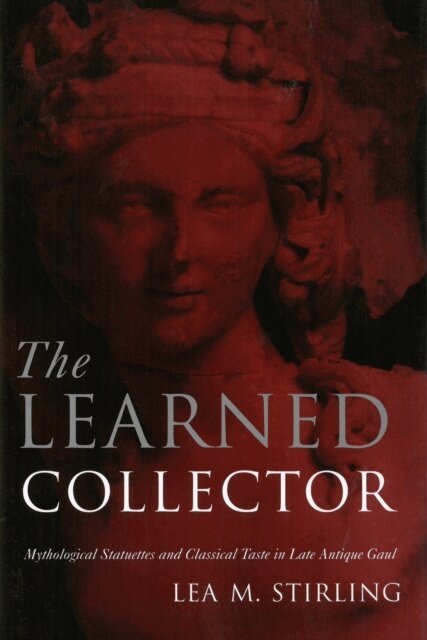
Inspired by a classical education, wealthy Romans populated the glittering interiors of their villas and homes with marble statuettes of ancestors, emperors, gods, and mythological figures. In The Learned Collector, Lea M. Stirling shows how the literary education received by all aristocrats, pagan and Christian alike, was fundamental in shaping their artistic taste while demonstrating how that taste was considered an important marker of status. Surveying collections across the empire, Stirling examines different ways that sculptural collections expressed not only the wealth but the identity of their aristocratic owners. The majority of statues in late antique homes were heirlooms and antiques. Mythological statuary, which would be interpreted in varying degrees of complexity, favored themes reflecting aristocratic pastimes such as dining and hunting. The Learned Collector investigates the manufacture of these distinctive statuettes in the later fourth century, the reasons for their popularity, and their modes of display in Gaul and the empire. Although the destruction of ancient artwork looms large in the common view of late antiquity, statuary of mythological figures continued to be displayed and manufactured into the early fifth century. Stirling surveys the sculptural decor of late antique villas across the empire to reveal the universal and regional trends in the late antique confluence of literary education, mythological references, aristocratic mores, and classicizing taste. Deftly combining art historical, archaeological, and literary evidence, this book will be important to classicists and art historians alike. Stirling''s accessible writing style makes this an important work for scholars, students, and anyone with an interest in Roman statues of this era.
Lea M. Stirling is Associate Professor of Classics at the University of Manitoba and holds a Canada Research Council Chair in Roman Archaeology. She co-directs excavations at the ancient city of Leptiminus, Tunisia.
E-bok
Engelska, 20161 420 kr
Läs direkt efter köp
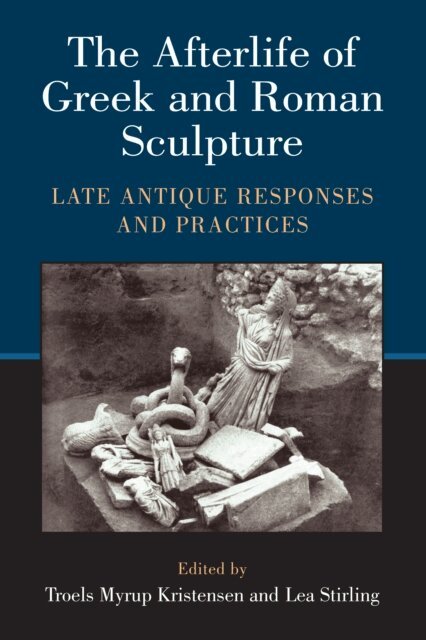
For centuries, statuary décor was a main characteristic of any city, sanctuary, or villa in the Roman world. However, from the third century CE onward, the prevalence of statues across the Roman Empire declined dramatically. By the end of the sixth century, statues were no longer a defining characteristic of the imperial landscape. Further, changing religious practices cast pagan sculpture in a threatening light. Statuary production ceased, and extant statuary was either harvested for use in construction or abandoned in place. The Afterlife of Greek and Roman Sculpture is the first volume to approach systematically the antique destruction and reuse of statuary, investigating key responses to statuary across most regions of the Roman world. The volume opens with a discussion of the complexity of the archaeological record and a preliminary chronology of the fate of statues across both the eastern and western imperial landscape. Contributors to the volume address questions of definition, identification, and interpretation for particular treatments of statuary, including metal statuary and the systematic reuse of villa materials. They consider factors such as earthquake damage, late antique views on civic versus “private” uses of art, urban construction, and deeper causes underlying the end of the statuary habit, including a new explanation for the decline of imperial portraiture. The themes explored resonate with contemporary concerns related to urban decline, as evident in post-industrial cities, and the destruction of cultural heritage, such as in the Middle East.
Inbunden, Engelska, 2007
980 kr
Skickas inom 5-8 vardagar
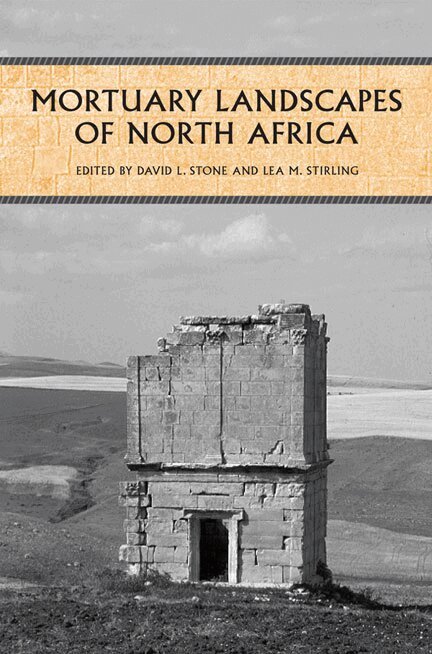
Cemetery and landscape studies have been hallmarks of North African archaeology for more than one hundred years. Mortuary Landscapes of North Africa is the first book to combine these two fields by considering North African cemeteries within the context of their wider landscapes. This unique perspective allows for new interpretations of notions of identity, community, imperial influence, and sacred space. Based on a wealth of material research from current fieldwork, this collection of essays investigates how North African funerary monuments acted as regional boundaries, markers of identity and status, and barometers of cultural change. The essays cover a broad range in terms of space and time – from southern Libya to eastern Algeria, and from the seventh century BCE to the seventh century CE. A comprehensive introduction explains the importance of the 'landscape perspective' that these studies bring to North African funerary monuments, while individual case-studies address such topics as the African way of death among the Garamantes, the ritual reasons for the location of certain Early Christian tombs, Punic burials, Roman cupula tombs, and the effects of rapid state formation and imperial incorporation on tomb builders. Unique in both scope and perspective, this volume will prove invaluable to a cross-section of archaeological scholars.
E-bok
PDF, Engelska, 20071 038 kr
Läs direkt efter köp
Cemetery and landscape studies have been hallmarks of North African archaeology for more than one hundred years. Mortuary Landscapes of North Africa is the first book to combine these two fields by considering North African cemeteries within the context of their wider landscapes. This unique perspective allows for new interpretations of notions of identity, community, imperial influence, and sacred space. Based on a wealth of material research from current fieldwork, this collection of essays investigates how North African funerary monuments acted as regional boundaries, markers of identity and status, and barometers of cultural change. The essays cover a broad range in terms of space and time – from southern Libya to eastern Algeria, and from the seventh century BCE to the seventh century CE. A comprehensive introduction explains the importance of the 'landscape perspective' that these studies bring to North African funerary monuments, while individual case-studies address such topics as the African way of death among the Garamantes, the ritual reasons for the location of certain Early Christian tombs, Punic burials, Roman cupula tombs, and the effects of rapid state formation and imperial incorporation on tomb builders. Unique in both scope and perspective, this volume will prove invaluable to a cross-section of archaeological scholars.
E-bok
Engelska, 20071 211 kr
Läs direkt efter köp
Cemetery and landscape studies have been hallmarks of North African archaeology for more than one hundred years. Mortuary Landscapes of North Africa is the first book to combine these two fields by considering North African cemeteries within the context of their wider landscapes. This unique perspective allows for new interpretations of notions of identity, community, imperial influence, and sacred space. Based on a wealth of material research from current fieldwork, this collection of essays investigates how North African funerary monuments acted as regional boundaries, markers of identity and status, and barometers of cultural change. The essays cover a broad range in terms of space and time – from southern Libya to eastern Algeria, and from the seventh century BCE to the seventh century CE. A comprehensive introduction explains the importance of the 'landscape perspective' that these studies bring to North African funerary monuments, while individual case-studies address such topics as the African way of death among the Garamantes, the ritual reasons for the location of certain Early Christian tombs, Punic burials, Roman cupula tombs, and the effects of rapid state formation and imperial incorporation on tomb builders. Unique in both scope and perspective, this volume will prove invaluable to a cross-section of archaeological scholars.