Lech Ryszkowski - Böcker
Visar alla böcker från författaren Lech Ryszkowski. Handla med fri frakt och snabb leverans.
4 produkter
4 produkter
904 kr
Skickas inom 10-15 vardagar
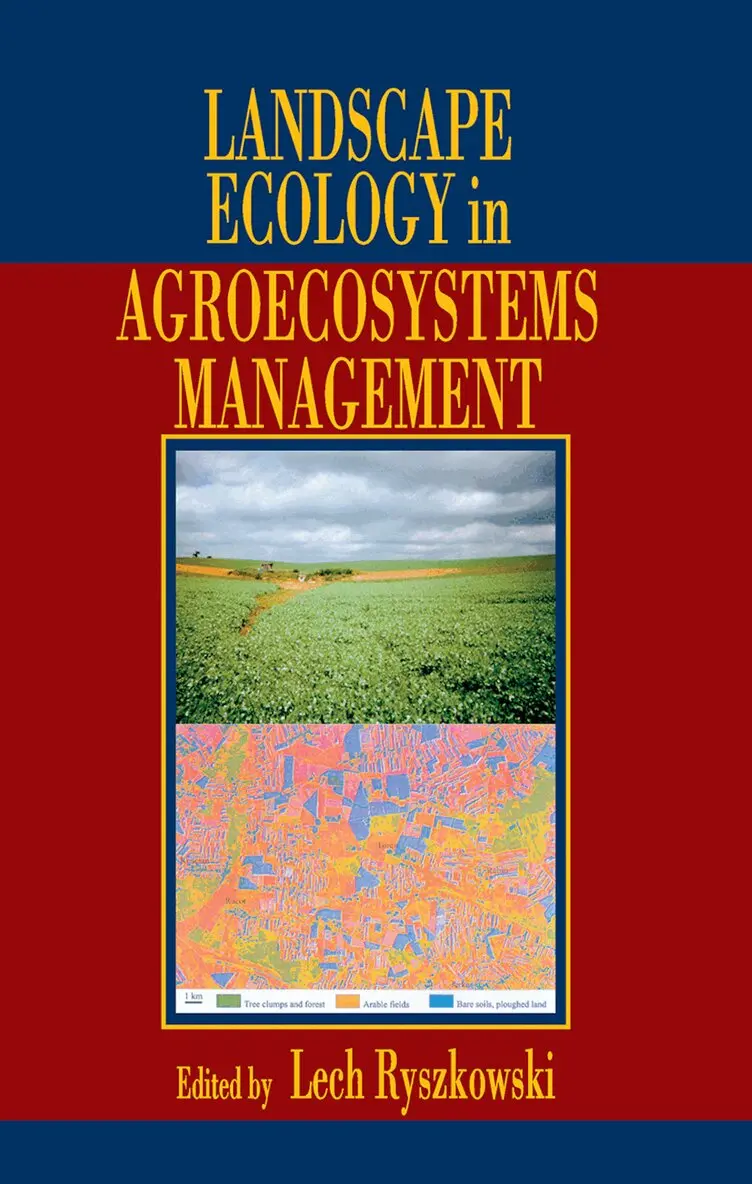
Successful management of agricultural landscapes depends on the recognition of the relationships between the processes and the structures that maintain the system. The rapidly growing science of Landscape Ecology quantifies the ways these ecosystems interact and establishes a link between the activities in one region and repercussions in another. Although science continuously yields new environmentally friendly agricultural technology, the sustainable development of a system will ultimately depend on a farmer's ability to understand and utilize these advances. The results presented in this book highlight the options for controlling threats and present guidelines for the implementation of environmentally friendly landscape management.Written by eminent scientists in landscape ecology research, Landscape Ecology in Agroecosystems Management provides a systematic evaluation of the basic ecological functions of the agricultural landscape. It presents a new approach to managing heat balance parameters and evaluates the effectiveness of models for assessing land use changes in rural areas. It also discusses the methods of evaluating matter cycling in agricultural landscapes with emphasis on the process leading to the diffuse pollution problems in ground and surface waters. It reports studies that show how semi-natural habitats maintained in the agricultural landscape constitute important refuge for many plants and animals and thereby enhances biological diversity in farmlands. Finally, it provides guidelines for management of agricultural landscapes for sustainable development of the countryside.The integration of agriculture and the natural ecosystem in the landscape has recently become a "hot" topic. The review of the achievements in landscape ecology presented in this book clearly demonstrates that landscape ecology is just passing through the threshold between the recognition of various basic processes to being able to manage these processes to achieve
Del 1 - NATO Science Series: IV:
Implementing Ecological Integrity
Restoring Regional and Global Environmental and Human Health
Inbunden, Engelska, 2000
2 117 kr
Skickas inom 10-15 vardagar
The concept of ecological integrity is used in environmental policy but is usually left undefined, the definition proposed by the Integrity Group focuses on a nature that has been impacted by human activity as little as possible, emphasizing and protecting its self-organizing capacities for life as a product of the natural history of ecosystems. The demand is for an ethical reverence for life in all its manifestations. The representatives of Central and Eastern European countries are less wary of human intervention than their North American counterparts. They consider low input agricultural ecosystems as acceptable candidates for ecological integrity, on condition they contain some unproductive components. This study of ecological integrity is multidisciplinary, grounded in ecology, thermodynamics, ethics and complex systems approach. It covers a broad international terrain, and documents geographically wide ranging case studies. It is applied in character and does not remain at the purely conceptual level.
Implementing Ecological Integrity
Restoring Regional and Global Environmental and Human Health
Häftad, Engelska, 2000
2 117 kr
Skickas inom 10-15 vardagar
This book contains some of the papers which were presented at the NATO Science, Environmental Security, Advanced Research Workshop on "Implementing Ecological Integrity: Restoring Regional and Global Environmental and Human Health" held in Budapest from June 26 to July 1, 1999. All papers presented are summarized in the Introduction and, in some cases, shorter versions are published. A mUltidisciplinary core of American and Western European participants had met over the preceeding years to discuss the concept of ecological integrity. The term "ecological integrity" is found in environmental policy documents but, generally, is not defined. It competes with other recent terms, or environmental narratives, such as "ecosystem health" and "sustainable development" and also with older ones such as "conservation". Therefore, it is deemed important not only to sort out the definitions of these concepts but also to find out whether their practical implications differ. Moreover, it was interesting to find out whether participants from Central and Eastern European Countries (CEEC) and, more generally, from NATO partner countries would be, first, responsive to this concept and, second, would hold different views of it. This explains the broad, albeit not always consistent, range oftopics which are covered in this book. The core group learned that CEEC and other NATO partners participants were responsive to the concept but that they were less exclusive of human influence.
2 588 kr
Skickas inom 10-15 vardagar
Successful management of agricultural landscapes depends on the recognition of the relationships between the processes and the structures that maintain the system. The rapidly growing science of Landscape Ecology quantifies the ways these ecosystems interact and establishes a link between the activities in one region and repercussions in another. Although science continuously yields new environmentally friendly agricultural technology, the sustainable development of a system will ultimately depend on a farmer's ability to understand and utilize these advances. The results presented in this book highlight the options for controlling threats and present guidelines for the implementation of environmentally friendly landscape management.Written by eminent scientists in landscape ecology research, Landscape Ecology in Agroecosystems Management provides a systematic evaluation of the basic ecological functions of the agricultural landscape. It presents a new approach to managing heat balance parameters and evaluates the effectiveness of models for assessing land use changes in rural areas. It also discusses the methods of evaluating matter cycling in agricultural landscapes with emphasis on the process leading to the diffuse pollution problems in ground and surface waters. It reports studies that show how semi-natural habitats maintained in the agricultural landscape constitute important refuge for many plants and animals and thereby enhances biological diversity in farmlands. Finally, it provides guidelines for management of agricultural landscapes for sustainable development of the countryside.The integration of agriculture and the natural ecosystem in the landscape has recently become a "hot" topic. The review of the achievements in landscape ecology presented in this book clearly demonstrates that landscape ecology is just passing through the threshold between the recognition of various basic processes to being able to manage these processes to achieve