Lefebvre Claire Lefebvre – författare
Visar alla böcker från författaren Lefebvre Claire Lefebvre. Handla med fri frakt och snabb leverans.
6 produkter
6 produkter
E-bok
PDF, Engelska, 20151 384 kr
Läs direkt efter köp
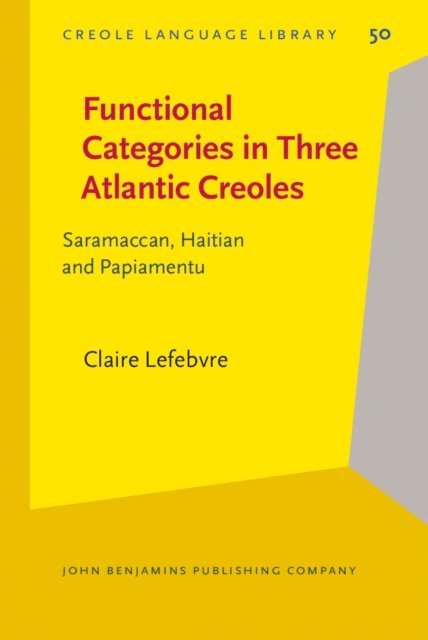
This book is about the functional categories of three Caribbean creoles: Saramaccan, Haitian Creole and Papiamentu with two specific goals. The first one is to evaluate the respective contribution of the source languages to the functional categories of these three creoles. The second is to evaluate the degree of similarity/dissimilarity of the functional categories across these creoles. This study is cast within the relabeling-based account of creole genesis. Several lexical items discussed in this book may fulfill more than one grammatical function thus raising the issue of multifuctionality. No such in-depth comparative work of these three creoles with their source languages and of the three creoles among themselves is available elsewhere in the literature. This book is addressed to linguists (including Master and PhD students) interested in syntactic categories and more specifically in functional categories, to creolists and to researchers interested in language contact.
E-bok
PDF, Engelska, 20131 447 kr
Läs direkt efter köp
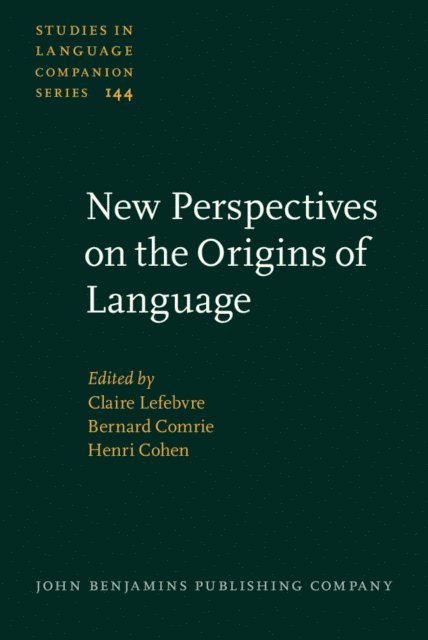
The question of how language emerged is one of the most fascinating and difficult problems in science. In recent years, a strong resurgence of interest in the emergence of language from an evolutionary perspective has been helped by the convergence of approaches, methods, and ideas from several disciplines. The selection of contributions in this volume highlight scenarios of language origin and the prerequisites for a faculty of language based on biological, historical, social, cultural, and paleontological forays into the conditions that brought forth and favored language emergence, augmented by insights from sister disciplines. The chapters all reflect new speculation, discoveries and more refined research methods leading to a more focused understanding of the range of possibilities and how we might choose among them. There is much that we do not yet know, but the outlines of the path ahead are ever clearer.
E-bok
PDF, Engelska, 19911 258 kr
Läs direkt efter köp
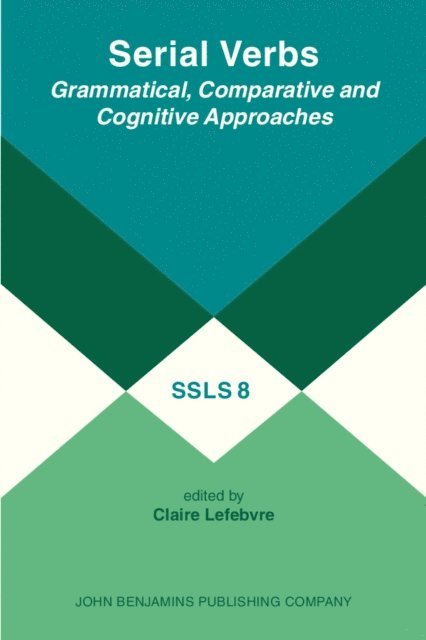
The papers in this volume offer several analyses of verb serialization written within various theoretical frameworks: grammatical, comparative and cognitive/functional. They cover a wide range of language families. All authors address two basic questions about verb serialization: First, what is the structure and thematic constitution of the construction? The answers to this question cover the spectrum of the options that are available in current grammatical theory. Second, what aspect of the grammar differentiates between languages which have serial constructions and those which do not? The specific proposals made by the authors are discussed by R. Larson in the concluding paper. Larson opens new perspectives for research on verb serialization by posing the following question: what analogues for verb serialization can be found in the more familiar grammatical apparatus of English? It is suggested that verb serialization finds a clear parallel in the secondary predicate structures of English.
E-bok
PDF, Engelska, 20041 305 kr
Läs direkt efter köp
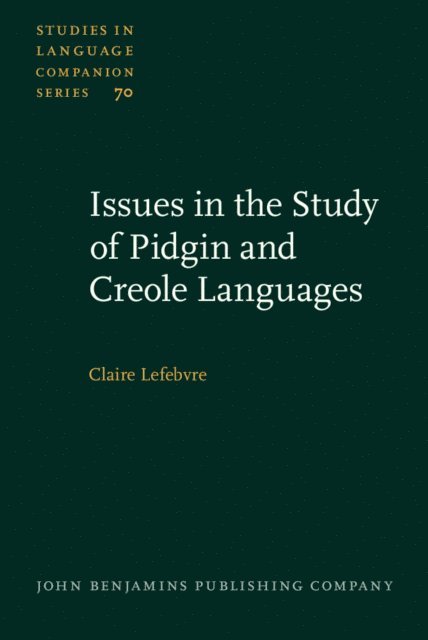
The content of this book is concerned with various issues at stake in Creole studies that are also of interest for general linguistics. These include the general issue of Creole genesis and of the accelerated linguistic change that characterizes the emergence of these languages as compared to ordinary cases of linguistic change, the problem of the development of morphology in incipient Creoles, the problem of the validity of data in linguistic analysis, the issue of multifunctionality as regards the concept of lexical entry, the question of whether Creole languages are semantically more transparent than languages not known as Creoles, the issue of whether Creole languages constitute a typologically identifiable class and the problem of the interaction between the processes involved in the emergence and development of Creole languages. The purpose of this book is to present the major debates that are currently taking place in the field of Creole studies; evaluate the arguments against data (mainly drawn from Haitian Creole); and address the issues at stake within the framework of new paradigms. The various positions on each issue are summarized on the basis of a thorough review of the literature.
E-bok
PDF, Engelska, 20061 651 kr
Läs direkt efter köp
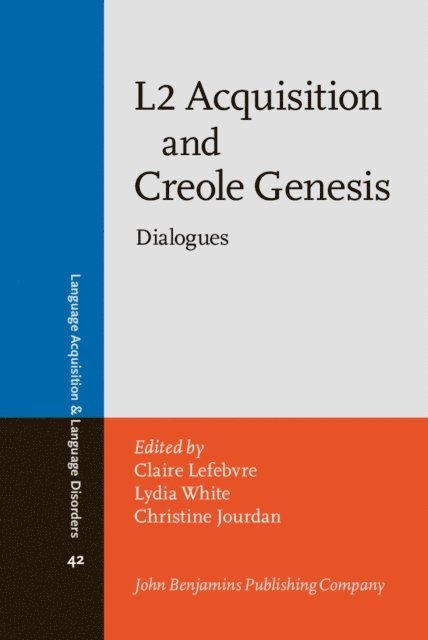
In this volume, second language (L2) acquisition researchers and creolists engage in a dialogue, focusing on processes at work in L2 acquisition and creole genesis. The volume opens with an overview of the relationship between L2 acquisition and pidgins/creoles (Siegel). The first group of papers addresses current language contact at a societal or an individual level (Smith; Terrill and Dunn; Bruhn de Garavito and Atoche; Liceras et al.; Müller). The second section focuses on processes characterizing various stages of L2 acquisition and creole genesis: relexification and transfer from the L1 and their role in the initial state (Sprouse; Schwartz; Kouwenberg; Aboh; Ionin). Chapters in the third section discuss processes involved in developing grammars, namely, reanalysis and restructuring (Sánchez; Brousseau and Nikiema; Steele and Brousseau). The final section concentrates on fossilization and the end state (Cornips and Hulk; Montrul; Lardiere). Between them, the chapters cover lexical, morphological, phonological, semantic and syntactic properties of interlanguage grammars and creole grammars.
E-bok
PDF, Engelska, 20111 384 kr
Läs direkt efter köp
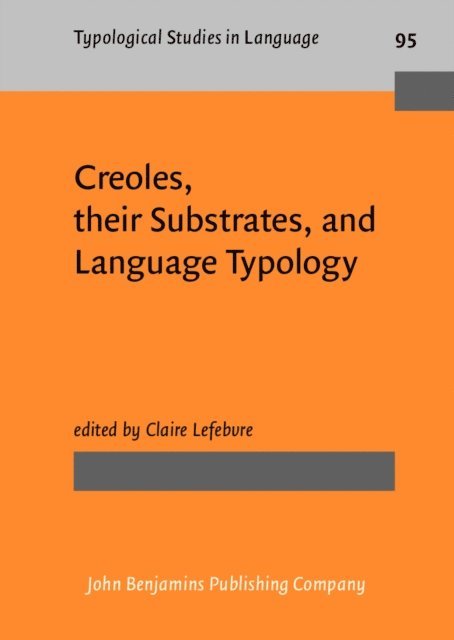
Since creole languages draw their properties from both their substrate and superstrate sources, the typological classification of creoles has long been a major issue for creolists, typologists, and linguists in general. Several contradictory proposals have been put forward in the literature. For example, creole languages typologically pair with their superstrate languages (Chaudenson 2003), with their substrate languages (Lefebvre 1998), or even, creole languages are alike (Bickerton 1984) such that they constitute a “definable typological class” (McWhorter 1998). This book contains 25 chapters bearing on detailed comparisons of some 30 creoles and their substrate languages. As the substrate languages of these creoles are typologically different, the detailed investigation of substrate features in the creoles leads to a particular answer to the question of how creoles should be classified typologically. The bulk of the data show that creoles reproduce the typological features of their substrate languages. This argues that creoles cannot be claimed to constitute a definable typological class.