454 kr
Leo Strauss – författare
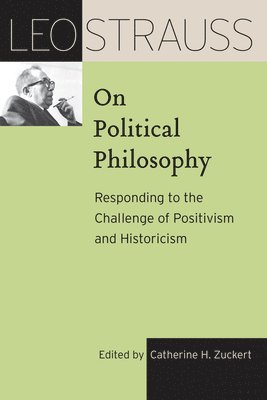
- Häftad, Engelska, 2021Leo Strauss is known primarily for reviving classical political philosophy through careful analyses of works by ancient thinkers. As with his published writings, Strauss’s seminars devoted to specific philosophers were notoriously dense, accessible only to graduate students and scholars with a good command of the subject. In 1965, however, Strauss offered an introductory course on political philosophy at the University of Chicago. Using a conversational style, he sought to make political philosophy, as well as his own ideas and methods, understandable to those with little background on the subject. Leo Strauss on Political Philosophy brings together the lectures that comprise Strauss’s “Introduction to Political Philosophy.” Strauss begins by emphasizing the importance of political philosophy in determining the common good of society and critically examining the two most powerful contemporary challenges to the possibility of using political theory to learn about and develop the best political order: positivism and historicism. In seeking the common good, classical political philosophers like Plato and Aristotle did not distinguish between political philosophy and political science. Today, however, political philosophy must contend with the contemporary belief that it is impossible to know what the good society really is. Strauss emphasizes the need to study the history of political philosophy to see whether the changes in the understanding of nature and conceptions of justice that gradually led people to believe that it is not possible to determine what the best political society is are either necessary or valid. In doing so, he ranges across the entire history of political philosophy, providing a valuable, thematically coherent foundation, including explications of many canonical thinkers, such as Auguste Comte and Immanuel Kant, about whom Strauss did not write extensively in his published writings.
- Inbunden, Engelska, 2018
530 kr
Skickas inom 5-8 vardagar
Leo Strauss is known primarily for reviving classical political philosophy through careful analyses of works by ancient thinkers. As with his published writings, Strauss’s seminars devoted to specific philosophers were notoriously dense, accessible only to graduate students and scholars with a good command of the subject. In 1965, however, Strauss offered an introductory course on political philosophy at the University of Chicago. Using a conversational style, he sought to make political philosophy, as well as his own ideas and methods, understandable to those with little background on the subject. Leo Strauss on Political Philosophy brings together the lectures that comprise Strauss’s “Introduction to Political Philosophy.” Strauss begins by emphasizing the importance of political philosophy in determining the common good of society and critically examining the two most powerful contemporary challenges to the possibility of using political theory to learn about and develop the best political order: positivism and historicism. In seeking the common good, classical political philosophers like Plato and Aristotle did not distinguish between political philosophy and political science. Today, however, political philosophy must contend with the contemporary belief that it is impossible to know what the good society really is. Strauss emphasizes the need to study the history of political philosophy to see whether the changes in the understanding of nature and conceptions of justice that gradually led people to believe that it is not possible to determine what the best political society is are either necessary or valid. In doing so, he ranges across the entire history of political philosophy, providing a valuable, thematically coherent foundation, including explications of many canonical thinkers, such as Auguste Comte and Immanuel Kant, about whom Strauss did not write extensively in his published writings. - Häftad, Engelska, 1988
328 kr
Skickas inom 5-8 vardagar
The essays collected in Persecution and the Art of Writing all deal with one problem—the relation between philosophy and politics. Here, Strauss sets forth the thesis that many philosophers, especially political philosophers, have reacted to the threat of persecution by disguising their most controversial and heterodox ideas. - Häftad, Engelska, 1995
327 kr
Skickas inom 5-8 vardagar
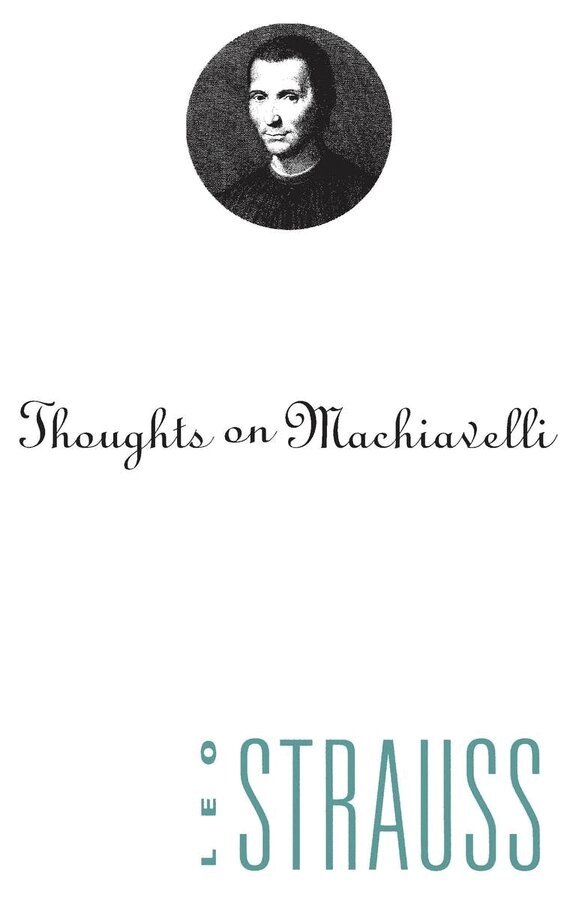
Leo Strauss argued that the most visible fact about Machiavelli's doctrine is also the most useful one: Machiavelli seems to be a teacher of wickedness. Strauss sought to incorporate this idea in his interpretation without permitting it to overwhelm or exhaust his exegesis of "The Prince" and the "Discourses on the First Ten Books of Livy". "We are in sympathy," he writes, "with the simple opinion about Machiavelli [namely, the wickedness of his teaching], not only because it is wholesome, but above all because a failure to take that opinion seriously prevents one from doing justice to what is truly admirable in Machiavelli: the intrepidity of his thought, the grandeur of his vision, and the graceful subtlety of his speech." This critique of the founder of modern political philosophy by this 20th-century scholar should be a valuable text for students of both authors. - Häftad, Engelska, 2013
302 kr
Skickas inom 5-8 vardagar
"On Tyranny" is Leo Strauss' classic reading of Xenophon's dialogue Hiero, or Tyrannicus, in which the tyrant Hiero and the poet Simonides discuss the advantages and disadvantages of exercising tyranny. Included are a translation of the dialogue from its original Greek, a critique of Strauss' commentary by the French philosopher Alexandre Kojeve, and the complete correspondence between the two. This corrected and expanded edition introduces important revisions throughout and expands Strauss' restatement of his position in light of Kojeve's commentary to bring it into conformity with the text as it was originally published in France. - E-bokEngelska, 2013
667 kr
Läs direkt efter köp
On Tyranny is Leo Strauss’s classic reading of Xenophon’s dialogue Hiero, or Tyrannicus, in which the tyrant Hiero and the poet Simonides discuss the advantages and disadvantages of exercising tyranny. Included are a translation of the dialogue from its original Greek, a critique of Strauss’s commentary by the French philosopher Alexandre Kojève, and the complete correspondence between the two. This revised and expanded edition introduces important corrections throughout and expands Strauss’s restatement of his position in light of Kojève’s commentary to bring it into conformity with the text as it was originally published in France. - E-bokEngelska, 2022
686 kr
Läs direkt efter köp
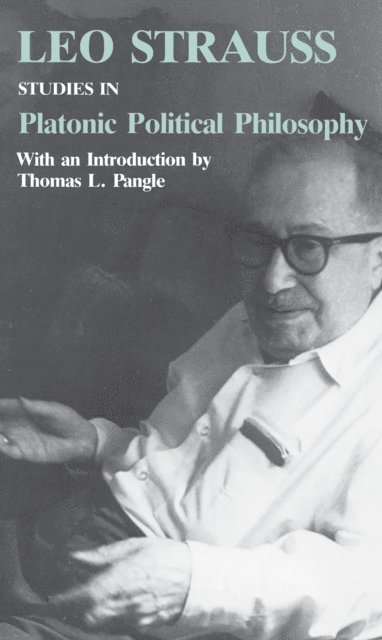
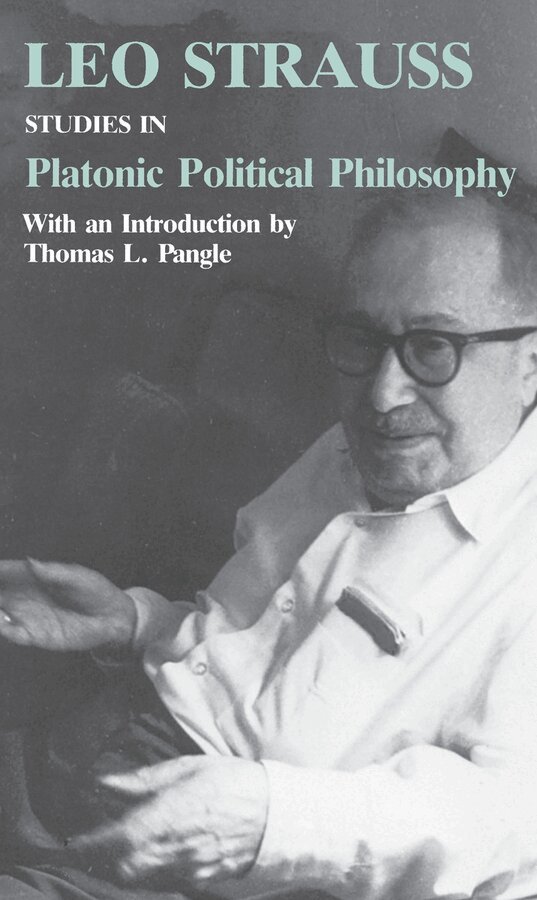
One of the outstanding thinkers of our time offers in this book his final words to posterity. Studies in Platonic Political Philosophy was well underway at the time of Leo Strauss''s death in 1973. Having chosen the title for the book, he selected the most important writings of his later years and arranged them to clarify the issues in political philosophy that occupied his attention throughout his life. As his choice of title indicates, the heart of Strauss''s work is Platonism—a Platonism that is altogether unorthodox and highly controversial. These essays consider, among others, Heidegger, Husserl, Nietzsche, Marx, Moses Maimonides, Machiavelli, and of course Plato himself to test the Platonic understanding of the conflict between philosophy and political society. Strauss argues that an awesome spritual impoverishment has engulfed modernity because of our dimming awareness of that conflict. Thomas Pangle''s Introduction places the work within the context of the entire Straussian corpus and focuses especially on Strauss''s late Socratic writings as a key to his mature thought. For those already familiar with Strauss, Pangle''s essay will provoke thought and debate; for beginning readers of Strauss, it provides a fine introduction. A complete bibliography of Strauss''s writings if included. - E-bokEngelska, 1996
779 kr
Läs direkt efter köp
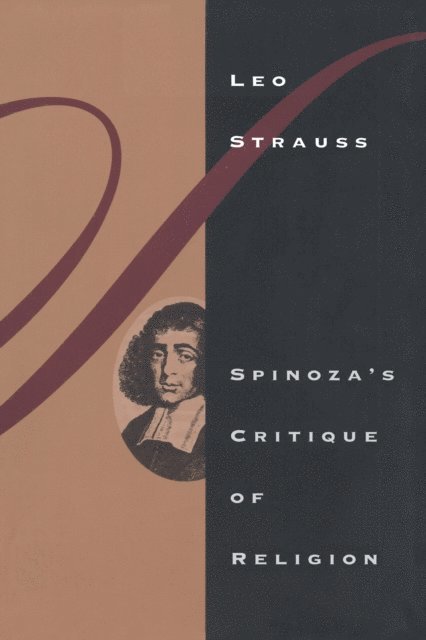
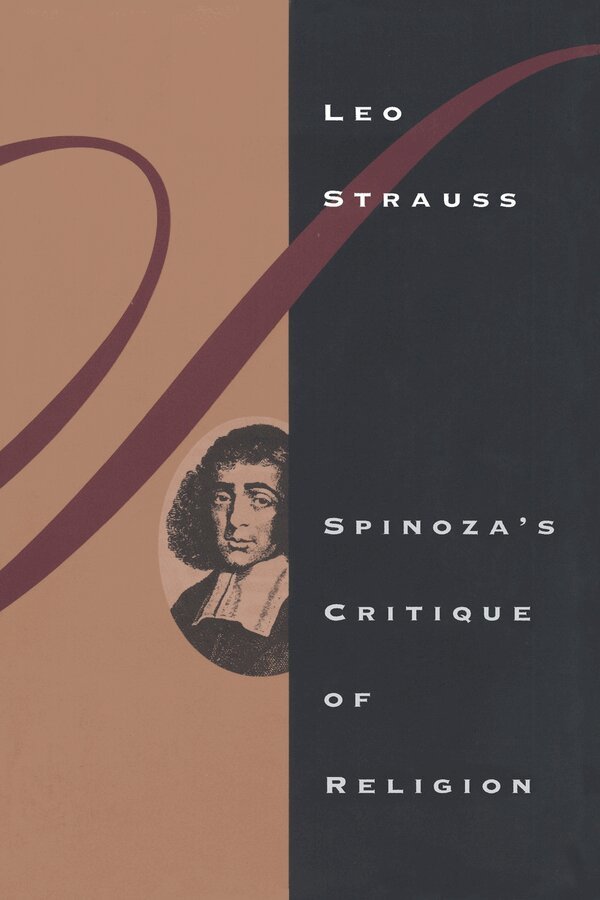
Leo Strauss articulates the conflict between reason and revelation as he explores Spinoza''s scientific, comparative, and textual treatment of the Bible. Strauss compares Spinoza''s Theologico-political Treatise and the Epistles, showing their relation to critical controversy on religion from Epicurus and Lucretius through Uriel da Costa and Isaac Peyrere to Thomas Hobbes. Strauss''s autobiographical Preface, traces his dilemmas as a young liberal intellectual in Germany during the Weimar Republic, as a scholar in exile, and as a leader of American philosophical thought. "[For] those interested in Strauss the political philosopher, and also those who doubt whether we have achieved the ''final solution'' in respect to either the character of political science or the problem of the relation of religion to the state." —Journal of Politics "A substantial contribution to the thinking of all those interested in the ageless problems of faith, revelation, and reason." —Kirkus Reviews Leo Strauss (1899-1973) was the Robert Maynard Hutchins Distinguished Service Professor Emeritus of political science at the University of Chicago. His contributions to political science include The Political Philosophy of Hobbes, The City and the Man, What is Political Philosophy?, and Liberalism Ancient and Modern. - E-bokEngelska, 2014
779 kr
Läs direkt efter köp
The posthumous publication of The Argument and the Action of Plato''s "Laws" was compiled shortly before the death of Leo Strauss in 1973. Strauss offers an insightful and instructive reading through careful probing of Plato''s classic text. "Strauss''s The Argument and the Action of Plato''s ''Laws'' reflects his interest in political thought, his dogged method of following the argument of the Laws step by step, and his vigorous defense of this dialogue''s integrity in respect to the ideals of the Republic."—Cross Currents "The unique characteristics of this commentary on the Laws reflect the care and precision which were the marks of Professor Strauss''s efforts to understand the complex thoughts of other men."—Allan D. Nelson, Canadian Journal of Political Science "Thorough and provocative, an important addition to Plato scholarship."—Library Journal "The major purpose of the commentary is to provide a reading of the dialogue which displays its structural arrangement and the continuity of the argument."—J. W. Dy, Bibliographical Bulletin of Philosophy "The reader of Strauss''s book is indeed guided closely through the whole text."— M. J. Silverthorne, The Humanities Association Review Leo Strauss (1899-1973) was the Robert Maynard Hutchins Distinguished Service Professor Emeritus of political science at the University of Chicago. - Inbunden, Engelska, 2017
400 kr
Skickas inom 5-8 vardagar
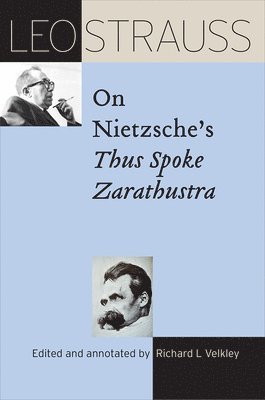
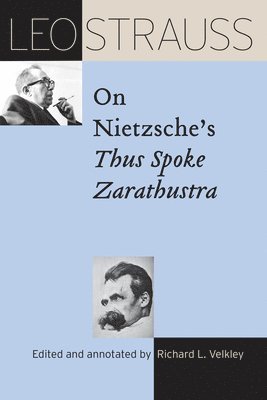
Although Leo Strauss published little on Nietzsche, his lectures and correspondence demonstrate a deep critical engagement with Nietzsche's thought. One of the richest contributions is a seminar on Nietzsche's Thus Spoke Zarathustra, taught in 1959 during Strauss's tenure at the University of Chicago. In the lectures, Strauss draws important parallels between Nietzsche's most important project and his own ongoing efforts to restore classical political philosophy. With Leo Strauss on Nietzsche's "Thus Spoke Zarathustra," preeminent Strauss scholar Richard L. Velkley presents Strauss's lectures on Zarathustra with superb annotations that bring context and clarity to the critical role played by Nietzsche in shaping Strauss's thought. In addition to the broad relationship between Nietzsche and political philosophy, Strauss adeptly guides readers through Heidegger's confrontations with Nietzsche, laying out Heidegger's critique of Nietzsche's "will to power" while also showing how Heidegger can be read as a foil for his own reading of Nietzsche.The lectures also shed light on the relationship between Heidegger and Strauss, as both philosophers saw Nietzsche as a central figure for understanding the crisis of philosophy and Western civilization. Strauss's reading of Nietzsche is one of the important--yet little appreciated--philosophical inquiries of the past century, both an original interpretation of Nietzsche's thought and a deep engagement with the core problems that modernity posed for political philosophy. It will be welcomed by anyone interested in the work of either philosopher. - Inbunden, Engelska, 2019
400 kr
Skickas inom 5-8 vardagar
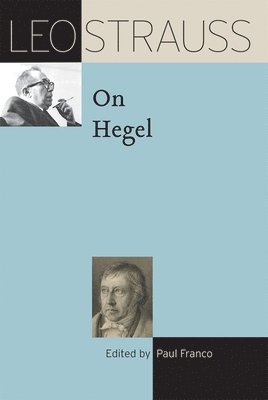
In the winter of 1965, Leo Strauss taught a seminar on Hegel at the University of Chicago. While Strauss did not consider himself a Hegelian nor write about Hegel at any length, his writings contain intriguing references to the philosopher, particularly in connection with his studies of Hobbes, in his debate in On Tyranny with Alexandre Koje ve; and in his account of the "three waves" of modern political philosophy. Leo Strauss on Hegel reconstructs Strauss's seminar on Hegel, supplemented by passages from an earlier version of the seminar from which only fragments of a transcript remain. Strauss focused in his seminar on the lectures collected in The Philosophy of History, which he considered more accessible than Hegel's written works. In his own lectures on Hegel, Strauss continues his project of demonstrating how modern philosophers related to ancient thought and explores the development and weaknesses of modern political theory. Strauss is especially concerned with the relationship in Hegel between empirical history and his philosophy of history, and he argues for the primacy of religion in Hegel's understanding of history and society. In addition to a relatively complete transcript, Leo Strauss on Hegel also includes annotations, which bring context and clarity to the text. - Häftad, Engelska, 2007
315 kr
Skickas inom 5-8 vardagar
In this, his most influential work, legal theorist and political philosopher Carl Schmitt argues that liberalism's basis in individual rights cannot provide a reasonable justification for sacrificing one-self for the state - a critique as cogent today as when it first appeared. George Schwab's introduction to his translation of the 1932 German edition highlights Schmitt's intellectual journey through the turbulent period of German history leading to the Hitlerian one-party state. In addition to analysis by Leo Strauss and a foreword by Tracy B. Strong placing Schmitt's work into contemporary context, this expanded edition also includes a translation of Schmitt's 1929 lecture "The Age of Neutralizations and Depoliticizations," which the author himself added to the 1932 edition of the book. An essential update of a modern classic, "The Concept of the Political, Expanded Edition" belongs on the bookshelf of anyone interested in political theory or philosophy. - Häftad, Engelska, 2003
310 kr
Skickas inom 5-8 vardagar
The first major piece of unpublished work by Leo Strauss to appear in more than 30 years, this volume offers the public the unprecedented experience of encountering this renowned scholar as his students did. Given as a course in autumn 1959 under the title "Plato's Political Philosophy" these provocative lectures - until now, never published, but instead passed down from one generation of students to the next - show Strauss at his subtle and insightful best. - Häftad, Engelska, 1997
351 kr
Skickas inom 5-8 vardagar
In this text Leo Strauss articulates the conflict between reason and revelation as he explores Spinoza's scientific, comparative, and textual treatment of the Bible. He compares Spinoza's "Theologico-political Treatise" and the Epistles, showing their relation to critical controversy on religion from Epicurus and Lucretius through Uriel da Costa and Isaac Peyrere to Thomas Hobbes. An autobiographical preface to this book traces Strauss' dilemmas as a young liberal intellectual in Germany during the Weimar Republic, as a scholar in exile, and as a leader of American philosophical thought. - Häftad, Engelska, 1965
236 kr
Skickas inom 5-8 vardagar
In this classic work, Leo Strauss examines the problem of natural right and argues that there is a firm foundation in reality for the distinction between right and wrong in ethics and politics. On the centenary of Strauss's birth, and the fiftieth anniversary of the Walgreen Lectures which spawned the work, Natural Right and History remains as controversial and essential as ever. "Strauss ...makes a significant contribution towards an understanding of the intellectual crisis in which we find ourselves ...[and] brings to his task an admirable scholarship and a brilliant, incisive mind."--John H. Hallowell, American Political Science Review Leo Strauss (1899-1973) was the Robert Maynard Hutchins Distinguished Service Professor Emeritus in Political Science at the University of Chicago. - Häftad, Engelska, 1996
286 kr
Skickas inom 5-8 vardagar
In this classic analysis, Leo Strauss pinpoints what is original and innovative in the political philosophy of Thomas Hobbes. He argues that Hobbes's ideas arose not from tradition or science but from his own deep knowledge and experience of human nature. Tracing the development of Hobbes's moral doctrine from his early writings to his major work The Leviathan, Strauss explains contradictions in the body of Hobbes's work and discovers startling connections between Hobbes and the thought of Plato, Thucydides, Aristotle, Descartes, Spinoza, and Hegel. Leo Strauss (1899-1973) was Robert Maynard Hutchins Distinguished Service Professor Emeritus in political science at the University of Chicago. Among his works published by the University of Chicago Press are Thoughts on Machiavelli, The City and Man, and Natural Right and History. - Häftad, Engelska, 1998
351 kr
Skickas inom 5-8 vardagar
The posthumous publication of The Argument and the Action of Plato's "Laws" was compiled shortly before the death of Leo Strauss in 1973. Strauss offers an insightful and instructive reading through careful probing of Plato's classic text. "Strauss's The Argument and the Action of Plato's 'Laws' reflects his interest in political thought, his dogged method of following the argument of the Laws step by step, and his vigorous defense of this dialogue's integrity in respect to the ideals of the Republic."--Cross Currents "The unique characteristics of this commentary on the Laws reflect the care and precision which were the marks of Professor Strauss's efforts to understand the complex thoughts of other men."--Allan D. Nelson, Canadian Journal of Political Science "Thorough and provocative, an important addition to Plato scholarship."--Library Journal "The major purpose of the commentary is to provide a reading of the dialogue which displays its structural arrangement and the continuity of the argument."--J. W. Dy, Bibliographical Bulletin of Philosophy "The reader of Strauss's book is indeed guided closely through the whole text."-- M. J.Silverthorne, The Humanities Association Review Leo Strauss (1899-1973) was the Robert Maynard Hutchins Distinguished Service Professor Emeritus of political science at the University of Chicago. - Häftad, Engelska, 1985
351 kr
Skickas inom 5-8 vardagar
One of the outstanding thinkers of our time offers in this book his final words to posterity. Studies in Platonic Political Philosophy was well underway at the time of Leo Strauss's death in 1973. Having chosen the title for the book, he selected the most important writings of his later years and arranged them to clarify the issues in political philosophy that occupied his attention throughout his life. As his choice of title indicates, the heart of Strauss's work is Platonism—a Platonism that is altogether unorthodox and highly controversial. These essays consider, among others, Heidegger, Husserl, Nietzsche, Marx, Moses Maimonides, Machiavelli, and of course Plato himself to test the Platonic understanding of the conflict between philosophy and political society. Strauss argues that an awesome spritual impoverishment has engulfed modernity because of our dimming awareness of that conflict. Thomas Pangle's Introduction places the work within the context of the entire Straussian corpus and focuses especially on Strauss's late Socratic writings as a key to his mature thought. For those already familiar with Strauss, Pangle's essay will provoke thought and debate; for beginning readers of Strauss, it provides a fine introduction. A complete bibliography of Strauss's writings if included. - Häftad, Engelska, 1978
277 kr
Skickas inom 5-8 vardagar
The City and Man consists of provocative essays by the late Leo Strauss on Aristotle's Politics, Plato's Republic, and Thucydides' Peloponnesian Wars. Together, the essays constitute a brilliant attempt to use classical political philosophy as a means of liberating modern political philosophy from the stranglehold of ideology. The essays are based on a long and intimate familiarity with the works, but the essay on Aristotle is especially important as one of Strauss's few writings on the philosopher who largely shaped Strauss's conception of antiquity. The essay on Plato is a full-scale discussion of Platonic political philosophy, wide in scope yet compact in execution. When discussing Thucydides, Strauss succeeds not only in presenting the historian as a moral thinker of high rank, but in drawing his thought into the orbit of philosophy, and thus indicating a relation of history and philosophy that does not presuppose the absorption of philosophy by history. - Häftad, Engelska, 1987
318 kr
Skickas inom 5-8 vardagar
This volume provides an unequaled introduction to the thought of chief contributors to the Western tradition of political philosophy from classical Greek antiquity to the twentieth century. Written by specialists on the various philosophers, this third edition has been expanded significantly to include both new and revised essays. - Häftad, Engelska, 1988
598 kr
Skickas inom 3-6 vardagar
- Häftad, Engelska, 1989
286 kr
Skickas inom 5-8 vardagar
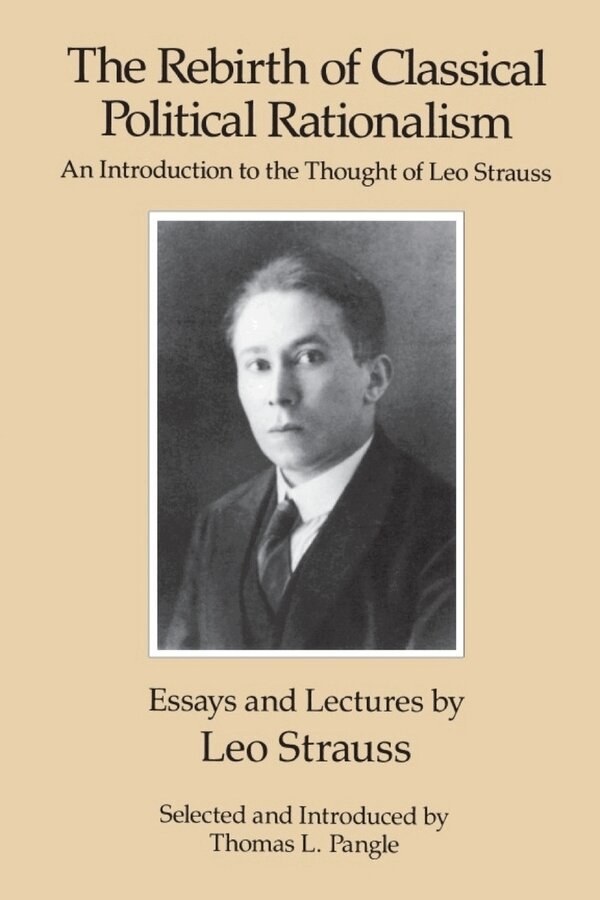
This concise and accessible introduction to Strauss's thought provides, for wider audience, a bridge to his more complex theoretical work. Editor Pangle has gathered five of Strauss's previously unpublished lectures and five hard-to-find published writings and has arranged them so as to demonstrate the systematic progression of the major themes that underlay Strauss's mature work. "[These essays] display the incomparable insight and remarkable range of knowledge that set Strauss's works apart from any other twentieth-century philosopher's."--Charles R. Kesler, National Review - Häftad, Engelska, 1996
404 kr
Skickas inom 5-8 vardagar
In one of his last books, Leo Strauss examines the confrontation between Socrates and Aristophanes in Aristophanes' comedies. Looking at eleven plays, Strauss shows that this confrontation is essentially one between poetry and philosophy, and that poetry emerges as an autonomous wisdom capable of rivaling philosophy. - Häftad, Engelska, 2021
359 kr
Skickas inom 5-8 vardagar
In the winter of 1965, Leo Strauss taught a seminar on Hegel at the University of Chicago. While Strauss neither considered himself a Hegelian nor wrote about Hegel at any length, his writings contain intriguing references to the philosopher, particularly in connection with his studies of Hobbes, in his debate in On Tyranny with Alexandre Kojève; and in his account of the “three waves” of modern political philosophy. Leo Strauss on Hegel reconstructs Strauss’s seminar on Hegel, supplemented by passages from an earlier version of the seminar from which only fragments of a transcript remain. Strauss focused his seminar on the lectures collected in The Philosophy of History, which he considered more accessible than Hegel’s written works. In his own lectures on Hegel, Strauss continues his project of demonstrating how modern philosophers related to ancient thought and explores the development and weaknesses of modern political theory. Strauss is especially concerned with the relationship in Hegel between empirical history and his philosophy of history, and he argues for the primacy of religion in Hegel’s understanding of history and society. In addition to a relatively complete transcript, Leo Strauss on Hegel also includes annotations, which bring context and clarity to the text. - Häftad, Engelska, 2021
359 kr
Skickas inom 5-8 vardagar
Although Leo Strauss published little on Nietzsche, his lectures and correspondence demonstrate a deep critical engagement with Nietzsche’s thought. One of the richest contributions is a seminar on Nietzsche’s Thus Spoke Zarathustra, taught in 1959 during Strauss’s tenure at the University of Chicago. In the lectures, Strauss draws important parallels between Nietzsche’s most important project and his own ongoing efforts to restore classical political philosophy. With Leo Strauss on Nietzsche’s “Thus Spoke Zarathustra,” eminent Strauss scholar Richard L. Velkley presents Strauss’s lectures on Zarathustra with superb annotations that bring context and clarity to the critical role played by Nietzsche in shaping Strauss’s thought. In addition to the broad relationship between Nietzsche and political philosophy, Strauss adeptly guides readers through Heidegger’s confrontations with Nietzsche, laying out Heidegger’s critique of Nietzsche’s “will to power” while also showing how Heidegger can be read as a foil for his own reading of Nietzsche. The lectures also shed light on the relationship between Heidegger and Strauss, as both philosophers saw Nietzsche as a central figure for understanding the crisis of philosophy and Western civilization.Strauss’s reading of Nietzsche is one of the important—yet little appreciated—philosophical inquiries of the past century, both an original interpretation of Nietzsche’s thought and a deep engagement with the core problems that modernity posed for political philosophy. It will be welcomed by anyone interested in the work of either philosopher. - Inbunden, Engelska, 2022
523 kr
Skickas inom 5-8 vardagar
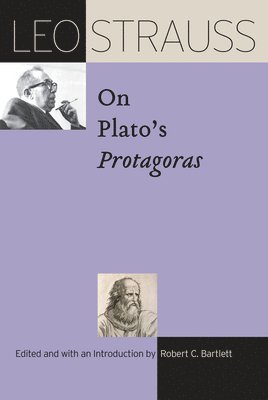
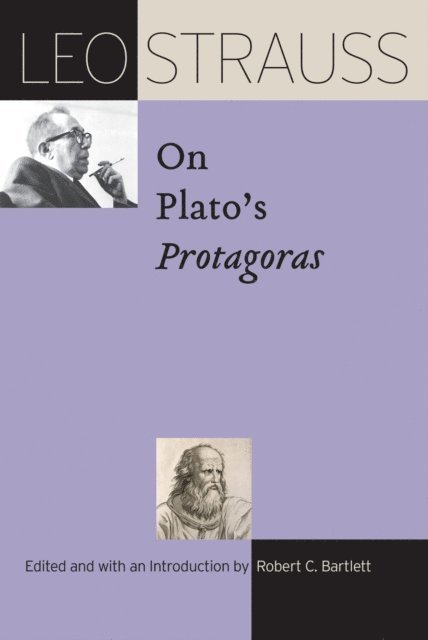
A transcript of Leo Strauss’s key seminars on Plato’s Protagoras. This book offers a transcript of Strauss’s seminar on Plato’s Protagoras taught at the University of Chicago in the spring quarter of 1965, edited and introduced by renowned scholar Robert C. Bartlett. These lectures have several important features. Unlike his published writings, they are less dense and more conversational. Additionally, while Strauss regarded himself as a Platonist and published some work on Plato, he published little on individual dialogues. In these lectures Strauss treats many of the great Platonic and Straussian themes: the difference between the Socratic political science or art and the Sophistic political science or art of Protagoras; the character and teachability of virtue, its relation to knowledge, and the relations among the virtues, courage, justice, moderation, and wisdom; the good and the pleasant; frankness and concealment; the role of myth; and the relation between freedom of thought and freedom of speech. In these lectures, Strauss examines Protagoras and the sophists, providing a detailed discussion of Protagoras as it relates to Plato’s other dialogues and the work of modern thinkers. This book should be of special interest to students both of Plato and of Strauss. - E-bokEngelska, 2022
1 042 kr
Läs direkt efter köp
A transcript of Leo Strauss’s key seminars on Plato’s Protagoras. This book offers a transcript of Strauss’s seminar on Plato’s Protagoras taught at the University of Chicago in the spring quarter of 1965, edited and introduced by renowned scholar Robert C. Bartlett. These lectures have several important features. Unlike his published writings, they are less dense and more conversational. Additionally, while Strauss regarded himself as a Platonist and published some work on Plato, he published little on individual dialogues. In these lectures Strauss treats many of the great Platonic and Straussian themes: the difference between the Socratic political science or art and the Sophistic political science or art of Protagoras; the character and teachability of virtue, its relation to knowledge, and the relations among the virtues, courage, justice, moderation, and wisdom; the good and the pleasant; frankness and concealment; the role of myth; and the relation between freedom of thought and freedom of speech. In these lectures, Strauss examines Protagoras and the sophists, providing a detailed discussion of Protagoras as it relates to Plato’s other dialogues and the work of modern thinkers. This book should be of special interest to students both of Plato and of Strauss. - Inbunden, Engelska, 2012
466 kr
Skickas inom 5-8 vardagar
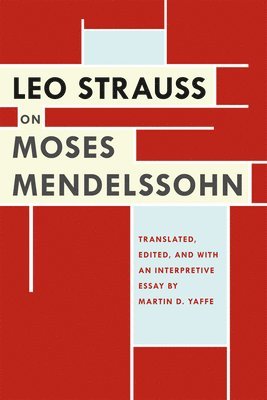
Moses Mendelssohn (1729-86) was the leading Jewish thinker of the German Enlightenment and the founder of modern Jewish philosophy. His writings, especially his attempt during the Pantheism Controversy to defend the philosophical legacies of Spinoza and Leibniz against F. H. Jacobi's philosophy of faith, captured the attention of a young Leo Strauss and played a critical role in the development of his thought on one of the fundamental themes of his life's work: the conflicting demands of reason and revelation. "Leo Strauss on Moses Mendelssohn" is a superbly annotated translation of ten introductions written by Strauss to a multivolume critical edition of Mendelssohn's work. Commissioned in Weimar Germany in the 1920s, the project was suppressed and nearly destroyed during Nazi rule and was not revived until the 1960s. In addition to Strauss' introductions, Martin D. Yaffe has translated various editorial annotations Strauss makes on key passages in Mendelssohn's texts.Yaffe has also contributed an extensive interpretive essay that both analyzes the introductions on their own terms and discusses what Strauss writes elsewhere about the broader themes broached in his Mendelssohnian studies. "Strauss' critique of Mendelssohn" represents one of the largest bodies of work by the young Strauss on a single thinker to be made available in English. It illuminates not only a formerly obscure phase in the emergence of his thought but also a critical moment in the history of the German Enlightenment. - Häftad, Engelska, 1995
441 kr
Skickas inom 5-8 vardagar
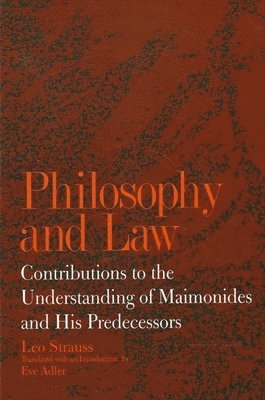
A groundbreaking study of the political philosophy of Maimonides and his Islamic predecessors.Leo Strauss's Philosophy and Law contains a groundbreaking study of the political philosophy of Maimonides and his Islamic predecessors, and it offers an argument on behalf of that philosophy which is also a profound critique of modern philosophy. Here is an entirely new and complete English translation of Strauss's work, which takes as its ideal the exacting standards of accuracy that Strauss himself emphasized in his own work. It includes a prefatory essay introducing the argument of each of the four sections of Philosophy and Law.This is a fresh and challenging treatment of the perennial conflict between reason and revelation, or philosophy and religion. Strauss's key contention in this book is that the most influential modern approaches to this conflict have run aground in ways that reflect their loss of key insights developed by the medieval philosophers of Islam and their Jewish pupils, especially Maimonides. Strauss challenges the modern view that scientific enlightenment must ultimately amount to atheism, and that therefore there can be no such thing as enlightened religion. Through a careful, original, and detailed treatment of central works of the medieval Islamic-Jewish tradition, especially Maimonides' Guide of the Perplexed, Strauss aims to recover their key insights into this question. - Häftad, Engelska, 1997
517 kr
Skickas inom 5-8 vardagar
Explores the impact on Jews and Judaism of the crisis of modernity, analyzing modern Jewish dilemmas and providing a prescription for their resolution.This is the first book to bring together the major essays and lectures of Leo Strauss in the field of modern Jewish thought. It contains some of his most famous published writings, as well as significant writings which were previously unpublished. Spanning almost 30 years of continuously deepening reflection, the book presents the full range of Strauss's contributions as a modern Jewish thinker.These essays and lectures also offer Strauss's mature considerations of some of the great figures in modern Jewish thought, such as Baruch Spinoza, Hermann Cohen, Franz Rosenzweig, Martin Buber, Theodor Herzl, and Sigmund Freud. They also encompass his incisive analyses and original explorations of modern Judaism (which he viewed as caught in the grip of the "theological-political crisis"): from German Jewry, anti-Semitism, and the Holocaust to Zionism and the State of Israel; from the question of assimilation to the meaning and value of Jewish history. In addition Strauss's two sustained interpretations of the Hebrew Bible are also reprinted.These essays and lectures cumulatively point toward the "postcritical" reconstruction of Judaism which Strauss envisioned, suggesting it rebuild along Maimonidean lines. Thus, the book lends credence to the view that Strauss was able to uncover and probe the crisis at the heart of modern Jewish thought and history, perhaps with greater profundity than any other contemporary Jewish thinker.