Catherine H. Zuckert - Böcker
Visar alla böcker från författaren Catherine H. Zuckert. Handla med fri frakt och snabb leverans.
12 produkter
12 produkter
298 kr
Skickas inom 7-10 vardagar
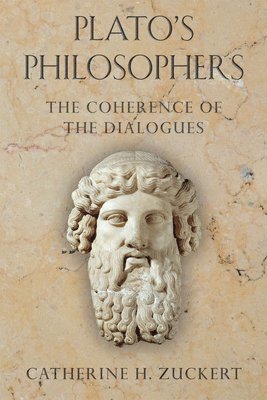
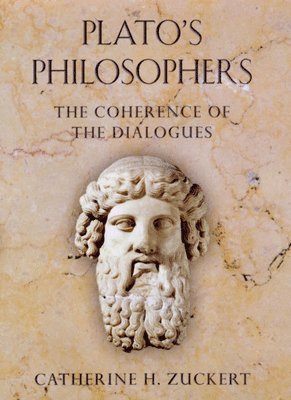
Faced with the difficult task of discerning Plato's true ideas from the contradictory voices he used to express them, scholars have never fully made sense of the many incompatibilities within and between the dialogues. In the magisterial "Plato's Philosophers", Catherine H. Zuckert explains for the first time how these prose dramas cohere to reveal a comprehensive Platonic understanding of philosophy. To expose this coherence, Zuckert examines the dialogues not in their supposed order of composition but according to the dramatic order in which Plato indicates they took place. This unconventional arrangement lays bare a narrative of the rise, development, and limitations of Socratic philosophy. In the drama's earliest dialogues, for example, non-Socratic philosophers introduce the political and philosophical problems to which Socrates tries to respond. A second dramatic group shows how Socrates develops his distinctive philosophical style. And, finally, the later dialogues feature interlocutors who reveal his philosophy's limitations.Despite these limitations, Zuckert concludes, Plato made Socrates the dialogues' central figure because Socrates raises the fundamental human question: What is the best way to live?
385 kr
Skickas inom 7-10 vardagar
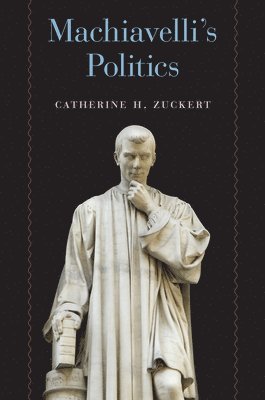
Machiavelli is popularly known as a teacher of tyrants, a key proponent of the unscrupulous "Machiavellian" politics laid down in his landmark political treatise The Prince. Others cite the Discourses on Livy to argue that Machiavelli is actually a passionate advocate of republican politics who saw the need for occasional harsh measures to maintain political order. Which best characterizes the teachings of the prolific Italian philosopher? With Machiavelli's Politics, Catherine H. Zuckert turns this question on its head with a major reinterpretation of Machiavelli's prose works that reveals a surprisingly cohesive view of politics. Starting with Machiavelli's two major political works, Zuckert persuasively shows that the moral revolution Machiavelli sets out in The Prince lays the foundation for the new form of democratic republic he proposes in the Discourses. Distrusting ambitious politicians to serve the public interest of their own accord, Machiavelli sought to persuade them in The Prince that the best way to achieve their own ambitions was to secure the desires and ambitions of their subjects and fellow citizens.In the Discourses, he then describes the types of laws and institutions that would balance the conflict between the two in a way that would secure the liberty of most, if not all. In the second half of her book, Zuckert places selected later works La Mandragola, The Art of War, The Life of Castruccio Castracani, Clizia, and Florentine Histories under scrutiny, showing how Machiavelli further developed certain aspects of his thought in these works. In The Art of War, for example, he explains more concretely how and to what extent the principles of organization he advanced in The Prince and the Discourses ought to be applied in modern circumstances. Because human beings act primarily on passions, Machiavelli attempts to show readers what those passions are and how they can be guided to have productive rather than destructive results. A stunning and ambitious analysis, Machiavelli's Politics brilliantly shows how many conflicting perspectives do inform Machiavelli's teachings, but that one needs to consider all of his works in order to understand how they cohere into a unified political view.This is a magisterial work that cannot be ignored if a comprehensive understanding of the philosopher is to be obtained.
314 kr
Skickas inom 7-10 vardagar
Leo Strauss and his alleged political influence regarding the Iraq War have in recent years been the subject of significant media attention, including stories in the Wall Street Journal and New York Times. Time magazine even called him one of the most influential men in American politics. With The Truth about Leo Strauss, Michael and Catherine Zuckert challenged the many claims and speculations about this notoriously complex thinker. Now, with Leo Strauss and the Problem of Political Philosophy, they turn their attention to a searching and more comprehensive interpretation of Strauss's thought as a whole, using the many manifestations of the problem of political philosophy as their touchstone.
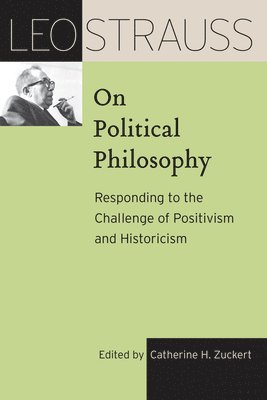
Leo Strauss on Political Philosophy
Responding to the Challenge of Positivism and Historicism
Inbunden, Engelska, 2018
385 kr
Skickas inom 7-10 vardagar
Leo Strauss is known primarily for reviving classical political philosophy through careful analyses of works by ancient thinkers. As with his published writings, Strauss’s seminars devoted to specific philosophers were notoriously dense, accessible only to graduate students and scholars with a good command of the subject. In 1965, however, Strauss offered an introductory course on political philosophy at the University of Chicago. Using a conversational style, he sought to make political philosophy, as well as his own ideas and methods, understandable to those with little background on the subject. Leo Strauss on Political Philosophy brings together the lectures that comprise Strauss’s “Introduction to Political Philosophy.” Strauss begins by emphasizing the importance of political philosophy in determining the common good of society and critically examining the two most powerful contemporary challenges to the possibility of using political theory to learn about and develop the best political order: positivism and historicism. In seeking the common good, classical political philosophers like Plato and Aristotle did not distinguish between political philosophy and political science. Today, however, political philosophy must contend with the contemporary belief that it is impossible to know what the good society really is. Strauss emphasizes the need to study the history of political philosophy to see whether the changes in the understanding of nature and conceptions of justice that gradually led people to believe that it is not possible to determine what the best political society is are either necessary or valid. In doing so, he ranges across the entire history of political philosophy, providing a valuable, thematically coherent foundation, including explications of many canonical thinkers, such as Auguste Comte and Immanuel Kant, about whom Strauss did not write extensively in his published writings.
Leo Strauss on Political Philosophy
Responding to the Challenge of Positivism and Historicism
Häftad, Engelska, 2021
306 kr
Skickas inom 7-10 vardagar
Leo Strauss is known primarily for reviving classical political philosophy through careful analyses of works by ancient thinkers. As with his published writings, Strauss’s seminars devoted to specific philosophers were notoriously dense, accessible only to graduate students and scholars with a good command of the subject. In 1965, however, Strauss offered an introductory course on political philosophy at the University of Chicago. Using a conversational style, he sought to make political philosophy, as well as his own ideas and methods, understandable to those with little background on the subject. Leo Strauss on Political Philosophy brings together the lectures that comprise Strauss’s “Introduction to Political Philosophy.” Strauss begins by emphasizing the importance of political philosophy in determining the common good of society and critically examining the two most powerful contemporary challenges to the possibility of using political theory to learn about and develop the best political order: positivism and historicism. In seeking the common good, classical political philosophers like Plato and Aristotle did not distinguish between political philosophy and political science. Today, however, political philosophy must contend with the contemporary belief that it is impossible to know what the good society really is. Strauss emphasizes the need to study the history of political philosophy to see whether the changes in the understanding of nature and conceptions of justice that gradually led people to believe that it is not possible to determine what the best political society is are either necessary or valid. In doing so, he ranges across the entire history of political philosophy, providing a valuable, thematically coherent foundation, including explications of many canonical thinkers, such as Auguste Comte and Immanuel Kant, about whom Strauss did not write extensively in his published writings.
275 kr
Skickas inom 7-10 vardagar
This study examines the work of five key philosophical figures from the 19th and 20th centuries through the lens of their own decidedly postmodern readings of Plato. The author argues that Nietzsche, Heidegger, Gadamer, Strauss and Derrida, convinced that modern rationalism had exhausted its possibilities, all turned to Plato in order to rediscover the original character of philosophy and to reconceive the Western tradition as a whole. Zuckert's juxtaposition of these seemingly disparate bodies of thought furnishes a synoptic view, not merely of these individual thinkers, but of the broad postmodern landscape as well. The result is a work that offers a perspective on the relation between the Western philosophical tradition and the evolving postmodern enterprise.
786 kr
Skickas inom 7-10 vardagar
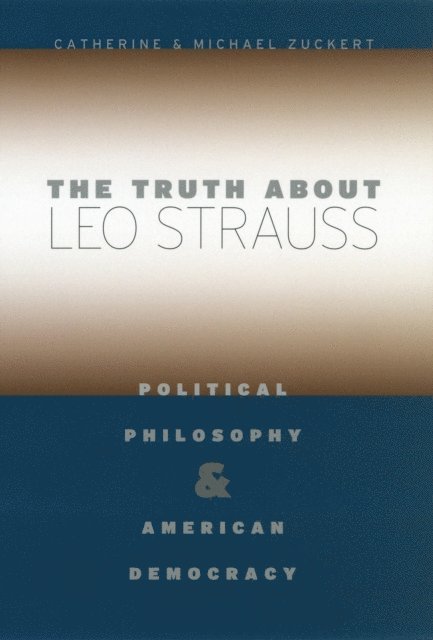
Is Leo Strauss truly an intellectual forebear of neoconservatism and a powerful force in shaping Bush administration foreign policy? "The Truth about Leo Strauss" puts this question to rest, revealing for the first time how the popular media came to perpetuate an oversimplified view of a complex and wide-ranging philosopher. In doing so, it corrects our perception of Strauss, providing the best general introduction available to the political thought of this misunderstood figure.Catherine and Michael Zuckert - both former students of Strauss - guide readers here to a nuanced understanding of how Strauss' political thought fits into his broader philosophy. Challenging the idea that Strauss was an inflexible conservative who followed in the foot-steps of Nietzsche, Heidegger, and Carl Schmitt, the Zuckerts contend that Strauss' signature idea was the need for a return to the ancients. Through their work, they conclude that Strauss was a sober defender of liberal democracy, aware of both its strengths and its weaknesses.Balanced and accessible, "The Truth about Leo Strauss" is a must-read for anyone who wants to more fully comprehend this enigmatic philosopher and his much-disputed legacy.
243 kr
Skickas inom 7-10 vardagar
Is Leo Strauss truly an intellectual forebear of neoconservatism and a powerful force in shaping Bush administration foreign policy? "The Truth about Leo Strauss" puts this question to rest, revealing for the first time how the popular media came to perpetuate an oversimplified view of a complex and wide-ranging philosopher. In doing so, it corrects our perception of Strauss, providing the best general introduction available to the political thought of this misunderstood figure.Catherine and Michael Zuckert - both former students of Strauss - guide readers here to a nuanced understanding of how Strauss' political thought fits into his broader philosophy. Challenging the idea that Strauss was an inflexible conservative who followed in the foot-steps of Nietzsche, Heidegger, and Carl Schmitt, the Zuckerts contend that Strauss' signature idea was the need for a return to the ancients. Through their work, they conclude that Strauss was a sober defender of liberal democracy, aware of both its strengths and its weaknesses.Balanced and accessible, "The Truth about Leo Strauss" is a must-read for anyone who wants to more fully comprehend this enigmatic philosopher and his much-disputed legacy.
786 kr
Skickas inom 7-10 vardagar
Faced with the difficult task of discerning Plato's true ideas from the contradictory voices he used to express them, scholars have never fully made sense of the many incompatibilities within and between the dialogues. In "The Magisterial Plato's Philosophers", Catherine H. Zuckert explains for the first time how these prose dramas cohere to reveal a comprehensive Platonic understanding of philosophy. To expose this coherence, Zuckert examines the dialogues not in their supposed order of composition but according to the dramatic order in which Plato indicates they took place. This unconventional arrangement lays bare a narrative of the rise, development, and limitations of Socratic philosophy. In the drama's earliest dialogues, for example, non-Socratic philosophers introduce the political and philosophical problems to which Socrates tries to respond. A second dramatic group shows how Socrates develops his distinctive philosophical style. And the later dialogues feature interlocutors who reveal his philosophy's limitations.Despite these limitations, Zuckert concludes, Plato made Socrates the dialogues' central figure because Socrates raises the fundamental human question: what is the best way to live? Plato's dramatization of Socratic imperfections suggests, moreover, that he recognized the apparently unbridgeable gap between our understandings of human life and the nonhuman world. At a time when this gap continues to raise questions - about the division between sciences and the humanities and the potentially dehumanizing effects of scientific progress - Zuckert's brilliant interpretation of the entire Platonic corpus offers genuinely new insights into worlds past and present.
322 kr
Skickas inom 7-10 vardagar
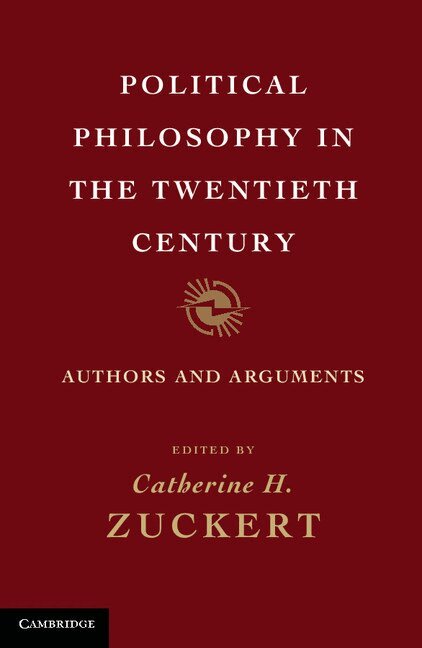
This book demonstrates the rich diversity and depth of political philosophy in the twentieth century. Catherine H. Zuckert has compiled a collection of essays recounting the lives of political theorists, connecting each biography with the theorist's life work and explaining the significance of the contribution to modern political thought. The essays are organized to highlight the major political alternatives and approaches. Beginning with essays on John Dewey, Carl Schmitt and Antonio Gramsci, representing the three main political alternatives - liberal, fascist and communist - at mid-century, the book proceeds to consider the lives and works of émigrés such as Hannah Arendt, Eric Voegelin, and Leo Strauss, who brought a continental perspective to the United States after World War II. The second half of the collection contains essays on recent defenders of liberalism, such as Friedrich Hayek, Isaiah Berlin and John Rawls and liberalism's many critics, including Michel Foucault, Jürgen Habermas and Alasdair MacIntyre.
169 kr
Skickas inom 5-8 vardagar
784 kr
Skickas inom 7-10 vardagar
This book demonstrates the rich diversity and depth of political philosophy in the twentieth century. Catherine H. Zuckert has compiled a collection of essays recounting the lives of political theorists, connecting each biography with the theorist's life work and explaining the significance of the contribution to modern political thought. The essays are organized to highlight the major political alternatives and approaches. Beginning with essays on John Dewey, Carl Schmitt and Antonio Gramsci, representing the three main political alternatives - liberal, fascist and communist - at mid-century, the book proceeds to consider the lives and works of émigrés such as Hannah Arendt, Eric Voegelin, and Leo Strauss, who brought a continental perspective to the United States after World War II. The second half of the collection contains essays on recent defenders of liberalism, such as Friedrich Hayek, Isaiah Berlin and John Rawls and liberalism's many critics, including Michel Foucault, Jürgen Habermas and Alasdair MacIntyre.