Leon Mwamba Tshimpaka – författare
706 kr
Läs direkt efter köp
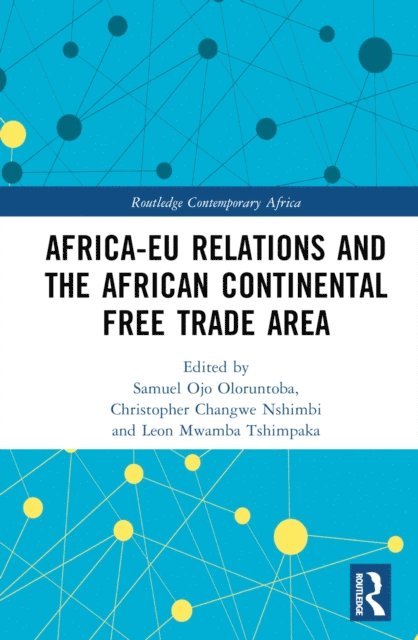
This book explores relations between states in the Africa–European Union in view of the African Continental Free Trade Area, both at a regional level and as a series of informal processes of socioeconomic and political interactions between state and non-state actors.
The book reconsiders the ways in which actors in the Africa–European Union relationship function, and what that means for regionalism, regionalisation and regional integration. In addition to formalised state-to-state and inter-regional interactions, the book examines the impact of socio-economic and political interactions with non-state actors, including those who engage with regional integration through formal and informal processes such as civil society activists, “African migration evangelists”, human smugglers and human traffickers. The book thus demonstrates that regional and inter-regional engagements include issues that extend beyond the usual discussions of trade.
The book is authored from an African perspective and will be of interest to academics who specialise in International Relations, Political Economy, Political Sociology and African Studies. Policy makers and various actors in civil society and think tanks who have an academic inclination and deal with trade, migration and regionalism in Africa and Africa’s relations with Europe will also find the book beneficial.
706 kr
Läs direkt efter köp
This book explores relations between states in the Africa–European Union in view of the African Continental Free Trade Area, both at a regional level and as a series of informal processes of socioeconomic and political interactions between state and non-state actors.
The book reconsiders the ways in which actors in the Africa–European Union relationship function, and what that means for regionalism, regionalisation and regional integration. In addition to formalised state-to-state and inter-regional interactions, the book examines the impact of socio-economic and political interactions with non-state actors, including those who engage with regional integration through formal and informal processes such as civil society activists, “African migration evangelists”, human smugglers and human traffickers. The book thus demonstrates that regional and inter-regional engagements include issues that extend beyond the usual discussions of trade.
The book is authored from an African perspective and will be of interest to academics who specialise in International Relations, Political Economy, Political Sociology and African Studies. Policy makers and various actors in civil society and think tanks who have an academic inclination and deal with trade, migration and regionalism in Africa and Africa’s relations with Europe will also find the book beneficial.
2 195 kr
Skickas inom 10-15 vardagar
600 kr
Skickas inom 10-15 vardagar
763 kr
Läs direkt efter köp
763 kr
Läs direkt efter köp
774 kr
Läs direkt efter köp
774 kr
Läs direkt efter köp
2 306 kr
Kommande
2 306 kr
Kommande
1 622 kr
Skickas inom 10-15 vardagar
2 057 kr
Läs direkt efter köp
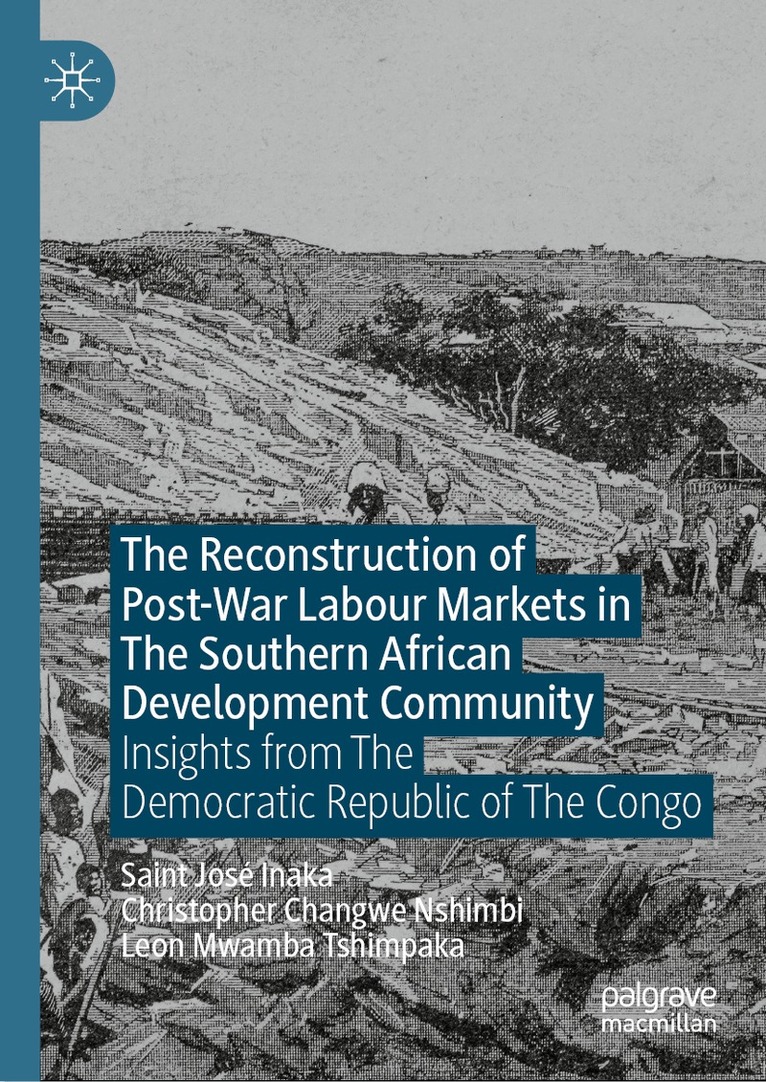
This book provides a comprehensive overview of post-war labour market reconstructions, in the context of a regional bloc whose member states have experienced conflict. Focusing on the Southern African Development Community (SADC) region, the book explores how major conflicts often expose shortcomings in affected countries particularly on their post-war labour market reconstruction processes. The authors discuss how countries in the SADC region in particular are equipped to navigate such processes. This key question drives the overview of relationships between labour market issues and wars of liberation from colonial rule and apartheid, rights to self-determination and racial (in)equality and the need to succinctly explain how labour market issues shaped civil wars in some post-independent SADC member states. The book examines the role of the state in reconstruction processes of post-war labour markets and the contribution of labour market institutions to these reconstructions. It further analyses private sector participation in remaking labour markets and workers’ experiences in finding employment in labour markets under reconstruction. The book provides specific insights from experiences in the Democratic Republic of the Congo (DRC).
648 kr
Skickas inom 5-8 vardagar
1 622 kr
Skickas inom 10-15 vardagar
1 622 kr
Skickas inom 10-15 vardagar
2 049 kr
Läs direkt efter köp
This book examines the establishment and implementation of the AfCFTA, which is the largest free trade area globally, covering 54 African countries. It explores how this initiative has the potential to reshape Africa-EU relations by promoting intra-African trade, economic integration, and diversification, as well as inter- regional trade. Both continents have the potential to serve as global actors in reshaping the global order in ways that can affect how multilateralism fosters inclusive development. However, whether this will happen would be a function of how the EU and AU define their interests and relationship.
1 622 kr
Skickas inom 10-15 vardagar
1 622 kr
Skickas inom 10-15 vardagar
2 049 kr
Läs direkt efter köp
This edited book explores the realities in various borderlands across Africa vis-à-vis the complexities that have emerged with the upsurge of COVID-19, which put the world at a standstill. In other words, it investigates the changing dynamics of borders and bordering in Africa, with a specific focus on how borders were managed before, during and in the aftermath of COVID-19 restrictions on global mobility. The evolving nature of threats associated with COVID-19 has led to border closures (land, sea and air), calling our attention to the current state of emergency preparedness in the context of cross-border-related health threats, risk characterization, crisis management, emergency risk communication, capacities and capabilities for prevention and control. However, borders and frontiers are located on the periphery, limiting the early warning and response capabilities of states. This book marks a comprehensive and field-defining analysis through its questioning of what kind of transitions have occurred in African borderlands and our perceptions as to how borders and bordering have traditionally been viewed and upheld.
1 622 kr
Skickas inom 10-15 vardagar
1 965 kr
Kommande
1 406 kr
Skickas inom 10-15 vardagar
1 733 kr
Läs direkt efter köp
This book examines regional integration in Africa, with a particular focus on the Southern African Development Community (SADC). It argues that the SADC’s pursuit of a rationalist and state-centric form of integration for Southern Africa is limited, as it overlooks the contributory role and efficacy of non-state actors, who are relegated to the periphery. The book demonstrates that civil society networks in Southern Africa constitute well-governed, self-organised entities that function just like formal regional arrangements driven by state actors and technocrats. The book amplifies this point by deploying New Institutionalism and the New Regionalism Approach to examine the role and efficacy of non-state actors in building regions from below. The book develops a unique typology that shows how Southern African regional civil society networks adopt strategies, norms and rules to establish an efficient form of alternative integration in the region. Based on a critical analysis of this self-organised regionalism, the book projects the reality that alternative regionalism driven by non-state actors is possible. This book expands the study of regionalism in the SADC, and makes a significant and innovative contribution to the study of contemporary regionalism.
1 406 kr
Skickas inom 10-15 vardagar