Leonardo Avritzer - Böcker
Visar alla böcker från författaren Leonardo Avritzer. Handla med fri frakt och snabb leverans.
8 produkter
8 produkter
400 kr
Skickas inom 7-10 vardagar
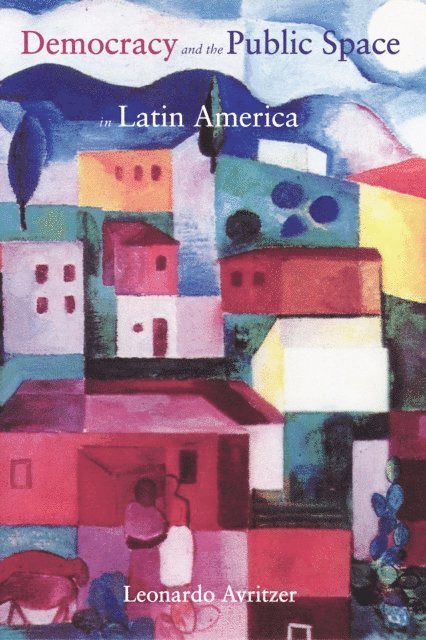
This is a bold new study of the recent emergence of democracy in Latin America. Leonardo Avritzer shows that traditional theories of democratization fall short in explaining this phenomenon. Scholars have long held that the postwar stability of Western Europe reveals that restricted democracy, or "democratic elitism," is the only realistic way to guard against forces such as the mass mobilizations that toppled European democracies after World War I. Avritzer challenges this view. Drawing on the ideas of Jurgen Habermas, he argues that democracy can be far more inclusive and can rely on a sphere of autonomous association and argument by citizens. He makes this argument by showing that democratic collective action has opened up a new "public space" for popular participation in Latin American politics. Unlike many theorists, Avritzer builds his case empirically. He looks at human rights movements in Argentina and Brazil, neighborhood associations in Brazil and Mexico, and election-monitoring initiatives in Mexico. Contending that such participation has not gone far enough, he proposes a way to involve citizens even more directly in policy decisions.For example, he points to experiments in "participatory budgeting" in two Brazilian cities. Ultimately, the concept of such a space beyond the reach of state administration fosters a broader view of democratic possibility, of the cultural transformation that spurred it, and of the tensions that persist, in a region where democracy is both new and different from the Old World models.
489 kr
Tillfälligt slut
Brazil has conducted some of the world's most stunning experiments in participatory democracy, most notably the creation of city budgets through local citizens' meetings. Leonardo Avritzer introduces a fresh analytical approach to reveal the social and institutional conditions that make civic participation most effective, expanding the empirical base for assessing these institutions. By examining participatory health councils and city master plans within a diverse group of cities-Sao Paulo, Belo Horizonte, and Salvador-this book goes beyond the current literature, which has focused almost exclusively on budgeting in Porto Alegre. Ultimately, Participatory Institutions in Democratic Brazil provides a more complex understanding of the links among participation, citizenship, and democracy through a set of case studies that will resonate both inside and outside Brazil.
300 kr
Skickas inom 7-10 vardagar
Brazil has conducted some of the world's most stunning experiments in participatory democracy, most notably the creation of city budgets through local citizens' meetings. Leonardo Avritzer introduces a fresh analytical approach to reveal the social and institutional conditions that make civic participation most effective, expanding the empirical base for assessing these institutions. By examining participatory health councils and city master plans within a diverse group of cities-Sao Paulo, Belo Horizonte, and Salvador-this book goes beyond the current literature, which has focused almost exclusively on budgeting in Porto Alegre. Ultimately, Participatory Institutions in Democratic Brazil provides a more complex understanding of the links among participation, citizenship, and democracy through a set of case studies that will resonate both inside and outside Brazil.
Del 1 - Advances in Critical Policy Studies series
Two Faces of Institutional Innovation
Promises and Limits of Democratic Participation in Latin America
Inbunden, Engelska, 2017
1 506 kr
Skickas inom 7-10 vardagar
Many democratic theorists have viewed the recent innovations adopted throughout Latin America in a positive light. This evaluation has engendered the idea that all innovations are democratic and all democratic innovations are able to foster citizenship. Presenting a realistic analysis of both the positive and negative aspects of innovation, this book argues that these innovations ought to be examined at the intersection between design and the political system.The Two Faces of Institutional Innovation offers a new perspective on developments such as participatory budgeting, the National Electoral Institute (INE) and the Federal Electoral Institute (IFE) in Mexico and comités de vigilancia in Bolivia, and evaluates the extent to which, in reality, citizens were involved in decision-making, distributive policies and citizen education. Further chapters also examine the expansion of innovation to the field of judicial institutions - one of the key areas in which innovation took place in Latin America, showing that the role of legal corporations in democracy cannot be compared with the role of engaged citizens.Contemporary and astute, this book will captivate students and scholars researching in the areas of innovation policy and regulatory governance. Its analysis of the positive and negative aspects of democratic innovation will also benefit democratic theorists and policy-makers alike.
Del 1 - Advances in Critical Policy Studies series
Two Faces of Institutional Innovation
Promises and Limits of Democratic Participation in Latin America
Häftad, Engelska, 2019
444 kr
Skickas inom 7-10 vardagar
Many democratic theorists have viewed the recent innovations adopted throughout Latin America in a positive light. This evaluation has engendered the idea that all innovations are democratic and all democratic innovations are able to foster citizenship. Presenting a realistic analysis of both the positive and negative aspects of innovation, this book argues that these innovations ought to be examined at the intersection between design and the political system.The Two Faces of Institutional Innovation offers a new perspective on developments such as participatory budgeting, the National Electoral Institute (INE) and the Federal Electoral Institute (IFE) in Mexico and comités de vigilancia in Bolivia, and evaluates the extent to which, in reality, citizens were involved in decision-making, distributive policies and citizen education. Further chapters also examine the expansion of innovation to the field of judicial institutions - one of the key areas in which innovation took place in Latin America, showing that the role of legal corporations in democracy cannot be compared with the role of engaged citizens.Contemporary and astute, this book will captivate students and scholars researching in the areas of innovation policy and regulatory governance. Its analysis of the positive and negative aspects of democratic innovation will also benefit democratic theorists and policy-makers alike.
Democracy Under Attack
Social Media and Disinformation in Brazilian Elections
Inbunden, Engelska, 2024
1 482 kr
Skickas inom 10-15 vardagar
This book makes a significant contribution to ongoing discussions about the crisis of democracy by delving into the impacts of digital communication technologies on the 2022 Brazilian elections. Written by a multidisciplinary group of experts in the field of digital politics, the chapters explore not only how these technologies are appropriated by political actors, but also how the affordances offered by digital platforms and their role in promoting them affect electoral integrity. Consequently, the book also contributes to debates concerning the urgent necessity of regulating digital corporations.In facing the potentially harmful effects of the uses of digital technologies on electoral integrity, the Brazilian case offers key lessons. Brazil stands as one of the most important global democracies, but it is also one that has been under attack from autocratic and extremist forces in the past decade. These forces have leveraged digital communication technologies extensively to advance their agendas and launch disinformation campaigns. Furthermore, the country is one of the main markets for digital companies. Their role in Brazil and how Brazilian actors react to them has a widespread impact in Latin America and beyond. As this book shows, the 2022 electoral process serves as a compelling case study of how various actors, including electoral authorities, civil society organizations, journalists, scholars, and prodemocracy activists, came together in the months leading up to the election to combat the rampant abuses facilitated by digital technologies and defend electoral integrity.Because of the similarities between the Brazilian context and the challenges being faced by other democracies, this book will be of interest to a broad international audience that is worried about the crisis of democracy and its resilience, as well as the impacts of asymmetric polarization.
2 958 kr
Skickas inom 10-15 vardagar
This book makes a significant contribution to ongoing discussions about the crisis of democracy by delving into the impacts of digital communication technologies on the 2022 Brazilian elections. Written by a multidisciplinary group of experts in the field of digital politics, the chapters explore not only how these technologies are appropriated by political actors, but also how the affordances offered by digital platforms and their role in promoting them affect electoral integrity. Consequently, the book also contributes to debates concerning the urgent necessity of regulating digital corporations.In facing the potentially harmful effects of the uses of digital technologies on electoral integrity, the Brazilian case offers key lessons. Brazil stands as one of the most important global democracies, but it is also one that has been under attack from autocratic and extremist forces in the past decade. These forces have leveraged digital communication technologies extensively to advance their agendas and launch disinformation campaigns. Furthermore, the country is one of the main markets for digital companies. Their role in Brazil and how Brazilian actors react to them has a widespread impact in Latin America and beyond. As this book shows, the 2022 electoral process serves as a compelling case study of how various actors, including electoral authorities, civil society organizations, journalists, scholars, and prodemocracy activists, came together in the months leading up to the election to combat the rampant abuses facilitated by digital technologies and defend electoral integrity.Because of the similarities between the Brazilian context and the challenges being faced by other democracies, this book will be of interest to a broad international audience that is worried about the crisis of democracy and its resilience, as well as the impacts of asymmetric polarization.
1 061 kr
Skickas inom 10-15 vardagar
This book fills a void in the existing literature on regime erosion and democratic backsliding by proposing a multidimensional and sequential explanation for the emergence of crisis of democracy using one of the most populous democracies in the world as a case study: Brazil. The book argues that long- and short-term factors combine to explain how democratic systems enter phases of profound instability, increasing system unpredictability and the resurgence of reinvigorated authoritarian enclaves in society.Brazil is an interesting case because it has been portraited by the extant literature as an example of success among Third Wave Democracies in making progress towards a stable regime. Against such interpretations, this book presents evidences that unresolved dilemmas in the transition to democracy during the 1970’s became ever more pressing and evident as the system has been shaken by unprecedented political and economic crisis. The vulnerability of Brazilian democracy became explicit with successive episodes that accumulated over the years, especially since 2013, leading to and being crowned by the coming to power of Jair Bolsonaro, a conservative, extreme-right wing President, with clear authoritarian tendencies. Ultimately, as the book narrates, several events that have taken place over the past decade question any idea of normality in the system and that institutions work. Business simply has not been conducted as usual in Brazilian democracy.The Crisis of Democracy in Brazil will be of interest to researchers in the fields of political science and political sociology interested in studying democratic backsliding and the current crisis of democracy all over the world by presenting a case study of how this crisis affected one of the largest democracies in the world.