Leszek Koczanowicz – författare
2 198 kr
Skickas inom 10-15 vardagar
625 kr
Skickas inom 10-15 vardagar
643 kr
Skickas inom 10-15 vardagar
643 kr
Skickas inom 10-15 vardagar
757 kr
Läs direkt efter köp
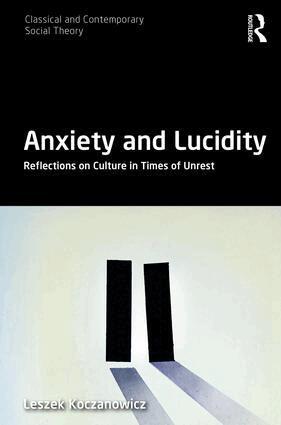
This book explores the nature of modern culture as a culture of anxiety, analyzing the modes in which such anxiety presents itself. Drawing on sociological and philosophical concepts of modernity, the author builds on the work of Marx, Nietzsche, and Freud to offer an understanding of modern anxiety culture as the reverse side of risk culture, which stabilizes itself by concealing or making familiar the social phenomena of risk society. Through explorations of memory, politics, art, clairvoyance, notions of national community, and identity, this volume sheds light on the fissures in our culture where anxiety appears, thus revealing its underlying volatility. A study of the ruptures in our modern culture, Anxiety and Lucidity will appeal to scholars of sociology, social theory, anthropology, and philosophy with interests in late modern culture.
757 kr
Läs direkt efter köp
This book explores the nature of modern culture as a culture of anxiety, analyzing the modes in which such anxiety presents itself. Drawing on sociological and philosophical concepts of modernity, the author builds on the work of Marx, Nietzsche, and Freud to offer an understanding of modern anxiety culture as the reverse side of risk culture, which stabilizes itself by concealing or making familiar the social phenomena of risk society. Through explorations of memory, politics, art, clairvoyance, notions of national community, and identity, this volume sheds light on the fissures in our culture where anxiety appears, thus revealing its underlying volatility. A study of the ruptures in our modern culture, Anxiety and Lucidity will appeal to scholars of sociology, social theory, anthropology, and philosophy with interests in late modern culture.
1 293 kr
Skickas inom 7-10 vardagar
284 kr
Läs direkt efter köp
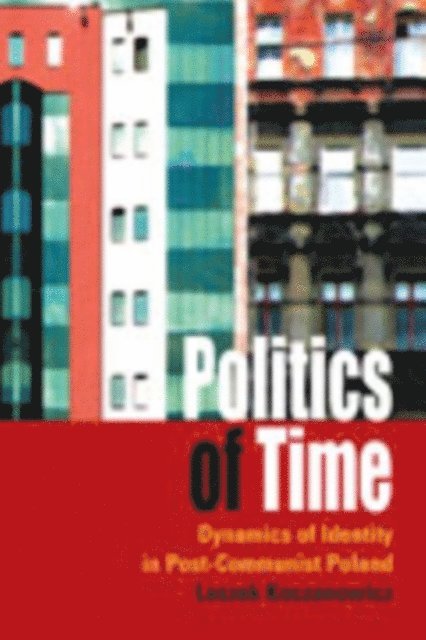
What has really happened in Poland since the election of 2005? After such spectacular events as the practice of lustration and the questioning of solidarity with the European Union, one has to ask: what is the nature of this newly emerging society? As with many of the recent developments in former communist countries that seem to be mysterious and irrational, the situation and ensuing problems are complex and the answers neither trivial nor easy. This book, by the distinguished Polish philosopher, addresses these complexities through the role of the communist past in post-communist Poland. It describes the events that led to the collapse of the Solidarity program and the growing influence of the nationalistic and religious parties in the government. The author investigates the nature of social and political temporality and develops a theoretical framework that allows him to apply his conclusions not only to Poland but also to other formerly communist countries.
833 kr
Skickas inom 5-8 vardagar
2 438 kr
Skickas inom 10-15 vardagar
774 kr
Läs direkt efter köp
This volume demonstrates how Wittgenstein’s philosophy can illuminate our understanding of politics and open new ways of conceptualizing democratic theory and practice. Its focus is on language, reason and communication as central to identifying present confusions in our understanding of democracy.The book seeks to engage Wittgenstein’s philosophical insights, aiming to go beyond the dichotomous oppositions and conceptual entanglements pervading existing frameworks of social and political theories of democracy. Its key topic is the irreplaceable role of dialogue in civic democratic engagement as a condition for the understanding of self and others and, hence, for political life in which reason has a role. Indeed, it presents concrete examples of how Wittgenstein can be constructively applied to current political discourse. Part I of the volume focuses on the general idea of applying Wittgenstein’s philosophy to political and democratic theory and explains the deep and intrinsic relation between Wittgenstein’s thought and politics. Part II discusses Wittgenstein’s concrete concepts as illuminating for understanding selected aspects of democratic politics. Part III deals with a possible exchange between Wittgenstein and other political thinkers, especially Hannah Arendt.Wittgenstein and Democratic Politics will appeal to researchers and advanced students working on Wittgenstein’s philosophy, political philosophy and democratic theory.
774 kr
Läs direkt efter köp
This volume demonstrates how Wittgenstein’s philosophy can illuminate our understanding of politics and open new ways of conceptualizing democratic theory and practice. Its focus is on language, reason and communication as central to identifying present confusions in our understanding of democracy.The book seeks to engage Wittgenstein’s philosophical insights, aiming to go beyond the dichotomous oppositions and conceptual entanglements pervading existing frameworks of social and political theories of democracy. Its key topic is the irreplaceable role of dialogue in civic democratic engagement as a condition for the understanding of self and others and, hence, for political life in which reason has a role. Indeed, it presents concrete examples of how Wittgenstein can be constructively applied to current political discourse. Part I of the volume focuses on the general idea of applying Wittgenstein’s philosophy to political and democratic theory and explains the deep and intrinsic relation between Wittgenstein’s thought and politics. Part II discusses Wittgenstein’s concrete concepts as illuminating for understanding selected aspects of democratic politics. Part III deals with a possible exchange between Wittgenstein and other political thinkers, especially Hannah Arendt.Wittgenstein and Democratic Politics will appeal to researchers and advanced students working on Wittgenstein’s philosophy, political philosophy and democratic theory.
2 198 kr
Skickas inom 10-15 vardagar
757 kr
Läs direkt efter köp
757 kr
Läs direkt efter köp
730 kr
Läs direkt efter köp
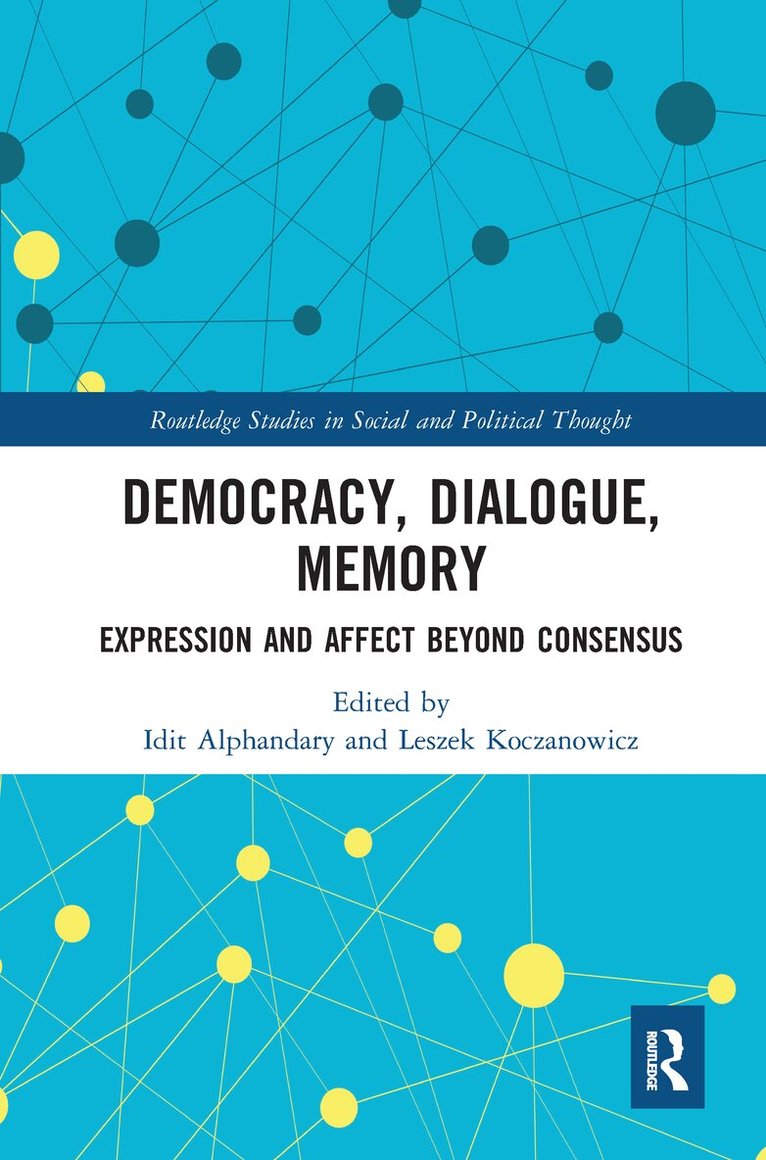
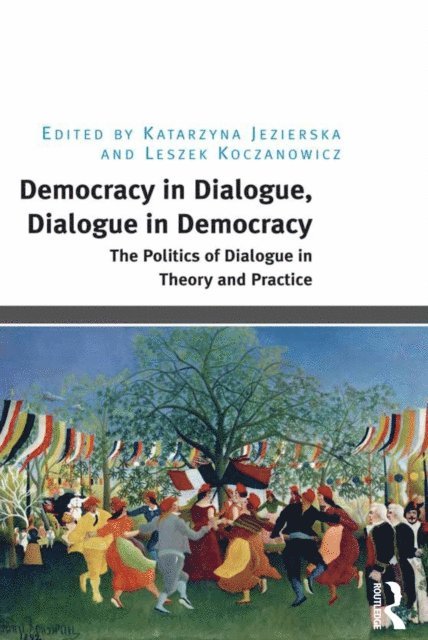
Arguing that the politics of democracy is inseparable from a notion of dialogue that emerges from conflicting and often traumatic memories, Democracy, Dialogue, Memory examines the importance of dialogue for the achievement of understanding in civil society rather than consensus, so that democratic participation and inclusion can be strengthened. With attention to the importance for marginalized communities of the ability to disclose fundamental ethnic, religious, gendered, racial, or personal and affective characteristics born of trauma, and so cease to represent "otherness," this book brings together studies from Europe, Israel and the United States of literary and visual attempts to expand dialogue with "the other," particularly where democracies are prone to vacillating between the desire to endorse otherness, and political dread of the other. A critique of the practices of forced inclusion and forced consensual negotiation, that seeks to advance dialogue as a crucial safeguard against the twin dangers of exclusion and enforced assimilation, Democracy, Dialogue, Memory will appeal to scholars with interests in political theory, political sociology, collective and contested memory and civil society at the same time as allowing scholars from the humanities and the arts to examine seminal chapters that pivot on psychoanalytical approaches to literature, film and philosophy at the borderline of political thinking.
757 kr
Läs direkt efter köp
Arguing that the politics of democracy is inseparable from a notion of dialogue that emerges from conflicting and often traumatic memories, Democracy, Dialogue, Memory examines the importance of dialogue for the achievement of understanding in civil society rather than consensus, so that democratic participation and inclusion can be strengthened. With attention to the importance for marginalized communities of the ability to disclose fundamental ethnic, religious, gendered, racial, or personal and affective characteristics born of trauma, and so cease to represent "otherness," this book brings together studies from Europe, Israel and the United States of literary and visual attempts to expand dialogue with "the other," particularly where democracies are prone to vacillating between the desire to endorse otherness, and political dread of the other. A critique of the practices of forced inclusion and forced consensual negotiation, that seeks to advance dialogue as a crucial safeguard against the twin dangers of exclusion and enforced assimilation, Democracy, Dialogue, Memory will appeal to scholars with interests in political theory, political sociology, collective and contested memory and civil society at the same time as allowing scholars from the humanities and the arts to examine seminal chapters that pivot on psychoanalytical approaches to literature, film and philosophy at the borderline of political thinking.
244 kr
Skickas
2 184 kr
Skickas inom 10-15 vardagar
1 903 kr
Skickas inom 3-6 vardagar
490 kr
Skickas inom 10-15 vardagar
633 kr
Läs direkt efter köp
Interpreting Globalization
Polish Perspectives on Culture in the Globalized World
1 774 kr
Skickas inom 5-8 vardagar
Democracy and the Post-Totalitarian Experience
1 116 kr
Skickas inom 5-8 vardagar
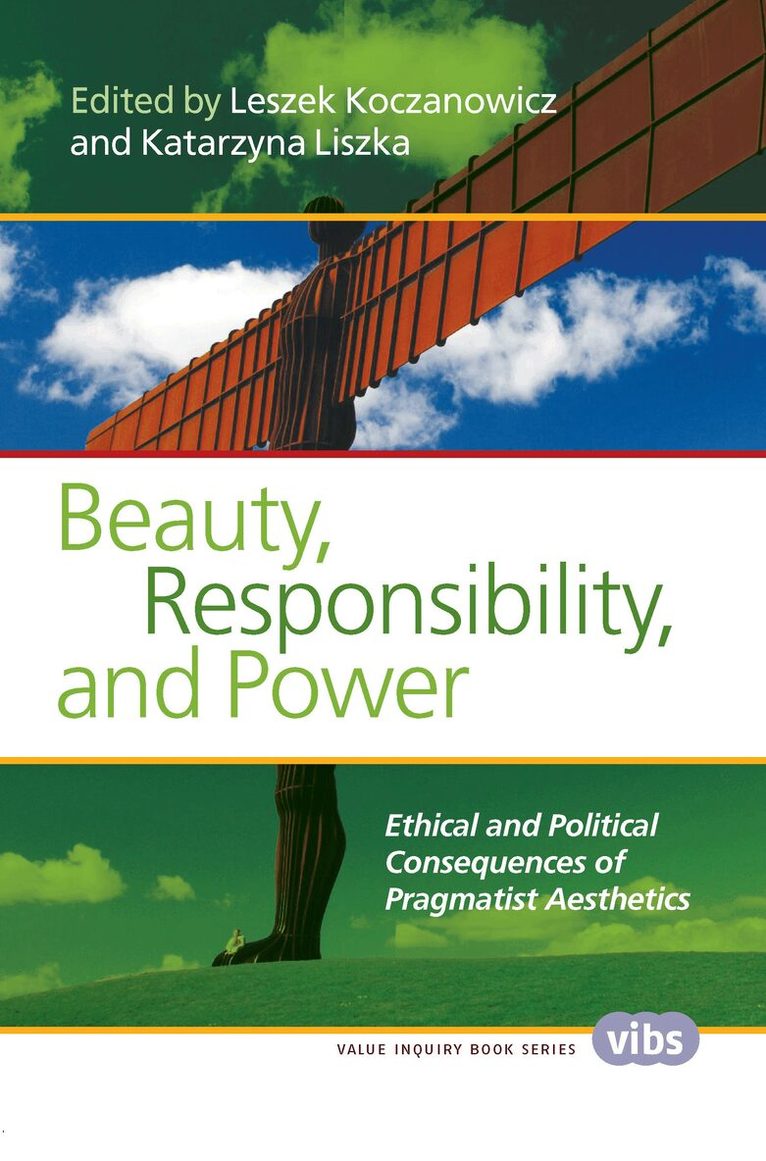
Beauty, Responsibility, and Power
Ethical and Political Consequences of Pragmatist Aesthetics
1 002 kr
Skickas inom 5-8 vardagar