Li-fang Zhang – författare
Visar alla böcker från författaren Li-fang Zhang. Handla med fri frakt och snabb leverans.
8 produkter
8 produkter
2 069 kr
Skickas inom 10-15 vardagar
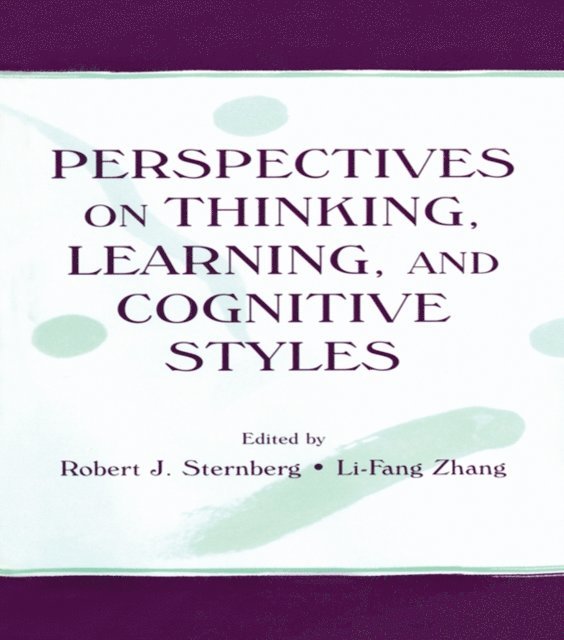
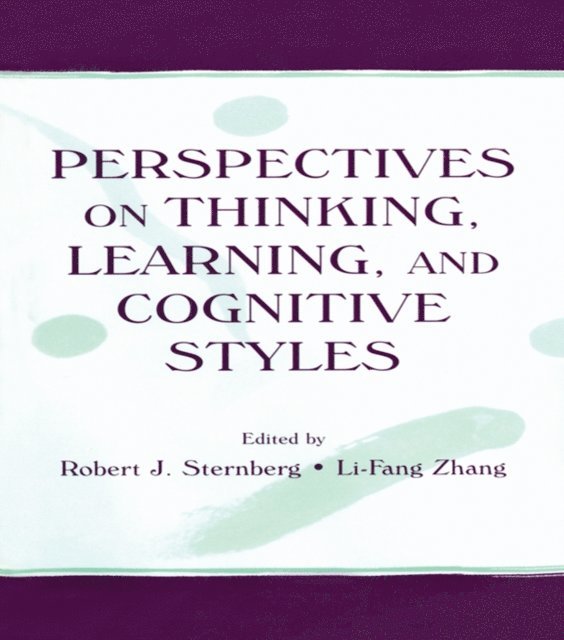
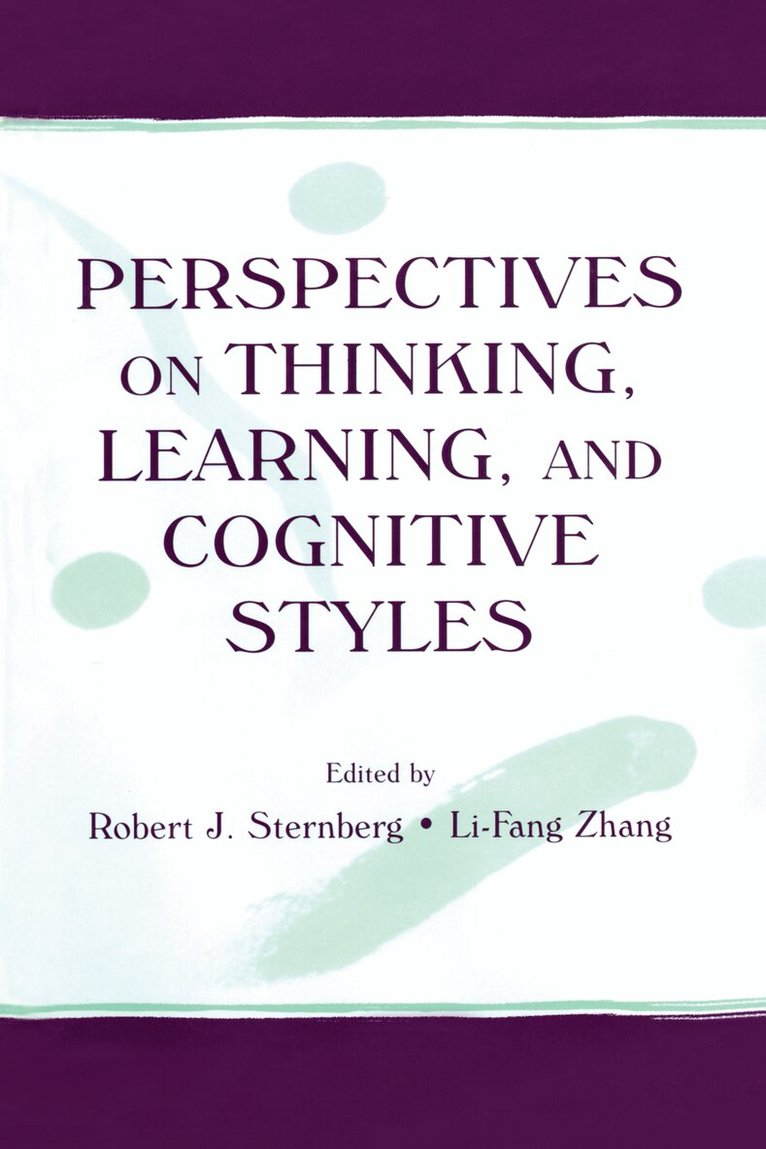
This volume presents the most comprehensive, balanced, and up-to-date coverage of theory and research on cognitive, thinking, and learning styles, in a way that:* represents diverse theoretical perspectives;* includes solid empirical evidence testing the validity of these perspectives; and* shows the application of these perspectives to school situations, as well as situations involving other kinds of organizations. International representation is emphasized, with chapters from almost every major leader in the field of styles. Each chapter author has contributed serious theory and/or published empirical data--work that is primarily commercial or that implements the theories of others. The book's central premise is that cognitive, learning, and thinking styles are not abilities but rather preferences in the use of abilities. Traditionally, many psychologists and educators have believed that people's successes and failures are attributable mainly to individual differences in abilities. However, for the past few decades research on the roles of thinking, learning, and cognitive styles in performance within both academic and nonacademic settings has indicated that they account for individual differences in performance that go well beyond abilities. New theories better differentiate styles from abilities and make more contact with other psychological literatures; recent research, in many cases, is more careful and conclusive than are some of the older studies. Cognitive, learning, and thinking styles are of interest to educators because they predict academic performance in ways that go beyond abilities, and because taking styles into account can help teachers to improve both instruction and assessment and to show sensitivity to cultural and individual diversity among learners. They are also of interest in business, where instruments to assess styles are valuable in selecting and placing personnel. The state-of-the-art research and theory in this volume will be of particular interest to scholars and graduate students in cognitive and educational psychology, managers, and others concerned with intellectual styles as applied in educational, industrial, and corporate settings.
885 kr
Skickas inom 10-15 vardagar
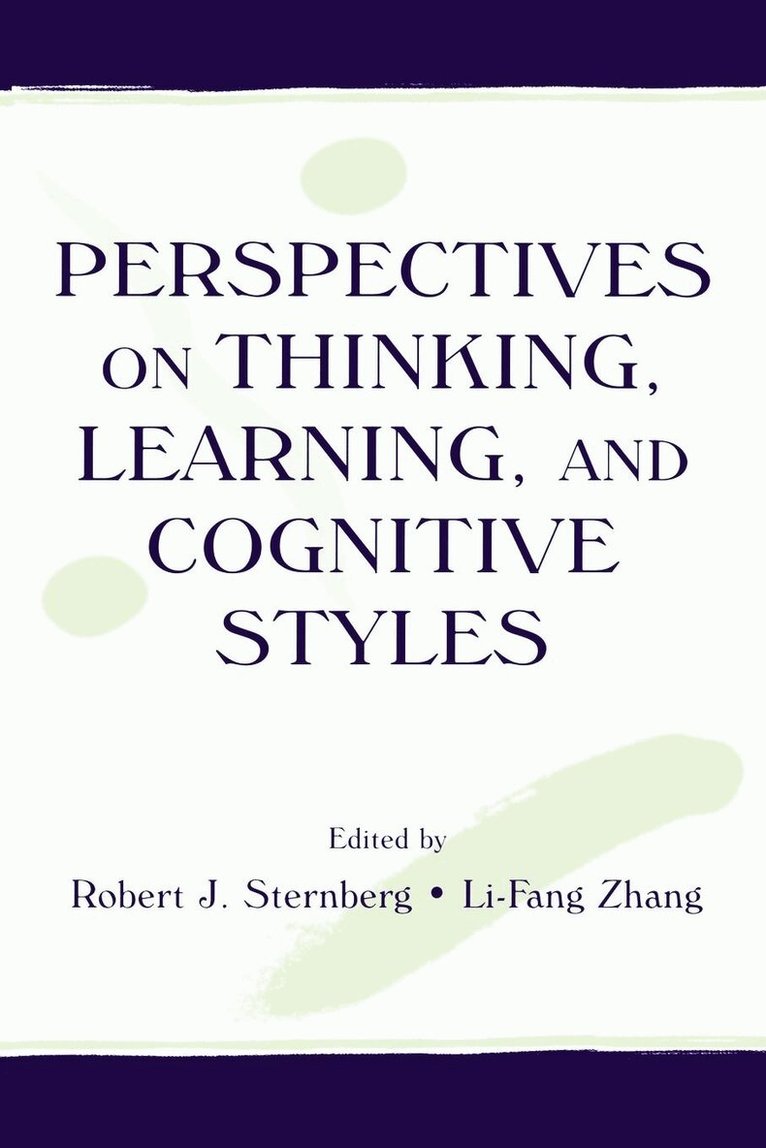
This volume presents the most comprehensive, balanced, and up-to-date coverage of theory and research on cognitive, thinking, and learning styles, in a way that:* represents diverse theoretical perspectives;* includes solid empirical evidence testing the validity of these perspectives; and* shows the application of these perspectives to school situations, as well as situations involving other kinds of organizations. International representation is emphasized, with chapters from almost every major leader in the field of styles. Each chapter author has contributed serious theory and/or published empirical data--work that is primarily commercial or that implements the theories of others. The book's central premise is that cognitive, learning, and thinking styles are not abilities but rather preferences in the use of abilities. Traditionally, many psychologists and educators have believed that people's successes and failures are attributable mainly to individual differences in abilities. However, for the past few decades research on the roles of thinking, learning, and cognitive styles in performance within both academic and nonacademic settings has indicated that they account for individual differences in performance that go well beyond abilities. New theories better differentiate styles from abilities and make more contact with other psychological literatures; recent research, in many cases, is more careful and conclusive than are some of the older studies. Cognitive, learning, and thinking styles are of interest to educators because they predict academic performance in ways that go beyond abilities, and because taking styles into account can help teachers to improve both instruction and assessment and to show sensitivity to cultural and individual diversity among learners. They are also of interest in business, where instruments to assess styles are valuable in selecting and placing personnel. The state-of-the-art research and theory in this volume will be of particular interest to scholars and graduate students in cognitive and educational psychology, managers, and others concerned with intellectual styles as applied in educational, industrial, and corporate settings.

2 069 kr
Skickas inom 10-15 vardagar
This book provides an up-to-date, panoramic picture of the field of intellectual styles through describing, analyzing, and integrating the major theoretical and research works on the topic. Readers will gain a broad understanding of the field--its nature, origins, historical development, theories, research, and applications, as well as the interrelationships among major theoretical constructs proposed by different theorists in the past few decades. In particular, three major controversial issues in the field are addressed by both empirical findings and literature review: styles as better versus worse or as equal in merit; styles as traits versus styles as states; and styles as different constructs versus styles as similar constructs with different style labels.Educators will find ideas on how to improve their teaching and assessment of student performance. Student development specialists will be interested in the book because intellectual styles, as evidenced by recent studies, play a critical role in many aspects of student development including cognitive, affective, psychosocial, and career development. Psychologists will gain an understanding of an important facet of the field at the interface between cognition and personality. Managers in business will find the book relevant to such issues as effective supervision and staff training and development. The Nature of Intellectual Styles is intended for anyone--particularly researchers and students in the fields of education, psychology, and business management--who is interested in understanding intellectual styles and their effects on daily life.
699 kr
Skickas inom 10-15 vardagar
This book provides an up-to-date, panoramic picture of the field of intellectual styles through describing, analyzing, and integrating the major theoretical and research works on the topic. Readers will gain a broad understanding of the field--its nature, origins, historical development, theories, research, and applications, as well as the interrelationships among major theoretical constructs proposed by different theorists in the past few decades. In particular, three major controversial issues in the field are addressed by both empirical findings and literature review: styles as better versus worse or as equal in merit; styles as traits versus styles as states; and styles as different constructs versus styles as similar constructs with different style labels.Educators will find ideas on how to improve their teaching and assessment of student performance. Student development specialists will be interested in the book because intellectual styles, as evidenced by recent studies, play a critical role in many aspects of student development including cognitive, affective, psychosocial, and career development. Psychologists will gain an understanding of an important facet of the field at the interface between cognition and personality. Managers in business will find the book relevant to such issues as effective supervision and staff training and development. The Nature of Intellectual Styles is intended for anyone--particularly researchers and students in the fields of education, psychology, and business management--who is interested in understanding intellectual styles and their effects on daily life.
1 546 kr
Skickas inom 7-10 vardagar
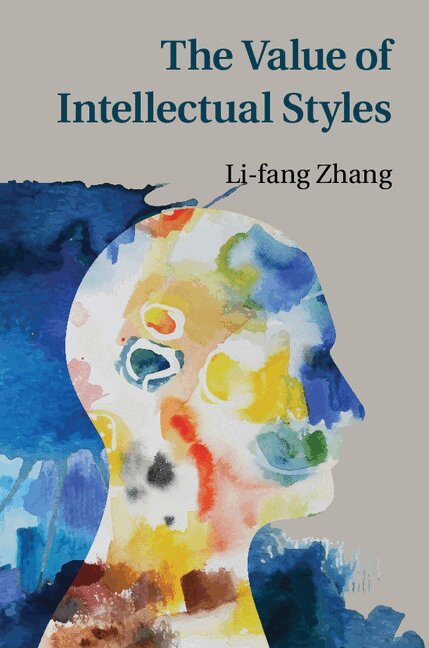
Intellectual styles are individuals' preferred ways of using their abilities. This book provides the first comprehensive and systematic review of existing research on the value and desirability of different intellectual styles. By critically analyzing findings from hundreds of international studies undertaken over eight decades, Li-fang Zhang demonstrates that the creativity-generating Type I styles are generally superior to the norm-conforming Type II styles in relation to a wide range of learning processes and developmental outcomes, work performance, physical and mental health, and many other domains of people's lives. She further demonstrates that people explicitly and implicitly express their preference for Type I styles over Type II styles. Professor Zhang elucidates the practical value of cultivating diverse intellectual styles, especially Type I styles, in both academic and nonacademic settings, and lays the groundwork for future research to advance the field of intellectual styles and to inform scholarly work in other academic disciplines.
1 534 kr
Skickas inom 7-10 vardagar
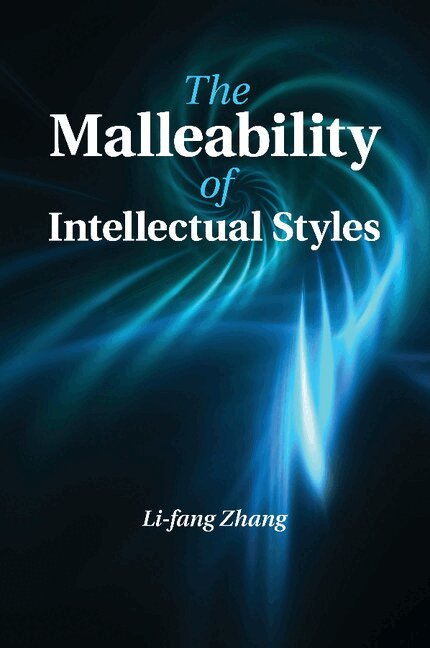
Intellectual styles are individuals' preferred ways of using the abilities that they possess. The extent to which one can change his or her intellectual style is a question of interest to both researchers and the general public. This book presents the first comprehensive and systematic review of existing research on the malleability of intellectual styles. By critically analyzing research findings derived from both cross-sectional and longitudinal investigations performed over the past seven decades, Li-fang Zhang demonstrates that intellectual styles can be modified through both socialization and purposeful training. Professor Zhang elucidates the heuristic value of these findings for the development of adaptive intellectual styles in both academic and non-academic settings. She proposes further avenues of research that might advance scholarly understanding of the nature of and the potential for modifying intellectual styles.
389 kr
Skickas inom 7-10 vardagar
Intellectual styles are individuals' preferred ways of using their abilities. This book provides the first comprehensive and systematic review of existing research on the value and desirability of different intellectual styles. By critically analyzing findings from hundreds of international studies undertaken over eight decades, Li-fang Zhang demonstrates that the creativity-generating Type I styles are generally superior to the norm-conforming Type II styles in relation to a wide range of learning processes and developmental outcomes, work performance, physical and mental health, and many other domains of people's lives. She further demonstrates that people explicitly and implicitly express their preference for Type I styles over Type II styles. Professor Zhang elucidates the practical value of cultivating diverse intellectual styles, especially Type I styles, in both academic and nonacademic settings, and lays the groundwork for future research to advance the field of intellectual styles and to inform scholarly work in other academic disciplines.
516 kr
Skickas inom 7-10 vardagar
Intellectual styles are individuals' preferred ways of using the abilities that they possess. The extent to which one can change his or her intellectual style is a question of interest to both researchers and the general public. This book presents the first comprehensive and systematic review of existing research on the malleability of intellectual styles. By critically analyzing research findings derived from both cross-sectional and longitudinal investigations performed over the past seven decades, Li-fang Zhang demonstrates that intellectual styles can be modified through both socialization and purposeful training. Professor Zhang elucidates the heuristic value of these findings for the development of adaptive intellectual styles in both academic and non-academic settings. She proposes further avenues of research that might advance scholarly understanding of the nature of and the potential for modifying intellectual styles.