Liette Vasseur – författare
Visar alla böcker från författaren Liette Vasseur. Handla med fri frakt och snabb leverans.
4 produkter
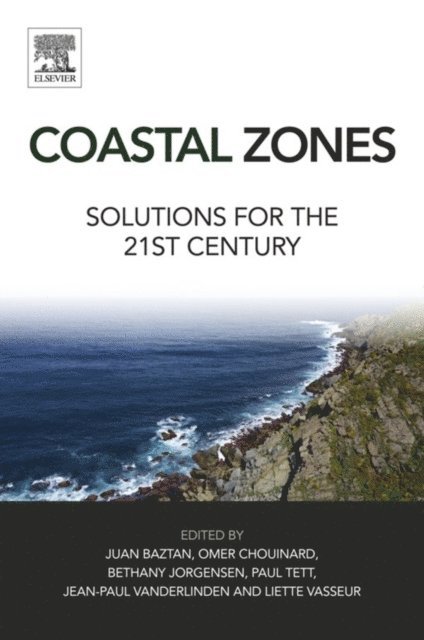
Coastal Zones
Solutions for the 21st Century
Av Juan Baztan, Omer Chouinard m. fl.
Häftad, 2015
892 kr
Lägg i varukorg
Coastal Zones: Solutions for the 21st Century bridges the gap between national and international efforts and the local needs for actions in communities where coastal zone challenges are faced daily. The solution-oriented approach covers issues of coastal zone management as well as responses to …
Coastal Zones
Solutions for the 21st Century
Av Liette Vasseur, Jean-Paul Vanderlinden m. fl.
E-bok, 2015
1119 kr
Lägg i varukorg
Coastal Zones: Solutions for the 21st Century bridges the gap between national and international efforts and the local needs for actions in communities where coastal zone challenges are faced daily. The solution-oriented approach covers issues of coastal zone management as well as responses to …
Adaptation to Coastal Storms in Atlantic Canada
Av Liette Vasseur, Mary J. Thornbush m. fl.
Häftad, 2017
552 kr
Lägg i varukorg
This brief is based on an analysis that was performed on the 2010 winter storms that caused considerable damage to coastal communities in Atlantic Canada. The hazards that occurred were associated with storm surge, high waves, coastal erosion, and flooding. The analysis covered a large multisite …
Adaptation to Coastal Storms in Atlantic Canada
Av Steve Plante, Mary J. Thornbush m. fl.
E-bok, 2017
734 kr
Lägg i varukorg
This brief is based on an analysis that was performed on the 2010 winter storms that caused considerable damage to coastal communities in Atlantic Canada. The hazards that occurred were associated with storm surge, high waves, coastal erosion, and flooding. The analysis covered a large multisite …