Linda A Reddy - Böcker
Visar alla böcker från författaren Linda A Reddy. Handla med fri frakt och snabb leverans.
6 produkter
6 produkter
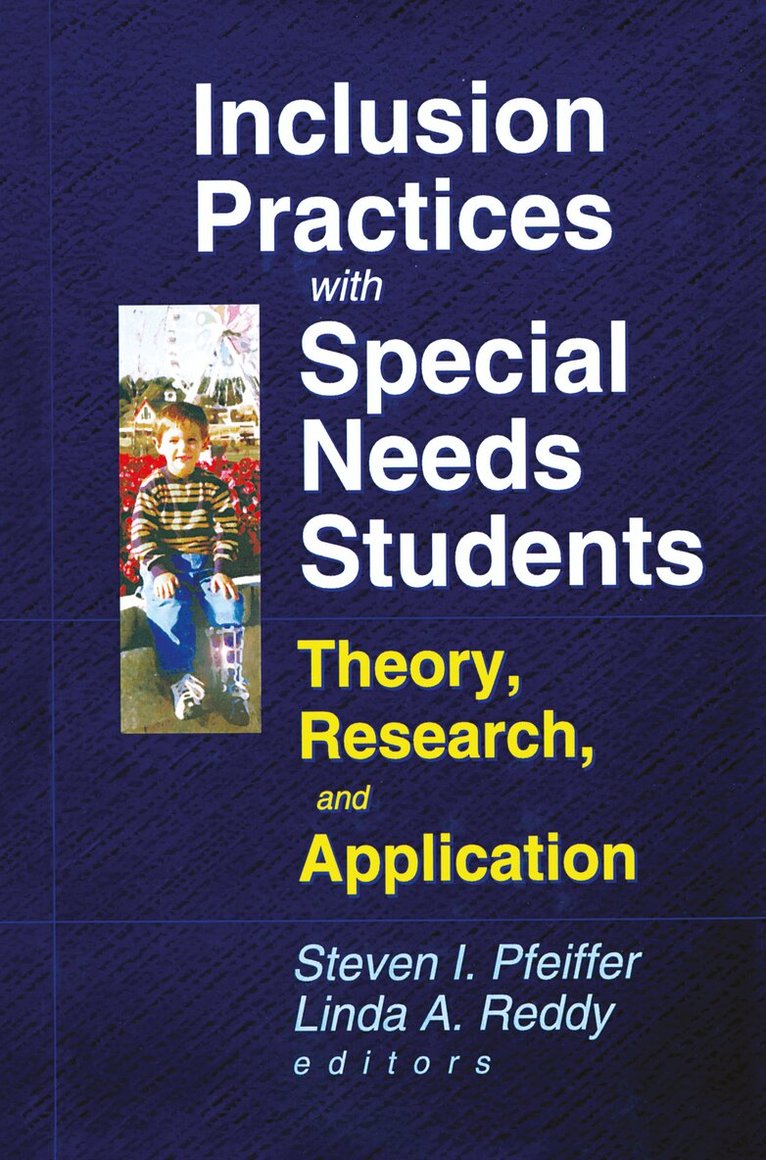
Inclusion Practices with Special Needs Students
Theory, Research, and Application
Inbunden, Engelska, 2000
560 kr
Skickas inom 10-15 vardagar
Explore the challenges, opportunities, and pitfalls of the inclusion of students with disabilities in your classroom!Exciting, complex, and challenging shifts in American education are occurring today. First, schools are moving to embrace student diversity and accommodate the classroom experience to support diverse ways of organizing students for learning. Second, teachers are moving away from a traditional didactic instructional mode and embracing a facilitator role that encourages creating innovative classroom learning opportunities. Third, there is a shift from the view of the school as providing educational and psychoeducational services for students to providing educational supports for learning.Coinciding with these changes is the growing movement in special education that enourages full inclusion of students with special needs. This is a far cry from the exclusionary and separatist movements of special education less than twenty years ago. Now American education is facing the challenging situation of working with students with disabilities in the regular classroom. Inclusion Practices with Special Needs Students provides a much needed overview of the issues faced by educators committed to understanding how to best serve children with disabilities in schools.Inclusion Practices with Special Needs Students: Theory, Research, and Application provides an overview of the origins, evolution, and recent developments regarding the inclusion of students with disabilities into general education classrooms. The book critically challenges the overriding assumptions that support the philosophy of inclusion with a balanced presentation or research and theory that both supports and raises questions about the viability of this practice. The contributors are authorities in their respective areas of inclusionary practices.Some of the issues you will explore in Inclusion Practices with Special Needs Students are:political, fiscal, and legal events that have shaped inclusion practices implications for school psychologists handling students with serious emotional, behavioral, or developmental problems remaining in regular education agenda for future research priorities for research, training, and policy reformInclusion Practices with Special Needs Students addresses practical, psychoeducational, philosophical, legal, ethical, and financial issues surrounding the inclusionary initiative in special education.
Inclusion Practices with Special Needs Students
Theory, Research, and Application
Häftad, Engelska, 2000
362 kr
Skickas inom 10-15 vardagar
Explore the challenges, opportunities, and pitfalls of the inclusion of students with disabilities in your classroom!Exciting, complex, and challenging shifts in American education are occurring today. First, schools are moving to embrace student diversity and accommodate the classroom experience to support diverse ways of organizing students for learning. Second, teachers are moving away from a traditional didactic instructional mode and embracing a facilitator role that encourages creating innovative classroom learning opportunities. Third, there is a shift from the view of the school as providing educational and psychoeducational services for students to providing educational supports for learning.Coinciding with these changes is the growing movement in special education that enourages full inclusion of students with special needs. This is a far cry from the exclusionary and separatist movements of special education less than twenty years ago. Now American education is facing the challenging situation of working with students with disabilities in the regular classroom. Inclusion Practices with Special Needs Students provides a much needed overview of the issues faced by educators committed to understanding how to best serve children with disabilities in schools.Inclusion Practices with Special Needs Students: Theory, Research, and Application provides an overview of the origins, evolution, and recent developments regarding the inclusion of students with disabilities into general education classrooms. The book critically challenges the overriding assumptions that support the philosophy of inclusion with a balanced presentation or research and theory that both supports and raises questions about the viability of this practice. The contributors are authorities in their respective areas of inclusionary practices.Some of the issues you will explore in Inclusion Practices with Special Needs Students are:political, fiscal, and legal events that have shaped inclusion practices implications for school psychologists handling students with serious emotional, behavioral, or developmental problems remaining in regular education agenda for future research priorities for research, training, and policy reformInclusion Practices with Special Needs Students addresses practical, psychoeducational, philosophical, legal, ethical, and financial issues surrounding the inclusionary initiative in special education.
847 kr
Skickas inom 10-15 vardagar
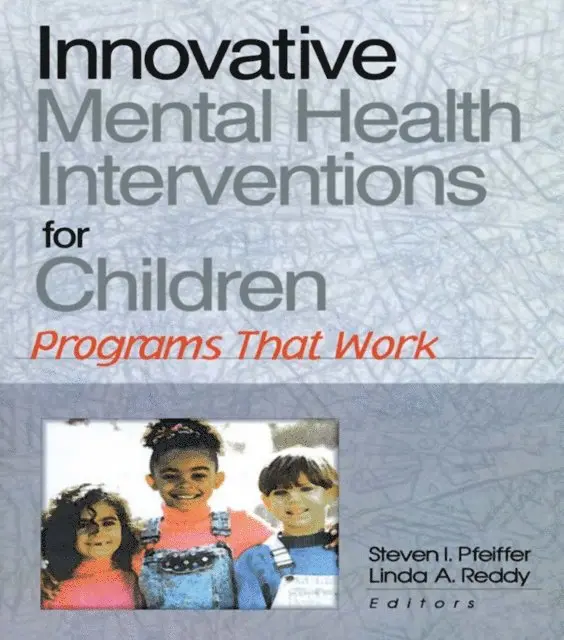
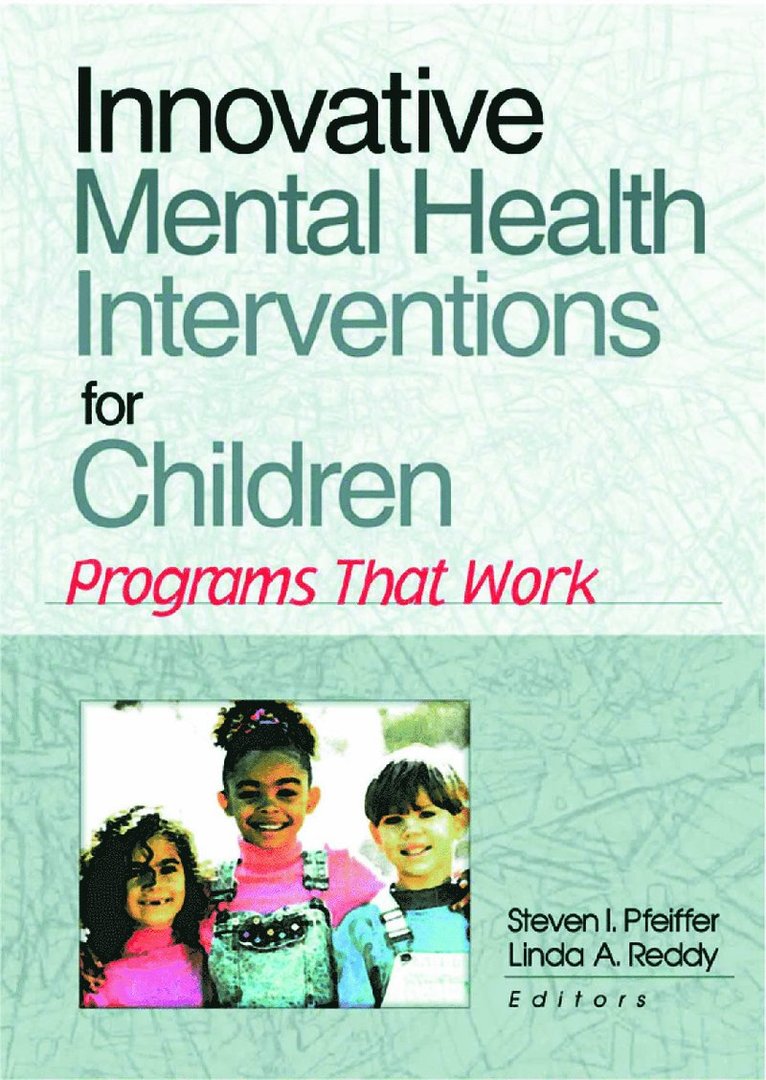
Children and families are in increasing need of mental health services that are more effective and less costly. Are you prepared to make this happen?This vital book for clinical psychiatrists and trainers examines uniquely successful prevention programs addressing the most challenging mental health problems in children. In it, leading authorities in child and family mental health provide compelling descriptions of these model prevention programs, which are clinically proven and cost-effective.Each chapter describes an internationally recognized program, including program mission and goals, key treatment ingredients, logistical and operational considerations, evaluation data, and replicability/transportability considerations. With Programs That Work: Innovative Mental Health Interventions for Children, you will explore insightful, expert examinations of:an interpersonal cognitive problem-solving program that can reduce and help prevent high-risk behaviors in young children a video-based program aimed at reducing substance abuse and behavioral problems in young adolescents the Teaching-Family Model (TFM) which stresses the importance of a positive family environment for children and adolescents with emotional/behavioral problems in residential treatment centers a set of school-based intervention programs for parents, teachers, and children ages 3--10 which can help reduce or prevent conduct problems and drug abuse in children MST (multisystemic therapy) programs aimed at juvenile offenders and youths who abuse substances--people who are not typically compliant with treatment programs the Anger Coping Program which can improve the social/cognitive skills of aggressive children aggression replacement training which combines skill streaming, anger control, and moral education to prevent aggression in adolescents multidimensional treatment foster care for adjudicated youthThe programs and interventions you will find in Programs That Work: Innovative Mental Health Interventions for Children address a great variety of serious emotional problems in children and adolescents, and emphasize the importance of an ecological and multi-systems approach to treatment. Explore them and choose what will work best for the children and families in your community!
427 kr
Skickas inom 10-15 vardagar
Children and families are in increasing need of mental health services that are more effective and less costly. Are you prepared to make this happen?This vital book for clinical psychiatrists and trainers examines uniquely successful prevention programs addressing the most challenging mental health problems in children. In it, leading authorities in child and family mental health provide compelling descriptions of these model prevention programs, which are clinically proven and cost-effective.Each chapter describes an internationally recognized program, including program mission and goals, key treatment ingredients, logistical and operational considerations, evaluation data, and replicability/transportability considerations. With Programs That Work: Innovative Mental Health Interventions for Children, you will explore insightful, expert examinations of:an interpersonal cognitive problem-solving program that can reduce and help prevent high-risk behaviors in young children a video-based program aimed at reducing substance abuse and behavioral problems in young adolescents the Teaching-Family Model (TFM) which stresses the importance of a positive family environment for children and adolescents with emotional/behavioral problems in residential treatment centers a set of school-based intervention programs for parents, teachers, and children ages 3--10 which can help reduce or prevent conduct problems and drug abuse in children MST (multisystemic therapy) programs aimed at juvenile offenders and youths who abuse substances--people who are not typically compliant with treatment programs the Anger Coping Program which can improve the social/cognitive skills of aggressive children aggression replacement training which combines skill streaming, anger control, and moral education to prevent aggression in adolescents multidimensional treatment foster care for adjudicated youthThe programs and interventions you will find in Programs That Work: Innovative Mental Health Interventions for Children address a great variety of serious emotional problems in children and adolescents, and emphasize the importance of an ecological and multi-systems approach to treatment. Explore them and choose what will work best for the children and families in your community!
Neuropsychological Assessment and Intervention for Youth
An Evidence-Based Approach to Emotional and Behavioral Disorders
Inbunden, Engelska, 2013
761 kr
Skickas inom 7-10 vardagar
This is the first comprehensive text that bridges the gap between neuropsychological assessment and intervention for children and adolescents with common emotional and behavioral disorders. This is a timely and important issue as clinical researchers-and the field at large-are increasingly able to translate basic brain science into empirically supported clinical assessments and interventions. Co-editors Reddy, Weissman, and Hale-all first-rate clinical researchers-selected the emotional and behavioral disorders examined in each chapter based on their high prevalence in children and adolescents (e.g., OCD, ADHD, anxiety disorders, conduct disorders, etc.) and the lack of published books integrating neuropsychology and treatment for these conditions.Written for clinicians and other practitioners who are involved with treating children and adolescents with common behavioral disorders in this young population, this book will also appeal to clinical researchers and to students in graduate psychology courses.
874 kr
Skickas inom 7-10 vardagar
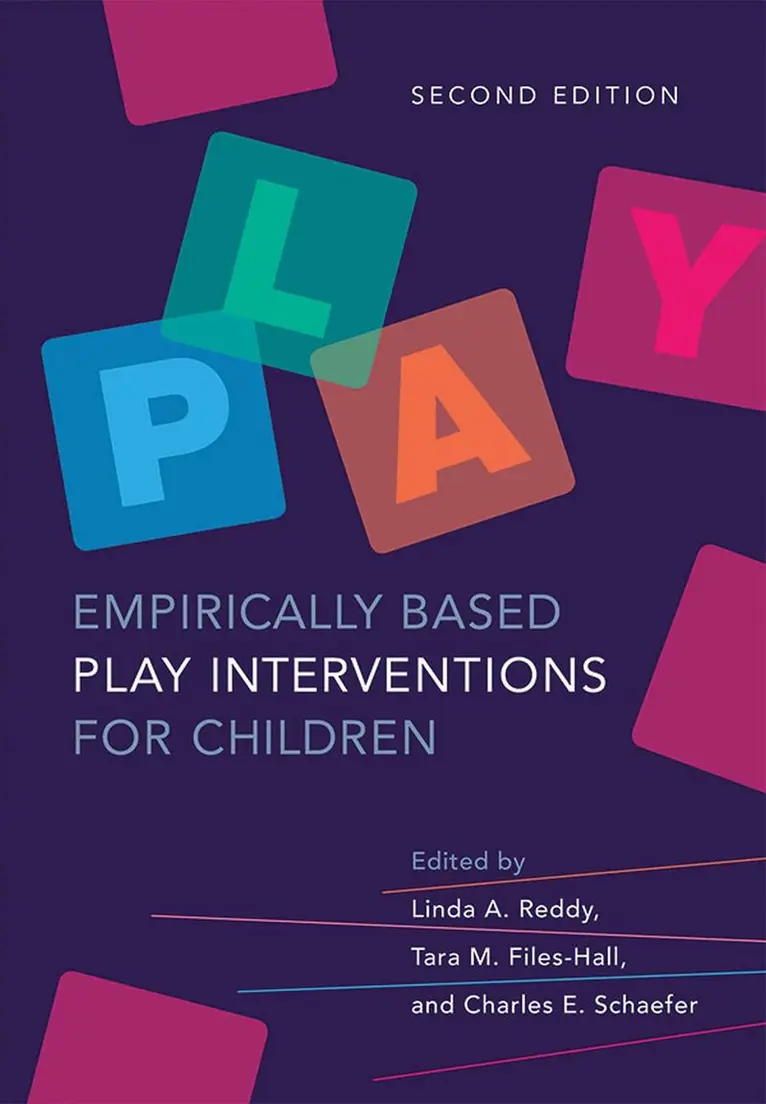
Play is a universal form of communication for children that promotes healthy cognitive, language, physical, and social development. Incorporating play into child therapy can therefore help children who are having difficulties in one or more of these developmental areas. For over 7 years, play therapy has been recognized as an effective method for targeting specific behaviors and competencies to help children communicate their thoughts, feelings, and experiences, and to refine their current skills and learn new ones.This book is a comprehensive reference for clinicians and researchers that provides well-established, theoretically based, and flexible interventions—both directive and nondirective—to meet the growing and diverse needs of today's children and families. This updated edition presents new research on play therapy treatment models and agents that have shown significant promise in treating a variety of child disorders—including autism. Authors also consider implementation issues arising from new mental health policies and initiatives, including integrated health care systems and the Affordable Care Act.Each chapter is carefully organized to include the theoretical basis and objectives of various innovative play interventions, key treatment ingredients and processes, and recommendations for replication and transportability to other settings. Detailed vignettes illustrate how these interventions can be used in clinical practice.