Lisa Unangst – författare
2 115 kr
Skickas inom 10-15 vardagar
619 kr
Skickas inom 10-15 vardagar
662 kr
Läs direkt efter köp
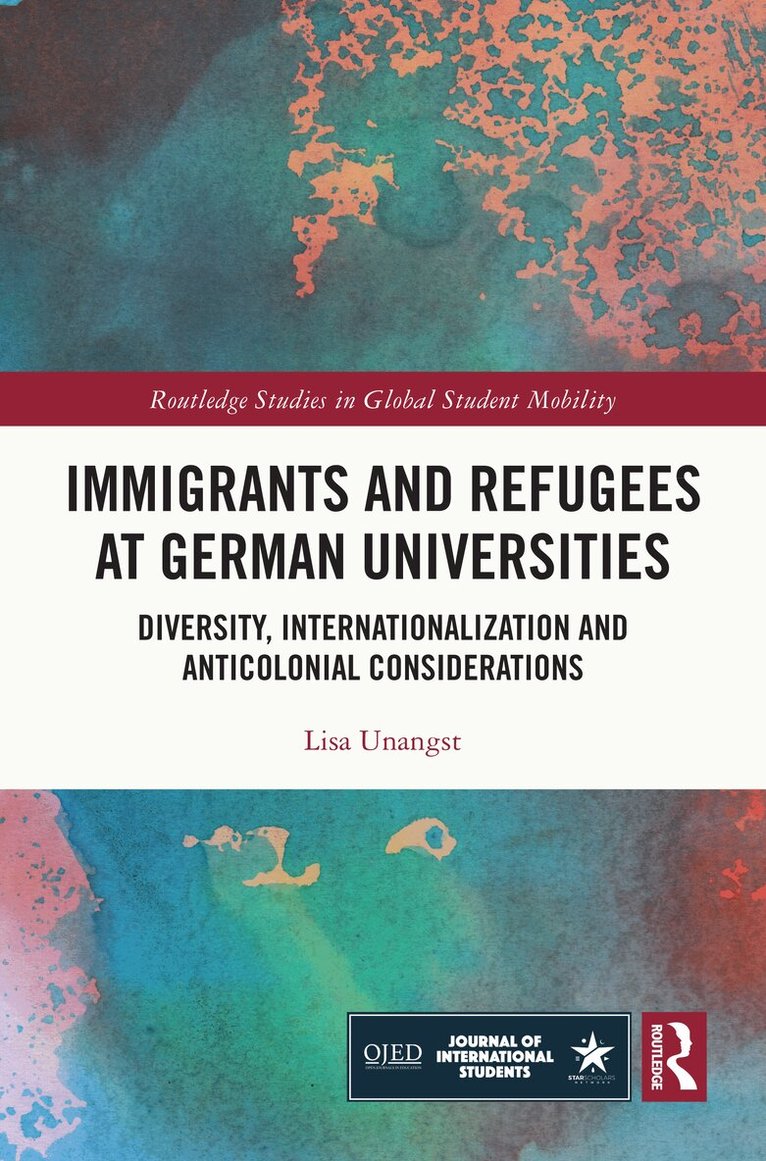
This book takes a critical and historical perspective in parsing the current state of play for refugee and immigrant students in Germany, addressing federal, state, and institutional innovations as well as gaps in service.
Drawing from de/post/anticolonial theory, it considers the levels of support for diverse groups including migrants, refugees, and racialized Germans, investigating why a comparatively well-resourced higher education system has, to date, selectively invested in the support of some marginalized groups. It calls for the reconsideration of policy and programmatic support, drawing from emerging best practice across states and higher education institutions (HEIs). Using historical analysis, federal and state level policy documents, institutional equal opportunity plans and student-facing websites, reporting, and first-person-accounts of marginalized students both prospective and enrolled, this critically oriented work interrogates how and why the world’s fourth largest economy – and its primarily public higher education system – have failed to engage systemic change with an eye towards addressing mechanisms of exclusion including racialization and xenophobia. It concludes with a consideration of possible policy interventions supporting these minoritized student groups who are essential not only to German learning and economy, but also to the rebuilding of conflict states.
This volume will appeal to researchers, scholars, and practitioners working across comparative and international higher education, crisis education, and education in emergencies, as well as diversity specialists.
662 kr
Läs direkt efter köp
This book takes a critical and historical perspective in parsing the current state of play for refugee and immigrant students in Germany, addressing federal, state, and institutional innovations as well as gaps in service.
Drawing from de/post/anticolonial theory, it considers the levels of support for diverse groups including migrants, refugees, and racialized Germans, investigating why a comparatively well-resourced higher education system has, to date, selectively invested in the support of some marginalized groups. It calls for the reconsideration of policy and programmatic support, drawing from emerging best practice across states and higher education institutions (HEIs). Using historical analysis, federal and state level policy documents, institutional equal opportunity plans and student-facing websites, reporting, and first-person-accounts of marginalized students both prospective and enrolled, this critically oriented work interrogates how and why the world’s fourth largest economy – and its primarily public higher education system – have failed to engage systemic change with an eye towards addressing mechanisms of exclusion including racialization and xenophobia. It concludes with a consideration of possible policy interventions supporting these minoritized student groups who are essential not only to German learning and economy, but also to the rebuilding of conflict states.
This volume will appeal to researchers, scholars, and practitioners working across comparative and international higher education, crisis education, and education in emergencies, as well as diversity specialists.
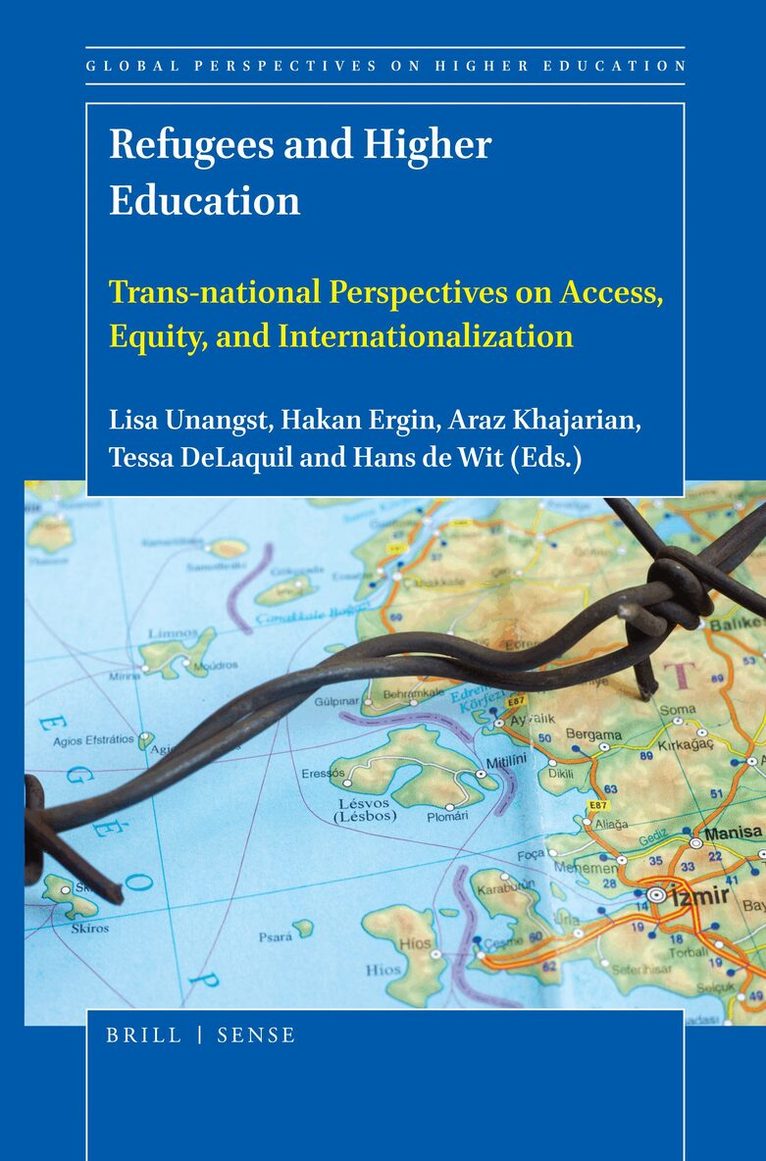
Refugees and Higher Education
Trans-national Perspectives on Access, Equity, and Internationalization
786 kr
Skickas inom 5-8 vardagar
Refugees and Higher Education
Trans-national Perspectives on Access, Equity, and Internationalization
1 902 kr
Skickas inom 5-8 vardagar
21 991 kr
Skickas inom 10-15 vardagar
22 253 kr
Läs direkt efter köp
This authoritative reference source covers all higher education themes in a comprehensive, accessible and comparative way. It maps the field for the twenty first century reflecting the massive changes that have occurred and the challenges ahead for future research. It provides a rich diversity of scholarly perspectives and covers the entire spectrum of higher education from a geographical, a topical and disciplinary perspective. It is unrivaled in its capacity to go beyond national boundaries and provides indispensible comparative analyses.
The major reference works available about higher education have been published more than two decades ago and since then higher education has undergone major changes that have resulted in a much larger, diverse, global, and multidimensional reality. One of the main trends has been relentless expansion on a worldwide scale. This has led to mass higher education becoming a reality across continents, substantial growth in the number of countries with universal access to higher education, and great diversification of the student body. The tremendous increase in the international links in higher education, through issues such as training, students’ mobility, staff mobility, research activities, is another major change. The consequence is a global dimension that is strongly associated with the intensification of international networks in which institutions and researchers explore, create and share knowledge. As a result of the changes and trends, higher education has increasingly become part of debates that highlight its complexity as an institution that combines relevant political, social, economic, and cultural purposes and dimensions. Asked to play important and varied economic and social roles, higher education has had to reshape its priorities, and organizational and decision-making structures. The growth and increased complexity of the field have both led to more attention being paid to all aspects of higher education and to the expansion of research.