Liya Palagashvili – författare
Visar alla böcker från författaren Liya Palagashvili. Handla med fri frakt och snabb leverans.
3 produkter
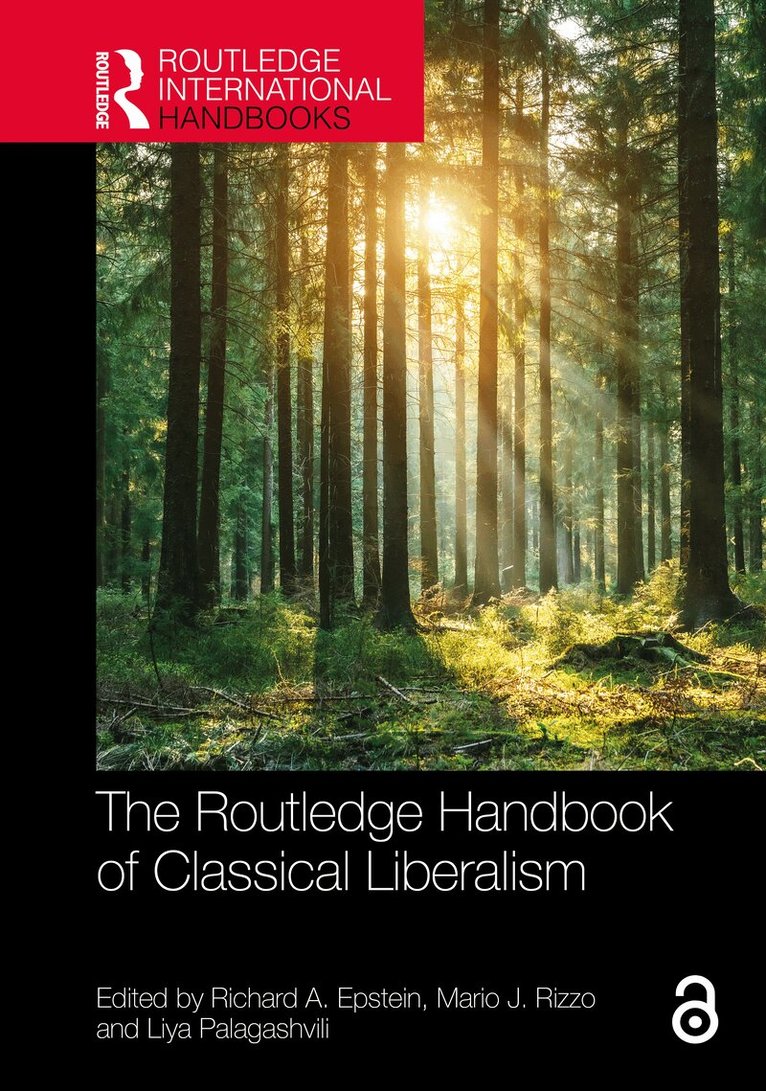
Routledge Handbook of Classical Liberalism
Av Richard A. Epstein, Mario J. Rizzo m. fl.
Inbunden, 2026
3793 kr
Lägg i varukorg
The Routledge Handbook of Classical Liberalism provides a comprehensive analysis of classical liberal theory including a survey of the theory’s central ideas and arguments, and the application of these ideas to contemporary issues.Chapters providing theoretical analyses are interwoven with coverage …
Decline and Rise of Institutions
A Modern Survey of the Austrian Contribution to the Economic Analysis of Institutions
Av David Skarbek, Ennio Piano m. fl.
E-bok, 2017
303 kr
Lägg i varukorg
Institutions are the formal or informal ''rules of the game'' that facilitate economic, social, and political interactions. These include such things as legal rules, property rights, constitutions, political structures, and norms and customs. The main theoretical insights from Austrian economics …
The Decline and Rise of Institutions
A Modern Survey of the Austrian Contribution to the Economic Analysis of Institutions
Av Liya Palagashvili, Ennio Piano m. fl.
Häftad, 2017
311 kr
Lägg i varukorg
Institutions are the formal or informal 'rules of the game' that facilitate economic, social, and political interactions. These include such things as legal rules, property rights, constitutions, political structures, and norms and customs. The main theoretical insights from Austrian economics …