Liyong Tong – författare
Visar alla böcker från författaren Liyong Tong. Handla med fri frakt och snabb leverans.
7 produkter
7 produkter
Häftad, Engelska, 2016
2 561 kr
Skickas inom 10-15 vardagar
The growing use of composites over metals for structural applications has made a thorough understanding of the behaviour of composite joints in various applications essential for engineers, but has also presented them with a new set of problems. Composite joints and connections addresses these differences and explores the design, modelling and testing of bonded and bolted joints and connections.Part one discusses bolted joints whilst part two examines bonded joints. Chapters review reinforcement techniques and applications for composite bolted and bonded joints and investigate the causes and effects of fatigue and stress on both types of joint in various applications and environments. Topics in part one include metal hybridization, glass-reinforced aluminium (GLARE), hybrid fibre metal laminates (FML), glass fibre reinforced polymer (GFRP) and carbon fibre reinforced polymer (CFRP) composites. Topics in part two include calculation of strain energy release rates, simulating fracture and fatigue failure using cohesive zone models, marine and aerospace applications, advanced modelling, stress analysis of bonded patches and scarf repairs.Composite joints and connections is a valuable reference for composite manufacturers and composite component fabricators, the aerospace, automotive, shipbuilding and civil engineering industries and for anyone involved in the joining and repair of composite structures.Explores the design, modelling and testing of bonded and bolted joints and connectionsReviews reinforcement techniques and applications for composite bolted and bonded jointsInvestigates the causes and effects of fatigue and stress on bolted and bonded joints in various applications and environments
Inbunden, Engelska, 1999
2 160 kr
Skickas inom 10-15 vardagar
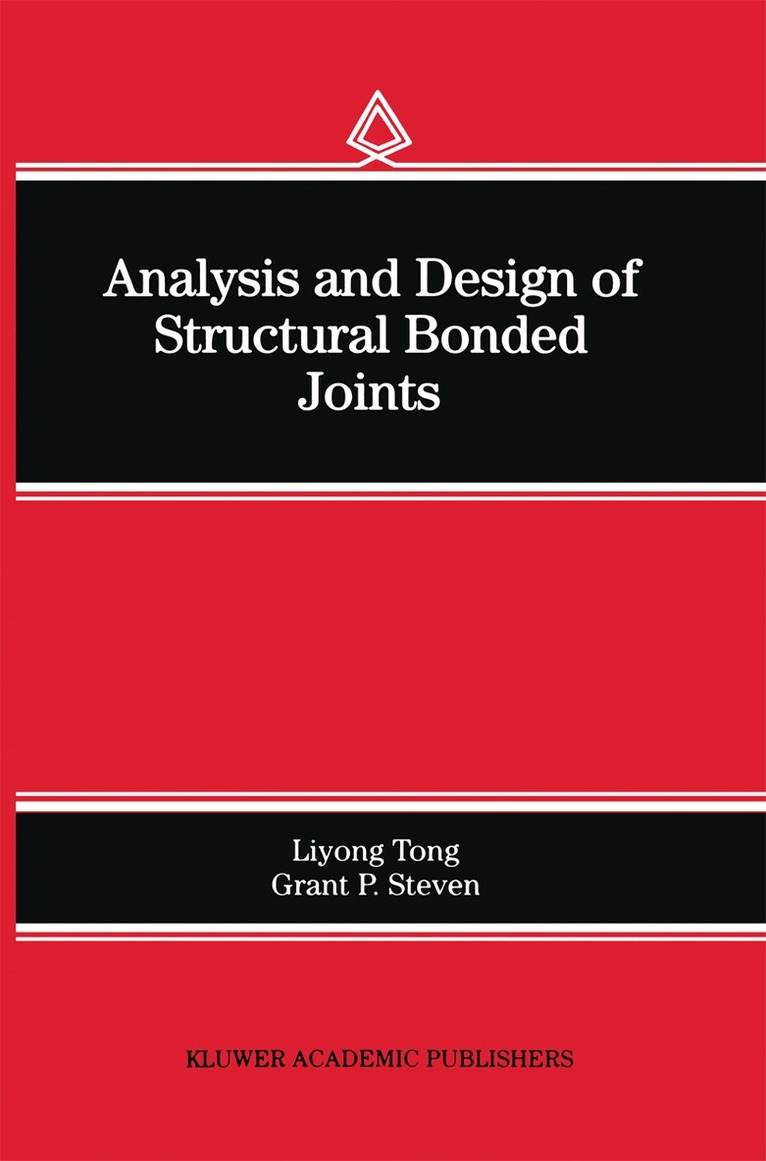
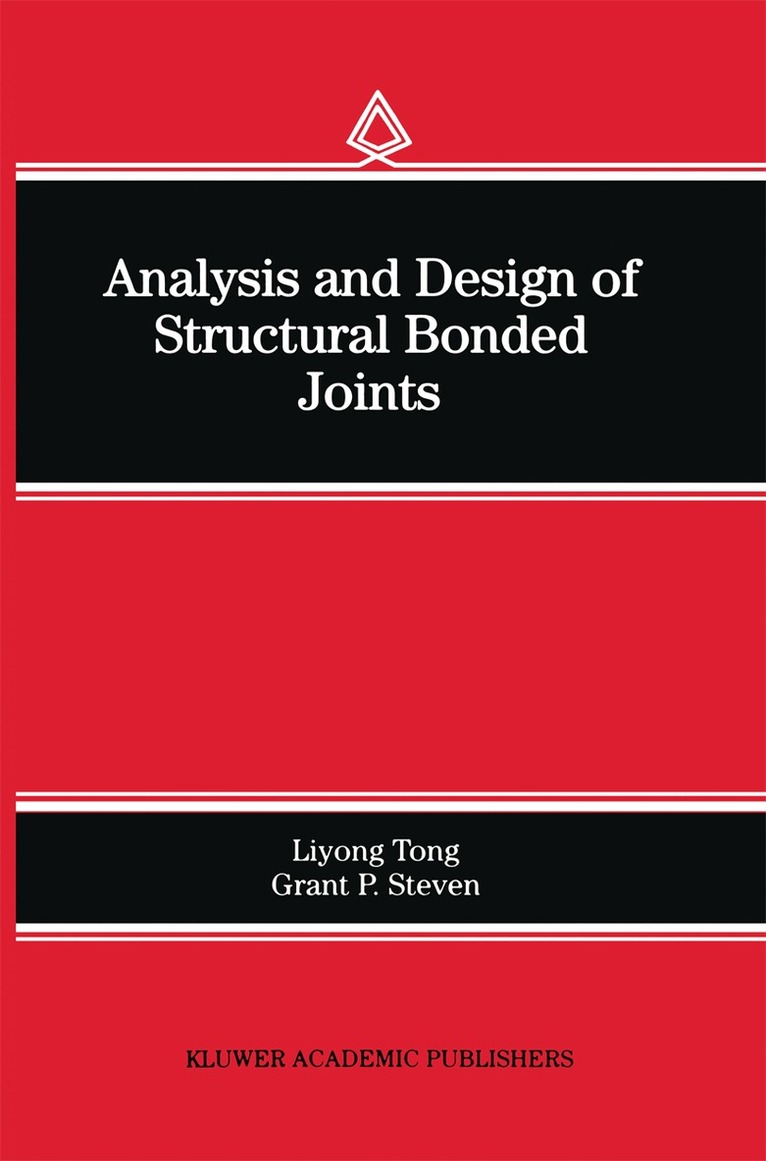
254 7. 2 AEROSPACE 261 7. 3 MARINE 265 7. 4 GROUND TRANSPORTATION 268 7. 5 CNIL 270 References 285 Index Preface Most structures consist of an assembly of a number of individual components that must be connected to form an integral load transmission path. These connections are often referred to as joints and can be achieved in a variety of forms, e. g. by bolting, riveting, or other forms of mechanical fastening, or by welding or brazing for connecting metallic elements, or by adhesive bonding. No matter what forms of connections are used in the structure, these joints are potentially the weakest points in the structure and the locations where a weight penalty may apply. Thus structural joints must be designed adequately to meet the specific design requirements. Adhesive bonding represents one of the most important enabling technologies for developing innovative design concepts and structural configurations as well as exploiting new materials. The evolution of adhesive bonding technology, and its current knowledge base, was made possibly by the explosive growth in the adhesive applications in a great variety of industries over the past few decades. While it is easy for everyone to identify examples of adhesive bonding in the world around us, analysis and design of structural bonded joints represent one of the most challenging jobs in structural design and manufacturing. Compared to other joining methods, particularly mechanical fastening, adhesive bonding can offer substantial performance and economic advantages.
Inbunden, Engelska, 2003
1 622 kr
Skickas inom 10-15 vardagar
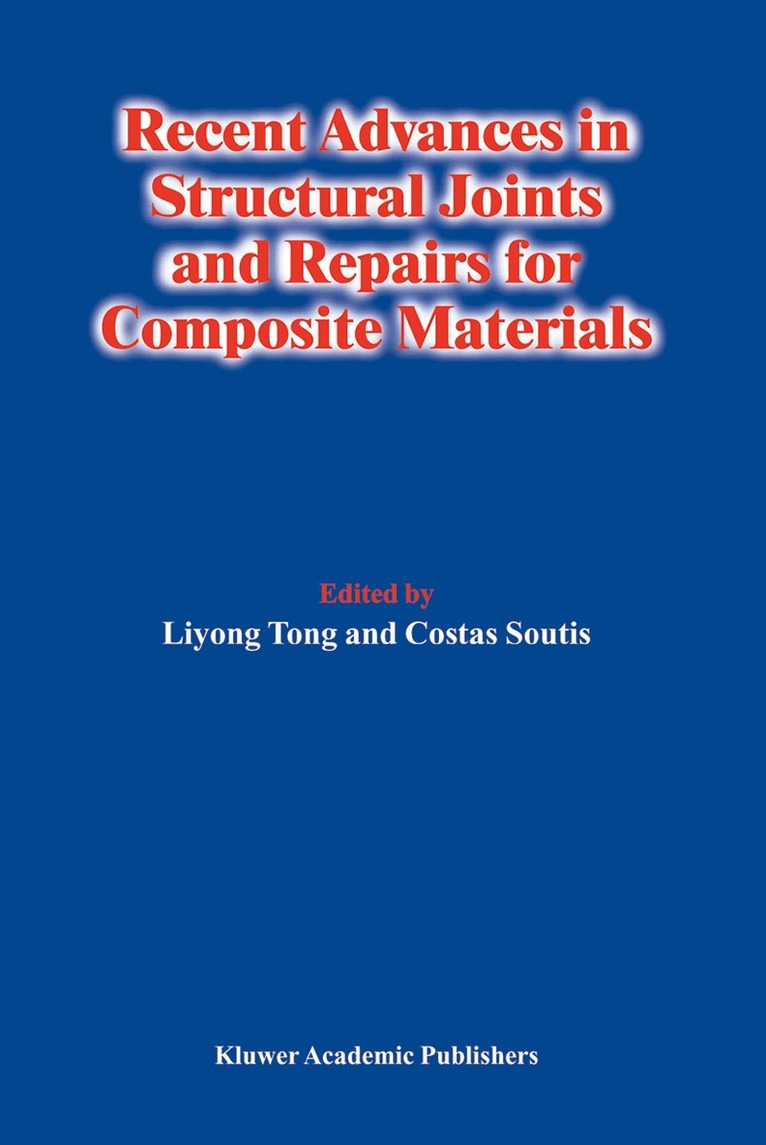
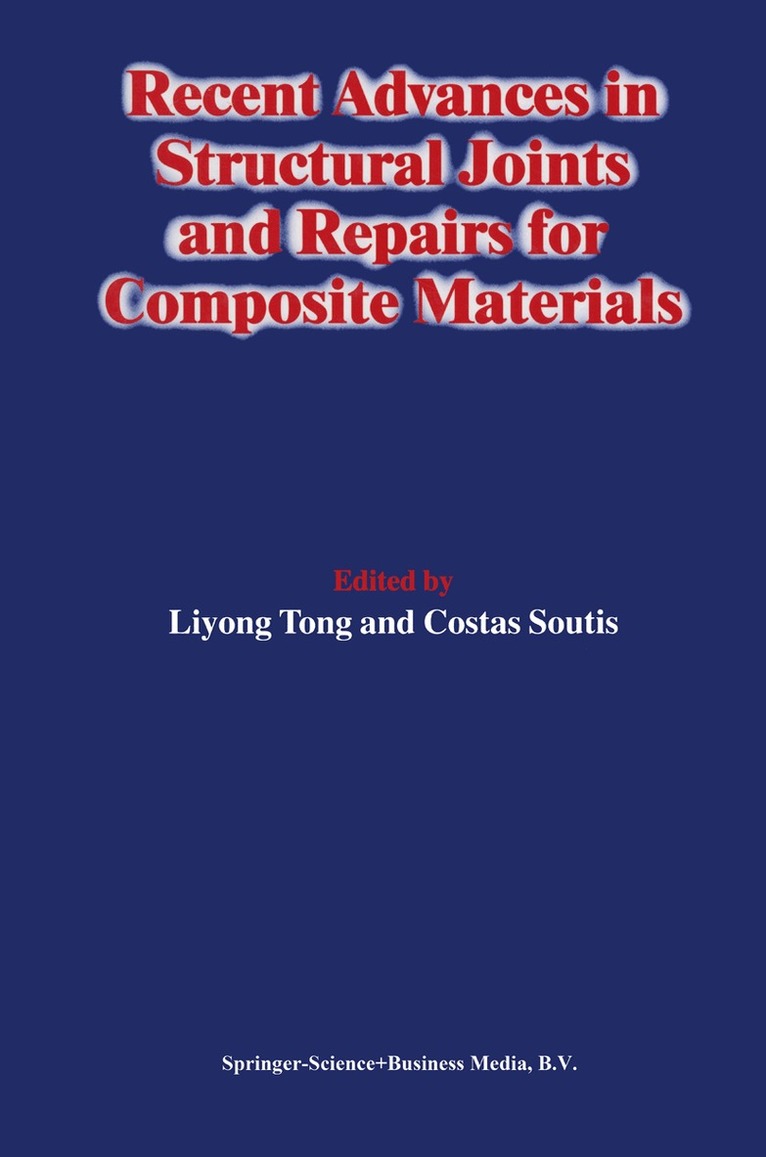
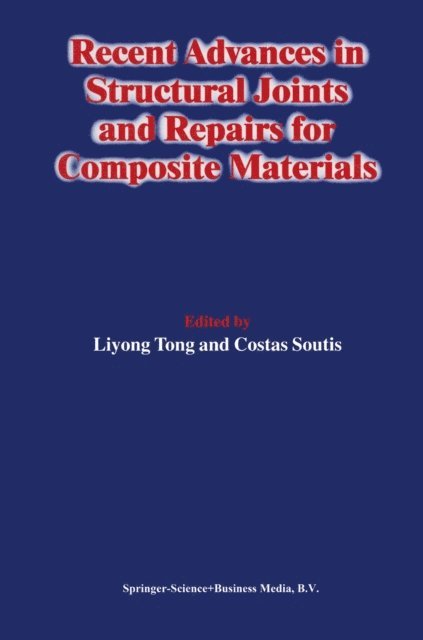
Joints in components or structures incur a weight penalty, are a source of failure, cause manufacturing problems, and are unfortunately unavoidable in most structures ranging from aircraft, and spacecraft to ships and offshore platforms, to automobiles, bridges and buildings. An important requirement for the complete design of practical structures is the development of attachment methods and joint designs. Recent Advances in Structural Joints and Repairs for Composite Materials provides an up-to-date account of adhesively bonded and mechanically fastened joints and repairs. Audience: This book will prove to be an informative resource for all engineers and researchers involved with joining and repair of composite structures.
Häftad, Engelska, 2014
2 160 kr
Skickas inom 10-15 vardagar
254 7. 2 AEROSPACE 261 7. 3 MARINE 265 7. 4 GROUND TRANSPORTATION 268 7. 5 CNIL 270 References 285 Index Preface Most structures consist of an assembly of a number of individual components that must be connected to form an integral load transmission path. These connections are often referred to as joints and can be achieved in a variety of forms, e. g. by bolting, riveting, or other forms of mechanical fastening, or by welding or brazing for connecting metallic elements, or by adhesive bonding. No matter what forms of connections are used in the structure, these joints are potentially the weakest points in the structure and the locations where a weight penalty may apply. Thus structural joints must be designed adequately to meet the specific design requirements. Adhesive bonding represents one of the most important enabling technologies for developing innovative design concepts and structural configurations as well as exploiting new materials. The evolution of adhesive bonding technology, and its current knowledge base, was made possibly by the explosive growth in the adhesive applications in a great variety of industries over the past few decades. While it is easy for everyone to identify examples of adhesive bonding in the world around us, analysis and design of structural bonded joints represent one of the most challenging jobs in structural design and manufacturing. Compared to other joining methods, particularly mechanical fastening, adhesive bonding can offer substantial performance and economic advantages.
Häftad, Engelska, 2011
1 622 kr
Skickas inom 10-15 vardagar
Joints in components or structures incur a weight penalty, are a source of failure, cause manufacturing problems, and are unfortunately unavoidable in most structures ranging from aircraft, and spacecraft to ships and offshore platforms, to automobiles, bridges and buildings. An important requirement for the complete design of practical structures is the development of attachment methods and joint designs. Recent Advances in Structural Joints and Repairs for Composite Materials provides an up-to-date account of adhesively bonded and mechanically fastened joints and repairs. Audience: This book will prove to be an informative resource for all engineers and researchers involved with joining and repair of composite structures.
E-bok
PDF, Engelska, 20132 049 kr
Läs direkt efter köp
Joints in components or structures incur a weight penalty, are a source of failure, cause manufacturing problems, and are unfortunately unavoidable in most structures ranging from aircraft, and spacecraft to ships and offshore platforms, to automobiles, bridges and buildings. An important requirement for the complete design of practical structures is the development of attachment methods and joint designs. Recent Advances in Structural Joints and Repairs for Composite Materials provides an up-to-date account of adhesively bonded and mechanically fastened joints and repairs. Audience: This book will prove to be an informative resource for all engineers and researchers involved with joining and repair of composite structures.
Inbunden, Engelska, 2002
3 437 kr
Tillfälligt slut