Ljungberg Christina Ljungberg – författare
Visar alla böcker från författaren Ljungberg Christina Ljungberg. Handla med fri frakt och snabb leverans.
8 produkter
8 produkter
E-bok
Engelska, 20221 384 kr
Läs direkt efter köp
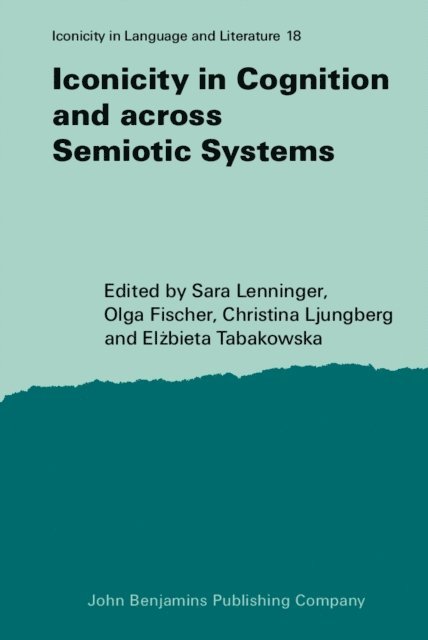
This volume investigates iconicity as to both comprehension and production of meaning in language, gesture, pictures, art and literature. It highlights iconic processes in meaning-making and interpretation across different semiotic systems at structurally, historically and pragmatically different levels of iconicity, with special focus on Cognitive Semiotics. Exploring the ubiquity of iconicity in verbal, visual and gestural communication, these contributions discuss it from the point of view of human meaning-making, examined as a phenomenon that is experienced, embodied and often polysemiotic in nature.
E-bok
Engelska, 20201 384 kr
Läs direkt efter köp
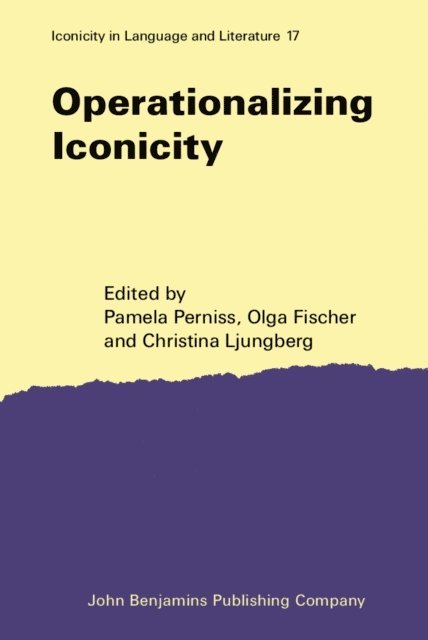
The Iconicity in Language and Literature series has long been dedicated to the recognition and understanding of the pervasiveness of iconicity in language in its many forms and functions. The present volume, divided into four sections, brings together and unifies different perspectives on iconicity. Chapters in the first section (Iconicity in language) provide linguistic analyses of systems of iconic forms in different languages, across both space (areally) and time (diachronically). The second section (Iconicity in literature) is concerned with stylistic analyses of iconicity in literature, in both poetry and prose and across a range of devices and genres. The third section (Iconicity in visual media) highlights the use and effects of iconicity in pictorial, photographic and cinematic media. The final section (Iconicity in semiotic analysis) offers a theoretical perspective, targeting an operationalisation of iconicity with respect to the relationship between types and subtypes of Peircean signs.
E-bok
Engelska, 20171 384 kr
Läs direkt efter köp
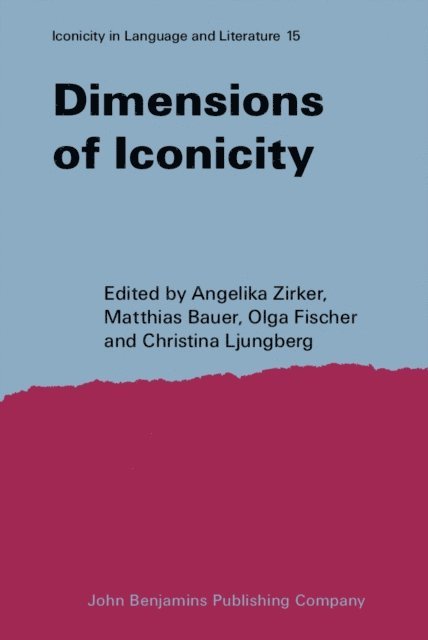
This volume addresses five different Dimensions of Iconicity. While some contributions examine the phonic dimensions of iconicity that are based on empirical, diachronic and theoretical work, others explore the function of similarity from a cognitive point of view. The section on multimodal dimensions takes into account philosophical, linguistic and literary perspectives in order to analyse, for example, the diagrammatic interplay of written texts and images. Contributions on performative dimensions of iconicity focus on Buddhist mantras, Hollywood films, and the dynamics of rhetorical structures in Shakespeare. Last but not least, the volume also addresses new ways of considering iconicity, including notational iconicity, the interplay of iconicity, ambiguity, interpretability, and the iconicity of literary analysis from a formal semanticist point of view.
E-bok
PDF, Engelska, 20131 384 kr
Läs direkt efter köp
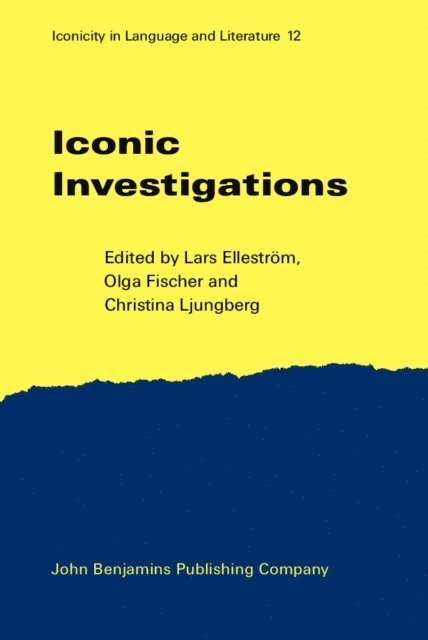
The contributions to Iconic Investigations deal with linguistic or literary aspects of language. While some studies analyze the cognitive structures of language, others pay close attention to the sounds of spoken language and the visual characteristics of written language. In addition this volume also contains studies of media types such as music and visual images that are integrated into the overall project to deepen the understanding of iconicity - the creation of meaning by way of similarity relations. Iconicity is a fundamental but relatively unexplored part of signification in language and other media types. During the last decades, the study of iconicity has emerged as a vital research area with far-reaching interdisciplinary scope and the volume should be of interest for students and researchers interested in scholarly fields such as semiotics, cognitive linguistics, conceptual metaphor studies, poetry, intermediality, and multimodality.
E-bok
PDF, Engelska, 20121 195 kr
Läs direkt efter köp
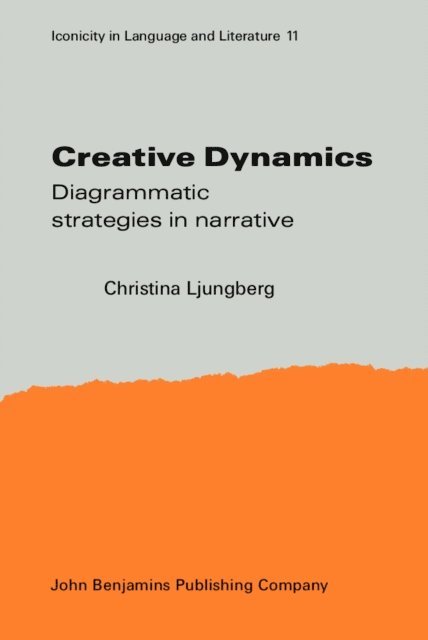
How do readers make sense of a picture, a photograph, or a map in literary narratives in which visual signs play a critical role? How do authors accomplish their various objectives in constructing such complex texts? What strategies and techniques do they use to project fictional worlds and to provide their readers with the means for orienting themselves there? This book investigates the dynamics of the imaginary diagrams created by cartographers, photographers, and writers of narratives, giving ample evidence of how mapping practices have inspired the imagination of a vast number of authors from Thomas More up to contemporary writers. A special focus is on the effects created by the projection of photographs into the narrative space, and how our seemingly effortless interpretation of photographs and even maps masks complex cognitive processes. The theoretical horizon of this study encompasses the fields of cartography, mental maps, iconicity research, and the spatial turn in cultural studies.
E-bok
PDF, Engelska, 20111 384 kr
Läs direkt efter köp
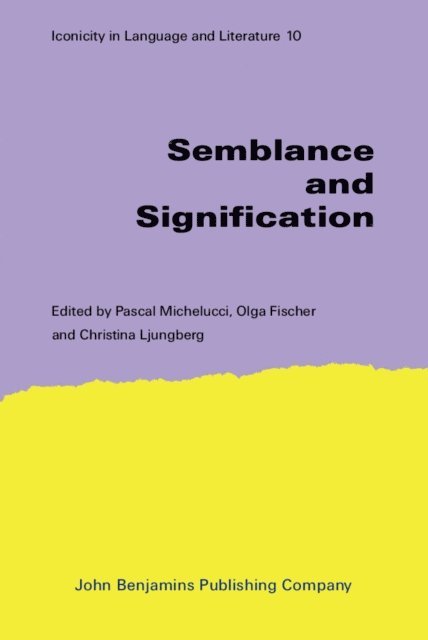
The articles assembled in Semblance and Signification explore linguistic and literary structures from a range of theoretical perspectives with a view to understanding the extent, prevalence, productivity, and limitations of iconically grounded forms of semiosis. With the complementary examination of large theoretical issues, extensive corpus analysis in several modern languages such as Italian, Japanese Sign Language, and English, and applied close studies across a range of artistic media, this volume brings a fresh understanding of the cognitive underpinnings of iconicity. If primary and secondary modelling systems are rarely studied in tandem, it is clear from this volume that their fruitful juxtaposition yields striking insight into the cognitive concerns that pervade current semiotic research.
E-bok
PDF, Engelska, 20101 325 kr
Läs direkt efter köp
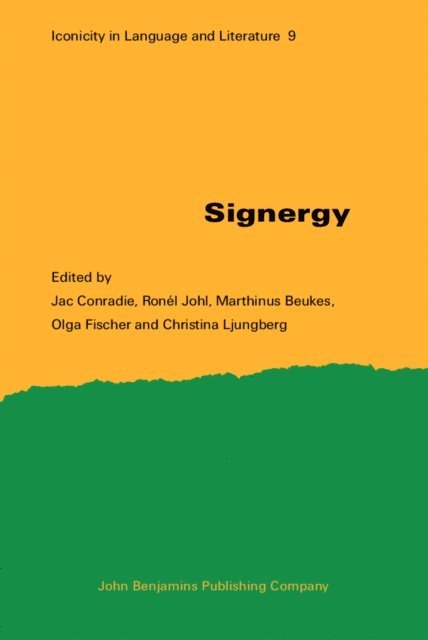
The title of this volume strives to capture the dynamic scope and range of the essays it contains, applying insights into the workings of iconicity to texts as far removed from each other in time as the Medieval tale of a bishop-fish and the war-poems of 20th century Italian Futurist F.T. Marinetti, and as thematically diverse as the Pilgrim’s Progress and the poetry of e.e. cummings. Applications reference both language and linguistics as well as literature and literary theory – and related fields such as sign language and translation; the former approached from the point of view of Japan Sign Language, the latter with reference to translations of the Koran and the Sesotho Bible, as well as modern German and English Bible translations. On the language side, the intricate relationships between sound symbolism and etymology, and between analogy and grammaticalization are examined in depth. On the literary side, the iconic effects of techniques such as enjambment and metrical inversion are considered, but also the ways in which an understanding of iconicity can open up meanings in complex poetry, like that of the Afrikaans poet T.T. Cloete – in this particular instance three poems inspired by figures as diverse as Dante, Paul Klee and the pop icon Marilyn Monroe. In view of the fact that form is able to mime meaning and meaning itself can be mimed by meaning, the theoretical question is asked – on the basis of a wide range of examples from literature, language, music and other sign-systems – whether meaning can also mime form. An introduction to the work of H.C.T. Müller, an early scholar in the field of iconicity, highlights a regrettably little known South African contribution to the development of iconicity theory.
E-bok
PDF, Engelska, 20071 714 kr
Läs direkt efter köp
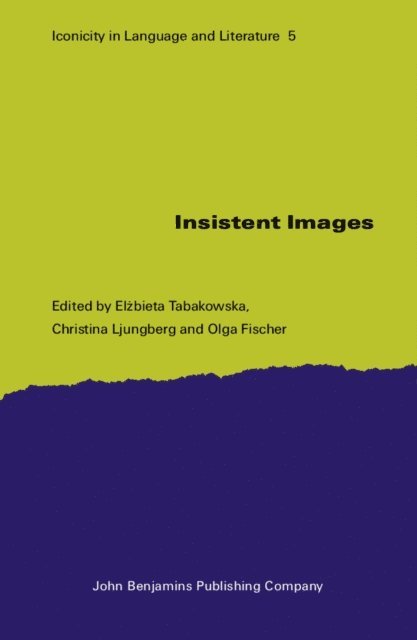
Insistent Images presents a number of new departures dealing with iconicity on the conceptual and the structural levels. On the level of structure, the interface between different aspects of iconicity, lexical meaning and grammar is discussed in reference to both spoken and signed languages. Novel approaches to aural iconicity investigate a wide range of phenomena from phonological iconicity to the role of iconic features in discourse, in the nineteenth century practice of reading aloud, in the almost magic incantations of fin de siecle poetry and in Tolkien's invented languages. Several papers examine the function of iconicity in visual and avant-garde poetry, where iconic features allow a reduction of means, which, paradoxically, generates textual diversification and complexity. A discussion of iconic text strategies shows how texts are comprehended through iconic holistic transfer from complex natural and action patterns. 'Liberature', which integrates text, image and physical space, is another novel area of study, as are the investigations into the iconic properties of film and of multimedia performance. Film is intrinsically iconic, while at the same time being, like photography, indexical; in multimedia performance, on the other hand, iconicity functions intermedially by both integrating and reflecting processes of perception and conceptualization. These last two new fields of inquiry further enhance this truly interdisciplinary volume's explorations of icons as 'insistent images'.