Lois Mai Chan - Böcker
Visar alla böcker från författaren Lois Mai Chan. Handla med fri frakt och snabb leverans.
9 produkter
9 produkter
178 kr
Skickas
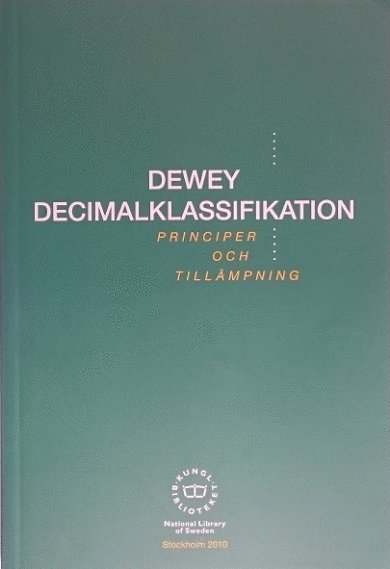
Vi tror att läroboken Dewey decimalklassifikation : principer och tillämpning både lämpar sig att använda vid utbildningar i biblioteks- och informationsvetenskap och av bibliotekarier som vill sätta sig in i Dewey decimalklassifikation. Joan S. Mitchell var tidigare chefredaktör för Dewey decimalklassifikation och Lois Mai Chan professor vid School of Library and Information science vid University of Kentucky. Boken beskriver 22:a upplagan av Dewey decimalklassifikation och mycket har ändrats sedan boken skrevs. Sedan 2012 används 23:e upplagan i Svenska WebbDewey. Det finns inte någon ny upplaga av boken på engelska att översätta. Principerna för hur Dewey är uppbyggt och ska tillämpas stämmer dock fortfarande. För detaljer och exakta svar till övningar hänvisas till Svenska WebbDewey.
731 kr
Skickas inom 10-15 vardagar
The rapid proliferation of online databases has been accompanied by an equally rapid increase in the number of thesauri, particularyly those used by bibliographic databases. This guide is designed to assist users of online databases identify the relevant indexing vocabularies. It identifies the indexing vocabularies used in specific online databases, the syndetic structures employed in specific thesauri, and the arrangement of descriptor displays. Selected for inclusion in this guide are thesauri used by databases that are widely available through the large commercial retrieval services and thesauri used by large databases. In general, the thesauri selected are in the English language. The 122 entries are arranged alphabetically by title. Five indexes, including title, personal name, organization, subject, and database, complete the work.
863 kr
Skickas inom 10-15 vardagar
Like earlier editions, this thoroughly updated sixth edition of the classic textbook provides readers with a basic understanding of the Library of Congress Classification system and its applications.The Library of Congress Classification system is used in academic, legal, medical, and research libraries throughout North America as well as worldwide; accordingly, catalogers and librarians in these settings all need to be able to use it. The established gold standard text for Library of Congress Classification (LCC), the sixth edition of Guide to the Library of Congress Classification updates and complements the classic textbook's coverage of cataloging in academic and research libraries.Clear and easy to understand, the text describes the reasoning behind assigning subject headings and subheadings, including use of tables; explains the principles, structure, and format of LCC; details notation, tables, assigning class numbers, and individual classes; and covers classification of special types of library materials. The last chapter of this perennially useful resource addresses the potential role of classification in libraries of the future.
1 126 kr
Skickas inom 10-15 vardagar
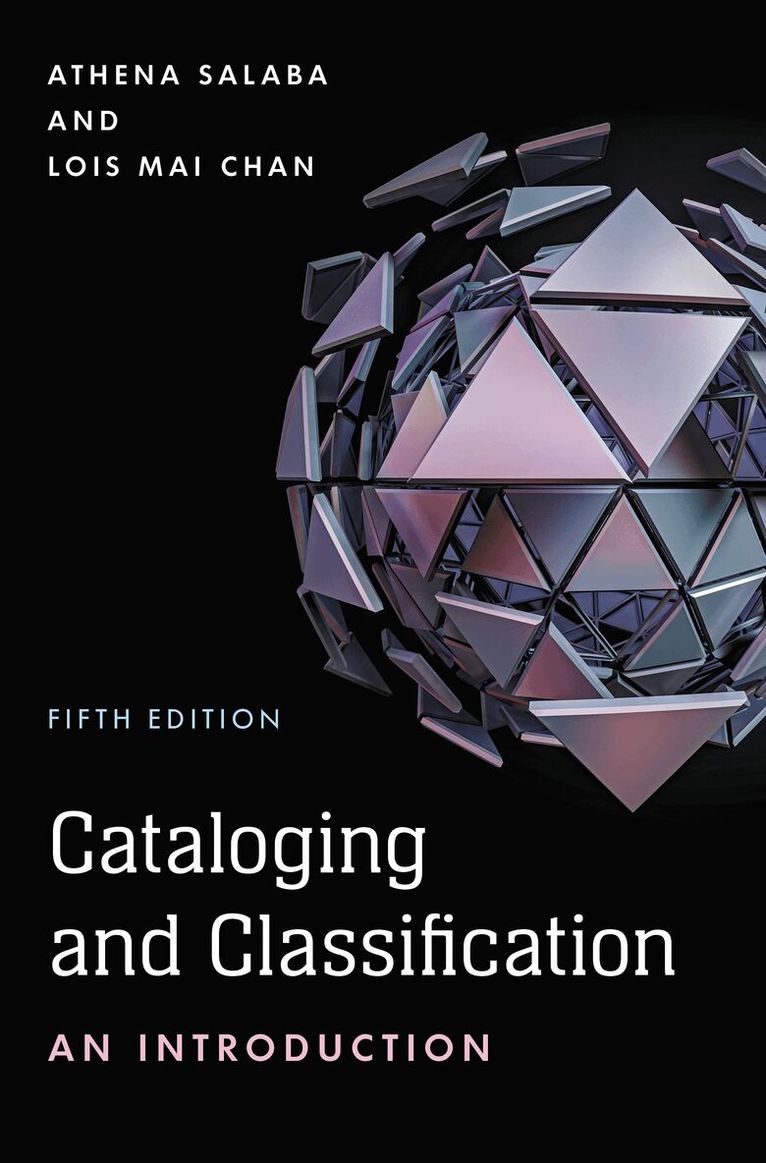
"The new edition of this essential work has raised the bar on an already excellent text about cataloguing." - Library Journal, Starred ReviewThe fifth edition of the classic Cataloging and Classification covers the analysis and representation of methods used in describing, organizing, and providing access to resources made available in or through libraries. Since the last edition, there have new developments in cataloging, with the introduction of the IFLA Library Reference Model (LRM) and the new, official RDA, following the 3R Project.This text presents the essence of library cataloging and classification in terms of four basic functions: descriptive cataloging, authority work, subject access, and classification. Within this framework, content has been re-organized, all chapters have been rewritten, and new chapters have been introduced to incorporate the changes that have occurred during the interval between the four and fifth editions. In each part, the historical development and underlying principles of the retrieval mechanism at issue are treated first, because these are considered essential to an understanding of cataloging and classification. Discussion and examples of provisions in the standards and tools are then presented to illustrate the operations covered in each chapter.Divided into seven parts—a general overview; record production and structure, encoding formats, and metadata records; RDA (original and official); subject access and controlled vocabularies; the organization of library resources; encoding & records of bibliographic and authority data; and cataloging ethics--this book includes lists of the standards and tools used in the preparation and processing of cataloging records covered, lists of RDA elements, and sample records.Its companion website with interactive learning activities and supplementary materials located at catclassintro.org make it a true multimedia tool.
797 kr
Skickas inom 10-15 vardagar
"The new edition of this essential work has raised the bar on an already excellent text about cataloguing." - Library Journal, Starred ReviewThe fifth edition of the classic Cataloging and Classification covers the analysis and representation of methods used in describing, organizing, and providing access to resources made available in or through libraries. Since the last edition, there have new developments in cataloging, with the introduction of the IFLA Library Reference Model (LRM) and the new, official RDA, following the 3R Project.This text presents the essence of library cataloging and classification in terms of four basic functions: descriptive cataloging, authority work, subject access, and classification. Within this framework, content has been re-organized, all chapters have been rewritten, and new chapters have been introduced to incorporate the changes that have occurred during the interval between the four and fifth editions. In each part, the historical development and underlying principles of the retrieval mechanism at issue are treated first, because these are considered essential to an understanding of cataloging and classification. Discussion and examples of provisions in the standards and tools are then presented to illustrate the operations covered in each chapter.Divided into seven parts—a general overview; record production and structure, encoding formats, and metadata records; RDA (original and official); subject access and controlled vocabularies; the organization of library resources; encoding & records of bibliographic and authority data; and cataloging ethics--this book includes lists of the standards and tools used in the preparation and processing of cataloging records covered, lists of RDA elements, and sample records.Its companion website with interactive learning activities and supplementary materials located at catclassintro.org make it a true multimedia tool.
994 kr
Skickas inom 10-15 vardagar
Presents the only comprehensive treatise on the Library of Congress Subject Headings (LCSH) system, now fully updated to address LCSH in the electronic environment.This book is the only comprehensive treatise on the Library of Congress Subject Headings (LCSH) system. It offers users a complete and definitive guide to a challenging area of study. Chan presents a brief history of the system, analyzes its principles, and describes its vocabulary and subject authority control. She then discusses the application of LC subject headings to LC MARC records and outlines the Library of Congress's policies on the assignment of subject headings in general and the treatment of certain types of materials in particular. This new edition updates the text according to policies governing current practices in using LCSH, and the highlighted relevance of LCSH in the global electronic environment. Part 3, completely rewritten, includes a chapter on FAST (Faceted Application of Subject Terminology), which is an LCSH-based controlled vocabulary for electronic resources.
731 kr
Skickas inom 10-15 vardagar
This book is the only comprehensive treatise on the Library of Congress Subject Headings (LCSH) system. It offers users a complete and definitive guide to a challenging area of study. Chan presents a brief history of the system, analyzes its principles, and describes its vocabulary and subject authority control. She then discusses the application of LC subject headings to LC MARC records and outlines the Library of Congress's policies on the assignment of subject headings in general and the treatment of certain types of materials in particular. This new edition updates the text according to policies governing current practices in using LCSH, and the highlighted relevance of LCSH in the global electronic environment. Part 3, completely rewritten, includes a chapter on FAST (Faceted Application of Subject Terminology), which is an LCSH-based controlled vocabulary for electronic resources.
797 kr
Skickas inom 10-15 vardagar
While The Library of Congress Subject Headings (LCSH) is perhaps the best known bibliographic control system in existence, it is cumbersome and not always user friendly. Faceted Application of Subject Terminology (or FAST) is designed to rework LCSH's authority rules, so that they are easier to use, understand, and apply. The result is a schema designed to handle a large volume of materials with less effort and cost. To this end, two members of the original design team have put together numerous examples of FAST-driven projects including traditional monographs, special collections (archives, business records), electronic resources, and websites. The result is a prototype designed to be used not just by experienced catalogers but people with minimal training and experience.
1 541 kr
Skickas inom 5-8 vardagar