Lorenza Saitta - Böcker
Visar alla böcker från författaren Lorenza Saitta. Handla med fri frakt och snabb leverans.
6 produkter
6 produkter
1 228 kr
Tillfälligt slut
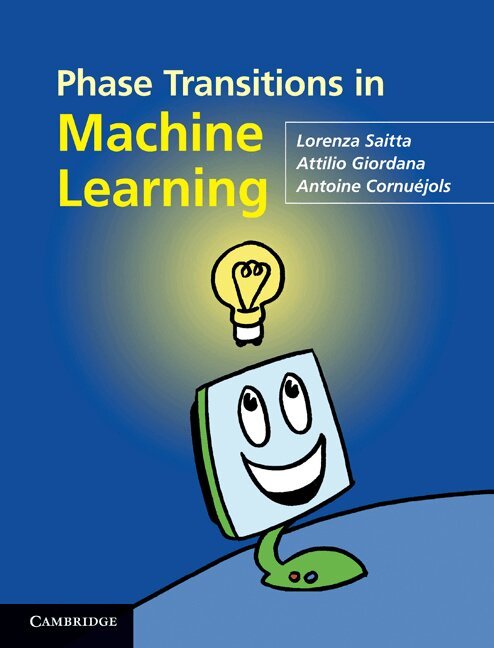
Phase transitions typically occur in combinatorial computational problems and have important consequences, especially with the current spread of statistical relational learning as well as sequence learning methodologies. In Phase Transitions in Machine Learning the authors begin by describing in detail this phenomenon, and the extensive experimental investigation that supports its presence. They then turn their attention to the possible implications and explore appropriate methods for tackling them. Weaving together fundamental aspects of computer science, statistical physics and machine learning, the book provides sufficient mathematics and physics background to make the subject intelligible to researchers in AI and other computer science communities. Open research issues are also discussed, suggesting promising directions for future research.
1 517 kr
Skickas inom 10-15 vardagar
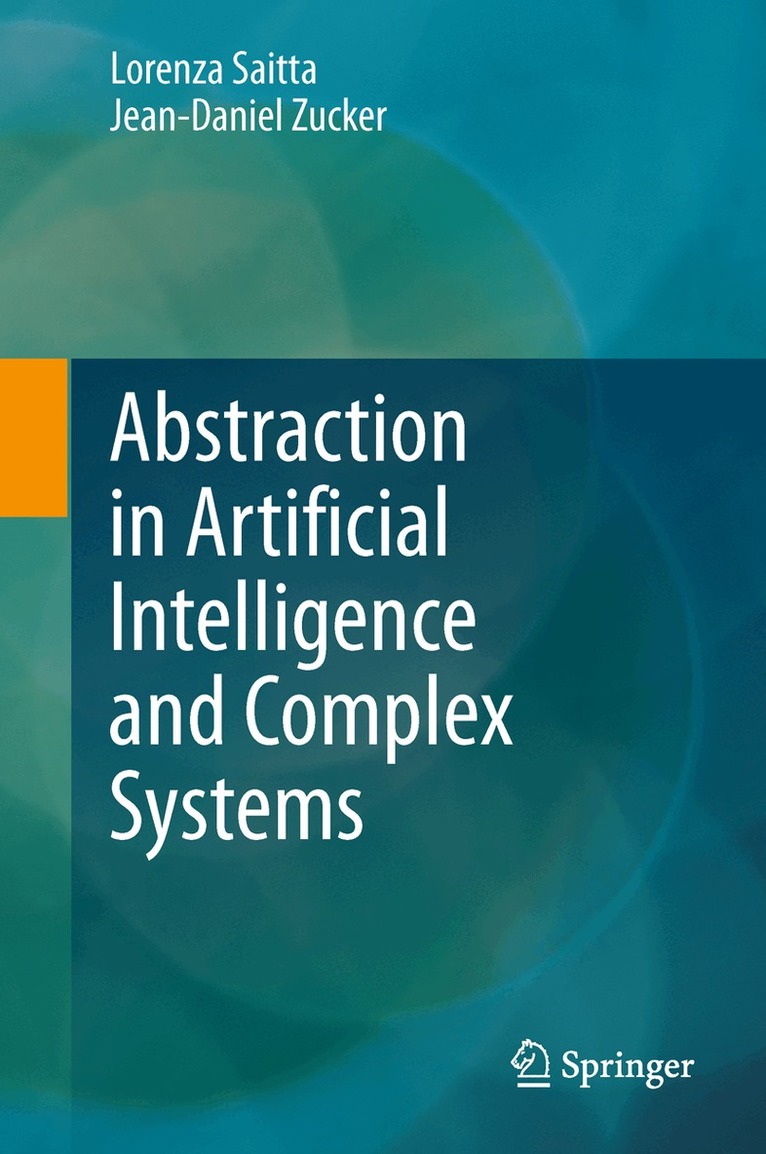
Abstraction is a fundamental mechanism underlying both human and artificial perception, representation of knowledge, reasoning and learning. This mechanism plays a crucial role in many disciplines, notably Computer Programming, Natural and Artificial Vision, Complex Systems, Artificial Intelligence and Machine Learning, Art, and Cognitive Sciences. This book first provides the reader with an overview of the notions of abstraction proposed in various disciplines by comparing both commonalities and differences. After discussing the characterizing properties of abstraction, a formal model, the KRA model, is presented to capture them. This model makes the notion of abstraction easily applicable by means of the introduction of a set of abstraction operators and abstraction patterns, reusable across different domains and applications. It is the impact of abstraction in Artificial Intelligence, Complex Systems and Machine Learning which creates the core of the book. A general framework, based on the KRA model, is presented, and its pragmatic power is illustrated with three case studies: Model-based diagnosis, Cartographic Generalization, and learning Hierarchical Hidden Markov Models.
1 096 kr
Skickas inom 10-15 vardagar
Abstraction is a fundamental mechanism underlying both human and artificial perception, representation of knowledge, reasoning and learning. This mechanism plays a crucial role in many disciplines, notably Computer Programming, Natural and Artificial Vision, Complex Systems, Artificial Intelligence and Machine Learning, Art, and Cognitive Sciences. This book first provides the reader with an overview of the notions of abstraction proposed in various disciplines by comparing both commonalities and differences. After discussing the characterizing properties of abstraction, a formal model, the KRA model, is presented to capture them. This model makes the notion of abstraction easily applicable by means of the introduction of a set of abstraction operators and abstraction patterns, reusable across different domains and applications. It is the impact of abstraction in Artificial Intelligence, Complex Systems and Machine Learning which creates the core of the book. A general framework, based on the KRA model, is presented, and its pragmatic power is illustrated with three case studies: Model-based diagnosis, Cartographic Generalization, and learning Hierarchical Hidden Markov Models.
552 kr
Skickas inom 10-15 vardagar
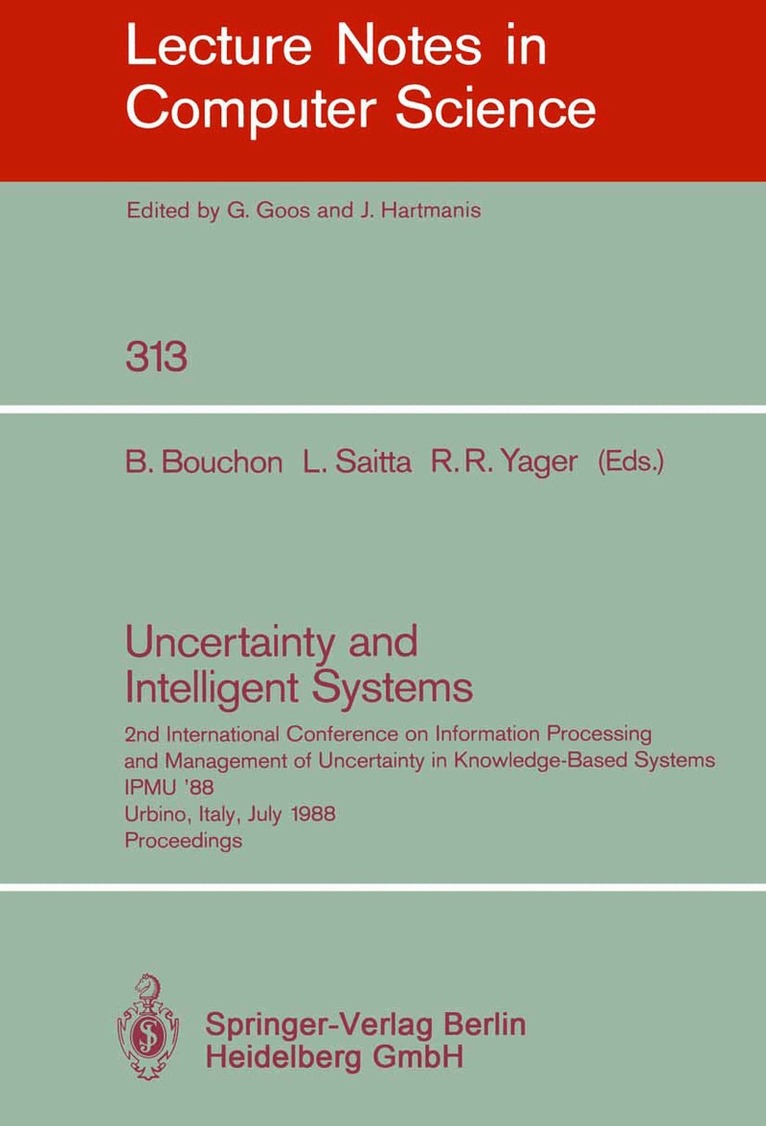
This book contains the papers presented at the 2nd IPMU Conference, held in Urbino (Italy), on July 4-7, 1988. The theme of the conference, Management of Uncertainty and Approximate Reasoning, is at the heart of many knowledge-based systems and a number of approaches have been developed for representing these types of information. The proceedings of the conference provide, on one hand, the opportunity for researchers to have a comprehensive view of recent results and, on the other, bring to the attention of a broader community the potential impact of developments in this area for future generation knowledge-based systems. The main topics are the following: frameworks for knowledge-based systems: representation scheme, neural networks, parallel reasoning schemes; reasoning techniques under uncertainty: non-monotonic and default reasoning, evidence theory, fuzzy sets, possibility theory, Bayesian inference, approximate reasoning; information theoretical approaches; knowledge acquisition and automated learning.
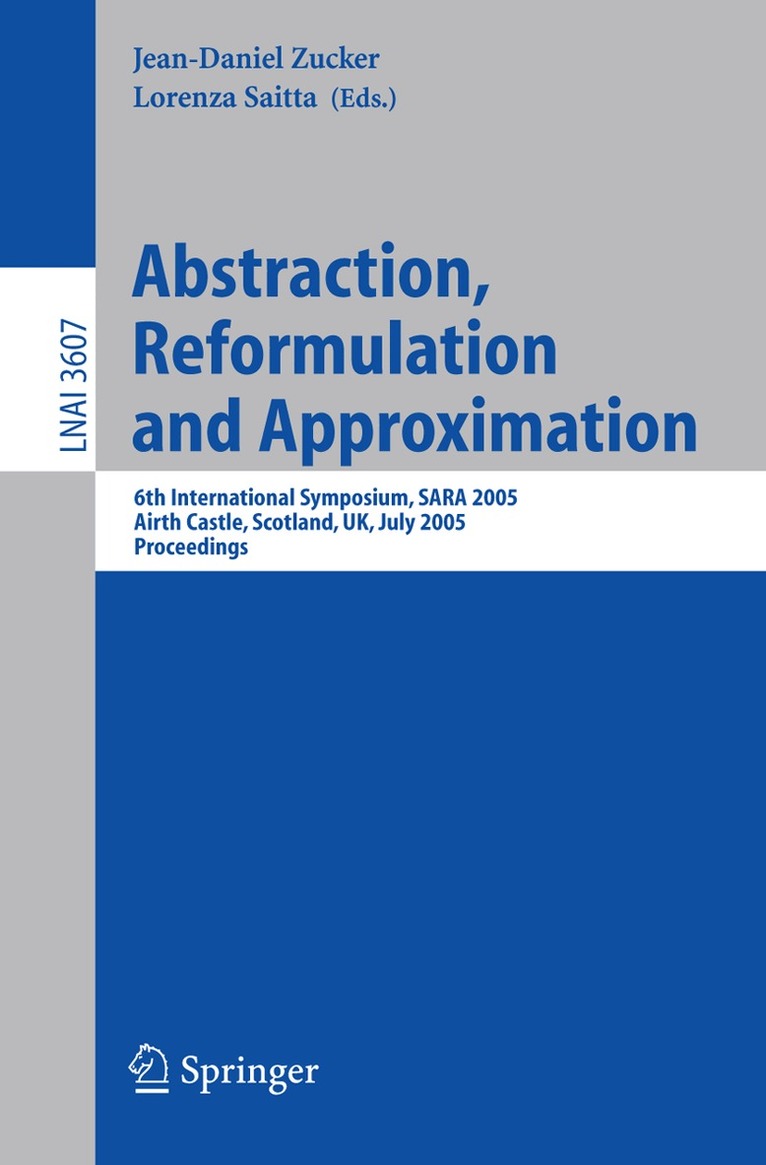
Abstraction, Reformulation and Approximation
6th International Symposium, SARA 2005, Airth Castle, Scotland, UK, July 26-29, 2005, Proceedings
Häftad, Engelska, 2005
552 kr
Skickas inom 10-15 vardagar
This volume contains the proceedings of the 6th Symposium on Abstraction, Reformulation and Approximation (SARA 2005). The symposium was held at Airth Castle, Scotland, UK, from July 26th to 29th, 2005, just prior to the IJCAI 2005 conference in Edinburgh. Previous SARA symposia took place at JacksonHole in Wyoming, USA (1994),Ville d'Estrel in Qubec, Canada (1995), Asilomar in California, USA (1998), Horseshoe Bay, Texas, USA (2000), and Kananaskis, Alberta, Canada (2002). This was then the ?rst time that the s- posium was held in Europe. Continuing the tradition started with SARA 2000, the proceedings have been published in the LNAI series of Springer. Abstractions, reformulations and approximations (AR&A) have found app- cationsin avarietyofdisciplines andproblems,including constraintsatisfaction, design, diagnosis, machine learning, planning, qualitative reasoning, scheduling, resource allocation and theorem proving, but are also deeply rooted in philo- phy and cognitive science. The papers in this volume capture a cross-section of the various facets of the ?eld and of its applications. One of the primary uses of AR&A is oriented to overcome computational intractability.AR&A techniques, however, have also proved useful for knowledge acquisition, explanation and other applications, as papers in this volume also illustrate.
552 kr
Skickas inom 10-15 vardagar
Knowledge discovery in ubiquitous environments is an emerging area of research at the intersection of the two major challenges of highly distributed and mobile systems and advanced knowledge discovery systems. It aims to provide a unifying framework for systematically investigating the mutual dependencies of otherwise quite unrelated technologies employed in building next-generation intelligent systems: machine learning, data mining, sensor networks, grids, peer-to-peer networks, data stream mining, activity recognition, Web 2.0, privacy, user modelling and others. This state-of-the-art survey is the outcome of a large number of workshops, summer schools, tutorials and dissemination events organized by KDubiq (Knowledge Discovery in Ubiquitous Environments), a networking project funded by the European Commission to bring together researchers and practitioners of this emerging community. It provides in its first part a conceptual foundation for the new field of ubiquitous knowledge discovery - highlighting challenges and problems, and proposing future directions in the area of 'smart', 'adaptive', and 'intelligent' learning. The second part of this volume contains selected approaches to ubiquitous knowledge discovery and treats specific aspects in detail. The contributions have been carefully selected to provide illustrations and in-depth discussions for some of the major findings of Part I.