Louis Lemkow – författare
Visar alla böcker från författaren Louis Lemkow. Handla med fri frakt och snabb leverans.
6 produkter
6 produkter
Häftad, Tyska, 2009
710 kr
Skickas inom 10-15 vardagar
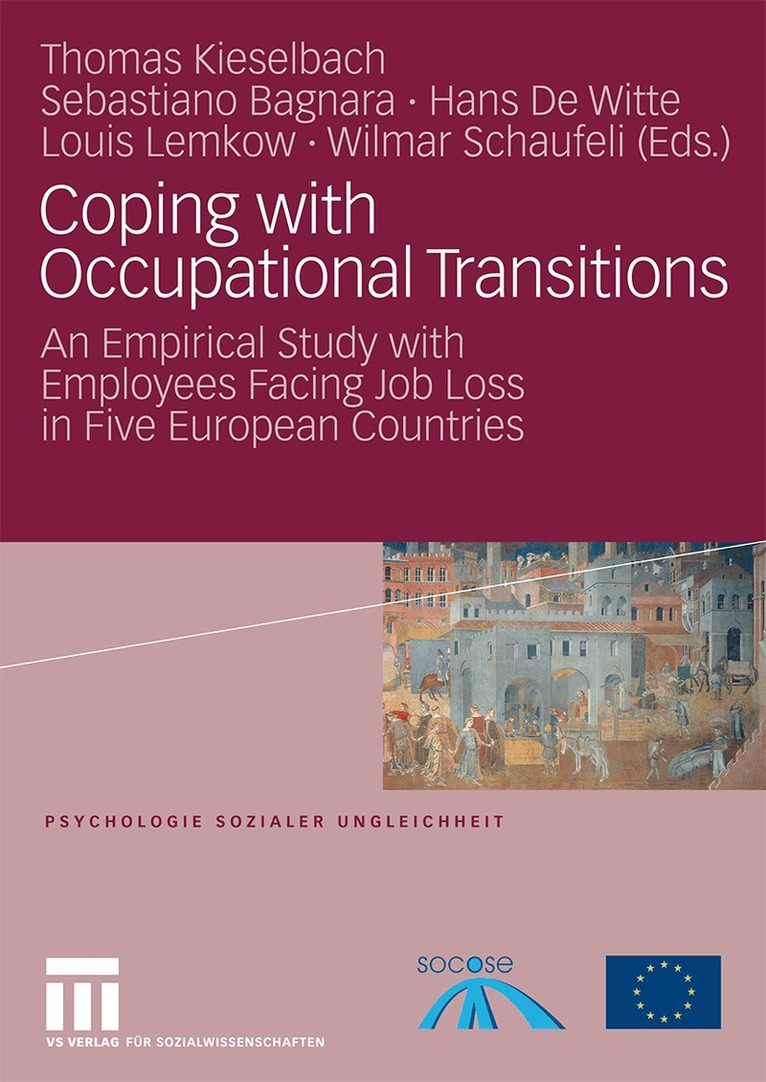
1 This volume is one of four book publications of the project "Social Convoy and S- tainable Employability: Innovative Strategies for Outplacement/Replacement Couns- ling" (SOCOSE). It is supported by the European Commission, DG Research, under the fifth Framework Programme, Key Action "Improving the Socio-Economic Knowledge 2 3 Base" and coordinated by Thomas Kieselbach at the University of Bremen . Starting point of our research is the increase in occupational transitions (Rodgers & Rodgers, 1989). This is caused by the ongoing globalisation of markets and eco- mies as a whole, but might also be considered the central aspect of globalisation: changes and flexibility which - on the part of the individual employee - means tran- tions in his or her occupational biography. These phases might include episodes of - employment as well as training or re-orientation. While transitions increase, employees experience insecurity with regard to their individual employment situation to a much larger degree than in the past. The formal 1 Kieselbach, T. (Ed.) (2004). Social Convoy in Occupational Transitions: Recommendations for a European Framework in the Context of Enterprise Restructuring.Bremen: University of Bremen, Ins- tute for Psychology of Work, Unemployment and Health (IPG). Kieselbach, T., Beelmann, G., Mader, S. & Wagner, O. (2005). Sozialer Konvoi in beruflichen Tran- tionen: Individuelle und organisationale Bewaltigung der Prekarisierung von Beschaftigung in Deutschland [Social convoy in occupational transitions: Individual and organisational coping with precarisation of jobs]. Munchen: Rainer Hampp.
E-bok
PDF, Tyska, 2010598 kr
Läs direkt efter köp
E-bok
PDF, Engelska, 2013687 kr
Läs direkt efter köp
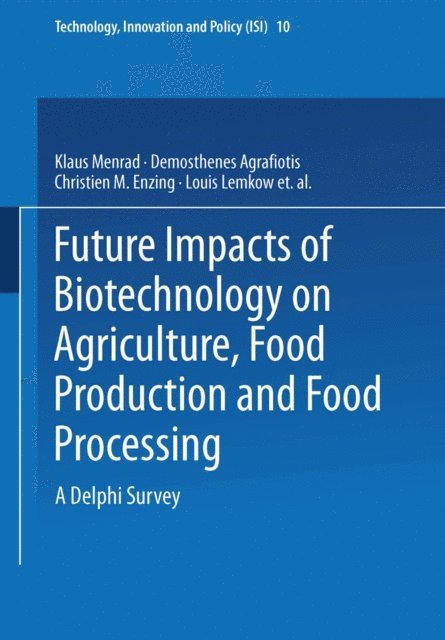
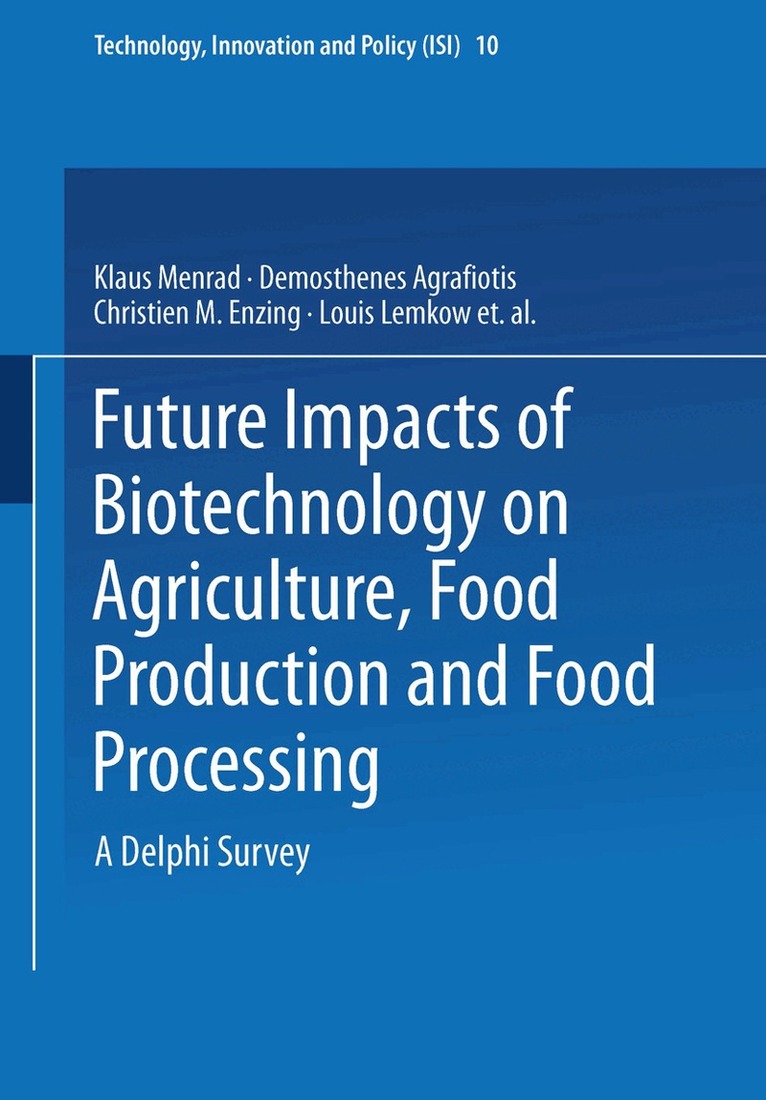
Although the first Agro-Food products based on modem biotechnology (e. g. recombinant chymosin for cheese production; tomato puree based on genetically engineered tomatoes; herbicide-resistant, genetically modified soybean; insect resistant maize) have been introduced in the EU markets in recent years, the application of this technology is still being intensively discussed in the European Union. Recent opinion polls indicate as well that consumers'' acceptance of genetically engineered food and agro-products still is relatively low (e. g. European Commission 1997, Hampel et al. 1997), at least in some member states of the EU. In contrast, representatives from politics and industry underline the necessity to apply modem biotechnology in the Agro-Food sector as well, mainly to ensure the competitiveness of EU agriculture and food industry and for employment reasons. Against this background there seems to be a need for a scientific analysis of the future impacts of modem biotechnology in the Agro-Food sector of the EU. Recent studies trying to analyse this issue (e. g. OECD 1992, Teuber 1992) usually comprise extrapolations of status-quo analyses. What has not been exploited so far in this context are systematic technology forecasting approaches which do not include only one single country, but get information on an international level. Therefore, the impacts of modem biotechnology on the Agro-Food sector in five member countries of the EU (Germany, Greece, Italy, the Netherlands, and Spain) have been analysed with the help of the Delphi methodology which represents one of the most reliable tools for technology forecasting.
E-bok
PDF, Engelska, 2013687 kr
Läs direkt efter köp
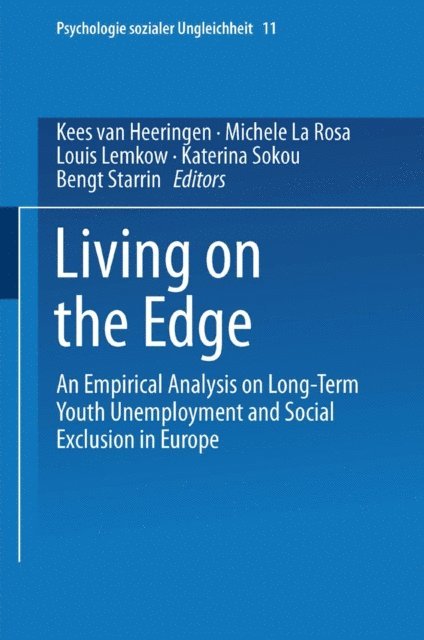
Thomas Kieselbach This volume is the third publication of the project "Youth Unemployment and Social Exclusion: Objective Dimensions, Subjective Experiences and Innovative Institutional Responses in Six European Countries" (YUSEDER) supported by the Directorate Gen eral Research of the European Commission (DG Research) within the Targeted Socio Economic Research Programme (TSER) of the 4th Framework Programme. The YU SEDER research project tries to answer some crucial questions with regard to the risk of social exclusion associated with long-term youth unemployment. The first volume de scribed the available empirical evidence on youth unemployment and health in the par ticipating six countries of the EU\ the second volume drew attention to the concept of social exclusion in the context of youth unemployment as well as to vulnerable groups 2 of young unemployed people • The 3''" YUSEDER volume includes the qualitative analyses of 300 young long term unemployed people (20-25 years old) regarding their experiences with their own unemployment and related processes of social exclusion in six European countries. The aim of the study is to analyse the content and extent of social exclusion among young unemployed persons including the specific courses and developments of processes of social exclusion, key mechanisms leading from unemployment to social exclusion (pro tective factors and vulnerability factors) and individual coping mechanisms with regard to unemployment and the risk of social exclusion.
Del 10 - Technology, Innovation and Policy (ISI)
Future Impacts of Biotechnology on Agriculture, Food Production and Food Processing
A Delphi Survey
Häftad, Engelska, 1999
544 kr
Skickas inom 10-15 vardagar
The study analyses the future application of modern biotechnology in the Agro-Food sector in five European countries as well as its impacts on economy, society, environment and the health of consumers and employees. Detailed information concerning the situation in Germany, Greece, Italy, The Netherlands and Spain as well as an in-depth analysis of the major factors influencing the application of modern biotechnology enable the reader to adjust his own decisions on the expected future developments in advance.
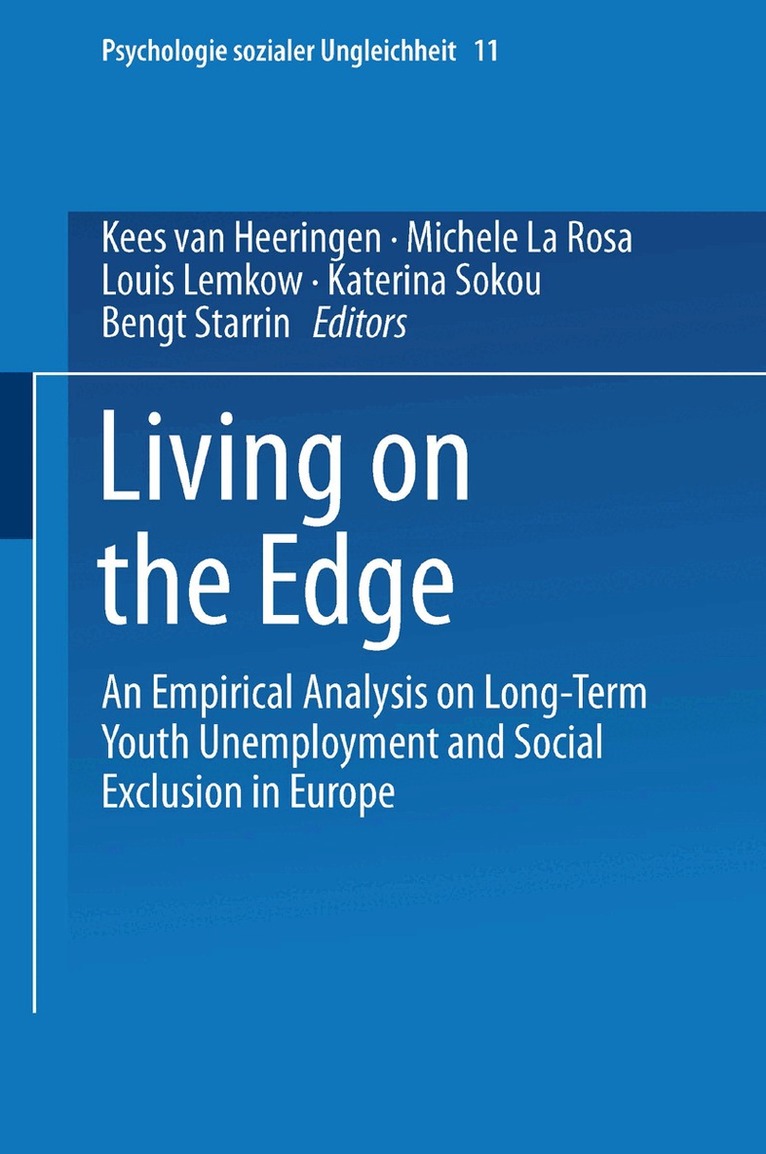
Del 11 - Psychologie sozialer Ungleichheit
Living on the Edge
An Empirical Analysis on Long-Term Youth Unemployment and Social Exclusion in Europe
Häftad, Engelska, 2001
544 kr
Skickas inom 10-15 vardagar
Thomas Kieselbach This volume is the third publication of the project "Youth Unemployment and Social Exclusion: Objective Dimensions, Subjective Experiences and Innovative Institutional Responses in Six European Countries" (YUSEDER) supported by the Directorate Gen eral Research of the European Commission (DG Research) within the Targeted Socio Economic Research Programme (TSER) of the 4th Framework Programme. The YU SEDER research project tries to answer some crucial questions with regard to the risk of social exclusion associated with long-term youth unemployment. The first volume de scribed the available empirical evidence on youth unemployment and health in the par ticipating six countries of the EU\ the second volume drew attention to the concept of social exclusion in the context of youth unemployment as well as to vulnerable groups 2 of young unemployed people • The 3'" YUSEDER volume includes the qualitative analyses of 300 young long term unemployed people (20-25 years old) regarding their experiences with their own unemployment and related processes of social exclusion in six European countries. The aim of the study is to analyse the content and extent of social exclusion among young unemployed persons including the specific courses and developments of processes of social exclusion, key mechanisms leading from unemployment to social exclusion (pro tective factors and vulnerability factors) and individual coping mechanisms with regard to unemployment and the risk of social exclusion.