Louise Holt - Böcker
Visar alla böcker från författaren Louise Holt. Handla med fri frakt och snabb leverans.
7 produkter
7 produkter
2 088 kr
Skickas inom 10-15 vardagar
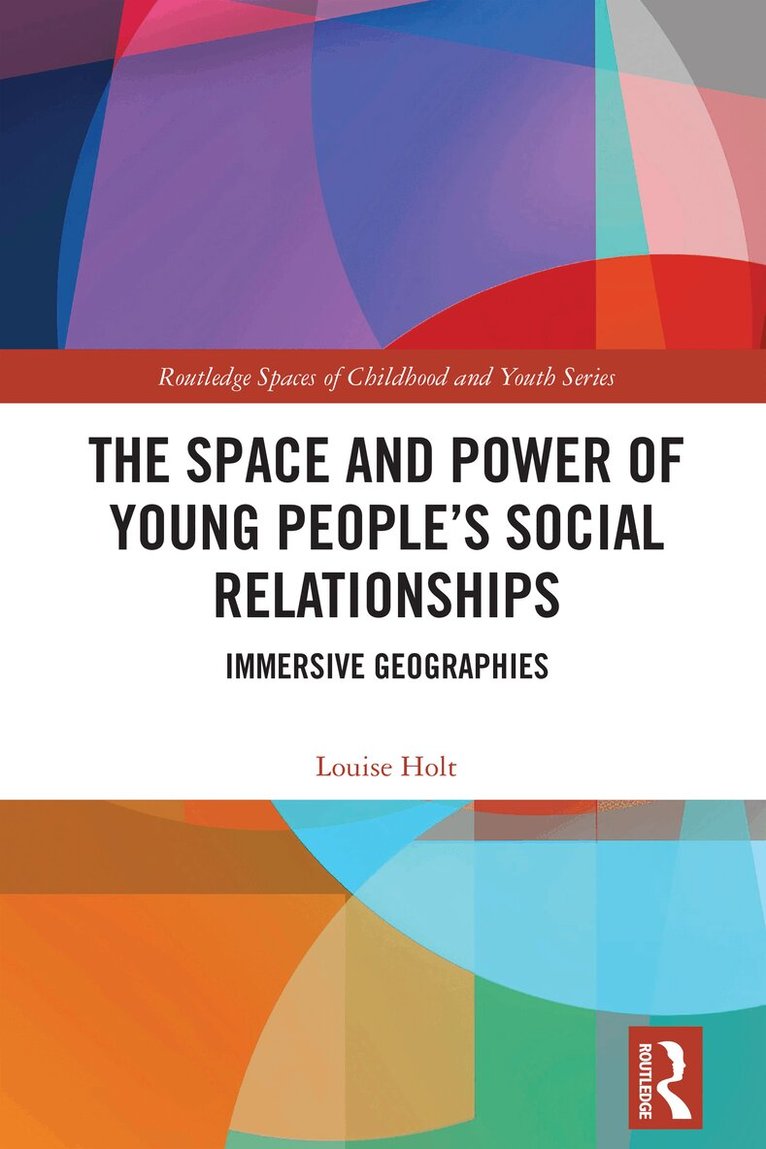
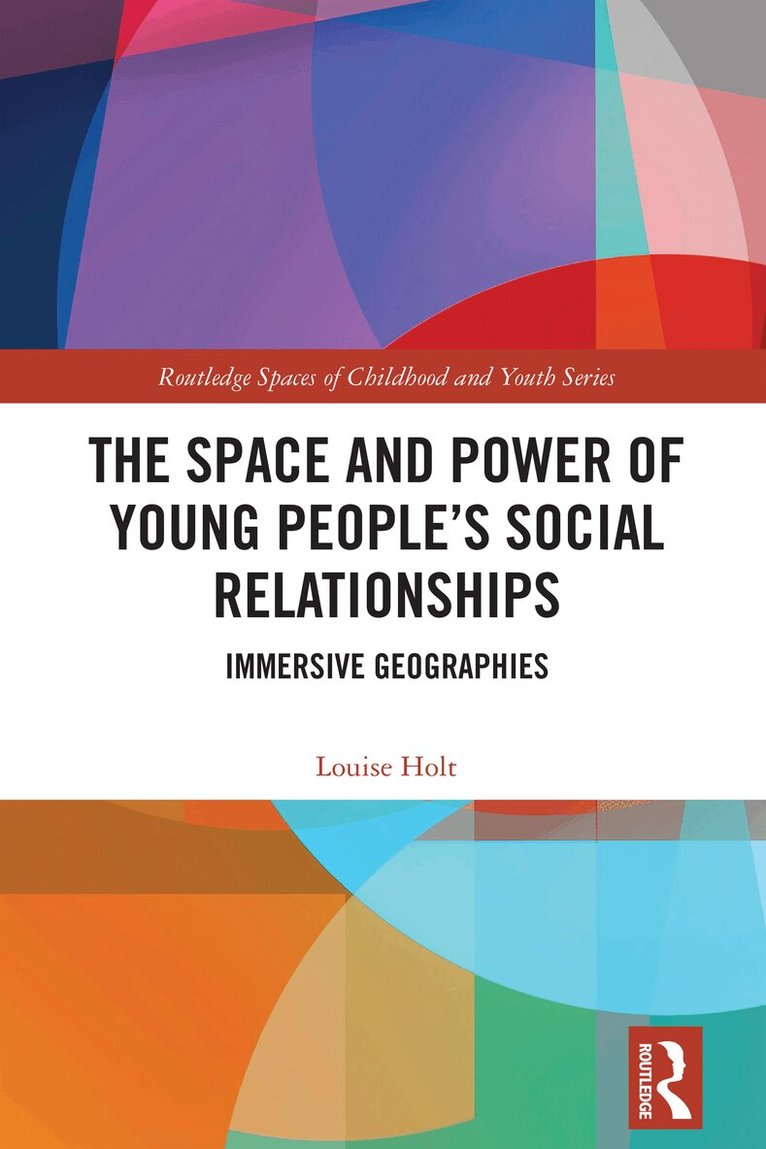
The book examines the power of young people’s social relationships in schools to transform, or more often, to continue, differences that pervade societies: mind-body-emotional diff erences or Special Educational Needs and Disability, gender, poverty, race/ethnicity, sexuality and their intersections. The book details extensive qualitative research with young people, foregrounding their accounts.In challenging educators and others to engage with young people’s own agencies and to make space for their socialities, the concepts of embodied social and emotional capital and young people as contextual bodies/subjectivities/agencies are developed, emphasising both young people’s agencies and how these are socio-spatially situated, constrained and enabled. The book is most concerned with how and when young people challenge and change enduring differences. The concept of ‘immersive geographies’ outlines the potential of change inherent in the repeated coming together of the same people in space, doing similar things that are, however, always provisional and always with the potential to be done diff erently. Examples of when diff erence is transformed are presented.The book marks a major interdisciplinary contribution to geographies and social studies of children, youth and education, child development, social work, social policy and education studies. Furthermore, it is of appeal to anyone interested in young people, social reproduction and sociality: from educators, policy makers, youth workers and social workers to parents.
2 290 kr
Skickas inom 10-15 vardagar
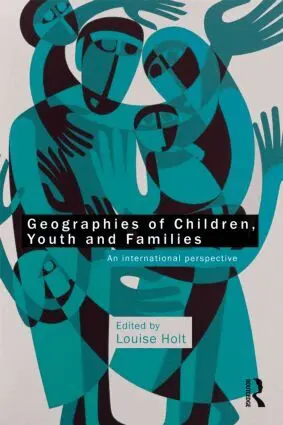
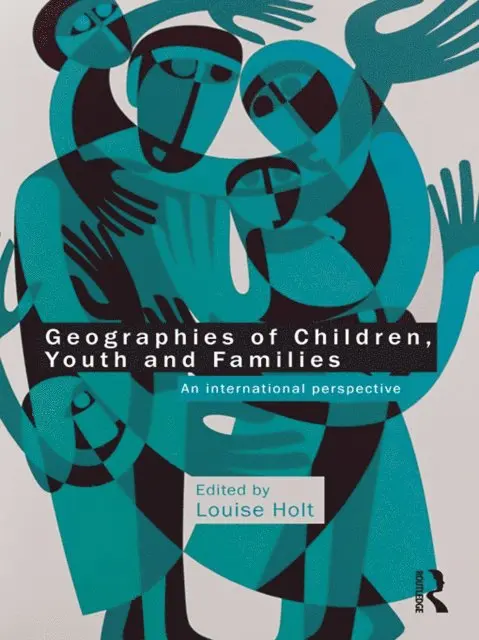
This edited collection brings together international experts from the vibrant and growing field of geographies of children, youth and families. Designed as an introduction to the topic, this book provides an overview of current conceptual and theoretical debates surrounding geographies of children, youth and families, and gives a wide range of examples of cutting-edge research from a variety of national contexts across the globe. The theme of ‘disentangling the socio-spatial contexts of young people and/or their families’ advances debates in the field by emphasising the context of young people’s social agency.Geographies of Children, Youth and Families is an invaluable course text for undergraduate and postgraduate students of geography and the social sciences, as well as being of interest to students and practitioners of education, youth work, social policy, and social work.
671 kr
Skickas inom 10-15 vardagar
This edited collection brings together international experts from the vibrant and growing field of geographies of children, youth and families. Designed as an introduction to the topic, this book provides an overview of current conceptual and theoretical debates surrounding geographies of children, youth and families, and gives a wide range of examples of cutting-edge research from a variety of national contexts across the globe. The theme of ‘disentangling the socio-spatial contexts of young people and/or their families’ advances debates in the field by emphasising the context of young people’s social agency.Geographies of Children, Youth and Families is an invaluable course text for undergraduate and postgraduate students of geography and the social sciences, as well as being of interest to students and practitioners of education, youth work, social policy, and social work.
2 088 kr
Skickas inom 10-15 vardagar
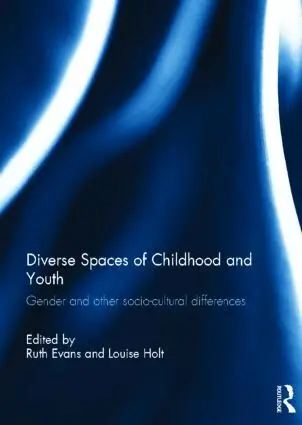
Diverse Spaces of Childhood and Youth focuses on the diverse spaces and discourses of children and youth globally. The chapters explore the influence of gender, age and other socio-cultural differences, such as race, ethnicity and migration trajectories, on the everyday lives of children and youth in a range of international contexts. These include the diverse urban environments of Istanbul, Copenhagen, Helsinki, Toronto, London, and Bratislava and the contrasting rural settings of Ghana and England. The analyses of children's, young people's, parents' and professionals' experiences and discourses provide critical insights into how gender and other socio-cultural differences intersect. The importance of everyday practices and performances in the formation of children's and young people's identities is revealed, through for example, friendships and everyday sociality, mobilities and movements across space in both rural and urban environments.The volume shows how discourses of childhood, particularly those associated with risk, intersect with difference. The recognition of young people’s agency and participation is central to many of the chapters, whilst also raising methodological questions about how discourses of childhood and youth are researched. Overall, the book provides an original contribution to geographies of children, youth and families and research on diversity and difference in global contexts.This book was published as a special issue of Children's Geographies.
631 kr
Skickas inom 10-15 vardagar
The book examines the power of young people’s social relationships in schools to transform, or more often, to continue, differences that pervade societies: mind-body-emotional diff erences or Special Educational Needs and Disability, gender, poverty, race/ethnicity, sexuality and their intersections. The book details extensive qualitative research with young people, foregrounding their accounts.In challenging educators and others to engage with young people’s own agencies and to make space for their socialities, the concepts of embodied social and emotional capital and young people as contextual bodies/subjectivities/agencies are developed, emphasising both young people’s agencies and how these are socio-spatially situated, constrained and enabled. The book is most concerned with how and when young people challenge and change enduring differences. The concept of ‘immersive geographies’ outlines the potential of change inherent in the repeated coming together of the same people in space, doing similar things that are, however, always provisional and always with the potential to be done diff erently. Examples of when diff erence is transformed are presented.The book marks a major interdisciplinary contribution to geographies and social studies of children, youth and education, child development, social work, social policy and education studies. Furthermore, it is of appeal to anyone interested in young people, social reproduction and sociality: from educators, policy makers, youth workers and social workers to parents.
563 kr
Skickas inom 10-15 vardagar
Diverse Spaces of Childhood and Youth focuses on the diverse spaces and discourses of children and youth globally. The chapters explore the influence of gender, age and other socio-cultural differences, such as race, ethnicity and migration trajectories, on the everyday lives of children and youth in a range of international contexts. These include the diverse urban environments of Istanbul, Copenhagen, Helsinki, Toronto, London, and Bratislava and the contrasting rural settings of Ghana and England. The analyses of children's, young people's, parents' and professionals' experiences and discourses provide critical insights into how gender and other socio-cultural differences intersect. The importance of everyday practices and performances in the formation of children's and young people's identities is revealed, through for example, friendships and everyday sociality, mobilities and movements across space in both rural and urban environments.The volume shows how discourses of childhood, particularly those associated with risk, intersect with difference. The recognition of young people’s agency and participation is central to many of the chapters, whilst also raising methodological questions about how discourses of childhood and youth are researched. Overall, the book provides an original contribution to geographies of children, youth and families and research on diversity and difference in global contexts.This book was published as a special issue of Children's Geographies.
2 310 kr
Skickas inom 10-15 vardagar
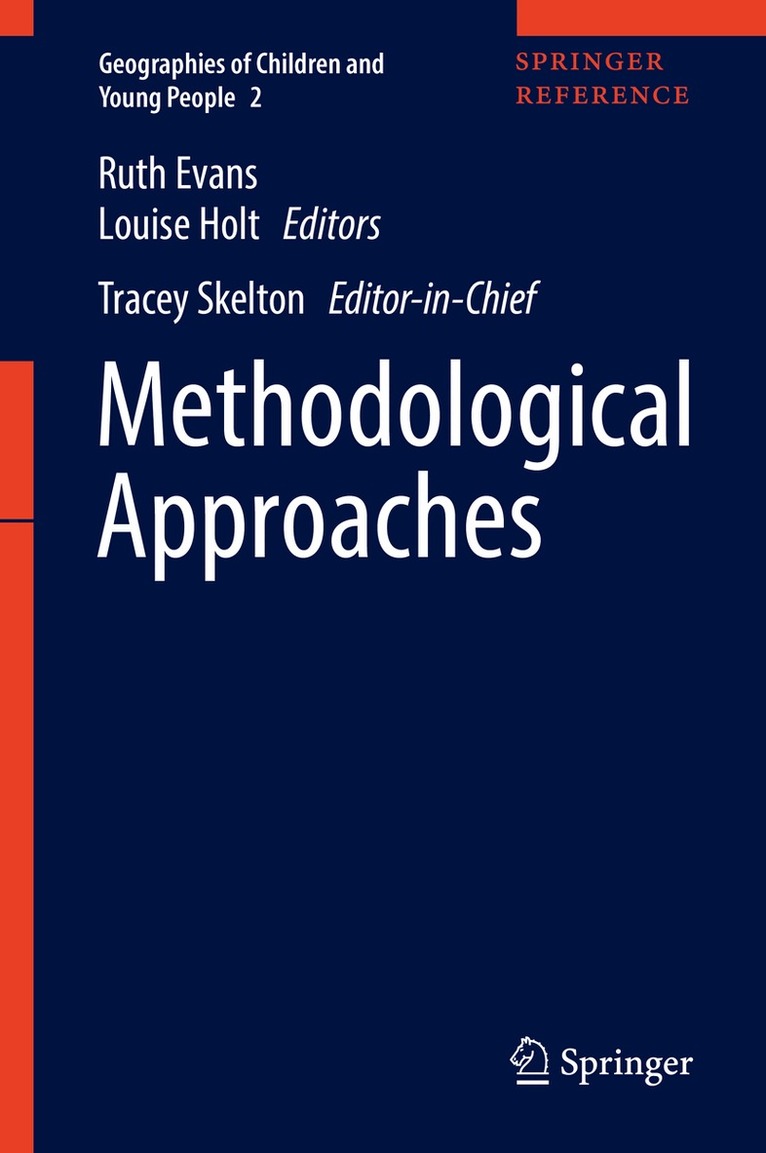
This volume presents the innovative methodologies, tools and techniques, as well as the challenges and ethical complexities of doing geographies of young people. Geographers of young people have reflected upon participation, power and how to approach young people, generating a vibrant and exciting methodological terrain, which this volume showcases. Understanding young people’s lives has challenged researchers to be creative in their research approaches. Facilitating research with, and alongside, young people and acknowledging, and endeavouring to address, adult-child power imbalances has prompted innovation, experimentation and adaptation which has applicability to all social scientists and geographers. The volume provides critical insights into underlying epistemological and ethical debates, along with practical methods and techniques that investigate young people’s geographies globally, across both majority and minority worlds. Many of the chapters consider how to facilitate participation and empowerment through the research process, and geographies of young people have a long tradition of co-production and participation in research. The collection is structured into three sections with a focus on: methodological approaches and ethics; methods, tools and techniques; co-production, participation and power. In the first section, key epistemological and methodological approaches are considered, such as critical realism, and critical pedagogy, with discussion of their implications for research design and analysis. In the second section, chapters explore the potential and challenges of a variety of innovative participatory tools: mobile technologies, geospatial methods, creative visual methods, participatory video. In the third section, chapters reflect on endeavours to promote more empowering, co-productive research including rights-based research, young people as researchers, and community engagement with young people. The collection highlights the specific methodological and ethical issues raised by relatively neglected techniques, such as archival research, autoethnography, qualitative longitudinal research and mobile interviewing. It addresses how barriers to participation with groups who are often more silenced and marginalised can be addressed, such as when conducting research with migrant and asylum seeking children in the minority world and with street youth and disabled young people in the majority world. The volume explores issues of data analysis, interpretation and dissemination, such as interpreting visual ethnography and the process of participatory dissemination.