Lu Qi - Böcker
Visar alla böcker från författaren Lu Qi. Handla med fri frakt och snabb leverans.
4 produkter
4 produkter
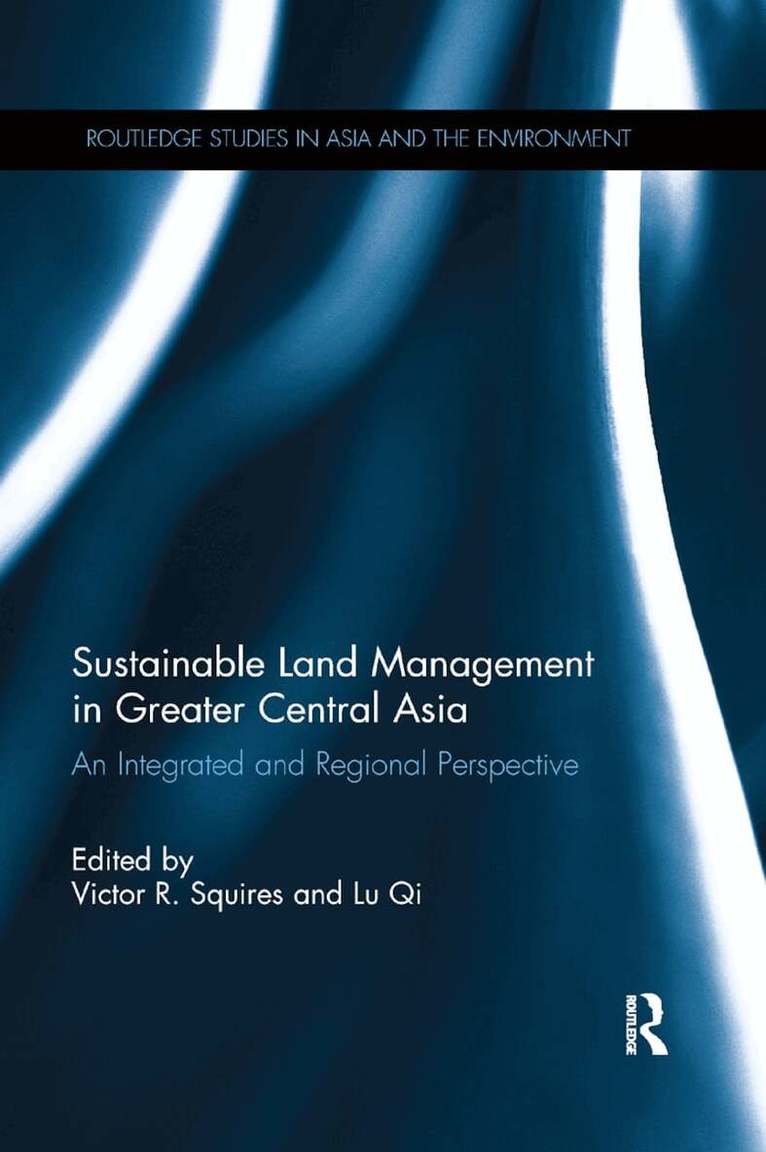
Sustainable Land Management in Greater Central Asia
An Integrated and Regional Perspective
Häftad, Engelska, 2019
638 kr
Skickas inom 10-15 vardagar
Greater Central Asia encompasses a vast area that includes deserts, natural grasslands, steppes, shrublands and alpine regions. Many of these land types are degraded and productivity is falling at a time when human populations and livestock inventories are on the rise. Ecosystem stability and biodiversity are under threat and there is an urgent need to develop more sustainable land management regimes. This book uses an integrated regional approach to provide a comprehensive exploration of sustainable land development in Central Asia. An interdisciplinary team of experts analyses the economic, ecological, sociological, technological and political factors surrounding sustainable land and water management in the region, sharing potential problems and solutions. As international concern about desertification grows, the book concludes by asking how the region is likely to develop in the future. This book will be of value to scholars, students, policy makers and NGOs with an interest in sustainable development in Central Asia.
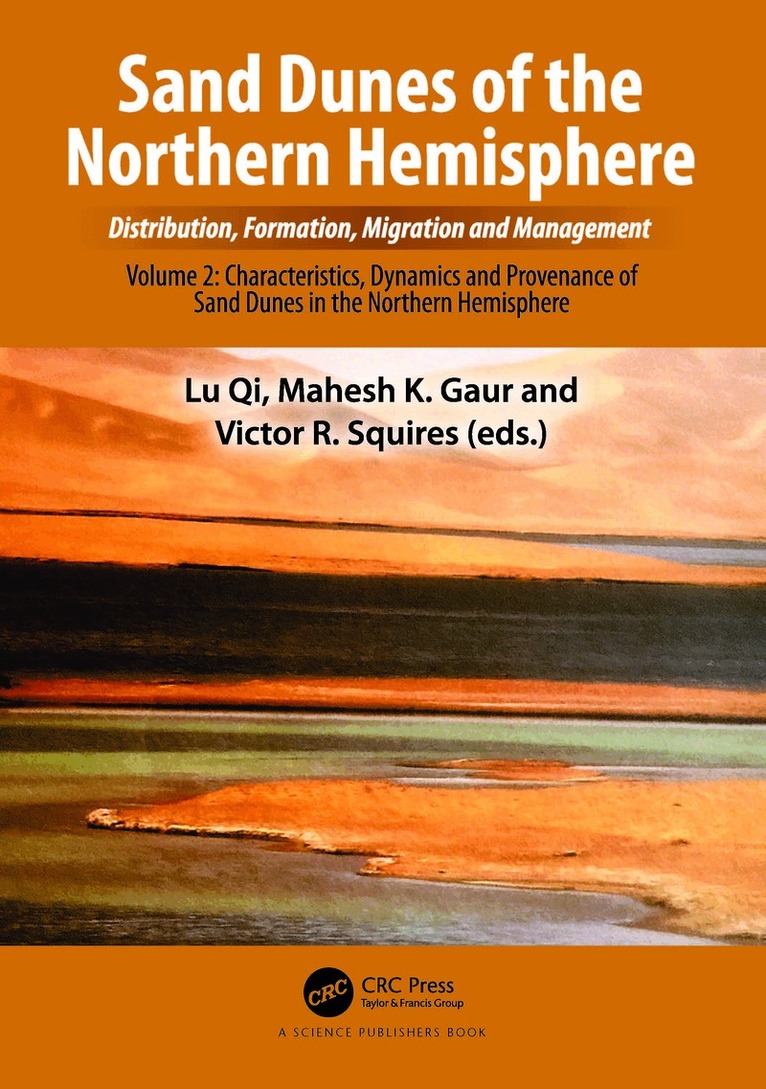
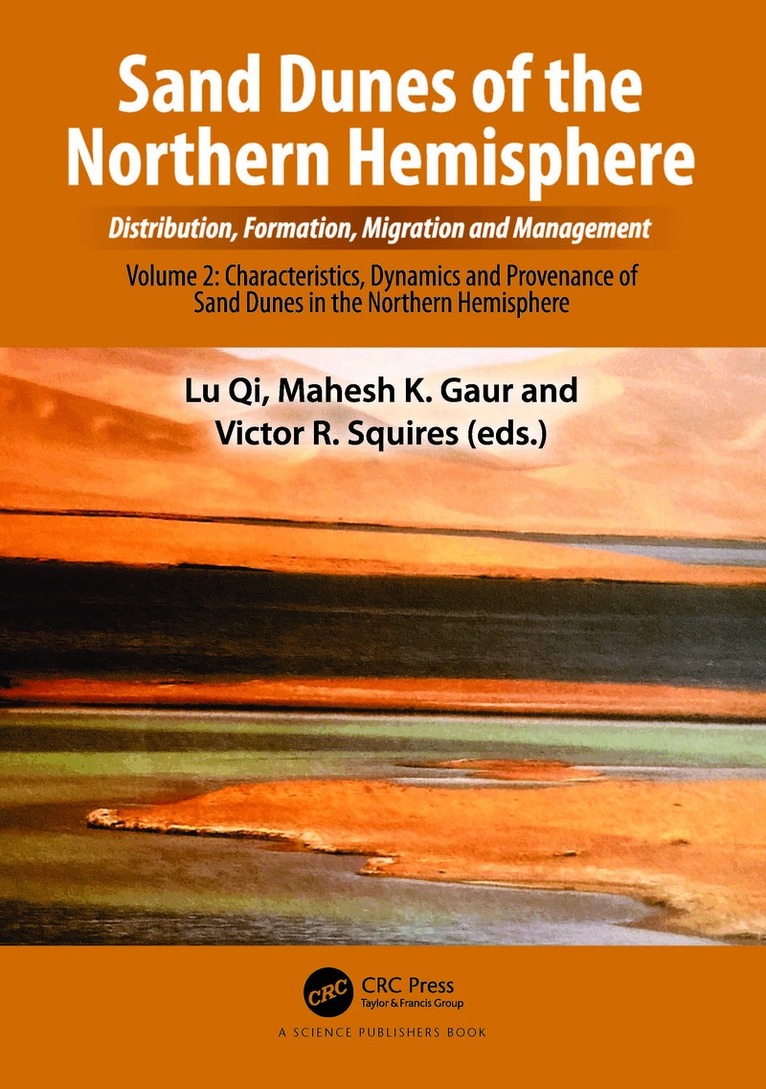
Sand Dunes of the Northern Hemisphere: Distribution, Formation, Migration and Management
Volume 2: Characteristics, Dynamics and Provenance of Sand Dunes in the Northern Hemisphere
Inbunden, Engelska, 2023
2 300 kr
Skickas inom 10-15 vardagar
Volume 2 of the book ‘Sand Dunes of the Northern Hemisphere’ is sub-titled Characteristics, Dynamics and Provenance of Sand Dunes in the Northern Hemisphere. It brings together a vast body of information and insight into sand dune and desert systems from North Asia, Central Asia, North Africa and the Middle East. Chapters from the Russian Federation include studies on dune systems within the permafrost zone and there is a case study from temperate zone dune system in coastal Japan.Volume 2: Characteristics, Dynamics and Provenance of Sand Dunes in the Northern Hemisphere of 16 chapters in three Parts, focusses on Saharan Africa, Egypt, and Middle East and gives attention to sand mobility and encroachment with case studies from a number of countries where these matters are of concern. We also include chapters on the remote dunes in the permafrost zone and in the hyper-arid deserts of Iran. Case studies are used to highlight the characteristics of dunes and their interaction with humans in several widely divergent settings. Volume 2 concludes with some musing on the value of study of the past as key to the future and speculates on what the future might hold in the light of a warmer and drier Earth and a rise in sea level that threaten large tracts of low-lying land with marine incursions and destruction from storm surge.PART 4 Sand Mobility and EncroachmentThe seven chapters in this Part examine the real-world impact of sand encroachment and dune migration on people and their economic activities and the health, welfare and financial implications related to destruction of infrastructure, including human habitations.PART 5 Sand Dune Landscapes Distribution, Formation and ManagementSeven Case studies from several geographic regions in Africa, the Middle East, north-east Asia are presented here to demonstrate the underlying mechanisms in dune formation and the diverse approaches to their management. Human impacts such as sand mining, tourism development, combine with natural forces like climate variability to challenge the realization of an optimum management strategy.PART 6 Concluding Thoughts: Coping with an Unknown Future from a Little-known PastThe two chapters in Part 6 have special roles. We are privileged to publish new research findings that are summarized here in Chapter 38 from extensive and detailed work conducted in the Kyzyl Kum, and Karakum sand seas of Central Asia. There is a strong belief that further study of the little-known past such as revealed in this study could unlock clues as to what a future Earth might look like. This leads on to speculation in Chapter 39 about the implications of what we already know about global change (not only climate change) and the impact of the Anthropocene on the dune systems, both inland and coastal. Sea level rise, marine incursions and an increase in extreme weather events will affect dune systems and sand seas on the Northern Hemisphere (and beyond).
Sand Dunes of the Northern Hemisphere: Distribution, Formation, Migration and Management
Volume 2: Characteristics, Dynamics and Provenance of Sand Dunes in the Northern Hemisphere
Häftad, Engelska, 2025
851 kr
Skickas inom 10-15 vardagar
Volume 2 of the book ‘Sand Dunes of the Northern Hemisphere’ is sub-titled Characteristics, Dynamics and Provenance of Sand Dunes in the Northern Hemisphere. It brings together a vast body of information and insight into sand dune and desert systems from North Asia, Central Asia, North Africa and the Middle East. Chapters from the Russian Federation include studies on dune systems within the permafrost zone and there is a case study from temperate zone dune system in coastal Japan.Volume 2: Characteristics, Dynamics and Provenance of Sand Dunes in the Northern Hemisphere of 16 chapters in three Parts, focusses on Saharan Africa, Egypt, and Middle East and gives attention to sand mobility and encroachment with case studies from a number of countries where these matters are of concern. We also include chapters on the remote dunes in the permafrost zone and in the hyper-arid deserts of Iran. Case studies are used to highlight the characteristics of dunes and their interaction with humans in several widely divergent settings. Volume 2 concludes with some musing on the value of study of the past as key to the future and speculates on what the future might hold in the light of a warmer and drier Earth and a rise in sea level that threaten large tracts of low-lying land with marine incursions and destruction from storm surge.PART 4 Sand Mobility and EncroachmentThe seven chapters in this Part examine the real-world impact of sand encroachment and dune migration on people and their economic activities and the health, welfare and financial implications related to destruction of infrastructure, including human habitations.PART 5 Sand Dune Landscapes Distribution, Formation and ManagementSeven Case studies from several geographic regions in Africa, the Middle East, north-east Asia are presented here to demonstrate the underlying mechanisms in dune formation and the diverse approaches to their management. Human impacts such as sand mining, tourism development, combine with natural forces like climate variability to challenge the realization of an optimum management strategy.PART 6 Concluding Thoughts: Coping with an Unknown Future from a Little-known PastThe two chapters in Part 6 have special roles. We are privileged to publish new research findings that are summarized here in Chapter 38 from extensive and detailed work conducted in the Kyzyl Kum, and Karakum sand seas of Central Asia. There is a strong belief that further study of the little-known past such as revealed in this study could unlock clues as to what a future Earth might look like. This leads on to speculation in Chapter 39 about the implications of what we already know about global change (not only climate change) and the impact of the Anthropocene on the dune systems, both inland and coastal. Sea level rise, marine incursions and an increase in extreme weather events will affect dune systems and sand seas on the Northern Hemisphere (and beyond).
Sustainable Land Management in Greater Central Asia
An Integrated and Regional Perspective
Inbunden, Engelska, 2017
2 030 kr
Skickas inom 10-15 vardagar
Greater Central Asia encompasses a vast area that includes deserts, natural grasslands, steppes, shrublands and alpine regions. Many of these land types are degraded and productivity is falling at a time when human populations and livestock inventories are on the rise. Ecosystem stability and biodiversity are under threat and there is an urgent need to develop more sustainable land management regimes. This book uses an integrated regional approach to provide a comprehensive exploration of sustainable land development in Central Asia. An interdisciplinary team of experts analyses the economic, ecological, sociological, technological and political factors surrounding sustainable land and water management in the region, sharing potential problems and solutions. As international concern about desertification grows, the book concludes by asking how the region is likely to develop in the future. This book will be of value to scholars, students, policy makers and NGOs with an interest in sustainable development in Central Asia.