Lubos Brieda - Böcker
Visar alla böcker från författaren Lubos Brieda. Handla med fri frakt och snabb leverans.
3 produkter
3 produkter
1 083 kr
Skickas inom 10-15 vardagar
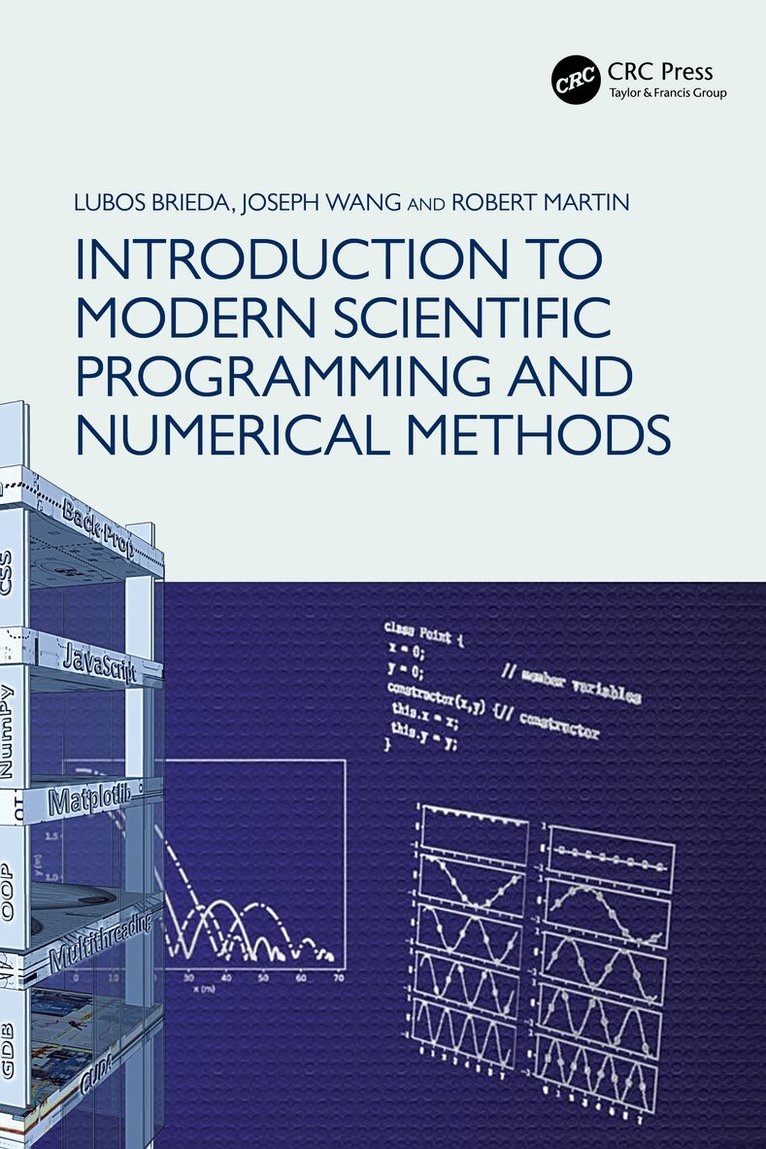
The ability to use computers to solve mathematical relationships is a fundamental skill for anyone planning for a career in science or engineering. For this reason, numerical analysis is part of the core curriculum for just about every undergraduate physics and engineering department. But for most physics and engineering students, practical programming is a self-taught process.This book introduces the reader not only to the mathematical foundation but also to the programming paradigms encountered in modern hybrid software-hardware scientific computing. After completing the text, the reader will be well-versed in the use of different numerical techniques, programming languages, and hardware architectures, and will be able to select the appropriate software and hardware tool for their analysis.It can serve as a textbook for undergraduate courses on numerical analysis and scientific computing courses within engineering and physical sciences departments. It will also be a valuable guidebook for researchers with experimental backgrounds interested in working with numerical simulations, or to any new personnel working in scientific computing or data analysis.Key Features:Includes examples of solving numerical problems in multiple programming languages, including MATLAB, Python, Fortran, C++, Arduino, Javascript, and VerilogProvides an introduction to modern high-performance computing technologies including multithreading, distributed computing, GPUs, microcontrollers, FPGAs, and web "cloud computing"Contains an overview of numerical techniques not found in other introductory texts including particle methods, finite volume and finite element methods, Vlasov solvers, and molecular dynamicsA video of the author discussing the book can be accessed here: https://www.youtube.com/watch?v=KYn8aDKXlcs
698 kr
Skickas inom 10-15 vardagar
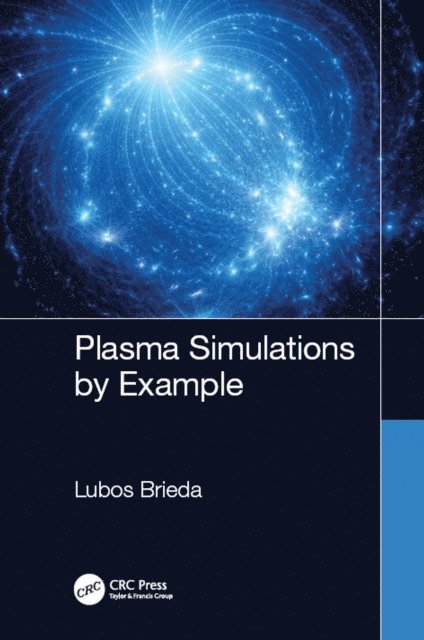
The study of plasmas is crucial in improving our understanding of the universe, and they are being increasingly utilised in key technologies such as spacecraft thrusters, plasma medicine, and fusion energy. Providing readers with an easy to follow set of examples that clearly illustrate how simulation codes are written, this book guides readers through how to develop C++ computer codes for simulating plasmas primarily with the kinetic Particle in Cell (PIC) method. This text will be invaluable to advanced undergraduates and graduate students in physics and engineering looking to learn how to put the theory to the test.Features: Provides a step-by-step introduction to plasma simulations with easy to follow examples Discusses the electrostatic and electromagnetic Particle in Cell (PIC) method on structured and unstructured meshes, magnetohydrodynamics (MHD), and Vlasov solvers Covered topics include Direct Simulation Monte Carlo (DSMC) collisions, surface interactions, axisymmetry, and parallelization strategies. Lubos Brieda has over 15 years of experience developing plasma and gas simulation codes for electric propulsion, contamination transport, and plasma-surface interactions. As part of his master’s research work, he developed a 3D ES-PIC electric propulsion plume code, Draco, which is to this date utilized by government labs and private aerospace firms to study plasma thruster plumes. His Ph.D, obtained in 2012 from George Washington University, USA, focused on a multi-scale model for Hall thrusters utilizing fluid-kinetic hybrid PIC codes. He has since then been involved in numerous projects involving development and the use of plasma simulation tools. Since 2014 he has been teaching online courses on plasma simulations through his website: particleincell.com.
2 557 kr
Skickas inom 10-15 vardagar
The study of plasmas is crucial in improving our understanding of the universe, and they are being increasingly utilised in key technologies such as spacecraft thrusters, plasma medicine, and fusion energy. Providing readers with an easy to follow set of examples that clearly illustrate how simulation codes are written, this book guides readers through how to develop C++ computer codes for simulating plasmas primarily with the kinetic Particle in Cell (PIC) method. This text will be invaluable to advanced undergraduates and graduate students in physics and engineering looking to learn how to put the theory to the test.Features:Provides a step-by-step introduction to plasma simulations with easy to follow examplesDiscusses the electrostatic and electromagnetic Particle in Cell (PIC) method on structured and unstructured meshes, magnetohydrodynamics (MHD), and Vlasov solversCovered topics include Direct Simulation Monte Carlo (DSMC) collisions, surface interactions, axisymmetry, and parallelization strategies.A video of the author discussinf the book can be accessed here: https://www.youtube.com/watch?v=HIlzx0DXIes