Joseph Wang - Böcker
Visar alla böcker från författaren Joseph Wang. Handla med fri frakt och snabb leverans.
10 produkter
10 produkter
1 361 kr
Skickas inom 7-10 vardagar
This book broadly reviews the modem techniques and significant applications of chemical sensors and biosensors. Chapters are written by experts in the field - including Professor Joseph Wang, the most cited scientist in the world and renowned expert on sensor science who is also co-editor. Each chapter provides technical details beyond the level found in typical journal articles, and explores the application of chemical sensors and biosensors to a significant problem in biomedical science, also providing a prospectus for the future.This book compiles the expert knowledge of many specialists in the construction and use of chemical sensors and biosensors including nitric oxide sensors, glucose sensors, DNA sensors, hydrogen sulfide sensors, oxygen sensors, superoxide sensors, immuno sensors, lab on chip, implatable microsensors, et al. Emphasis is laid on practical problems, ranging from chemical application to biomedical monitoring and from in vitro to in vivo, from single cell to animal to human measurement. This provides the unique opportunity of exchanging and combining the expertise of otherwise apparently unrelated disciplines of chemistry, biological engineering, and electronic engineering, medical, physiological.Provides user-oriented guidelines for the proper choice and application of new chemical sensors and biosensorsDetails new methodological advancements related to and correlated with the measurement of interested species in biomedical samplesContains many case studies to illustrate the range of application and importance of the chemical sensors and biosensors
1 085 kr
Skickas inom 10-15 vardagar
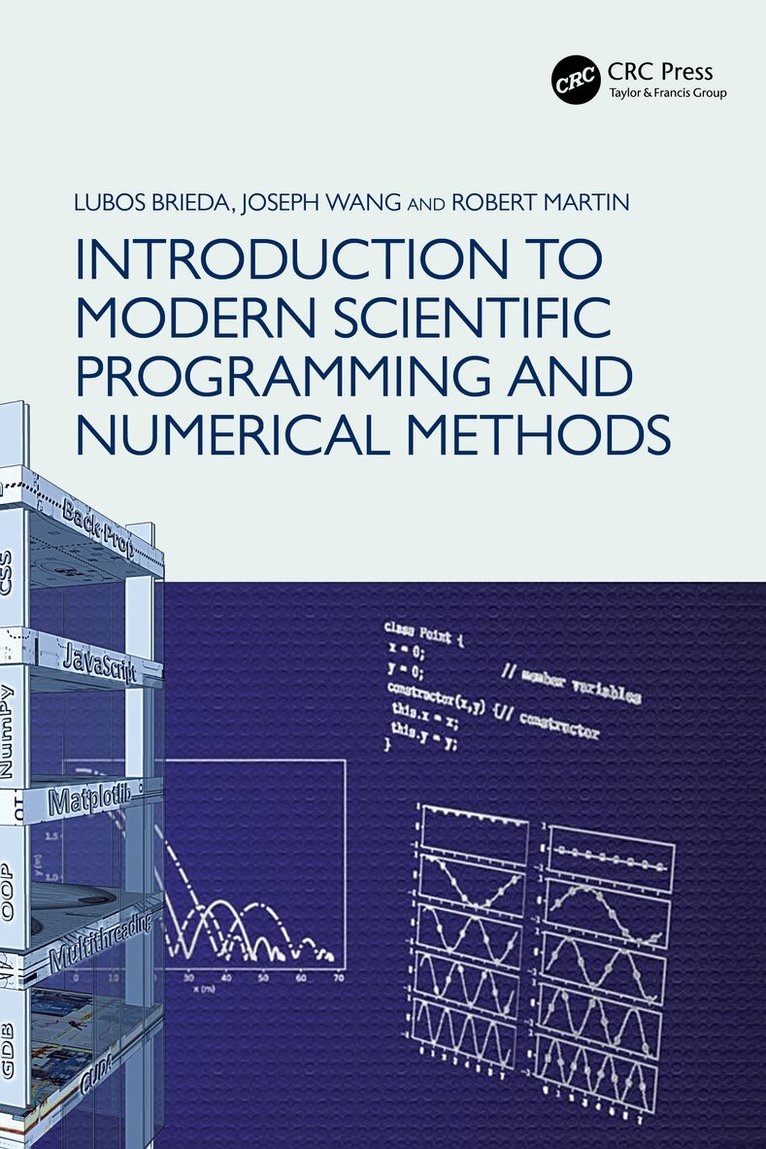
The ability to use computers to solve mathematical relationships is a fundamental skill for anyone planning for a career in science or engineering. For this reason, numerical analysis is part of the core curriculum for just about every undergraduate physics and engineering department. But for most physics and engineering students, practical programming is a self-taught process.This book introduces the reader not only to the mathematical foundation but also to the programming paradigms encountered in modern hybrid software-hardware scientific computing. After completing the text, the reader will be well-versed in the use of different numerical techniques, programming languages, and hardware architectures, and will be able to select the appropriate software and hardware tool for their analysis.It can serve as a textbook for undergraduate courses on numerical analysis and scientific computing courses within engineering and physical sciences departments. It will also be a valuable guidebook for researchers with experimental backgrounds interested in working with numerical simulations, or to any new personnel working in scientific computing or data analysis.Key Features:Includes examples of solving numerical problems in multiple programming languages, including MATLAB, Python, Fortran, C++, Arduino, Javascript, and VerilogProvides an introduction to modern high-performance computing technologies including multithreading, distributed computing, GPUs, microcontrollers, FPGAs, and web "cloud computing"Contains an overview of numerical techniques not found in other introductory texts including particle methods, finite volume and finite element methods, Vlasov solvers, and molecular dynamicsA video of the author discussing the book can be accessed here: https://www.youtube.com/watch?v=KYn8aDKXlcs
2 582 kr
Skickas inom 7-10 vardagar
This practical introduction to all the elextroanalytical techniques that are used in clinical chemistry and laboratory medicine is the only in-depth treatment of the subject available. The author presents the relevant theory and uses numerous examples to illustrate the scope and possibilities of electroanalysis in the clinical laboratory. The material covered includes the principles and bioanalytical applications of voltammetry and potentiometry, electrochemical biosensors, detectors to flowing steams, and in vivo electrochemistry. The book should be useful to those considering the use of electroanalysis in their laboratories and to clinical chemists experienced in electroanalysis
125 kr
Skickas inom 5-8 vardagar
2 118 kr
Skickas inom 10-15 vardagar
Biosensors offer distinct advantages over standard analytical methods for the direct monitoring of environmental pollutants in the field, such as real-time detection with minimum sample preparation and handling. This work highlights advantages that will be of value to a range of scientists, researchers and students dealing with analytical and environmental chemistry and biosensor technology. It presents recent trends in analytical methodology for the determination of indoor and outdoor pollutants, advances in DNA, biological and recognition-based sensors, examples of biosensors for use in field and water analysis, biosensors based on non-aqueous systems, and recent advances in the miniaturization and micromachining of biosensors.
1 343 kr
Skickas inom 7-10 vardagar
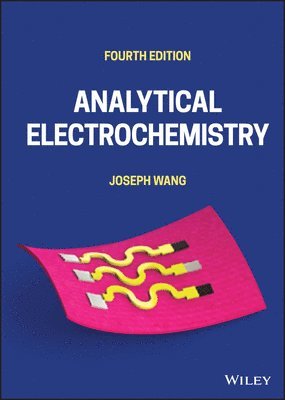
ANALYTICAL ELECTROCHEMISTRY An accessible and robust text with comprehensive coverage of modern electroanalytical techniques and devices In the newly revised 4th edition of Analytical Electrochemistry, distinguished researcher Dr. Joseph Wang delivers an authoritative and comprehensive discussion of modern electroanalytical techniques and devices. With a strong focus on electroanalysis (as opposed to physical electrochemistry), the book offers readers a thorough grounding in the fundamentals of electrode reactions and the principles of electrochemical methods. It also demonstrates the solving of real-life analytical problems using the techniques discussed within. This latest edition contains extensive updates to the cited literature and its descriptions of various electrochemical processes and techniques. Additional worked examples are included in the text and numerous quantitative questions and exercise problems are found at the end of each chapter. Readers will also find: A thorough introduction to the fundamental concepts of electroanalysis, including discussions of Faradaic processes, electrical double layers, and the electrocapillary effectComprehensive explorations of the study of electrode reactions, interfacial properties, and controlled potential techniquesPractical discussions of the practical considerations of electroanalysis, including electrochemical cells, solvents and supporting electrolytes, and instrumentationDetailed treatments of potentiometry and electrochemical sensors, including ion selective electrodes, electrochemical biosensors and wearable devicesPerfect for graduate students studying electroanalytical chemistry, Analytical Electrochemistry will also benefit advanced undergraduate students taking courses in instrumental analysis, as well as academics and industrial professionals considering the use of electroanalysis in their labs.
1 638 kr
Skickas inom 10-15 vardagar
This book will cover the full scope of nanobiosensing, which combines the newest research results in the cross-disciplines of chemistry, biology, and materials science with biosensing and bioanalysis to develop novel detection principles, sensing mechanisms, and device engineering methods. It not only covers the important types of nanomaterials for biosensing applications, including carbon nanotubes, carbon nanofiber, quantum dots, fullerenes, fluorescent and biological molecules, etc., but also illustrates a wide range of sensing principles, including electrochemical detection, fluorescence, chemiluminesence, antibody-antigen interactions, and magnetic detection.The book details novel developments in the methodology and devices of biosensing and bioanalysis combined with nanoscience and nanotechnology, as well as their applications in biomedicine and environmental monitoring. Furthermore, the reported works on the application and biofunction of nanoparticles have attracted extensive attention and interest, thus they are of particular interest to readers.The reader will obtain a rich survey of nanobiosensing technology, including the principles and application of biosensing, the design and biofunctionalization of bionanomaterials, as well as the methodology to develop biosensing devices and bioanalytical systems.
1 638 kr
Skickas inom 10-15 vardagar
This book will cover the full scope of nanobiosensing, which combines the newest research results in the cross-disciplines of chemistry, biology, and materials science with biosensing and bioanalysis to develop novel detection principles, sensing mechanisms, and device engineering methods.
1 672 kr
Skickas inom 5-8 vardagar
This second of two volumes brings together invited papers of the 32nd International Wittgenstein Symposium (Kirchberg/W. (Austria), 2009). The collection not only contains articles related to some of Wittgenstein’s central arguments but also holds contributions that deal with the role and function of signs, as well as with the relations between language and action, consciousness and metaphysics. An interdisciplinary workshop was dedicated to “Wittgenstein and Literature”, an area of study which has been prominent in the philosophical discourse of the last decade. Contributors to this volume are Anat Biletzki, Michael Dummett, Laurence Goldstein, Peter Janich, Brian McGuinness, Marjorie Perloff, David Schalkwyk, Joachim Schulte, Pirmin Stekeler-Weithofer, David Stern, Eike von Savigny among others.
2 118 kr
Skickas inom 10-15 vardagar
Biosensors offer clear and distinct advantages over standard analytical methods for the direct monitoring of environmental pollutants in the field, such as real-time detection with minimum sample preparation and handling. The present book highlights recent advantages that will be of great value to a range of scientists, researchers and students dealing with analytical and environmental chemistry and biosensor technology. It presents recent trends in analytical methodology for the determination of indoor and outdoor pollutants, advances in DNA, biological and recognition-based sensors, examples of biosensors for use in field and water analysis, biosensors based on non-aqueous systems, and recent advances in the miniaturisation and micromachining of biosensors.