Xueji Zhang - Böcker
Visar alla böcker från författaren Xueji Zhang. Handla med fri frakt och snabb leverans.
5 produkter
5 produkter
1 361 kr
Skickas inom 7-10 vardagar
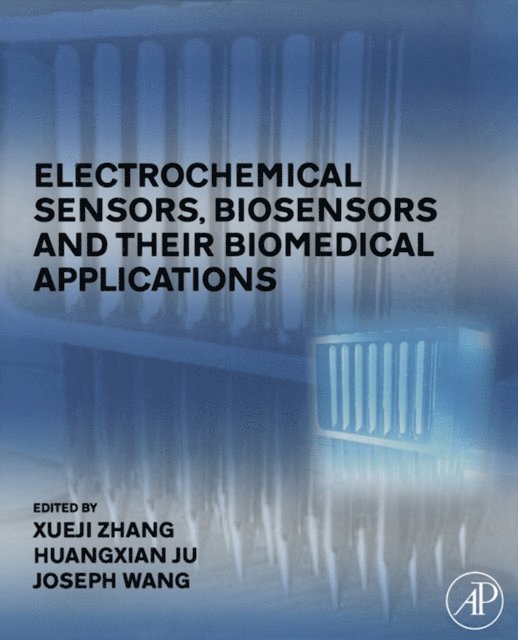
This book broadly reviews the modem techniques and significant applications of chemical sensors and biosensors. Chapters are written by experts in the field - including Professor Joseph Wang, the most cited scientist in the world and renowned expert on sensor science who is also co-editor. Each chapter provides technical details beyond the level found in typical journal articles, and explores the application of chemical sensors and biosensors to a significant problem in biomedical science, also providing a prospectus for the future.This book compiles the expert knowledge of many specialists in the construction and use of chemical sensors and biosensors including nitric oxide sensors, glucose sensors, DNA sensors, hydrogen sulfide sensors, oxygen sensors, superoxide sensors, immuno sensors, lab on chip, implatable microsensors, et al. Emphasis is laid on practical problems, ranging from chemical application to biomedical monitoring and from in vitro to in vivo, from single cell to animal to human measurement. This provides the unique opportunity of exchanging and combining the expertise of otherwise apparently unrelated disciplines of chemistry, biological engineering, and electronic engineering, medical, physiological.Provides user-oriented guidelines for the proper choice and application of new chemical sensors and biosensorsDetails new methodological advancements related to and correlated with the measurement of interested species in biomedical samplesContains many case studies to illustrate the range of application and importance of the chemical sensors and biosensors
1 849 kr
Skickas inom 11-20 vardagar
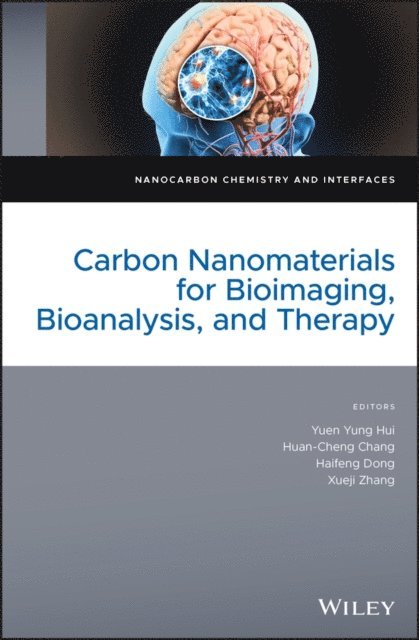
A comprehensive reference on biochemistry, bioimaging, bioanalysis, and therapeutic applications of carbon nanomaterialsCarbon nanomaterials have been widely applied for biomedical applications in the past few decades, because of their unique physical properties, versatile functionalization chemistry, and biological compatibility. This book provides background knowledge at the entry level into the biomedical applications of carbon nanomaterials, focusing on three applications: bioimaging, bioanalysis, and therapy.Carbon Nanomaterials for Bioimaging, Bioanalysis and Therapy begins with a general introduction to carbon nanomaterials for biomedical applications, including a discussion about the pros and cons of various carbon nanomaterials for the respective therapeutic applications. It then goes on to cover fluorescence imaging; deep tissue imaging; photoacoustic imaging; pre-clinical/clinical bioimaging applications; carbon nanomaterial sensors for cancer and disease diagnosis; targeted cancer therapy; and photothermal/photodynamic therapy. Each chapter briefly introduces the biomedical application and emphasizes the most appropriate carbon nanomaterial(s) for the application. Provides an introduction to the biomedical applications of carbon nanomaterials for early-career scientists, as well as background and context for mid-career scientists and researchersContains four sections covering biochemistry, bioimaging, bioanalysis, and therapeutic applications of carbon nanomaterialsPresented by experts who have strong background in the field of nanotechnology for biomedical applicationsCovers a hot area of research which has very unique physical properties, versatile functionalization chemistry, and biological compatibilityCarbon Nanomaterials for Bioimaging, Bioanalysis and Therapy is an excellent resource for academic researchers and industrial scientists working on preparation and bio-application of carbon nanomaterials, biomedical engineering, and nanotechnology.
1 625 kr
Skickas inom 10-15 vardagar
This book will cover the full scope of nanobiosensing, which combines the newest research results in the cross-disciplines of chemistry, biology, and materials science with biosensing and bioanalysis to develop novel detection principles, sensing mechanisms, and device engineering methods. It not only covers the important types of nanomaterials for biosensing applications, including carbon nanotubes, carbon nanofiber, quantum dots, fullerenes, fluorescent and biological molecules, etc., but also illustrates a wide range of sensing principles, including electrochemical detection, fluorescence, chemiluminesence, antibody-antigen interactions, and magnetic detection.The book details novel developments in the methodology and devices of biosensing and bioanalysis combined with nanoscience and nanotechnology, as well as their applications in biomedicine and environmental monitoring. Furthermore, the reported works on the application and biofunction of nanoparticles have attracted extensive attention and interest, thus they are of particular interest to readers.The reader will obtain a rich survey of nanobiosensing technology, including the principles and application of biosensing, the design and biofunctionalization of bionanomaterials, as well as the methodology to develop biosensing devices and bioanalytical systems.
1 625 kr
Skickas inom 10-15 vardagar
This book will cover the full scope of nanobiosensing, which combines the newest research results in the cross-disciplines of chemistry, biology, and materials science with biosensing and bioanalysis to develop novel detection principles, sensing mechanisms, and device engineering methods.
552 kr
Skickas inom 10-15 vardagar
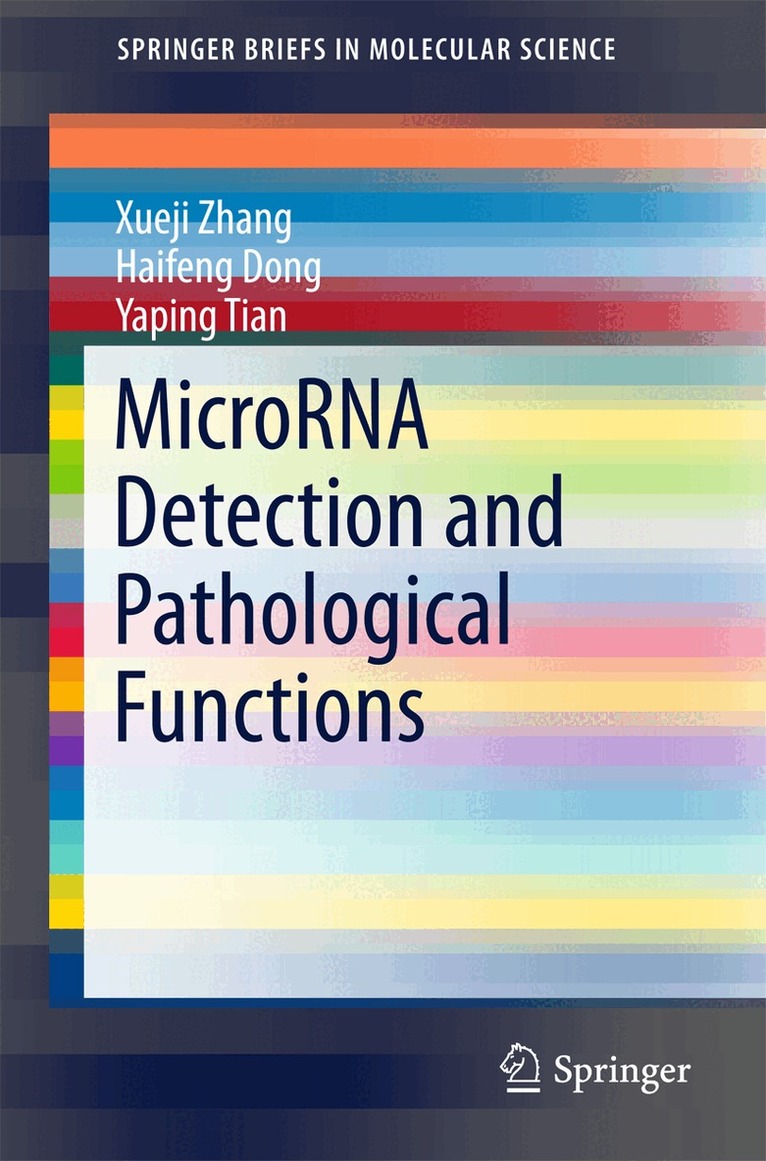
This book summarizes microRNA (miRNA) biology in a variety of pathological processes, emphasizing the significant potential applications of miRNA in diagnostics and prognostics, as well as novel drug targets. The conventional techniques used for miRNA detection including standard PCR, Northern blotting, microarray and clone methods are addressed. Recent emerging strategies in miRNA detection and quantification with superior flexibility and adaptability, such as novel molecular biological techniques and locked nucleic acid (LNA) modified probes, as well as nanotechnology-based approaches, are also included. The book also highlights the latest advances in clinical-related miRNA detection methods in living cells, circulating blood and tissue, such as in situ hybridization (ISH) and molecular imaging techniques, which are useful to elucidate the biogenesis and biological function of miRNAs in vivo. Finally, the respective advantages and drawbacks of various detection techniques in this fast-moving field are discussed, along with the challenges and promising new directions.This book offers a valuable resource for analytical chemists, biologists and physicians involved in miRNA research.Dr. Xueji Zhang and Dr. Haifeng Dong are Professors at the School of Chemistry & Biological Engineering, University of Science & Technology Beijing (USTB), China.Dr. Yaping Tian is a Professor at the Department of Clinical Biochemistry, Chinese PLA General Hospital and Military Medical School, China.