Luca Delgrossi - Böcker
Visar alla böcker från författaren Luca Delgrossi. Handla med fri frakt och snabb leverans.
3 produkter
3 produkter
1 624 kr
Skickas inom 10-15 vardagar
The advent of multimedia technology is creating a number of new problems in the fields of computer and communication systems. Perhaps the most important of these problems in communication, and certainly the most interesting, is that of designing networks to carry multimedia traffic, including digital audio and video, with acceptable quality. The main challenge in integrating the different services needed by the different types of traffic into the same network (an objective that is made worthwhile by its obvious economic advantages) is to satisfy the performance requirements of continuous media applications, as the quality of audio and video streams at the receiver can be guaranteed only if bounds on delay, delay jitters, bandwidth, and reliability are guaranteed by the network. Since such guarantees cannot be provided by traditional packet-switching technology, a number of researchers and research groups during the last several years have tried to meet the challenge by proposing new protocols or modifications of old ones, to make packet-switching networks capable of delivering audio and video with good quality while carrying all sorts of other traffic.The HeiTS architecture is based on using the Internet Stream Protocol Version 2 (ST-II) at the network layer. The Heidelberg researchers were the first to implement ST-II. The author documents this activity in the book and provides thorough coverage of the improvements made to the protocol. The book also includes coverage of HeiTP as used in error handling, error control, congestion control, and the full specification of ST2+, a new version of ST-II. The ideas and techniques implemented by the Heidelberg group and their coverage in this volume apply to many other approaches to multimedia networking.
Del 103 - Information and Communication Technology Series
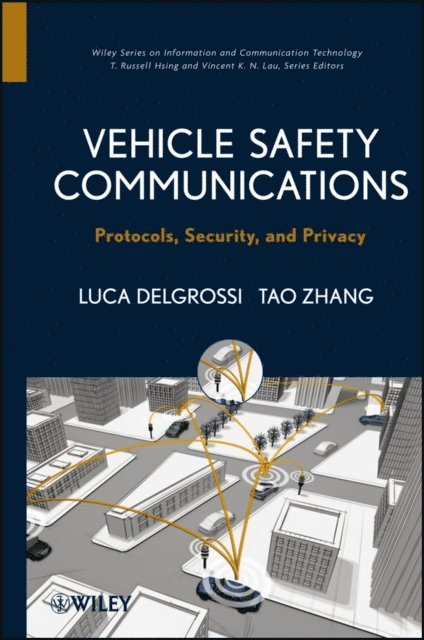
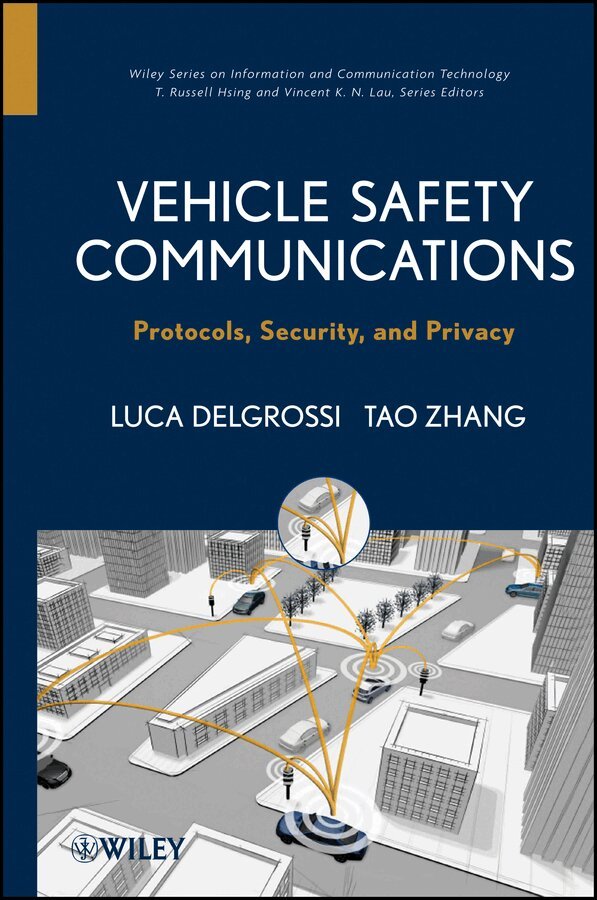
Vehicle Safety Communications
Protocols, Security, and Privacy
Inbunden, Engelska, 2012
1 339 kr
Skickas inom 7-10 vardagar
Provides an up-to-date, in-depth look at the current research, design, and implementation of cooperative vehicle safety communication protocols and technologyImproving traffic safety has been a top concern for transportation agencies around the world and the focus of heavy research and development efforts sponsored by both governments and private industries. Cooperative vehicle systems—which use sensors and wireless technologies to reduce traffic accidents—can play a major role in making the world's roads safer.Vehicle Safety Communications: Protocols, Security, and Privacy describes fundamental issues in cooperative vehicle safety and recent advances in technologies for enabling cooperative vehicle safety. It gives an overview of traditional vehicle safety issues, the evolution of vehicle safety technologies, and the need for cooperative systems where vehicles work together to reduce the number of crashes or mitigate damage when crashes become unavoidable.Authored by two top industry professionals, the book: Summarizes the history and current status of 5.9 GHz Dedicated Short Range Communications (DSRC) technology and standardization, discussing key issues in applying DSRC to support cooperative vehicle safetyFeatures an in-depth overview of on-board equipment (OBE) and roadside equipment (RSE) by describing sample designs to illustrate the key issues and potential solutionsTakes on security and privacy protection requirements and challenges, including how to design privacy-preserving digital certificate management systems and how to evict misbehaving vehiclesIncludes coverage of vehicle-to-infrastructure (V2I) communications like intersection collision avoidance applications and vehicle-to-vehicle (V2V) communications like extended electronic brake lights and intersection movement assistVehicle Safety Communications is ideal for anyone working in the areas of—or studying—cooperative vehicle safety and vehicle communications.
1 624 kr
Skickas inom 10-15 vardagar
The advent of multimedia technology is creating a number of new problems in the fields of computer and communication systems. Perhaps the most important of these problems in communication, and certainly the most interesting, is that of designing networks to carry multimedia traffic, including digital audio and video, with acceptable quality. The main challenge in integrating the different services needed by the different types of traffic into the same network (an objective that is made worthwhile by its obvious economic advantages) is to satisfy the performance requirements of continuous media applications, as the quality of audio and video streams at the receiver can be guaranteed only if bounds on delay, delay jitters, bandwidth, and reliability are guaranteed by the network. Since such guarantees cannot be provided by traditional packet-switching technology, a number of researchers and research groups during the last several years have tried to meet the challenge by proposing new protocols or modifications of old ones, to make packet-switching networks capable of delivering audio and video with good quality while carrying all sorts of other traffic. The focus of this book is on HeiTS (the Heidelberg Transport System), and its contributions to integrated services network design. The HeiTS architecture is based on using the Internet Stream Protocol Version 2 (ST-II) at the network layer. The Heidelberg researchers were the first to implement ST-II. The author documents this activity in the book and provides thorough coverage of the improvements made to the protocol. The book also includes coverage of HeiTP as used in error handling, error control, congestion control, and the full specification of ST2+, a new version of ST-II. The ideas and techniques implemented by the Heidelberg group and their coverage in this volume apply to many other approaches to multimedia networking.