Lucía Morales – författare
Visar alla böcker från författaren . Handla med fri frakt och snabb leverans.
6 produkter
6 produkter
Inbunden, Engelska, 2025
2 416 kr
Skickas inom 10-15 vardagar
In 2015, the United Nations introduced its very ambitious 2030 Agenda, known as the Sustainable Developmental Goals or SDGs. The SDGs provide a comprehensive list of goals and targets to address social, economic and environmental issues. In this book, different areas of expertise are brought together, examining the main challenges associated with the effects of “climate change” and the broader scope of the SDGs through the lenses of the geo-economics and geopolitics of sustainability. The book sheds light on the growing connections between the economic and financial fields and their impact on defining the international order and its economy. It examines the importance of trade and economic integration in promoting sustainable development and achieving the SDGs.The role of supranational organisations like the United Nations, the World Trade Organisation and the IMF in supporting the SDGs within the context of the world’s most advanced economies and those less developed; the influence of economic diplomacy and geopolitical rivalries on progress towards the SDGs; the changing global balance of power and the significance of technology and innovation; as well as the role of emerging and less developed economies in enabling sustainable development. The book offers insights into practical issues linked to theory and applied frameworks, underscoring the significant challenges associated with sustainable development, the global economic and political reality, and how political tensions affect the global economy.The book supports students through the established disciplines of economics, finance, political science, and law and provides academics with new research and theory-building tools.
Häftad, Engelska, 2026
679 kr
Skickas inom 10-15 vardagar
In 2015, the United Nations introduced its very ambitious 2030 Agenda, known as the Sustainable Developmental Goals or SDGs. The SDGs provide a comprehensive list of goals and targets to address social, economic and environmental issues. In this book, different areas of expertise are brought together, examining the main challenges associated with the effects of “climate change” and the broader scope of the SDGs through the lenses of the geo-economics and geopolitics of sustainability. The book sheds light on the growing connections between the economic and financial fields and their impact on defining the international order and its economy. It examines the importance of trade and economic integration in promoting sustainable development and achieving the SDGs.The role of supranational organisations like the United Nations, the World Trade Organisation and the IMF in supporting the SDGs within the context of the world’s most advanced economies and those less developed; the influence of economic diplomacy and geopolitical rivalries on progress towards the SDGs; the changing global balance of power and the significance of technology and innovation; as well as the role of emerging and less developed economies in enabling sustainable development. The book offers insights into practical issues linked to theory and applied frameworks, underscoring the significant challenges associated with sustainable development, the global economic and political reality, and how political tensions affect the global economy.The book supports students through the established disciplines of economics, finance, political science, and law and provides academics with new research and theory-building tools.
E-bok
PDF, Engelska, 2025805 kr
Läs direkt efter köp
In 2015, the United Nations introduced its very ambitious 2030 Agenda, known as the Sustainable Developmental Goals or SDGs. The SDGs provide a comprehensive list of goals and targets to address social, economic and environmental issues. In this book, different areas of expertise are brought together, examining the main challenges associated with the effects of "e;climate change"e; and the broader scope of the SDGs through the lenses of the geo-economics and geopolitics of sustainability. The book sheds light on the growing connections between the economic and financial fields and their impact on defining the international order and its economy. It examines the importance of trade and economic integration in promoting sustainable development and achieving the SDGs.The role of supranational organisations like the United Nations, the World Trade Organisation and the IMF in supporting the SDGs within the context of the world's most advanced economies and those less developed; the influence of economic diplomacy and geopolitical rivalries on progress towards the SDGs; the changing global balance of power and the significance of technology and innovation; as well as the role of emerging and less developed economies in enabling sustainable development. The book offers insights into practical issues linked to theory and applied frameworks, underscoring the significant challenges associated with sustainable development, the global economic and political reality, and how political tensions affect the global economy.The book supports students through the established disciplines of economics, finance, political science, and law and provides academics with new research and theory-building tools.
E-bok
Engelska, 2025805 kr
Läs direkt efter köp
In 2015, the United Nations introduced its very ambitious 2030 Agenda, known as the Sustainable Developmental Goals or SDGs. The SDGs provide a comprehensive list of goals and targets to address social, economic and environmental issues. In this book, different areas of expertise are brought together, examining the main challenges associated with the effects of "e;climate change"e; and the broader scope of the SDGs through the lenses of the geo-economics and geopolitics of sustainability. The book sheds light on the growing connections between the economic and financial fields and their impact on defining the international order and its economy. It examines the importance of trade and economic integration in promoting sustainable development and achieving the SDGs.The role of supranational organisations like the United Nations, the World Trade Organisation and the IMF in supporting the SDGs within the context of the world's most advanced economies and those less developed; the influence of economic diplomacy and geopolitical rivalries on progress towards the SDGs; the changing global balance of power and the significance of technology and innovation; as well as the role of emerging and less developed economies in enabling sustainable development. The book offers insights into practical issues linked to theory and applied frameworks, underscoring the significant challenges associated with sustainable development, the global economic and political reality, and how political tensions affect the global economy.The book supports students through the established disciplines of economics, finance, political science, and law and provides academics with new research and theory-building tools.
Inbunden, Engelska, 2026
2 479 kr
Kommande
This book examines the complex interplay between peace, conflict, and power in an era of unprecedented global disruption. As traditional peace dynamics become increasingly overlaid by geo-economic and geopolitical interests, the volume explores how confrontational aspirations are reshaping international relations and the emerging global order. Through rigorous analysis of the interconnections between political, economic, military, and educational dimensions, the book demonstrates how conflict has become a guiding pattern behind state and non-state actors' actions. It reveals how geostrategic dynamics of peace and war are crucial in shaping how global actors portray and pursue their interests, with conflict serving as a mechanism by which access to resources, wealth, and power is contested and controlled. By situating contemporary conflicts within broader frameworks of geopolitical competition and geo-economic transformation, this book offers critical insights into how the dynamics of peace and war are being reconfigured in the twenty-first century.This book will be of interest to students and scholars across multiple disciplines, including international relations, peace and conflict studies, security studies, political economy, geopolitics, and global governance. It will also appeal to policy-makers, diplomacy practitioners, defense analysts, and international development professionals seeking to understand the evolving dynamics of global conflict and cooperation. Additionally, the volume serves as an essential resource for researchers examining the intersection of economic interests and military strategy, as well as those concerned with the future of multilateralism and international order.The chapters in this book were originally published as a special issue of Peace Review.
Inbunden, Engelska, 2023
1 727 kr
Skickas inom 5-8 vardagar
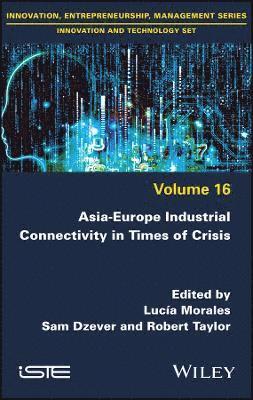
The main objective of this book is to offer an overview and a critical assessment of current connectivity issues in Asia and Europe, seen from an industrial perspective. Critical insights into the contemporary debate on connectivity during times of crisis, which has led to significant economic and social disruptions, are offered throughout the book. European and Asian countries seek to "bounce forward" and not "bounce back" as they navigate the complex economic recovery process. Innovation and investment emerge as critical players to help an economic recovery that shifts towards a more resilient and environmentally friendly approach, to ensure that the world economies stay connected.The global health crisis has revealed that, more than ever before, ubiquitous connectivity, underpinned by pioneering innovation, is a must. As such, governments worldwide need to ensure that businesses and societies emerge stronger and more resilient from existing and emerging crises by laying solid foundations that help to circumnavigate future disruptions of a global magnitude.