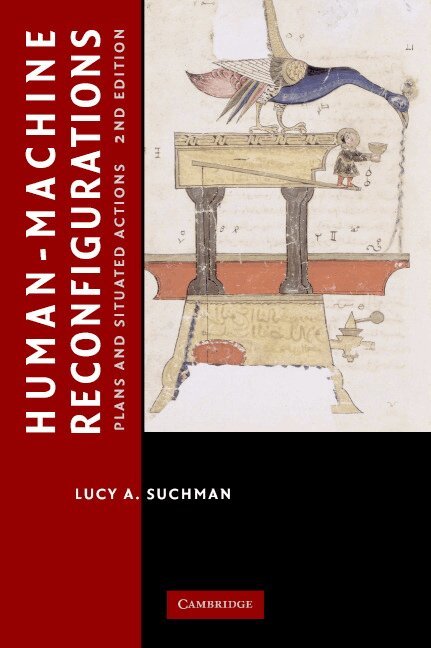
This 2007 book considers how agencies are currently figured at the human-machine interface, and how they might be imaginatively and materially reconfigured. Contrary to the apparent enlivening of objects promised by the sciences of the artificial, the author proposes that the rhetorics and practices of those sciences work to obscure the performative nature of both persons and things. The question then shifts from debates over the status of human-like machines, to that of how humans and machines are enacted as similar or different in practice, and with what theoretical, practical and political consequences. Drawing on scholarship across the social sciences, humanities and computing, the author argues for research aimed at tracing the differences within specific sociomaterial arrangements without resorting to essentialist divides. This requires expanding our unit of analysis, while recognizing the inevitable cuts or boundaries through which technological systems are constituted.
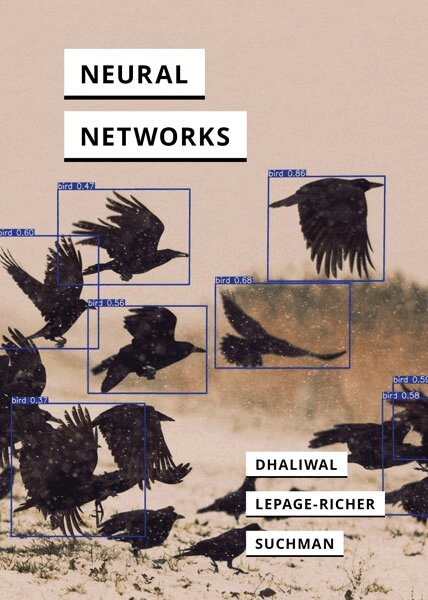
A critical examination of the figure of the neural network as it mediates neuroscientific and computational discourses and technical practicesNeural Networks proposes to reconstruct situated practices, social histories, mediating techniques, and ontological assumptions that inform the computational project of the same name. If so-called machine learning comprises a statistical approach to pattern extraction, then neural networks can be defined as a biologically inspired model that relies on probabilistically weighted neuron-like units to identify such patterns. Far from signaling the ultimate convergence of human and machine intelligence, however, neural networks highlight the technologization of neurophysiology that characterizes virtually all strands of neuroscientific and AI research of the past century. Taking this traffic as its starting point, this volume explores how cognition came to be constructed as essentially computational in nature, to the point of underwriting a technologized view of human biology, psychology, and sociability, and how countermovements provide resources for thinking otherwise.
This 2007 book considers how agencies are currently figured at the human-machine interface, and how they might be imaginatively and materially reconfigured. Contrary to the apparent enlivening of objects promised by the sciences of the artificial, the author proposes that the rhetorics and practices of those sciences work to obscure the performative nature of both persons and things. The question then shifts from debates over the status of human-like machines, to that of how humans and machines are enacted as similar or different in practice, and with what theoretical, practical and political consequences. Drawing on scholarship across the social sciences, humanities and computing, the author argues for research aimed at tracing the differences within specific sociomaterial arrangements without resorting to essentialist divides. This requires expanding our unit of analysis, while recognizing the inevitable cuts or boundaries through which technological systems are constituted.
A critical examination of the figure of the neural network as it mediates neuroscientific and computational discourses and technical practicesNeural Networks proposes to reconstruct situated practices, social histories, mediating techniques, and ontological assumptions that inform the computational project of the same name. If so-called machine learning comprises a statistical approach to pattern extraction, then neural networks can be defined as a biologically inspired model that relies on probabilistically weighted neuron-like units to identify such patterns. Far from signaling the ultimate convergence of human and machine intelligence, however, neural networks highlight the technologization of neurophysiology that characterizes virtually all strands of neuroscientific and AI research of the past century. Taking this traffic as its starting point, this volume explores how cognition came to be constructed as essentially computational in nature, to the point of underwriting a technologized view of human biology, psychology, and sociability, and how countermovements provide resources for thinking otherwise.