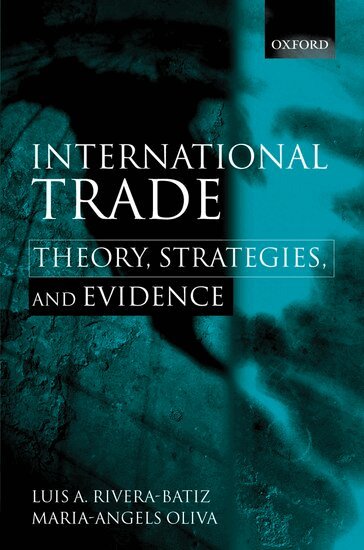
The field of international trade has been a focus of renewed debate for academics and policy-makers alike. The progressive integration of economics at a worldwide level have led to debates surrounding the migration of labor markets, restrictive trade practices, the impact of foreign investment, the role of cooperation through multilateral and regional agreements, and the enforceability of international agreements. This book reviews the new research findings and theoretical developments that have informed these debates, offering a balanced analytical account of American and European experiences, viewpoints, approaches and policy.Written in six parts, the first part examines the determinants of trade patterns, economic location, foreign investment and the interaction between trade and economic growth. The second part deals with strategic policy interventions. The third part examines the role of innovation, skills and contracts in trade and foreign direct investment. The fourth part focuses on trade reform, trade and investment restrictions and economic sanctions. The fifth part tackles the endogenous formation of policy through the interaction between interest groups and the government, block formation and a host of coexisting trade-restricting and -promoting practices. The sixth part focuses on the economics of the World Trade Organisation, cooperative agreements, and their sustainability.Comprehensive in its approach, this book will be of particular interest to graduate students, policymakers, and practitioners with an interest in international trade.
Del 68 - WORLD SCIENTIFIC STUDIES IN INTERNATIONAL ECONOMICS
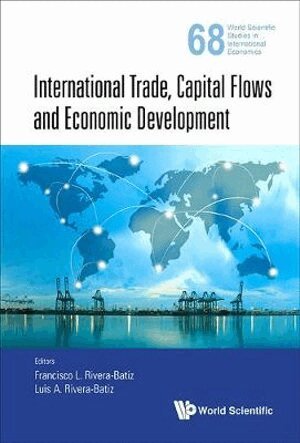
The impact of rising global trade and investment remains one of the most controversial topics among academics, policymakers and the public in general. This book written by international economists Francisco L Rivera-Batiz and Luis A Rivera-Batiz offers a collection of articles outlining the diverse consequences of trade liberalization and the elimination of barriers to international capital flows. The co-editors present a rich discussion of the theoretical approaches and empirical evidence available in economics to analyze globalization and its effects on growth, poverty and income distribution. Specifically, the book chapters examine how economic integration influences technological change and growth, the effects on poverty, income distribution and economic development, the consequences of liberalizing foreign direct investment, the impact of capital flows on emerging markets, and the role played by public sector governance and policies on trade and investment liberalization. Overall, this volume adopts diverse scientific approaches in analyzing globalization and its consequences.
The field of international trade has been a focus of renewed debate for academics and policy-makers alike. The progressive integration of economics at a worldwide level have led to debates surrounding the migration of labor markets, restrictive trade practices, the impact of foreign investment, the role of cooperation through multilateral and regional agreements, and the enforceability of international agreements. This book reviews the new research findings and theoretical developments that have informed these debates, offering a balanced analytical account of American and European experiences, viewpoints, approaches and policy.Written in six parts, the first part examines the determinants of trade patterns, economic location, foreign investment and the interaction between trade and economic growth. The second part deals with strategic policy interventions. The third part examines the role of innovation, skills and contracts in trade and foreign direct investment. The fourth part focuses on trade reform, trade and investment restrictions and economic sanctions. The fifth part tackles the endogenous formation of policy through the interaction between interest groups and the government, block formation and a host of coexisting trade-restricting and -promoting practices. The sixth part focuses on the economics of the World Trade Organisation, cooperative agreements, and their sustainability.Comprehensive in its approach, this book will be of particular interest to graduate students, policymakers, and practitioners with an interest in international trade.
Del 68 - WORLD SCIENTIFIC STUDIES IN INTERNATIONAL ECONOMICS
The impact of rising global trade and investment remains one of the most controversial topics among academics, policymakers and the public in general. This book written by international economists Francisco L Rivera-Batiz and Luis A Rivera-Batiz offers a collection of articles outlining the diverse consequences of trade liberalization and the elimination of barriers to international capital flows. The co-editors present a rich discussion of the theoretical approaches and empirical evidence available in economics to analyze globalization and its effects on growth, poverty and income distribution. Specifically, the book chapters examine how economic integration influences technological change and growth, the effects on poverty, income distribution and economic development, the consequences of liberalizing foreign direct investment, the impact of capital flows on emerging markets, and the role played by public sector governance and policies on trade and investment liberalization. Overall, this volume adopts diverse scientific approaches in analyzing globalization and its consequences.