Luke A. J. O'Neill – författare
Visar alla böcker från författaren Luke A. J. O'Neill. Handla med fri frakt och snabb leverans.
5 produkter
5 produkter
Inbunden, Engelska, 1995
1 016 kr
Skickas inom 7-10 vardagar
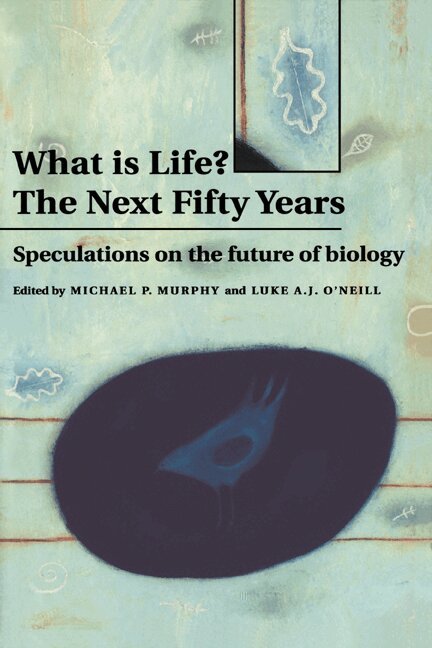
Erwin Schrödinger's book What is Life? had a tremendous influence on the development of molecular biology, stimulating scientists such as Watson and Crick to explore the physical basis of life. Much of the appeal of Schrödinger's book lay in its approach to the central problems in biology - heredity and how organisms use energy to maintain order - from a physicist's perspective. At Trinity College, Dublin a number of outstanding scientists from a range of disciplines gathered to celebrate the fiftieth anniversary of What is Life? and following Schrödinger's example fifty years previously, presented their views on the current central problems in biology. The contributors to this volume include Stephen Jay Gould, Roger Penrose, Jared Diamond, Manfred Eigen, John Maynard Smith, Christien de Duve and Lewis Wolpert. This collection is essential reading for anyone interested in biology and its future.
Häftad, Engelska, 1997
560 kr
Skickas inom 7-10 vardagar
Erwin Schrödinger's book What is Life? had a tremendous influence on the development of molecular biology, stimulating scientists such as Watson and Crick to explore the physical basis of life. Much of the appeal of Schrödinger's book lay in its approach to the central problems in biology - heredity and how organisms use energy to maintain order - from a physicist's perspective. At Trinity College, Dublin a number of outstanding scientists from a range of disciplines gathered to celebrate the fiftieth anniversary of What is Life? and following Schrödinger's example fifty years previously, presented their views on the current central problems in biology. The contributors to this volume include Stephen Jay Gould, Roger Penrose, Jared Diamond, Manfred Eigen, John Maynard Smith, Christien de Duve and Lewis Wolpert. This collection is essential reading for anyone interested in biology and its future.
Inbunden, Engelska, 2001
1 116 kr
Skickas inom 10-15 vardagar
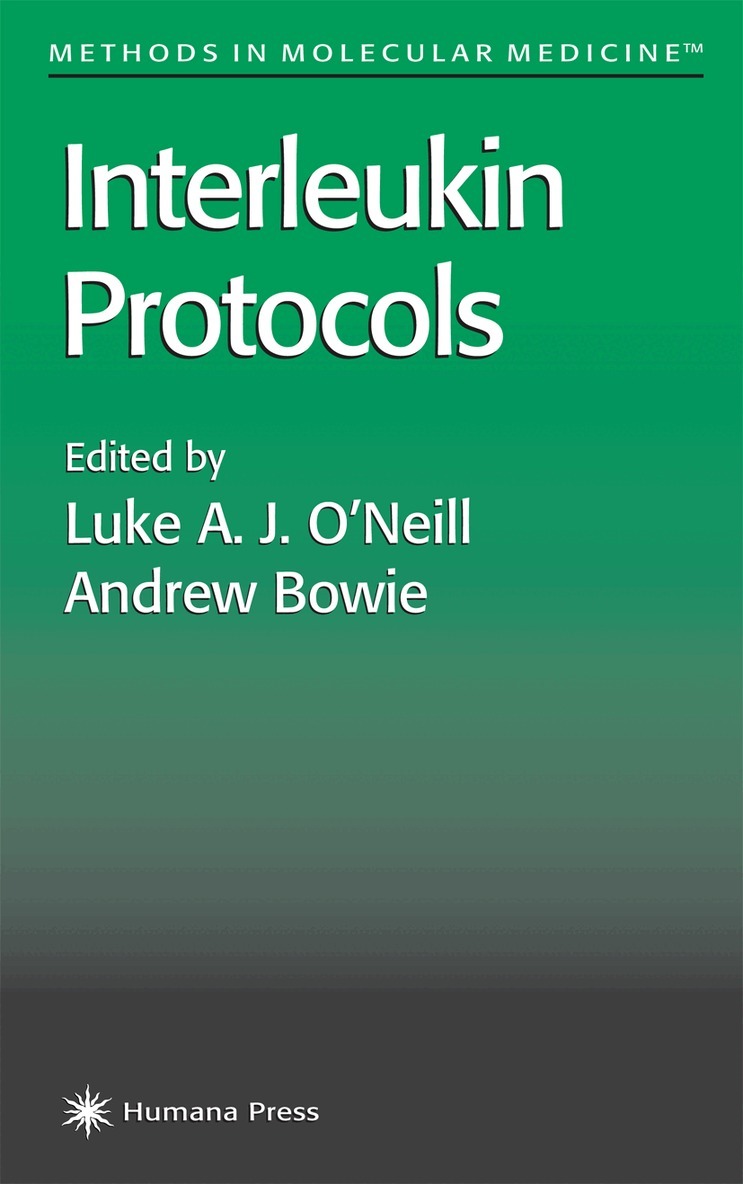
Luke O'Neill and Andrew Bowie bring together a collection of standard and advanced methods for measuring these powerful agents. Their readily reproducible techniques range from the assay of interleukin protein and mRNA - using ELISA, FACS, and RT-PCR - to the study of interleukin signal transduction. Newer techniques are also covered, including the analysis of interleukin gene polymorphisms and the use of cDNA microarrays. Many of the assays are geared to specific pathologies, including breast cancer, depression, psoriasis, Grave's disease, migraine, and myocardial infarction. Comprehensive and highly practical, Interleukin Protocols offers biomedical investigators a stellar collection of all the major techniques needed to analyze the role of interleukins in disease, to improve diagnosis, and to foster the rapid emergence of new and more powerful therapeutics.
E-bok
Engelska, 20081 459 kr
Läs direkt efter köp
Interleukins are a family of proteins that regulate the maturation, diff- entiation, or activation of cells involved in immunity and inflammation, and belong to a broader family termed cytokines. Collectively these proteins are the key orchestrators of host defense and the response to tissue injury. There are currently 23 different interleukins (numbered from IL-1 to IL-23), although the full extent of the interleukin family will only become clear upon analysis of the human genome sequence. Most important, interleukins are central to the pathogenesis of a wide range of diseases that involve an immune com- nent, including such conditions as rheumatoid arthritis, multiple sclerosis, ulcerative colitis, psoriasis, and asthma. Interleukins have also been imp- cated in other conditions, including cancer, migraine, myocardial infarction, and depression. In essence, when cells are activated by interleukins, a program of gene expression is initiated in the target cell that alters the cell’s phenotype, leading to enhanced immune reactivity, inflammation, and/or proliferation. Interleukins are therefore at the core of the cellular basis for many diseases. They are the subject of intense investigation by biomedical researchers and the targeting or use of interleukins in the clinic is proceeding apace. Approaches such as t- geting IL-4 in asthma or IL-1 in joint disease are being pursued, and it is likely that in the next 5–10 years a number of new therapies based on either inhib- ing or administering interleukins will be available.
Del 60 - Methods in Molecular Medicine
Interleukin Protocols
Häftad, Engelska, 2010
1 116 kr
Skickas inom 10-15 vardagar
Interleukins are a family of proteins that regulate the maturation, diff- entiation, or activation of cells involved in immunity and inflammation, and belong to a broader family termed cytokines. Collectively these proteins are the key orchestrators of host defense and the response to tissue injury. There are currently 23 different interleukins (numbered from IL-1 to IL-23), although the full extent of the interleukin family will only become clear upon analysis of the human genome sequence. Most important, interleukins are central to the pathogenesis of a wide range of diseases that involve an immune com- nent, including such conditions as rheumatoid arthritis, multiple sclerosis, ulcerative colitis, psoriasis, and asthma. Interleukins have also been imp- cated in other conditions, including cancer, migraine, myocardial infarction, and depression. In essence, when cells are activated by interleukins, a program of gene expression is initiated in the target cell that alters the cell’s phenotype, leading to enhanced immune reactivity, inflammation, and/or proliferation. Interleukins are therefore at the core of the cellular basis for many diseases. They are the subject of intense investigation by biomedical researchers and the targeting or use of interleukins in the clinic is proceeding apace. Approaches such as t- geting IL-4 in asthma or IL-1 in joint disease are being pursued, and it is likely that in the next 5–10 years a number of new therapies based on either inhib- ing or administering interleukins will be available.