M. Cecilia Gaposchkin – författare
Visar alla böcker från författaren M. Cecilia Gaposchkin. Handla med fri frakt och snabb leverans.
13 produkter
13 produkter
Häftad, Engelska, 2012
413 kr
Skickas inom 10-15 vardagar
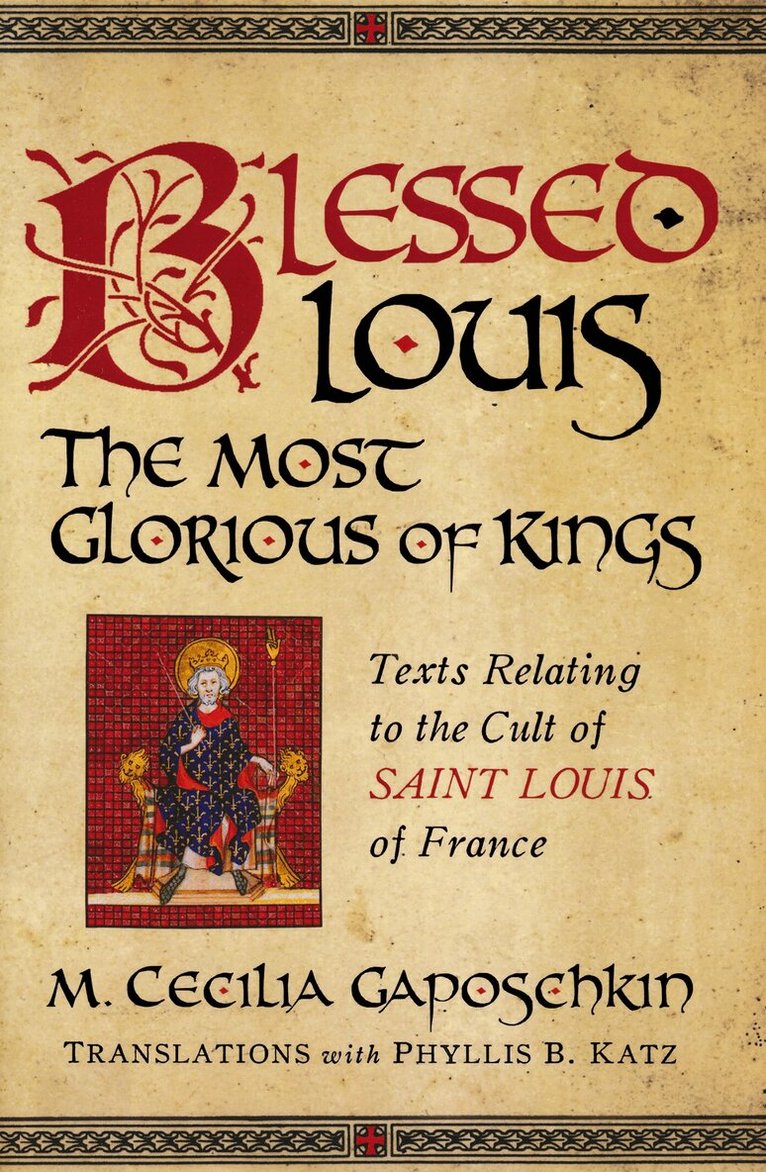
Louis IX, king of France from 1226 to 1270 and twice crusader, was canonized in 1297. He was the last king canonized during the medieval period, and was both one of the most important saints and one of the most important kings of the later Middle Ages. In Blessed Louis, the Most Glorious of Kings: Texts Relating to the Cult of Saint Louis of France, M. Cecilia Gaposchkin presents six previously untranslated texts that informed medieval views of St. Louis IX: two little-known but early and important vitae of Saint Louis; two unedited sermons by the Parisian preacher Jacob of Lausanne (d. 1322); and a liturgical office and proper mass in his honor—the most commonly used liturgical texts composed for Louis' feast day—which were widely copied, read, and disseminated in the Middle Ages. Gaposchkin's aim is to present to a diverse readership the Louis as he was known and experienced in the Middle Ages: a saint celebrated by the faithful for his virtue and his deeds. She offers for the first time to English readers a typical hagiographical view of Saint Louis, one in counterbalance to that set forth in Jean of Joinville's Life of Saint Louis. Although Joinville's Life has dominated our views of Louis, Joinville's famous account was virtually unknown beyond the French royal court in the Middle Ages and was not printed until the sixteenth century. His portrayal of Louis as an individual and deeply charismatic personality is remarkable, but it is fundamentally unrepresentative of the medieval understanding of Louis. The texts that Gaposchkin translates give immediate access to the reasons why medieval Christians took Louis to be a saint; the texts, and the image of Saint Louis presented in them, she argues, must be understood within the context of the developing history of sanctity and sainthood at the end of the Middle Ages.
Inbunden, Engelska, 2022
1 360 kr
Skickas inom 10-15 vardagar
Louis IX, king of France from 1226 to 1270 and twice crusader, was canonized in 1297. He was the last king canonized during the medieval period, and was both one of the most important saints and one of the most important kings of the later Middle Ages. In Blessed Louis, the Most Glorious of Kings: Texts Relating to the Cult of Saint Louis of France, M. Cecilia Gaposchkin presents six previously untranslated texts that informed medieval views of St. Louis IX: two little-known but early and important vitae of Saint Louis; two unedited sermons by the Parisian preacher Jacob of Lausanne (d. 1322); and a liturgical office and proper mass in his honor—the most commonly used liturgical texts composed for Louis' feast day—which were widely copied, read, and disseminated in the Middle Ages. Gaposchkin's aim is to present to a diverse readership the Louis as he was known and experienced in the Middle Ages: a saint celebrated by the faithful for his virtue and his deeds. She offers for the first time to English readers a typical hagiographical view of Saint Louis, one in counterbalance to that set forth in Jean of Joinville's Life of Saint Louis. Although Joinville's Life has dominated our views of Louis, Joinville's famous account was virtually unknown beyond the French royal court in the Middle Ages and was not printed until the sixteenth century. His portrayal of Louis as an individual and deeply charismatic personality is remarkable, but it is fundamentally unrepresentative of the medieval understanding of Louis. The texts that Gaposchkin translates give immediate access to the reasons why medieval Christians took Louis to be a saint; the texts, and the image of Saint Louis presented in them, she argues, must be understood within the context of the developing history of sanctity and sainthood at the end of the Middle Ages.
Inbunden, Engelska, 2008
632 kr
Skickas inom 10-15 vardagar
Canonized in 1297 as Saint Louis, King Louis IX of France (r. 1226–1270) was one of the most important kings of medieval history and also one of the foremost saints of the later Middle Ages. As a saint, Louis became the centerpiece of an ideological program that buttressed the ongoing political consolidation of France and underscored Capetian claims of sacred kingship. M. Cecilia Gaposchkin reconstructs and analyzes the process that led to the monarch's canonization and the consolidation and spread of his cult.Differing political and religious ideals produced competing images of the sanctity of Louis in late-thirteenth and early fourteenth-century France. Drawing on hagiography, sermons, and liturgical evidence—the latter a rich but little-explored historical source—Gaposchkin shows how various groups (including Dominicans, Cistercians, and Franciscans) and individuals (such as Philip the Fair and Joinville) used commemoration of the saint-king to sanctify their own politics and notions of identity and religious virtue. Louis' cult was disseminated to a wider, nonelite public through sermons in the fourteenth and fifteenth centuries and then revived by the Bourbon kings in the seventeenth century. In deepening our knowledge of this royal saint, this elegantly written book opens the curtain on the religious sensibilities and secular politics of a transitional period in European history.
Inbunden, Engelska, 2013
1 681 kr
Skickas inom 10-15 vardagar
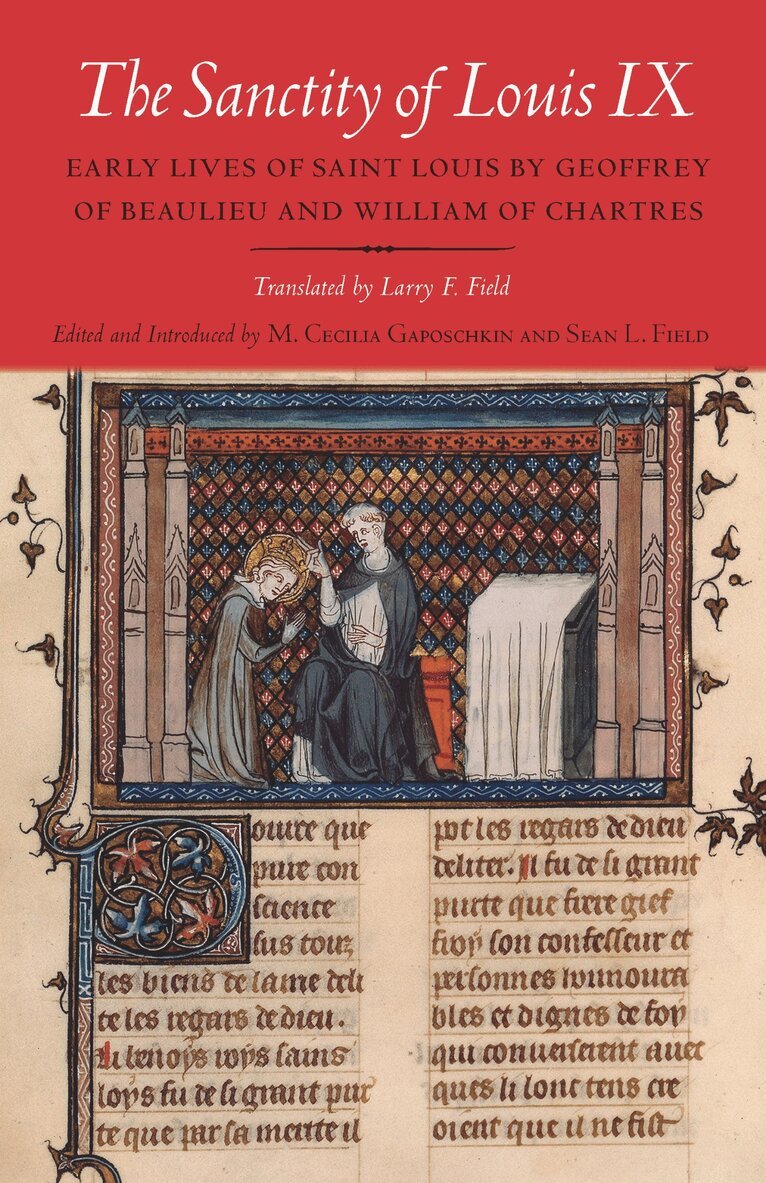
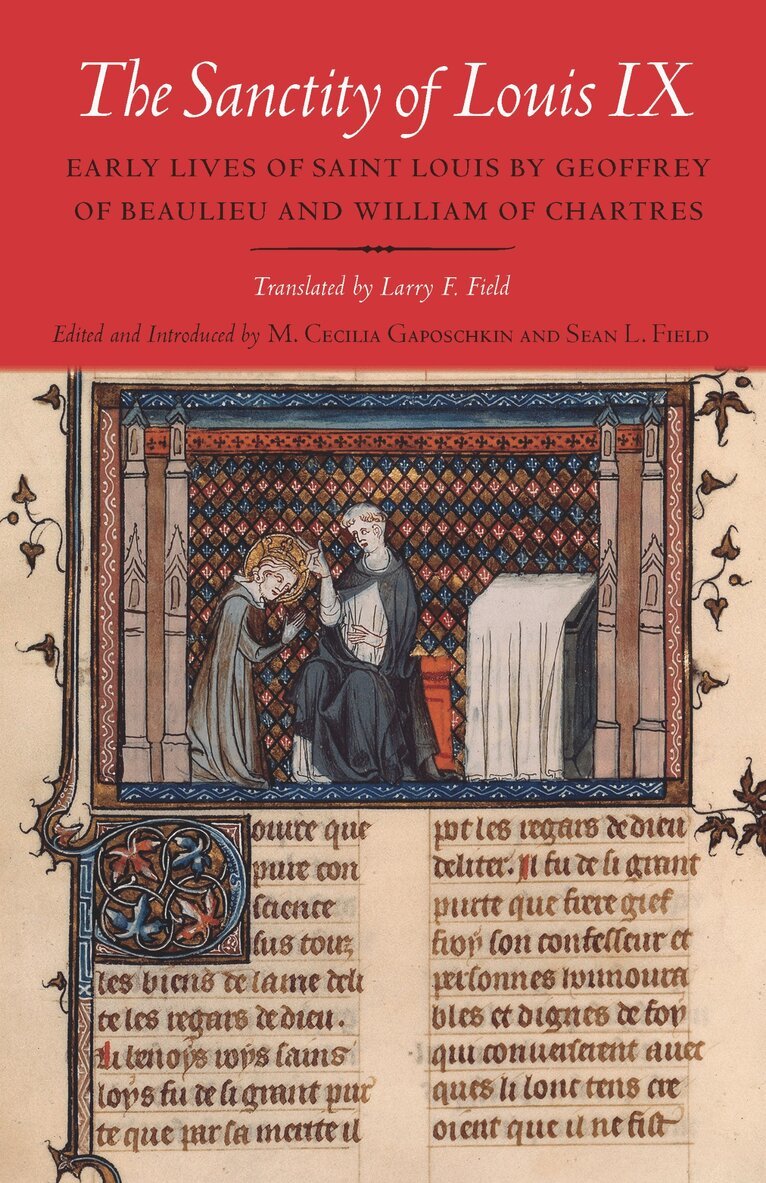
Louis IX of France reigned as king from 1226 to 1270 and was widely considered an exemplary Christian ruler, renowned for his piety, justice, and charity toward the poor. After his death on crusade, he was proclaimed a saint in 1297, and today Saint Louis is regarded as one of the central figures of early French history and the High Middle Ages. In The Sanctity of Louis IX, Larry F. Field offers the first English-language translations of two of the earliest and most important accounts of the king's life: one composed by Geoffrey of Beaulieu, the king's long-time Dominican confessor, and the other by William of Chartres, a secular clerk in Louis's household who eventually joined the Dominican Order himself. Written shortly after Louis's death, these accounts are rich with details and firsthand observations absent from other works, most notably Jean of Joinville's well-known narrative.The introduction by M. Cecilia Gaposchkin and Sean L. Field provides background information on Louis IX and his two biographers, analysis of the historical context of the 1270s, and a thematic introduction to the texts. An appendix traces their manuscript and early printing histories. The Sanctity of Louis IX also features translations of Boniface VIII's bull canonizing Louis and of three shorter letters associated with the earliest push for his canonization. It also contains the most detailed analysis of these texts, their authors, and their manuscript traditions currently available.
Häftad, Engelska, 2010
343 kr
Skickas inom 10-15 vardagar
Canonized in 1297 as Saint Louis, King Louis IX of France (r. 1226–1270) was one of the most important kings of medieval history and also one of the foremost saints of the later Middle Ages. As a saint, Louis became the centerpiece of an ideological program that buttressed the ongoing political consolidation of France and underscored Capetian claims of sacred kingship. M. Cecilia Gaposchkin reconstructs and analyzes the process that led to the monarch's canonization and the consolidation and spread of his cult.Differing political and religious ideals produced competing images of the sanctity of Louis in late-thirteenth and early fourteenth-century France. Drawing on hagiography, sermons, and liturgical evidence—the latter a rich but little-explored historical source—Gaposchkin shows how various groups (including Dominicans, Cistercians, and Franciscans) and individuals (such as Philip the Fair and Joinville) used commemoration of the saint-king to sanctify their own politics and notions of identity and religious virtue. Louis' cult was disseminated to a wider, nonelite public through sermons in the fourteenth and fifteenth centuries and then revived by the Bourbon kings in the seventeenth century. In deepening our knowledge of this royal saint, this elegantly written book opens the curtain on the religious sensibilities and secular politics of a transitional period in European history.
Häftad, Engelska, 2013
339 kr
Skickas inom 10-15 vardagar
Louis IX of France reigned as king from 1226 to 1270 and was widely considered an exemplary Christian ruler, renowned for his piety, justice, and charity toward the poor. After his death on crusade, he was proclaimed a saint in 1297, and today Saint Louis is regarded as one of the central figures of early French history and the High Middle Ages. In The Sanctity of Louis IX, Larry F. Field offers the first English-language translations of two of the earliest and most important accounts of the king's life: one composed by Geoffrey of Beaulieu, the king's long-time Dominican confessor, and the other by William of Chartres, a secular clerk in Louis's household who eventually joined the Dominican Order himself. Written shortly after Louis's death, these accounts are rich with details and firsthand observations absent from other works, most notably Jean of Joinville's well-known narrative.The introduction by M. Cecilia Gaposchkin and Sean L. Field provides background information on Louis IX and his two biographers, analysis of the historical context of the 1270s, and a thematic introduction to the texts. An appendix traces their manuscript and early printing histories. The Sanctity of Louis IX also features translations of Boniface VIII's bull canonizing Louis and of three shorter letters associated with the earliest push for his canonization. It also contains the most detailed analysis of these texts, their authors, and their manuscript traditions currently available.
Inbunden, Engelska, 2026
1 658 kr
Kommande
Volume III focuses on the evolution of crusading beyond the Holy Land, the ways in which crusading impacted the people of Europe, and the cultural, political and religious legacies that were left behind. As a major cultural driver of the medieval age, it did much to shape religious thinking and practices, as well as influencing royal, knightly and civic ideology. Across twenty-one chapters, leading experts reveal the impact the Crusades had on women, Jews and emphasises the prominent presence of the Military Orders. Further essays show the rapid diversification of crusading to encompass enemies of the Catholic Church in Iberia, the Baltic and eastern Europe, the heretical Cathars, as well as the Ottoman Turks in the sixteenth century. It concludes with extensive coverage of the vast and diverse legacies of the Crusades, revealing the complexity and contemporary relevance of these contrasting memories in the West and the Muslim world.
Inbunden, Engelska, 2026
1 658 kr
Kommande
Volume II offers an authoritative new guide to life in the Crusader States of the Levant and the Eastern Mediterranean. Across nineteen chapters, leading experts explore how the crusaders not only imposed their own ideas and practices on the Levant but also adapted to its diverse landscapes and societies. With a strong emphasis on material culture, this volume offers a series of interpretative essays covering medicine, law, intellectual life and religious practice, while also providing a fresh treatment of topics including warfare, castles, the Military Orders, art, architecture, archaeology, and many aspects of daily life.
Inbunden, Engelska, 2026
1 658 kr
Kommande
Volume I provides this generation's definitive account to crusading history, beginning with the First Crusade in 1095, through Richard the Lionheart, Saladin and the Third Crusade (1187-92), to the fall of the Holy Land in 1291. Across twenty-four chapters, leading experts also provide broad coverage of the source material, delivering fresh perspectives and interpretations. The volume brings together new insights into the establishment of crusader rule and the ongoing interaction of these new Christian territories - in military, religious, cultural and economic terms - with local societies and regimes, most notably the Muslims and the Byzantine Greeks.
Inbunden, Engelska, 2017
896 kr
Skickas inom 10-15 vardagar
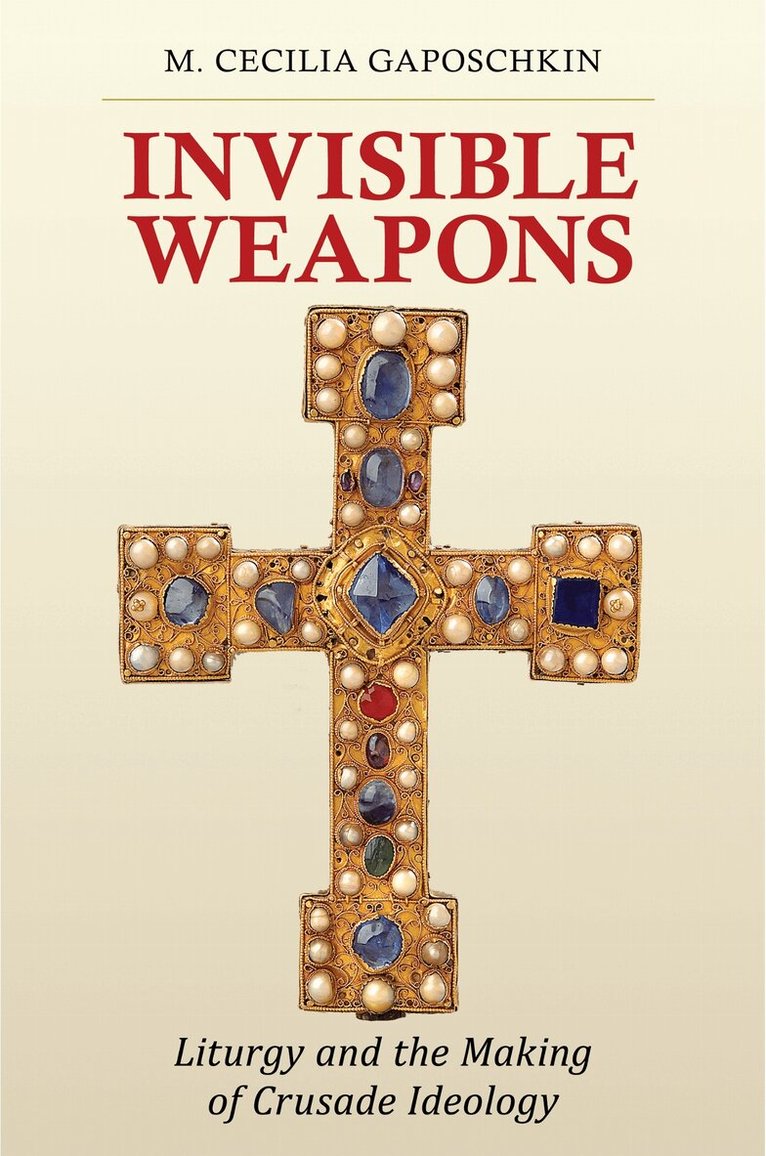
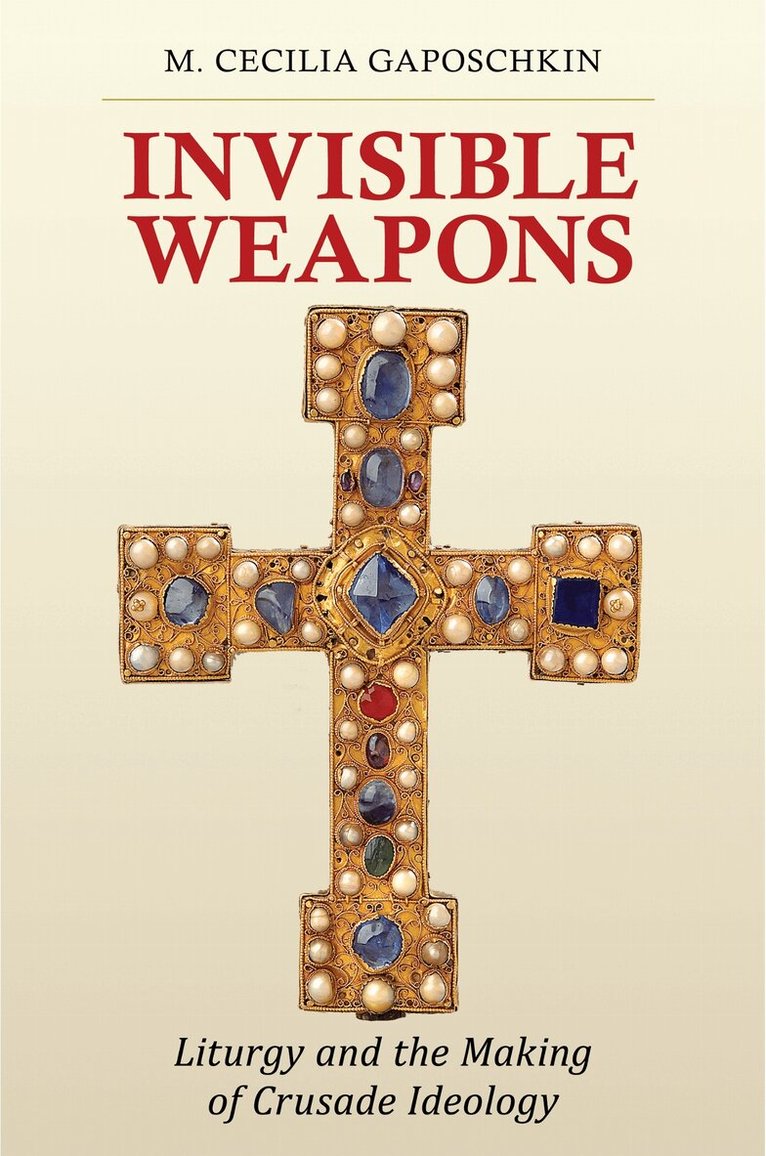
Throughout the history of the Crusades, liturgical prayer, masses, and alms were all marshaled in the fight against Muslim armies. In Invisible Weapons, M. Cecilia Gaposchkin focuses on the ways in which Latin Christians communicated their ideas and aspirations for crusade to God through liturgy, how public worship was deployed, and how prayers and masses absorbed the ideals and priorities of crusading. Placing religious texts and practices within the larger narrative of crusading, Gaposchkin offers a new understanding of a crucial facet in the culture of holy war.Open Access edition funded by the National Endowment for the Humanities
Häftad, Engelska, 2021
376 kr
Skickas inom 10-15 vardagar
Throughout the history of the Crusades, liturgical prayer, masses, and alms were all marshaled in the fight against Muslim armies. In Invisible Weapons, M. Cecilia Gaposchkin focuses on the ways in which Latin Christians communicated their ideas and aspirations for crusade to God through liturgy, how public worship was deployed, and how prayers and masses absorbed the ideals and priorities of crusading. Placing religious texts and practices within the larger narrative of crusading, Gaposchkin offers a new understanding of a crucial facet in the culture of holy war.Open Access edition funded by the National Endowment for the Humanities
Inbunden, Engelska, 2022
1 617 kr
Skickas inom 5-8 vardagar
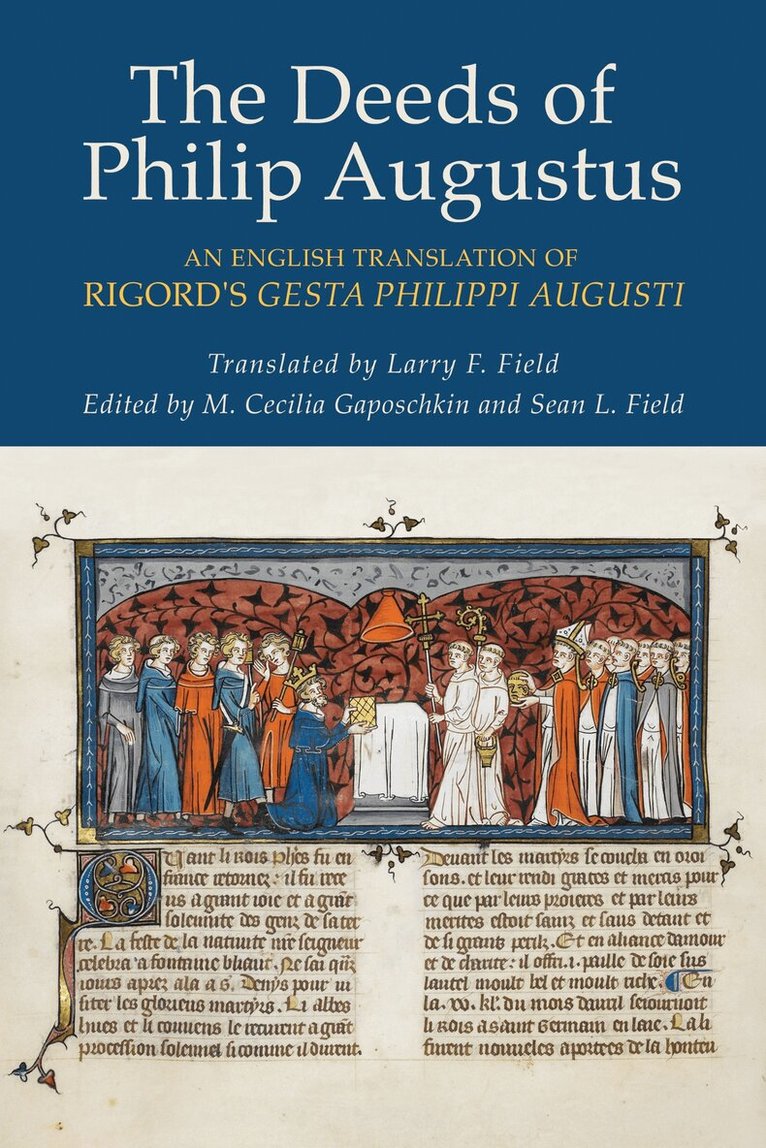
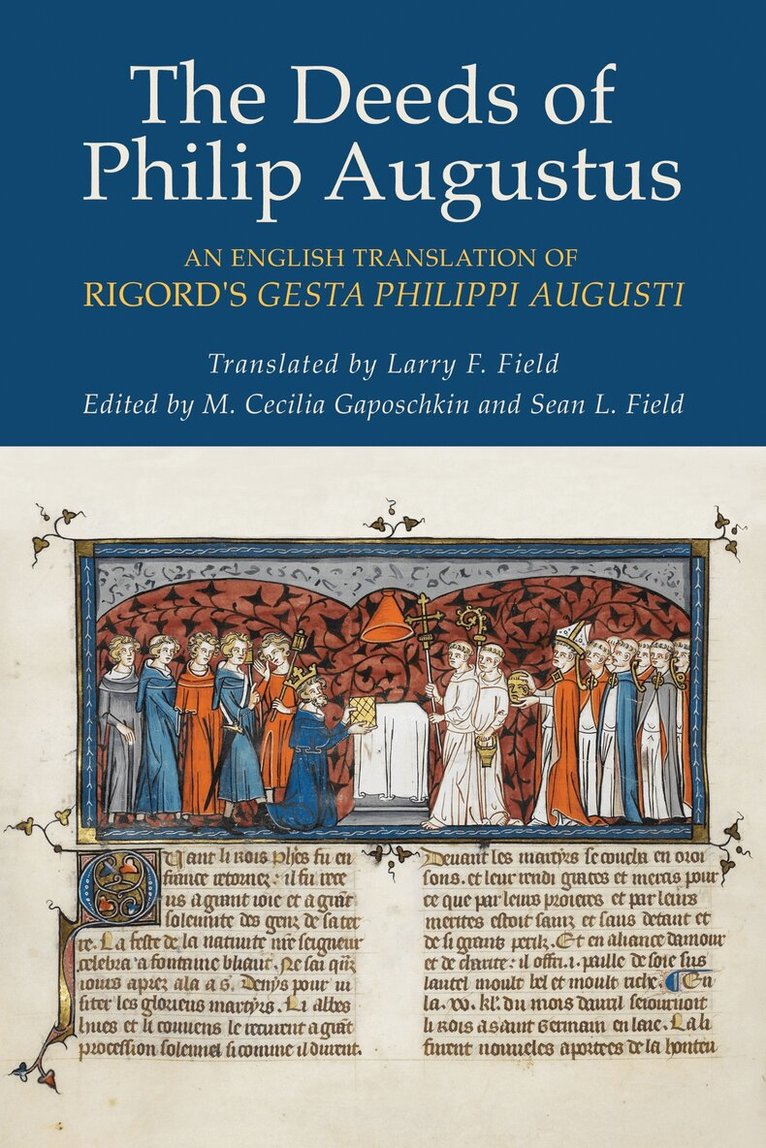
The first full English translation of Rigord's Gesta Philippi Augusti, The Deeds of Philip Augustus makes available to Anglophone readers the most important narrative account of the reign of King Philip II of France (r. 1180–1223), a critical source about this pivotal figure in the development of the medieval French monarchy and an intriguing window into many aspects of the broader twelfth century.Rigord wrote his chronicle in Latin, covering the first two-thirds of Philip II's reign, including such events as Philip's fateful expulsion of the Jews in 1182, his departure on the Third Crusade in 1190, his governmental innovations, and his victory over King John of England. As Philip II transformed French royal power, Rigord transformed contemporary writing about the nature of that power. Presented in a lively and readable translation framed by an introduction that contextualizes the text and accompanied by annotations, maps, and illustrations, The Deeds of Philip Augustus makes one of the most important documents of twelfth-century France available to a wide new readership.
Häftad, Engelska, 2022
313 kr
Skickas inom 5-8 vardagar
The first full English translation of Rigord's Gesta Philippi Augusti, The Deeds of Philip Augustus makes available to Anglophone readers the most important narrative account of the reign of King Philip II of France (r. 1180–1223), a critical source about this pivotal figure in the development of the medieval French monarchy and an intriguing window into many aspects of the broader twelfth century.Rigord wrote his chronicle in Latin, covering the first two-thirds of Philip II's reign, including such events as Philip's fateful expulsion of the Jews in 1182, his departure on the Third Crusade in 1190, his governmental innovations, and his victory over King John of England. As Philip II transformed French royal power, Rigord transformed contemporary writing about the nature of that power. Presented in a lively and readable translation framed by an introduction that contextualizes the text and accompanied by annotations, maps, and illustrations, The Deeds of Philip Augustus makes one of the most important documents of twelfth-century France available to a wide new readership.