M. Doyama – författare
Visar alla böcker från författaren M. Doyama. Handla med fri frakt och snabb leverans.
5 produkter
5 produkter
E-bok
PDF, Engelska, 19982 290 kr
Läs direkt efter köp
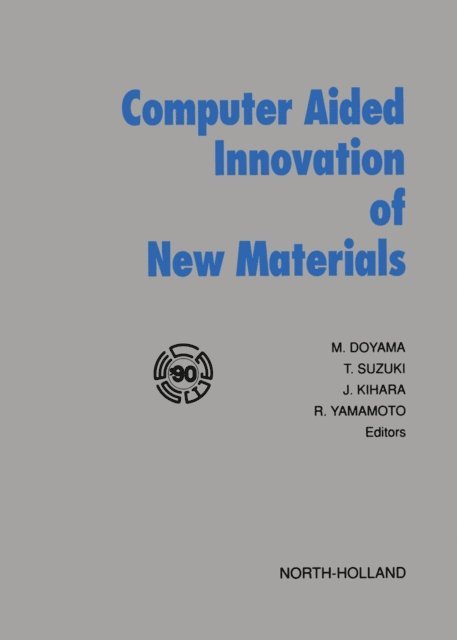
This symposium was organised with the aim of encouraging collaboration in international science and engineering communities for the benefit of human kind. It consisted of invited talks by experts on materials and poster presentation papers. Approximately 140 scientists participated and the resulting proceedings present an up-to-date review of the research in this area.
E-bok
PDF, Engelska, 2012870 kr
Läs direkt efter köp
This volume brings together the experience of specialists in the entire field of applications of Materials Science. The volume contains 196 of the excellent papers presented at the conference. This multidisciplinary meeting was held to bring together workers in a wide range of materials science and engineering activities who employ common analytical and experimental methods in their day to day work. The results of the meeting are of worldwide interest, and will help to stimulate future research and analysis in this area.
979 kr
Läs direkt efter köp
With advanced materials being in the midst of a widely acknowledged revolution, there is relentless pressure on scientists and engineers to be on the cutting edge of emerging theories and design methodologies. The 379 papers in this two part volume bring together the experience of specialists in the entire field of applications of Materials Science. This multidisciplinary meeting was held to bring together workers in a wide range of materials science and engineering activities who employ common analytical and experimental methods in their day to day work. The results of the meeting are of worldwide interest, and will help to stimulate future research and analysis in this area.
E-bok
PDF, Engelska, 2012687 kr
Läs direkt efter köp
The Materials Research Society of Japan (MRS-Japan), formerly the Advanced Materials Science and Engineering Society (AMSES), was established on 16 March 1989 in Tokyo, Japan. AMSES was established following the International Conference on Advanced Materials, held from 30 May to 3 June 1988 in Tokyo (MRS Bulletin, October and November 1988). This meeting was similar to the MRS meeting held in Boston, USA, and consisted of 21 symposia, which were published as proceedings in 14 volumes. The number of participants was over 1600. The first President of AMSES, Professor Masao Doyama, gave the following address: As advanced technology develops toward its highest goals, a small improvement in existing materials is not enough to meet the demands. The deadlock of advanced technology often brings the invention of new materials. Human civilization has grown along with materials. The Stone Age, the Bronze Age, and the Iron Age represent the materials most used in those times. Since the beginning of the 20th century, the plastic age, the semiconductor age, the new ceramics age, and the composite materials age have been identified, but no single material dominates.
Häftad, Engelska, 2011
540 kr
Skickas inom 10-15 vardagar
The Materials Research Society of Japan (MRS-Japan), formerly the Advanced Materials Science and Engineering Society (AMSES), was established on 16 March 1989 in Tokyo, Japan. AMSES was established following the International Conference on Advanced Materials, held from 30 May to 3 June 1988 in Tokyo (MRS Bulletin, October and November 1988). This meeting was similar to the MRS meeting held in Boston, USA, and consisted of 21 symposia, which were published as proceedings in 14 volumes. The number of participants was over 1600. The first President of AMSES, Professor Masao Doyama, gave the following address: As advanced technology develops toward its highest goals, a small improvement in existing materials is not enough to meet the demands. The deadlock of advanced technology often brings the invention of new materials. Human civilization has grown along with materials. The Stone Age, the Bronze Age, and the Iron Age represent the materials most used in those times. Since the beginning of the 20th century, the plastic age, the semiconductor age, the new ceramics age, and the composite materials age have been identified, but no single material dominates.