S. Somiya – författare
Visar alla böcker från författaren S. Somiya. Handla med fri frakt och snabb leverans.
13 produkter
13 produkter
E-bok
PDF, Engelska, 19982 290 kr
Läs direkt efter köp
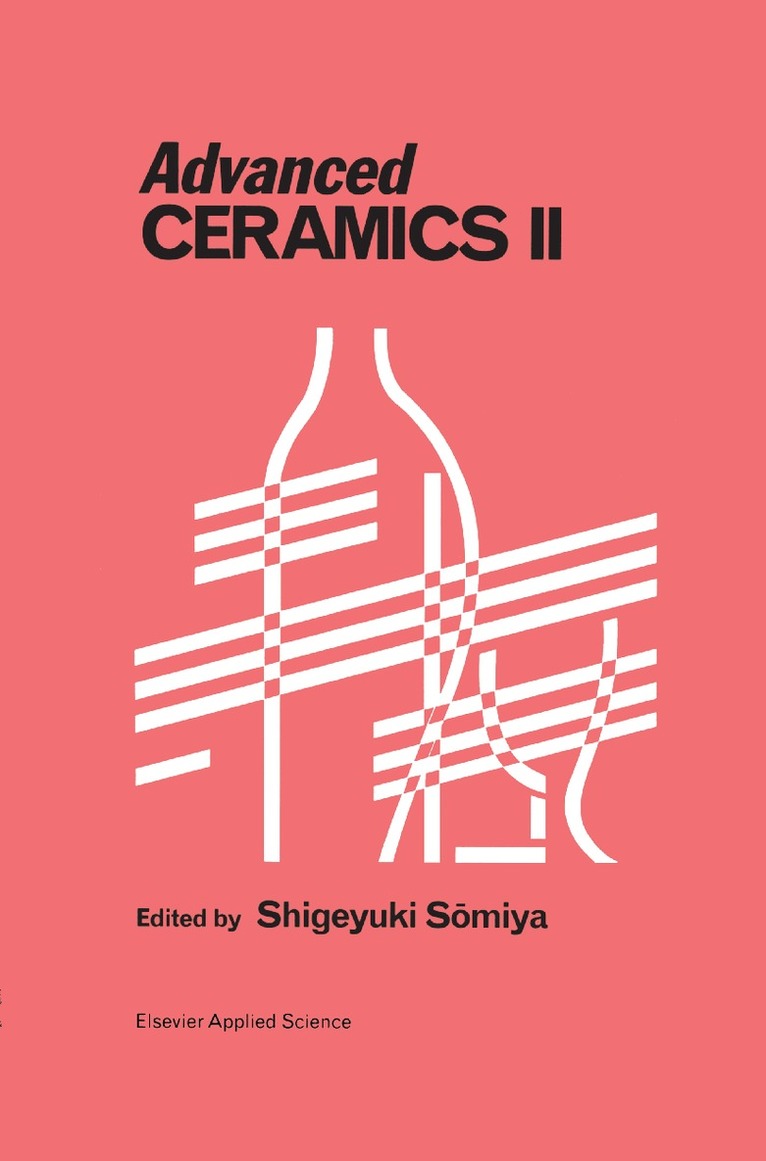
This symposium was organised with the aim of encouraging collaboration in international science and engineering communities for the benefit of human kind. It consisted of invited talks by experts on materials and poster presentation papers. Approximately 140 scientists participated and the resulting proceedings present an up-to-date review of the research in this area.
Inbunden, Engelska, 1988
2 156 kr
Skickas inom 10-15 vardagar
Inbunden, Engelska, 1990
2 156 kr
Skickas inom 10-15 vardagar
Inbunden, Engelska, 1991
3 231 kr
Skickas inom 10-15 vardagar
Silicon carbides have major industrial uses as high temperature structural ceramic materials. These two volumes are translated from the Japanese and provide a comprehensive account of the seminal work going on in Japan.
E-bok
PDF, Engelska, 20121 788 kr
Läs direkt efter köp
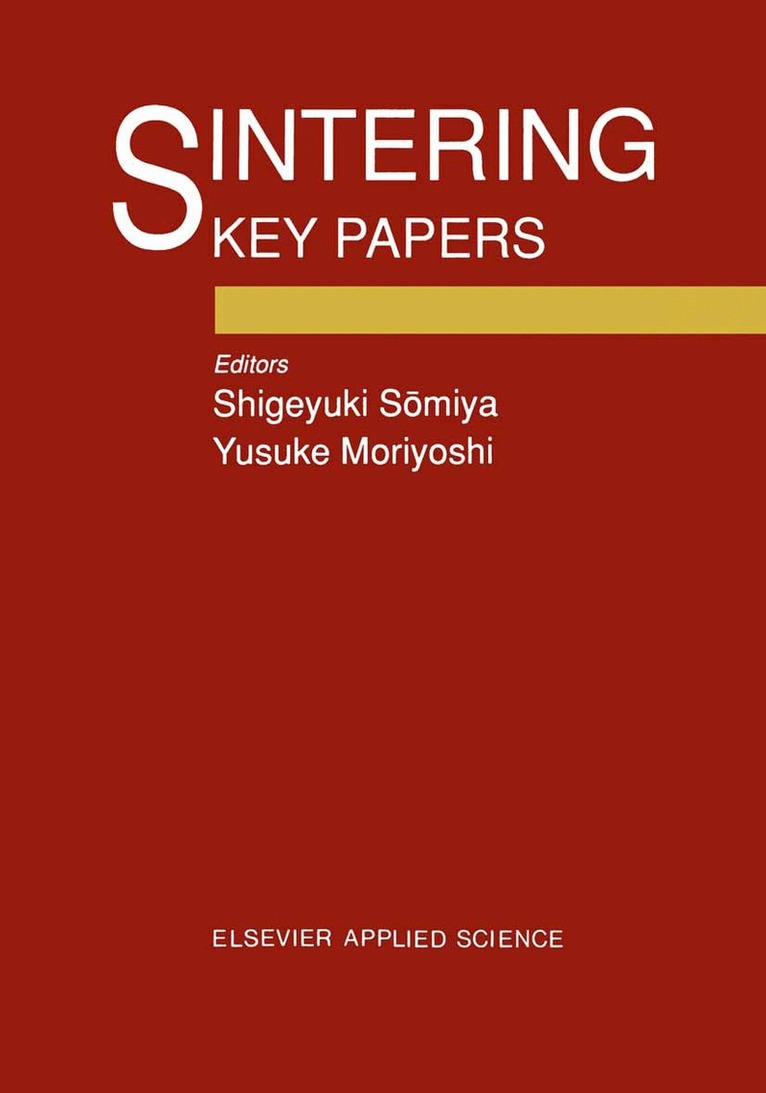
The 4th International Symposium on the Science and Technology of Sintering was held on 4-6 November 1987 in Tokyo. Among the many technical sessions was one entitled ''Session for Sintering-Case Study''. Over 200 participants heard these invited talks. Although some papers were over 20 years old, it is necessary to understand the authors'' way of thinking. Since the end of the Second World War, many excellent papers related to sintering have appeared in many different academic journals. Some of these papers are still of value, and are still being read by today''s students. The questions we have to ask are: Why does the scholar think this way? Why did the scholar perform his experiments? What is the mechanism of sintering? What is the liquid phase of sintering? What is the behavior of sintering additives? What is the history and development of sintering theory? This book includes these sort of historical papers and also new original papers on sintering, all of which are very important to our understanding of the subject. Several papers have been added for this English edition, which is thus more comprehensive than its Japanese counterpart. These papers were spread out in many different sources and the benefits of collecting them together in book form is obvious.
E-bok
PDF, Engelska, 20121 379 kr
Läs direkt efter köp
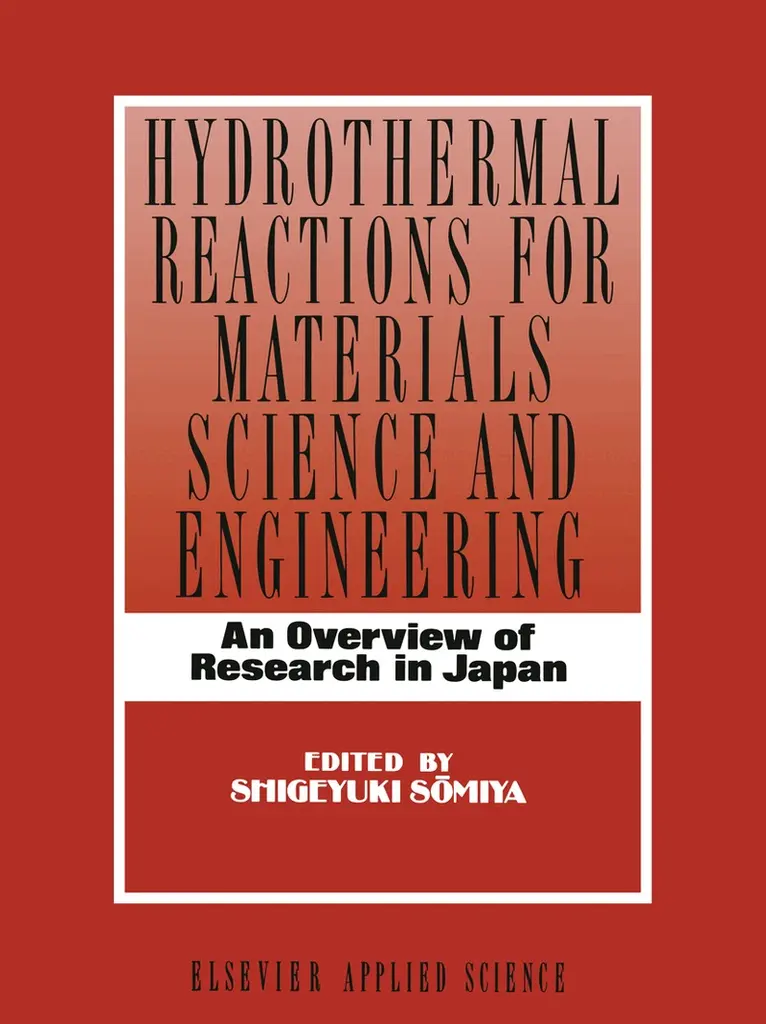
According to the late Professor Emeritus Seitaro Tsuboi,l the word ''hydrothermal'' was used as early as 1849 by a British geologist, Sir Roderick Murchison (1792-187 I), in relation to the action of heated water in bringing about change in the earth''s crust. The term abounds in later geological literature, and is most frequently met in connection with the processes that take place at a stage near the closing in the course of consolidation of magma. When a cooling magma reaches that stage, the residual liquid contains a large proportion of volatile components, chiefly water, and further cooling results in the formation of minerals of special interest or ore-deposits. A great concern of Tsuboi''s as a petrologist was to elucidate the details of the nature of various actions involved in these ''hydrothermal processes'', of which little was known. It is remarkable that, in the last few decades, extensive high-temperature and high-pressure experiments, in which water plays an important role, have become practicable in laboratories, owing to the development of new apparatus and new methods. As a result, the knowledge essential to the elucidation of ''hydrothermal processes'' has been improved, but is still far from complete.
E-bok
PDF, Engelska, 2012687 kr
Läs direkt efter köp
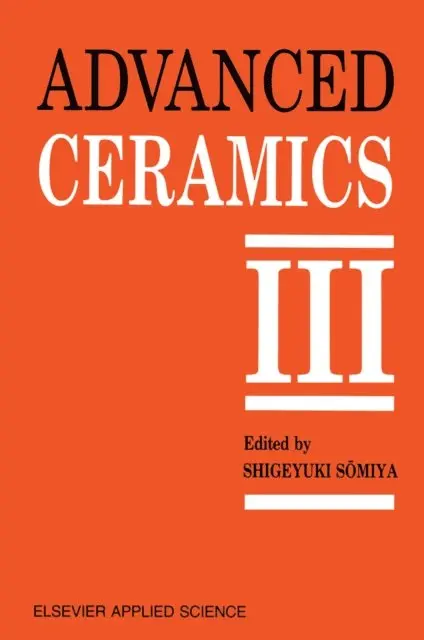
This volume is one in a series which attempts to bring together comprehensive articles on recent advances in ceramics. The volume is dedicated to Professor Shigeyuki Somiya on the occasion of his retirement from the Tokyo Institute of Technology; and it is a most fitting tribute. Professor Somiya has been one of the earliest and most persistent and versatile champions of research in ceramic materials in Japan. He has served this cause extraordinarily well by mixing two strategies. First, by making bridges to the entire international community of ceramic researchers in the US and Europe. Thereby, he kept a window for all of Japanese ceramic science on world class research in the field. It was largely through his efforts that the series of US-Japan International Cooperation Sessions in Ceram ics were started. I was honored to be US chairman of the first such in 1969. At Penn State we are delighted to claim Professor Somiya as an honorary alumnus. The high regard in which he is held is shown by the many of his colleagues from the University who have chosen to come over for this conference. He was also recognized with a Penn State MRL Bridge-Building award in 1988 to reflect his pioneering in establishing the two-way exchange with Japan.
E-bok
PDF, Engelska, 2012687 kr
Läs direkt efter köp
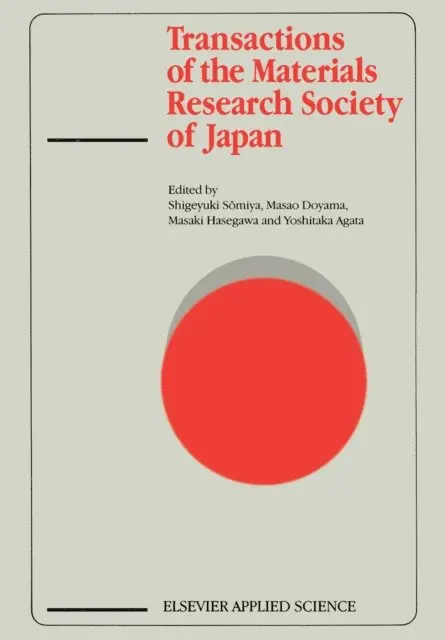
The Materials Research Society of Japan (MRS-Japan), formerly the Advanced Materials Science and Engineering Society (AMSES), was established on 16 March 1989 in Tokyo, Japan. AMSES was established following the International Conference on Advanced Materials, held from 30 May to 3 June 1988 in Tokyo (MRS Bulletin, October and November 1988). This meeting was similar to the MRS meeting held in Boston, USA, and consisted of 21 symposia, which were published as proceedings in 14 volumes. The number of participants was over 1600. The first President of AMSES, Professor Masao Doyama, gave the following address: As advanced technology develops toward its highest goals, a small improvement in existing materials is not enough to meet the demands. The deadlock of advanced technology often brings the invention of new materials. Human civilization has grown along with materials. The Stone Age, the Bronze Age, and the Iron Age represent the materials most used in those times. Since the beginning of the 20th century, the plastic age, the semiconductor age, the new ceramics age, and the composite materials age have been identified, but no single material dominates.
Häftad, Engelska, 2011
1 499 kr
Skickas inom 10-15 vardagar
The 4th International Symposium on the Science and Technology of Sintering was held on 4-6 November 1987 in Tokyo. Among the many technical sessions was one entitled 'Session for Sintering-Case Study'. Over 200 participants heard these invited talks. Although some papers were over 20 years old, it is necessary to understand the authors' way of thinking. Since the end of the Second World War, many excellent papers related to sintering have appeared in many different academic journals. Some of these papers are still of value, and are still being read by today's students. The questions we have to ask are: Why does the scholar think this way? Why did the scholar perform his experiments? What is the mechanism of sintering? What is the liquid phase of sintering? What is the behavior of sintering additives? What is the history and development of sintering theory? This book includes these sort of historical papers and also new original papers on sintering, all of which are very important to our understanding of the subject. Several papers have been added for this English edition, which is thus more comprehensive than its Japanese counterpart. These papers were spread out in many different sources and the benefits of collecting them together in book form is obvious.
Häftad, Engelska, 2011
1 073 kr
Skickas inom 10-15 vardagar
According to the late Professor Emeritus Seitaro Tsuboi,l the word 'hydrothermal' was used as early as 1849 by a British geologist, Sir Roderick Murchison (1792-187 I), in relation to the action of heated water in bringing about change in the earth's crust. The term abounds in later geological literature, and is most frequently met in connection with the processes that take place at a stage near the closing in the course of consolidation of magma. When a cooling magma reaches that stage, the residual liquid contains a large proportion of volatile components, chiefly water, and further cooling results in the formation of minerals of special interest or ore-deposits. A great concern of Tsuboi's as a petrologist was to elucidate the details of the nature of various actions involved in these 'hydrothermal processes', of which little was known. It is remarkable that, in the last few decades, extensive high-temperature and high-pressure experiments, in which water plays an important role, have become practicable in laboratories, owing to the development of new apparatus and new methods. As a result, the knowledge essential to the elucidation of 'hydrothermal processes' has been improved, but is still far from complete.
Häftad, Engelska, 2011
540 kr
Skickas inom 10-15 vardagar
This volume is one in a series which attempts to bring together comprehensive articles on recent advances in ceramics. The volume is dedicated to Professor Shigeyuki Somiya on the occasion of his retirement from the Tokyo Institute of Technology; and it is a most fitting tribute. Professor Somiya has been one of the earliest and most persistent and versatile champions of research in ceramic materials in Japan. He has served this cause extraordinarily well by mixing two strategies. First, by making bridges to the entire international community of ceramic researchers in the US and Europe. Thereby, he kept a window for all of Japanese ceramic science on world class research in the field. It was largely through his efforts that the series of US-Japan International Cooperation Sessions in Ceram ics were started. I was honored to be US chairman of the first such in 1969. At Penn State we are delighted to claim Professor Somiya as an honorary alumnus. The high regard in which he is held is shown by the many of his colleagues from the University who have chosen to come over for this conference. He was also recognized with a Penn State MRL Bridge-Building award in 1988 to reflect his pioneering in establishing the two-way exchange with Japan.
Häftad, Engelska, 2011
540 kr
Skickas inom 10-15 vardagar
The Materials Research Society of Japan (MRS-Japan), formerly the Advanced Materials Science and Engineering Society (AMSES), was established on 16 March 1989 in Tokyo, Japan. AMSES was established following the International Conference on Advanced Materials, held from 30 May to 3 June 1988 in Tokyo (MRS Bulletin, October and November 1988). This meeting was similar to the MRS meeting held in Boston, USA, and consisted of 21 symposia, which were published as proceedings in 14 volumes. The number of participants was over 1600. The first President of AMSES, Professor Masao Doyama, gave the following address: As advanced technology develops toward its highest goals, a small improvement in existing materials is not enough to meet the demands. The deadlock of advanced technology often brings the invention of new materials. Human civilization has grown along with materials. The Stone Age, the Bronze Age, and the Iron Age represent the materials most used in those times. Since the beginning of the 20th century, the plastic age, the semiconductor age, the new ceramics age, and the composite materials age have been identified, but no single material dominates.
E-bok
PDF, Engelska, 20121 109 kr
Läs direkt efter köp
Discovered by Edward G. Acheson about 1890, silicon carbide is one of the oldest materials and also a new material. It occurs naturally in meteorites, but in very small amounts and is not in a useable state as an industrial material. For industrial require ments, large amounts of silicon carbide must be synthesized by solid state reactions at high temperatures. Silicon carbide has been used for grinding and as an abrasive material since its discovery. During World War II, silicon carbide was used as a heating element; however, it was difficult to obtain high density sintered silicon carbide bodies. In 1974, S. Prochazka reported that the addition of small amounts of boron compounds and carbide were effective in the sintering process to obtain high density. It was then possible to produce high density sintered bodies by pressureless sintering methods in ordinary atmosphere. Since this development, silicon carbide has received great attention as one of the high temperature structural ceramic materials. Since the 1970s, many research papers have appeared which report studies of silicon carbide and silicon nitride for structural ceramics.