M. Munawar – författare
Visar alla böcker från författaren M. Munawar. Handla med fri frakt och snabb leverans.
21 produkter
21 produkter
Inbunden, Engelska, 1990
3 233 kr
Skickas inom 10-15 vardagar
Proceedings of the First International Conference held in Lancaster, England, July 11-14, 1988
E-bok
PDF, Engelska, 20131 331 kr
Läs direkt efter köp
Phytoplankton Dynamics in the North American Great Lakes is the compilation of two volumes, originally published 1996 and 2000. Both volumes provide a thorough treatment of the community structure, function, and dynamics of phytoplankton in the North American Great Lakes and represent the culmination of nearly three decades’ worth of work by Mohiuddin Munawar and Iftekhar F. Munawar.With these volumes, the phycology of the North American Great Lakes has been brought into the new millennium. Volume 1 focuses on the Lower Great Lakes—Lakes Ontario and Erie—while volume 2 highlights Lakes Michigan, Huron, and Superior. Phytoplankton Dynamics in the North American Great Lakes also includes a chapter devoted to the integration, summarization, and synthesis of the two volumes’ major findings, as well as a discussion of the current and future status of food-web research in the Great Lakes.
E-bok
PDF, Engelska, 20011 380 kr
Läs direkt efter köp
The Great Lakes of the World (GLOW) is a series of international symposia organized by the Aquatic Ecosystem Health and Management Society in order to promote interaction and communication between Great Lakes scientists and communities around the world. The purpose of GLOW is to establish a platform where understanding of structure, function, and performance of healthy and damaged ecosystems from integrated, multidisciplinary, and sustainable perspectives is promoted. This book includes papers originating in part from the first of many international symposia—Exploring the Great Lakes of the World: Food-Web Dynamics, Health and Integrity, held at Victoria Falls, Zimbabwe. The following is adapted from the editorial: “As scientists, we accept that we can never know everything at one time about large aquatic ecosystems, due to temporal and spatial measurement limitations. This uncertainty can be reduced through sharing our knowledge of large systems so that others can incorporate our results into analyses of their systems. To that end, this book is a remarkable achievement as it does accomplish global coverage of large and great lakes.”
E-bok
PDF, Engelska, 19951 380 kr
Läs direkt efter köp
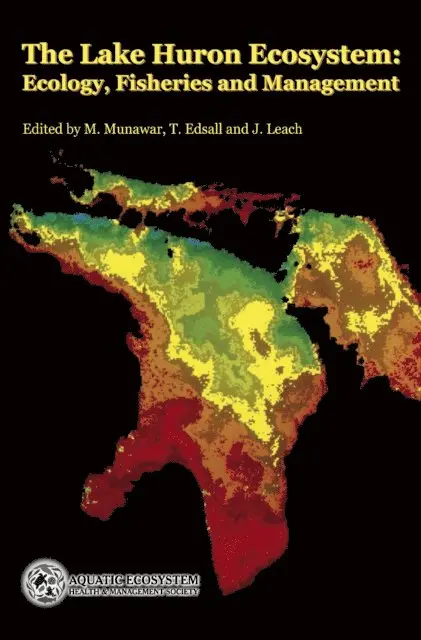
Lake Huron is the second largest of the Great Lakes and the fifth largest lake in the world (surface area: 59,000 km2). It is also one of the least known lakes in the Great Lakes system in terms of limnology and food web dynamics. To rectify this, the Aquatic Ecosystem Health and Management Society organized an international symposium in September 1993, which they followed with the publication of this peer-reviewed book. In total, forty-five papers were presented during the conference on topics ranging from microbial ecology, the role of exotic species, and sediment toxicology, to fisheries and wildlife of Lake Huron and its basin. With few existing comprehensive reports on the limnology and fisheries of Lake Huron, this detailed book helps bridge the information gap by introducing a multidisciplinary and ecosystematic approach to Great Lake (particularly Lake Huron) research.
E-bok
PDF, Engelska, 20091 766 kr
Läs direkt efter köp
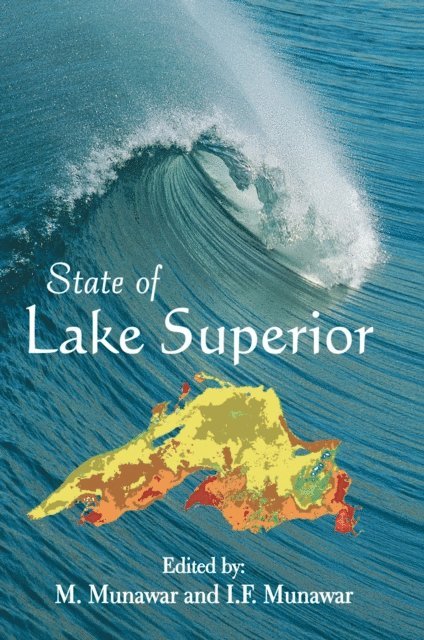
Lake Superior was saved from the extremes felt elsewhere because it is the top of the drainage landscape. Superior offered the prospects of greatest success because it was, in general, least altered. Many decades later, Superior serves as the best example of success in recovering from environmental adversity. This is not to say that restoration is complete or that all ecological problems are resolved. The heavy hand of humanity continues to cause important threats to the present and future state of Lake Superior. State of Lake Superior offers a polythetic view of current conditions in Lake Superior and insightful suggestions about where and how improvements should continue. The chapters range from basic reviews of what we know as a consequence of effective research to explorations of what little we know about challenging environmental issues for the future. Among these are the continuing concerns about contaminants, the burgeoning march of invasive species, and the portent of global change. We find some encouragement in the resilience of this large lake ecosystem. In many respects, it is a success story, as is shown from the insights of research merged with the mindful attention of management agencies.
E-bok
PDF, Engelska, 20051 610 kr
Läs direkt efter köp
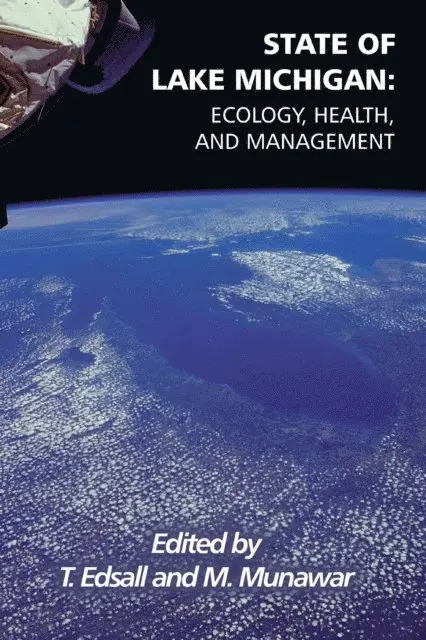
State of Lake Michigan is part of the Ecovision World Monograph Series, which is devoted to exploring the state, ecology, and integrity of the lakes. It is the formal outcome of an international symposium on Lake Michigan, organized by the Aquatic Ecosystem Health and Management Society, and chaired by T. Edsall and M. Munawar.State of Lake Michigan reviews the status of the major Lake Michigan ecosystem components and provides a basis for evaluating the health of the lake and for promoting integrated management of this exceptional natural resource. The book consists of papers by professionals in the Great Lakes region who are recognized for their contributions to the advancement of Great Lakes science and management. The book also includes an extensive subject index. Other sections explore physical and chemical regimes, food web, water birds, wetlands, and management and initiatives.
E-bok
PDF, Engelska, 20081 380 kr
Läs direkt efter köp
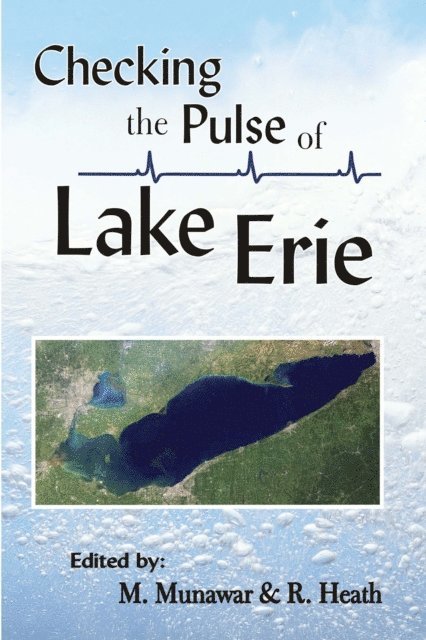
The progress of research on Lake Erie has been marked by several milestone publications during the long struggle to restore the system. The reports of the U.S. Federal Water Pollution Control Administration (1968) and the International Joint Commission (1969) described Lake Erie in the depths of degradation. “Lake Erie in the Early Seventies” (1976) recorded the status of limnology and fisheries in the lake before remedial programs were implemented. “State of Lake Erie” (1999) described the state of the lake in response to remedial actions and at early stages of the invasion of dreissenid mussels. Checking the Pulse of Lake Erie is an update of “State of Lake Erie” in light of continued efforts at restoration and impacts from nonindigenous species. This book contains twenty papers contributed by authors from a broad spectrum of disciplines and research interests.
E-bok
PDF, Engelska, 20031 610 kr
Läs direkt efter köp
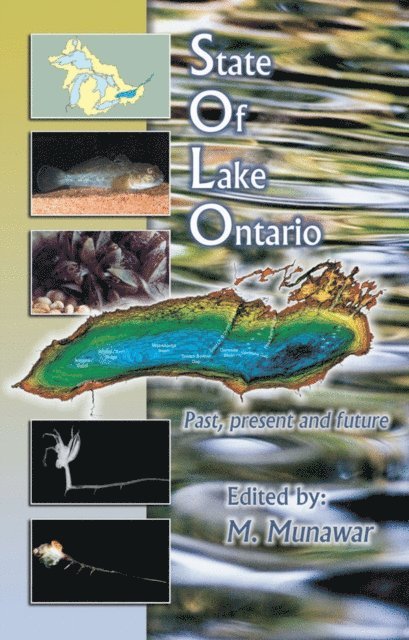
The State of Lake Ontario is a giant step forward in the study of Lake Ontario’s fisheries and limnology. The sixty-three authors have contributed twenty-two papers on physical and chemical limnology, food-web linkages, fish community dynamics, contaminants, water birds, and impacts of nonindigenous species. As the “lake below the Falls,” Lake Ontario has long been impacted by invasive species. The historic invaders (sea lamprey, alewife, and white perch) were trouble enough, but recent invasions of dreissenid mussels, gobies, and crustaceans have further disrupted an unstable system. Contaminant burdens in fish and water birds have been a persistent problem. As the smallest of the Great Lakes, Lake Ontario has some of the biggest ecosystem health problems.
E-bok
PDF, Engelska, 2003414 kr
Läs direkt efter köp
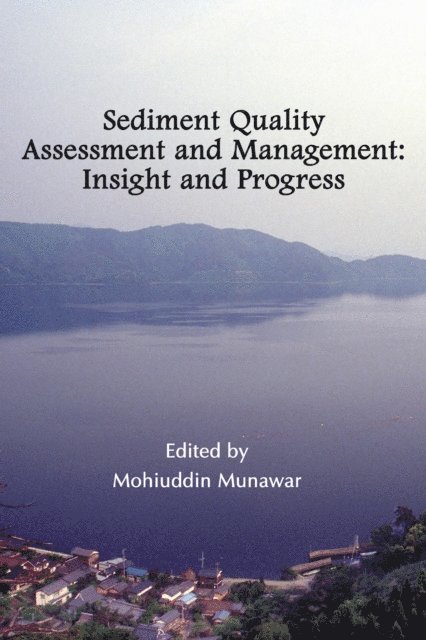
Sediment contamination is an issue of concern throughout the world, and a major goal of the AEHMS has been to encourage the exchange of scientific knowledge on a worldwide basis. This is reflected in the global distribution of papers presented in this book, which summarizes the key findings of the Fourth International Symposium on Sediment Quality Assessment, held in Otsu, Japan, in October 2000. Sediment Quality Assessment and Management demonstrates how sediments and the organisms living in them provide an indication of spatial and temporal trends in contamination, how bioaccumulation is used to measure the bioavailable fraction of these contaminants, how toxicity tests can be used to measure environmental impacts, and how the cause of these effects can be identified.
E-bok
Engelska, 20163 867 kr
Läs direkt efter köp
Focusing on state-of-the-art biological testing and methods used for aquatic ecosystem health assessment, Ecotoxicological Testing of Marine and Freshwater Ecosystems evaluates the latest bioassay techniques and different types of water and sediment quality assessments. The book also explores multi-tiered approaches to making recommendations for th
E-bok
PDF, Engelska, 20161 451 kr
Läs direkt efter köp
Focusing on state-of-the-art biological testing and methods used for aquatic ecosystem health assessment, Ecotoxicological Testing of Marine and Freshwater Ecosystems evaluates the latest bioassay techniques and different types of water and sediment quality assessments. The book also explores multi-tiered approaches to making recommendations for th
Inbunden, Engelska, 1988
2 480 kr
Skickas inom 10-15 vardagar
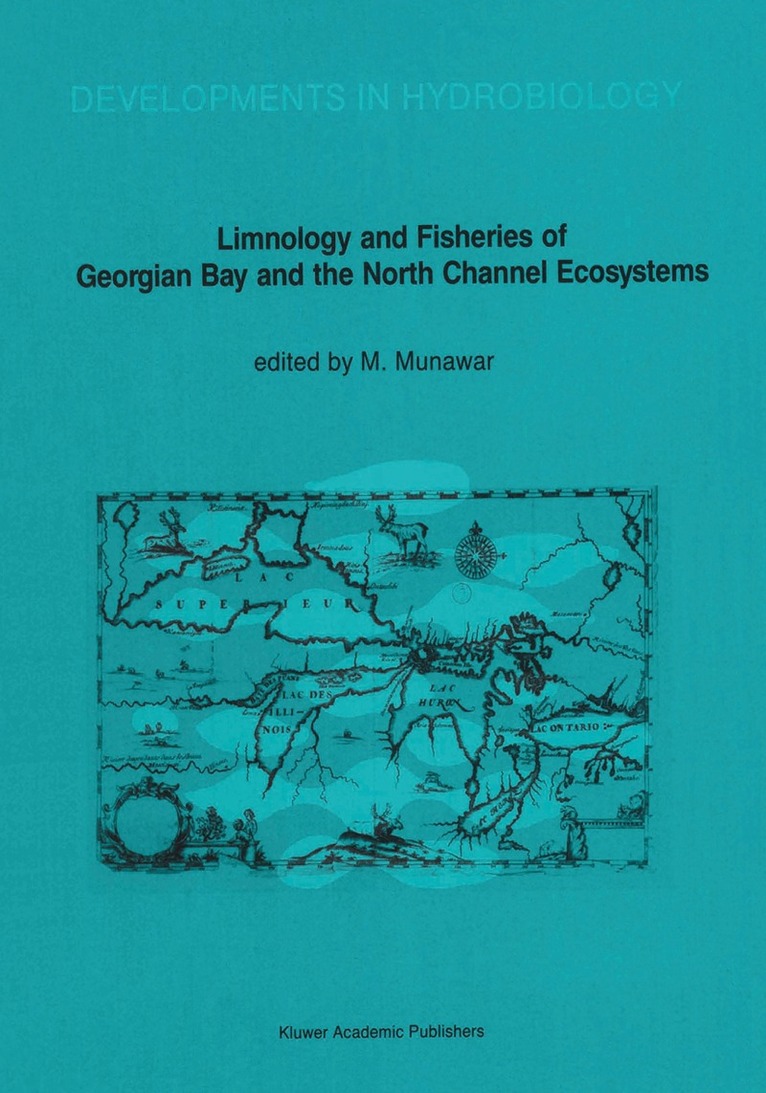
'The criterion of true beauty' , wrote Fulke Greville, 1st Baron of Burke, 'is that it increases on examination; if false, that it lessens. There is therefore something in true beauty that corresponds with right reason, and it is not the mere creation of fantasy.' The authors of this compact volume have increased the beauty of an area that is commonly and rightly ac knowledged to be one of the loveliest parts of the Great Lakes. They have done this by integrating the historical, industrial, and cultural influences on 'Lake Manitoulin' in sixteen manuscripts. It is enigmatic that Lake Huron, the second of the Great Lakes to be discovered by European explorers, has been the last to be adequately described Iimnologicaliy. As recently as 1966, for example, Alfred M. Beeton wrote in Limnology in North America: ' ... even a list of the more common species comprising the plankton of Lake Huron could be an original contribution to scientific literature.' Comparable statements could have been made for sediments, benthos, and water chemistry. This volume reflects a change of course and Georgian Bay and the North Channel of Lake Huron are now on the scientific map. Science is 'right reason'. Its application to Georgian Bay and the North Channel is a welcome and timely addition for the renewal of public, political, and scientific interest in the conservation of the Great Lakes.
E-bok
PDF, Engelska, 20133 948 kr
Läs direkt efter köp
E-bok
PDF, Engelska, 20123 157 kr
Läs direkt efter köp
''The criterion of true beauty'' , wrote Fulke Greville, 1st Baron of Burke, ''is that it increases on examination; if false, that it lessens. There is therefore something in true beauty that corresponds with right reason, and it is not the mere creation of fantasy.'' The authors of this compact volume have increased the beauty of an area that is commonly and rightly ac knowledged to be one of the loveliest parts of the Great Lakes. They have done this by integrating the historical, industrial, and cultural influences on ''Lake Manitoulin'' in sixteen manuscripts. It is enigmatic that Lake Huron, the second of the Great Lakes to be discovered by European explorers, has been the last to be adequately described Iimnologicaliy. As recently as 1966, for example, Alfred M. Beeton wrote in Limnology in North America: '' ... even a list of the more common species comprising the plankton of Lake Huron could be an original contribution to scientific literature.'' Comparable statements could have been made for sediments, benthos, and water chemistry. This volume reflects a change of course and Georgian Bay and the North Channel of Lake Huron are now on the scientific map. Science is ''right reason''. Its application to Georgian Bay and the North Channel is a welcome and timely addition for the renewal of public, political, and scientific interest in the conservation of the Great Lakes.
E-bok
PDF, Engelska, 20121 140 kr
Läs direkt efter köp
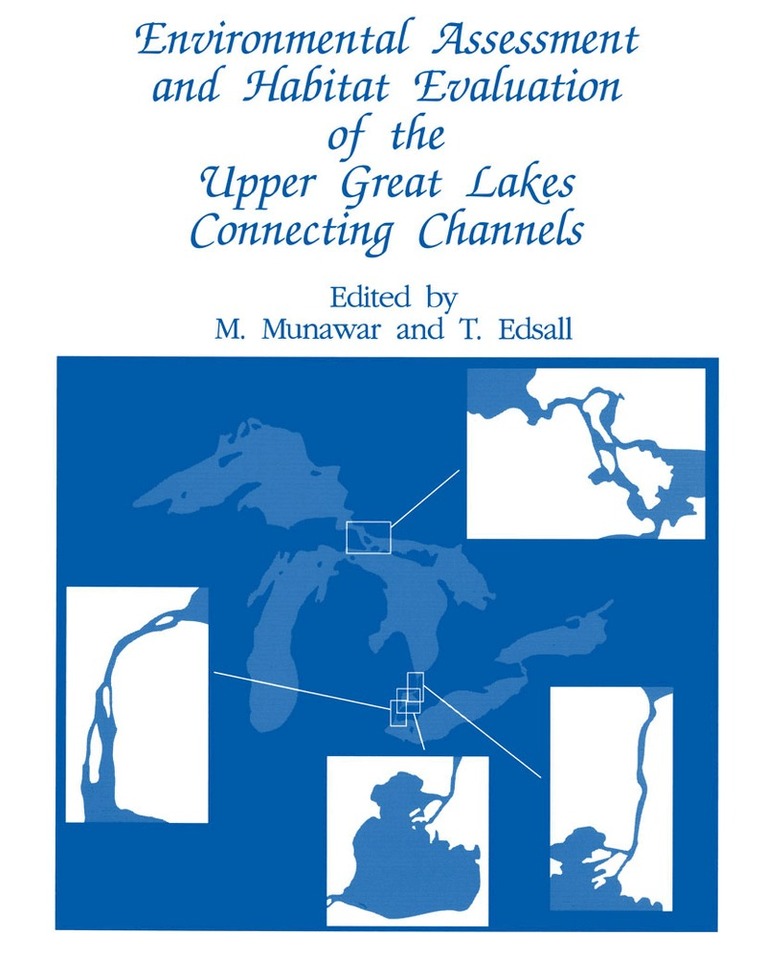
The International Joint Commission (IJC) was established between Canada and the United States under the Boundary Water Agreement in 1909. The Great Lakes Water Quality Agreement between the two countries (signed in 1972, revised and renewed in 1978) expresses the determination of each country to restore and en hance the water quality of the largest freshwater system in the world. The Agreement provides for two inter national boards to assist the IJC: the Great Lakes Water Quality Board and the Great Lakes Science Advisory Board. In 1982, the Dredging Subcommittee of the Great Lakes Water Quality Board was asked to investigate and provide an assessment of the environmental impacts of sediment-bound contaminants and to recom mend alternate strategies for solving ecological problems associated with the presence and removal of pollu tants. This issue however, was beyond the scope of the Dredging Subcommittee. It was then referred to the Great Lakes Science Advisory Board with a specific request that the Board focus on whether contaminated sediments located in areas with water quality problems and impaired uses should be removed and if so, under what conditions. The Science Advisory Board established a Task Force to address these issues with specific reference to: - provide the IJC with an assessment of the effects of sediment-bound contaminants on biota and water quality; - recommend appropriate remedies for possible application by the parties for remedial activities in the Great Lakes; and - identify gaps in knowledge and suggest appropriate investigations to provide this knowledge.
E-bok
PDF, Engelska, 20121 140 kr
Läs direkt efter köp
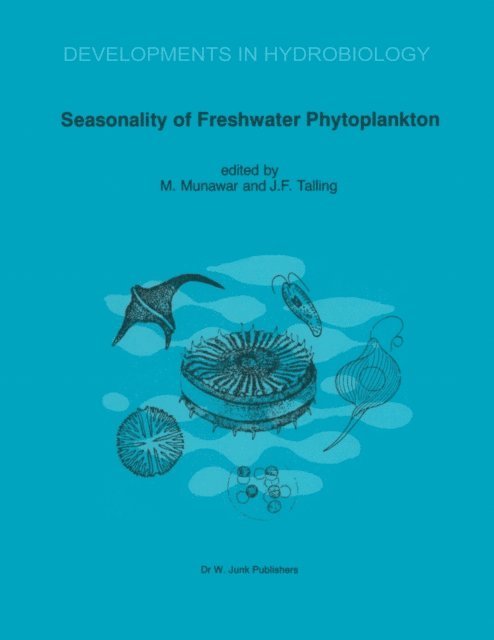
This volume originated in a belief, shared by the two editors, that the time was ripe for a world-wide survey - or at least sampling - of seasonality in freshwater phytoplankton. An opportunity was provided by the International Limnological Congress (S. I. L. ), held at Lyon in August 1983, to plan a one-day symposium on the topic. From this enjoyable and successful occasion, augmented by additional written contributions, the present volume has emerged. As convenors and editors, we are grateful to the contributors for their cooperation in this international venture. The seasonality of phytoplankton is widely conditioned by that of climate. Thus one may expect to find the geographical differentiation of climatic patterns reflected in the seasonal patterns of algal occurrence. Diversity in the global perspective is also introduced by considerations of geomorphology, geochemistry, and genotypically determined response. Nevertheless, the historical base of our subject is firmly rooted in the north-temperate zone. From its fresh waters, and seas, there have evolved virtually all of the approaches and techniques now being applied to the analysis of phytoplankton seasonal dynamics.
Häftad, Engelska, 2012
545 kr
Skickas inom 10-15 vardagar
Häftad, Engelska, 2013
3 233 kr
Skickas inom 10-15 vardagar
Proceedings of the First International Conference held in Lancaster, England, July 11-14, 1988
Häftad, Engelska, 2011
2 480 kr
Skickas inom 10-15 vardagar
'The criterion of true beauty' , wrote Fulke Greville, 1st Baron of Burke, 'is that it increases on examination; if false, that it lessens. There is therefore something in true beauty that corresponds with right reason, and it is not the mere creation of fantasy.' The authors of this compact volume have increased the beauty of an area that is commonly and rightly ac knowledged to be one of the loveliest parts of the Great Lakes. They have done this by integrating the historical, industrial, and cultural influences on 'Lake Manitoulin' in sixteen manuscripts. It is enigmatic that Lake Huron, the second of the Great Lakes to be discovered by European explorers, has been the last to be adequately described Iimnologicaliy. As recently as 1966, for example, Alfred M. Beeton wrote in Limnology in North America: ' ... even a list of the more common species comprising the plankton of Lake Huron could be an original contribution to scientific literature.' Comparable statements could have been made for sediments, benthos, and water chemistry. This volume reflects a change of course and Georgian Bay and the North Channel of Lake Huron are now on the scientific map. Science is 'right reason'. Its application to Georgian Bay and the North Channel is a welcome and timely addition for the renewal of public, political, and scientific interest in the conservation of the Great Lakes.
E-bok
PDF, Engelska, 2012712 kr
Läs direkt efter köp
Inbunden, Engelska, 2005
2 383 kr
Tillfälligt slut
Focusing on state-of-the-art biological testing and methods used for aquatic ecosystem health assessment, Ecotoxicological Testing of Marine and Freshwater Ecosystems evaluates the latest bioassay techniques and different types of water and sediment quality assessments. The book also explores multi-tiered approaches to making recommendations for the preservation, enhancement, and restoration of ecosystem functions as well as risk perception and communication strategies for investigators, policy makers, government agencies, and the public.The book examines the use of selective biosensors, bioassays, bioaccumulation modeling, biomarkers, gene expression analysis, and other techniques that enable scientists to measure cellular, sub-cellular, and molecular effects of low-level contaminants on various organisms and evaluate changes caused by over-exploitation, habitat modification, catchment run-off, polluting emissions, and even global warming. The chapters describe various ways to assess species diversity, organism population trends, and exposure routes to reveal tangible consequences of sediment or water toxicity. A chapter is dedicated to the role of remote sensing technologies in monitoring, prediction, and management of changes within coastal ecosystems, along with improvements in information technology and data processing that allow for the assessment of spatial variability. The last chapter summarizes the current status of techniques and strategies. Several appendices highlight the strengths and limitations of various techniques and provide references to additional literature.Contributed by leading field experts, this book is useful for post-graduate students, researchers, and regulatory professionals involved in environmental toxicology, ecosystem health, ecology, pollution monitoring, and freshwater and marine science. Ecotoxicological Testing of Marine and Freshwater Ecosystems: Emerging Techniques, Trends and Strategies presents new possibilities for prognostic tools that can be used for early detection systems and integrative approaches that foster informed decision-making consisting of evidence-based risk assessments for remediation, treatment, and maintenance in environmental and resource management