Maartje Weerdesteijn – författare
Visar alla böcker från författaren Maartje Weerdesteijn. Handla med fri frakt och snabb leverans.
6 produkter
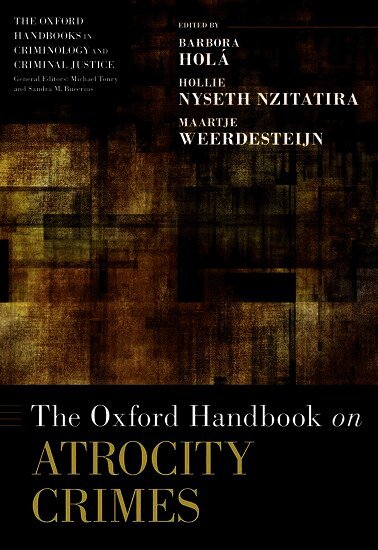
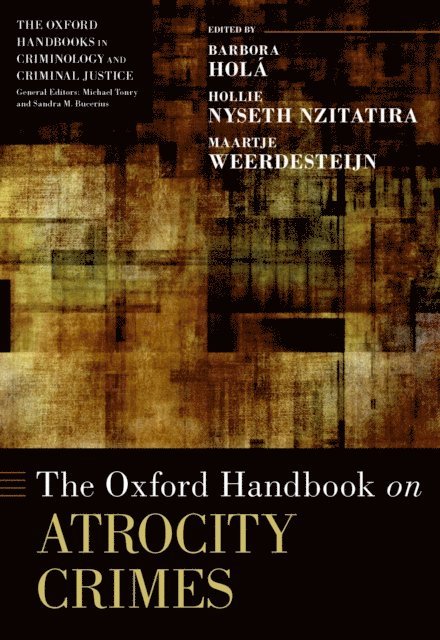
The Oxford Handbook on Atrocity Crimes
Av Barbora Holá, Hollie Nyseth Nzitatira m. fl.
Inbunden, 2022
2902 kr
Lägg i varukorg
Social scientific research focusing on mass atrocities, which include widespread or systematic crimes such as genocide, crimes against humanity, and war crimes, expanded after the end of the Cold War. Mass violence in the former Yugoslavia, as well as the genocide in Rwanda, sparked new research …
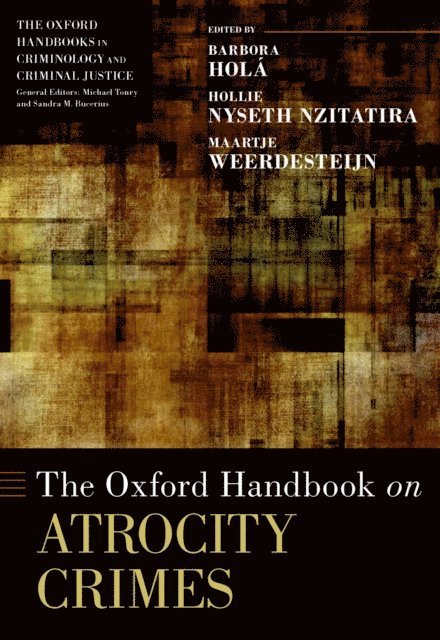
Oxford Handbook on Atrocity Crimes
Av Maartje Weerdesteijn, Hollie Nyseth Nzitatira m. fl.
E-bok, 2022
2058 kr
Lägg i varukorg
Social scientific research focusing on mass atrocities, which include widespread or systematic crimes such as genocide, crimes against humanity, and war crimes, expanded after the end of the Cold War. Mass violence in the former Yugoslavia, as well as the genocide in Rwanda, sparked new research …
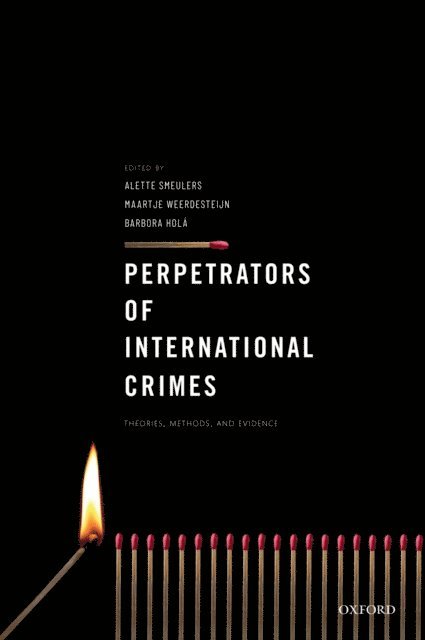
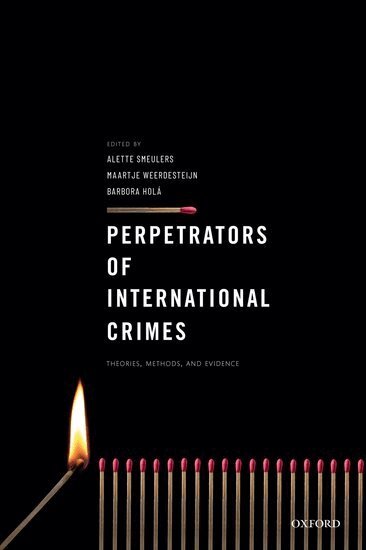
Perpetrators of International Crimes
Theories, Methods, and Evidence
Av Barbora Hola, Maartje Weerdesteijn m. fl.
E-bok, 2019
1484 kr
Lägg i varukorg
Why would anyone commit a mass atrocity such as genocide, crimes against humanity, war crimes, or terrorism? This question is at the core of the multi- and interdisciplinary field of perpetrator studies, a developing field which this book assesses in its full breadth for the first time. …
Perpetrators of International Crimes
Theories, Methods, and Evidence
Av Barbora Hola, Maartje Weerdesteijn m. fl.
E-bok, 2019
1484 kr
Lägg i varukorg
Why would anyone commit a mass atrocity such as genocide, crimes against humanity, war crimes, or terrorism? This question is at the core of the multi- and interdisciplinary field of perpetrator studies, a developing field which this book assesses in its full breadth for the first time. …
Oxford Handbook on Atrocity Crimes
Av Maartje Weerdesteijn, Hollie Nyseth Nzitatira m. fl.
E-bok, 2022
2058 kr
Lägg i varukorg
Social scientific research focusing on mass atrocities, which include widespread or systematic crimes such as genocide, crimes against humanity, and war crimes, expanded after the end of the Cold War. Mass violence in the former Yugoslavia, as well as the genocide in Rwanda, sparked new research …
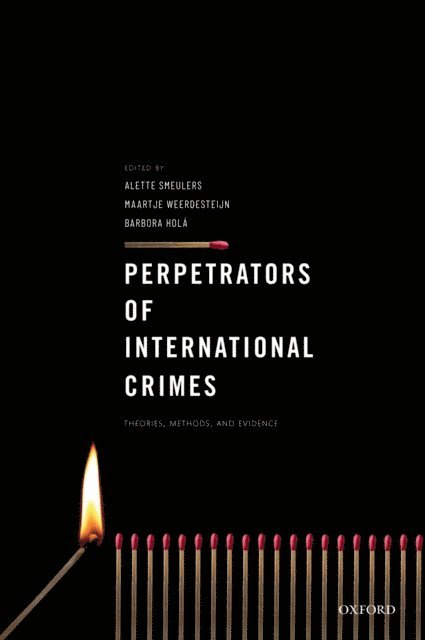
Perpetrators of International Crimes
Theories, Methods, and Evidence
Av Alette Smeulers, Maartje Weerdesteijn m. fl.
Inbunden, 2019
2122 kr
Lägg i varukorg
Why would anyone commit a mass atrocity such as genocide, crimes against humanity, war crimes, or terrorism? This question is at the core of the multi- and interdisciplinary field of perpetrator studies, a developing field which this book assesses in its full breadth for the first time. …