Magdalena Jeszka-Skowron – författare
Visar alla böcker från författaren Magdalena Jeszka-Skowron. Handla med fri frakt och snabb leverans.
6 produkter
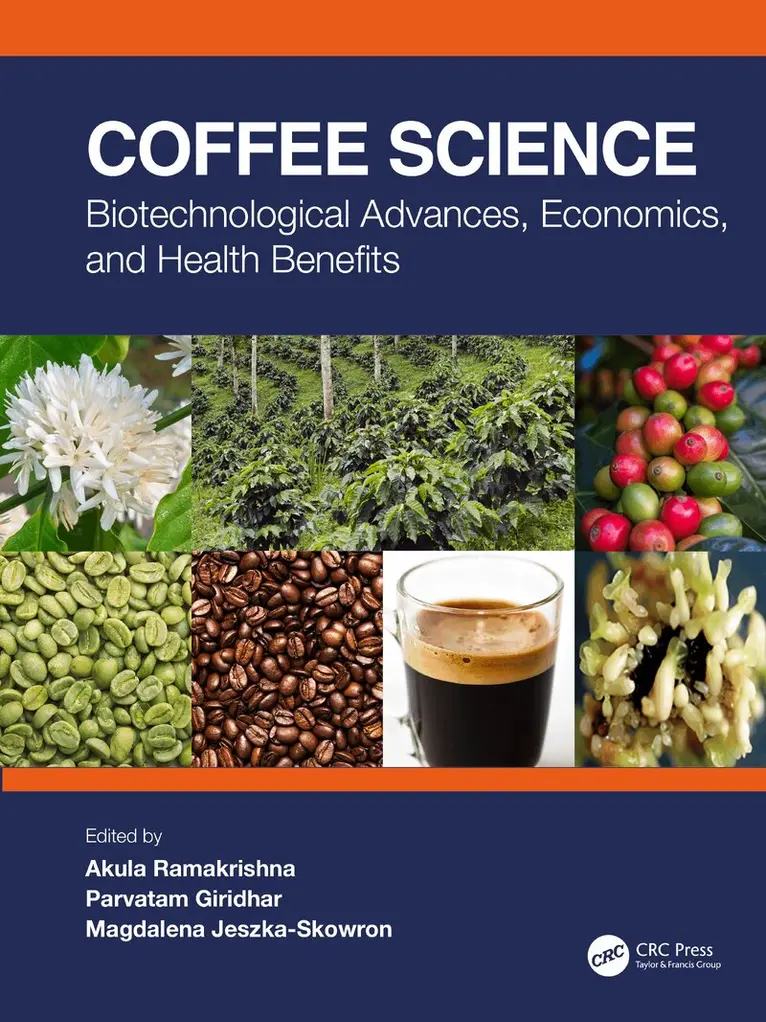
Coffee Science
Biotechnological Advances, Economics, and Health Benefits
Av Akula Ramakrishna, Parvatam Giridhar m. fl.
Inbunden, 2022
2513 kr
Lägg i varukorg
Coffee Science: Biotechnological Advances, Economics and Health Benefits highlights the important advances in coffee research and an all-inclusive collection of information on the current status of global coffee production and market, sustainable benefits, novel methods and recent developments in …
Coffee Science
Biotechnological Advances, Economics, and Health Benefits
Av Magdalena Jeszka-Skowron, Parvatam Giridhar m. fl.
E-bok, 2022
989 kr
Lägg i varukorg
Coffee Science: Biotechnological Advances, Economics and Health Benefits highlights the important advances in coffee research and an all-inclusive collection of information on the current status of global coffee production and market, sustainable benefits, novel methods and recent developments in …
Coffee Science
Biotechnological Advances, Economics, and Health Benefits
Av Magdalena Jeszka-Skowron, Parvatam Giridhar m. fl.
E-bok, 2022
1022 kr
Lägg i varukorg
Coffee Science: Biotechnological Advances, Economics and Health Benefits highlights the important advances in coffee research and an all-inclusive collection of information on the current status of global coffee production and market, sustainable benefits, novel methods and recent developments in …
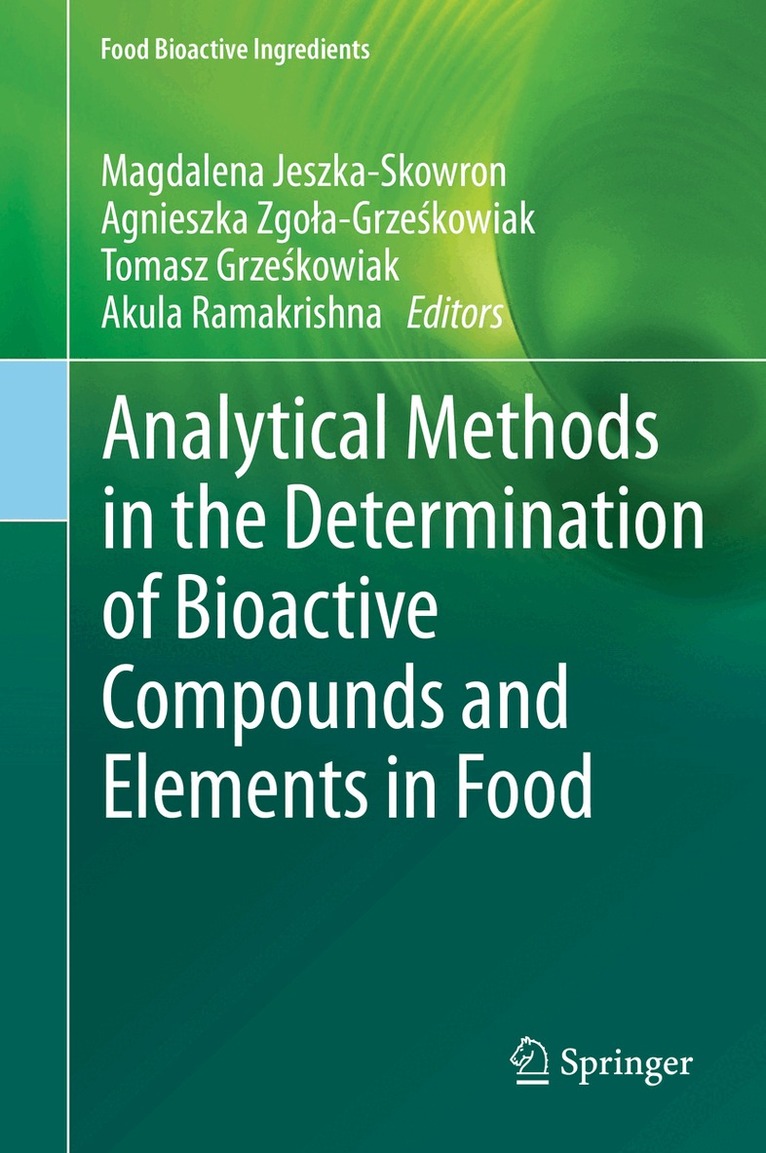
Analytical Methods in the Determination of Bioactive Compounds and Elements in Food
Av Magdalena Jeszka-Skowron, Agnieszka Zgoła-Grześkowiak m. fl.
Inbunden, 2021
2182 kr
Lägg i varukorg
Most bioactive compounds have antioxidant activity, particularly tocochromanols, phenolics (flavonoids and phenolic acids), methylxantines and capsaicinoids. Some of these compounds have also other properties important for human health. For example, vitamin E protects against oxidative stress, but …
Analytical Methods in the Determination of Bioactive Compounds and Elements in Food
Av Akula Ramakrishna, Tomasz Grzeskowiak m. fl.
E-bok, 2021
2862 kr
Lägg i varukorg
Most bioactive compounds have antioxidant activity, particularly tocochromanols, phenolics (flavonoids and phenolic acids), methylxantines and capsaicinoids. Some of these compounds have also other properties important for human health. For example, vitamin E protects against oxidative stress, but …
Analytical Methods in the Determination of Bioactive Compounds and Elements in Food
Av Magdalena Jeszka-Skowron, Agnieszka Zgoła-Grześkowiak m. fl.
Häftad, 2022
2182 kr
Lägg i varukorg
Most bioactive compounds have antioxidant activity, particularly tocochromanols, phenolics (flavonoids and phenolic acids), methylxantines and capsaicinoids. Some of these compounds have also other properties important for human health. For example, vitamin E protects against oxidative stress, but …