Magdalena Zych – författare
Visar alla böcker från författaren Magdalena Zych. Handla med fri frakt och snabb leverans.
4 produkter
4 produkter
Inbunden, Engelska, 2027
550 kr
Kommande
Art responding to the Holocaust – an even often deemed unrepresentable – has sparked much discussion regarding its themes, strategies, challenges. As knowledge about World War II’s genocide has expanded beyond the history of ghettos and camps, Eastern Europe’s provinces have come into view. In this broader frame, vernacular, non-professional, so-called “folk” artists in Poland become visible, working outside of elite urban culture. What did such artists see? What did they experience? What remained in their memories in the postwar years? How were these represented? And indeed, whose memories were they? This book concerns the responses of Polish non-professional artists to the violence that they witnessed, or inherited as “post-witnesses” if they were born after the war and gained knowledge second-hand. It shows how memory was controlled, silenced, or amplified by institutions such as the state, the church, or museums both at home and abroad, particularly in Germany, and how amateur art connected Poles, Germans, and Jews, in forms of attempted reconciliation even as it served as a medium for the transfer of guilt.Explored here are questions about how this type of art may have functioned to sustain the memory of the Holocaust, as well as to expedite its forgetting.
Inbunden, Engelska, 2017
1 079 kr
Skickas inom 10-15 vardagar
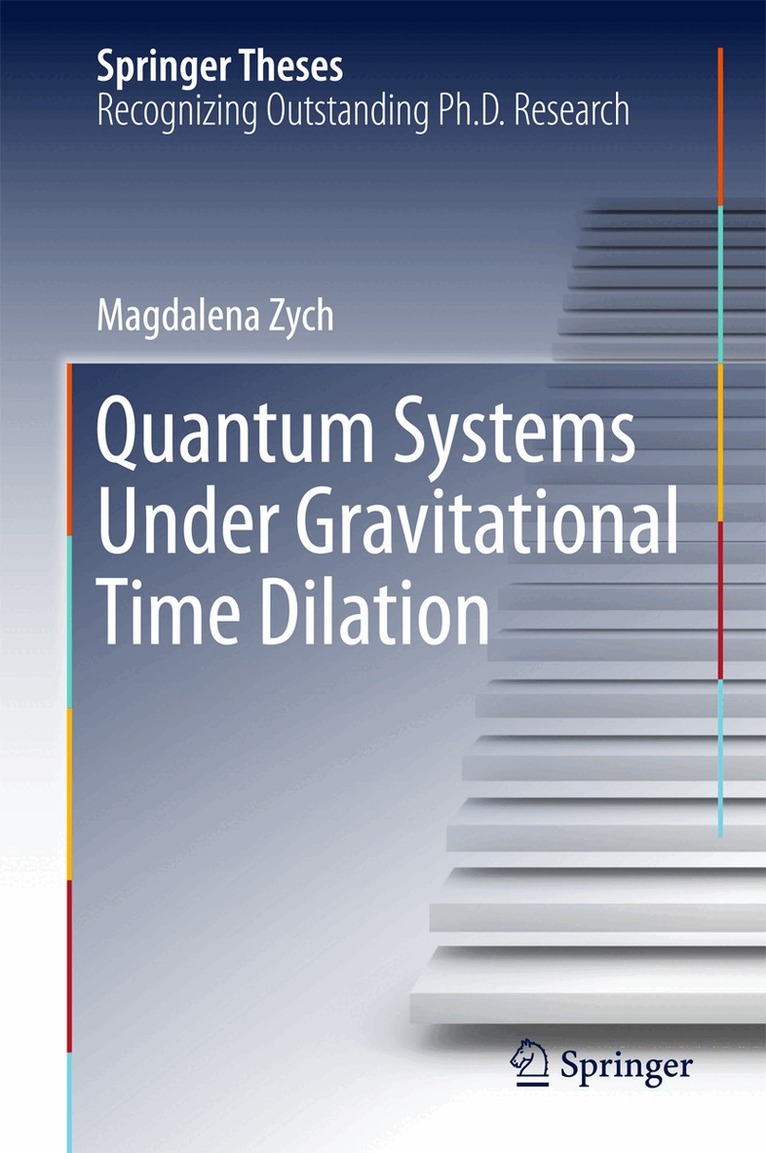
This thesis introduces a new theoretical tool to explore the notion of time and temporal order in quantum mechanics: the relativistic quantum "clock" framework. It proposes novel thought experiments showing that proper time can display quantum features, e.g. when a “clock” runs different proper times in superposition. The resulting new physical effects can be tested in near-future laboratory experiments (with atoms, molecules and photons as "clocks"). The notion of time holds the key to the regime where quantum theory and general relativity overlap, which has not been directly tested yet and remains largely unexplored by the theory. The framework also applies to scenarios in which causal relations between events become non-classical and which were previously considered impossible to address without refuting quantum theory. The relativistic quantum "clock" framework offers new insights into the foundations of quantum theory and general relativity.
E-bok
Engelska, 20171 367 kr
Läs direkt efter köp
This thesis introduces a new theoretical tool to explore the notion of time and temporal order in quantum mechanics: the relativistic quantum "clock" framework. It proposes novel thought experiments showing that proper time can display quantum features, e.g. when a “clock” runs different proper times in superposition. The resulting new physical effects can be tested in near-future laboratory experiments (with atoms, molecules and photons as "clocks"). The notion of time holds the key to the regime where quantum theory and general relativity overlap, which has not been directly tested yet and remains largely unexplored by the theory. The framework also applies to scenarios in which causal relations between events become non-classical and which were previously considered impossible to address without refuting quantum theory. The relativistic quantum "clock" framework offers new insights into the foundations of quantum theory and general relativity.
Häftad, Engelska, 2018
1 079 kr
Skickas inom 10-15 vardagar
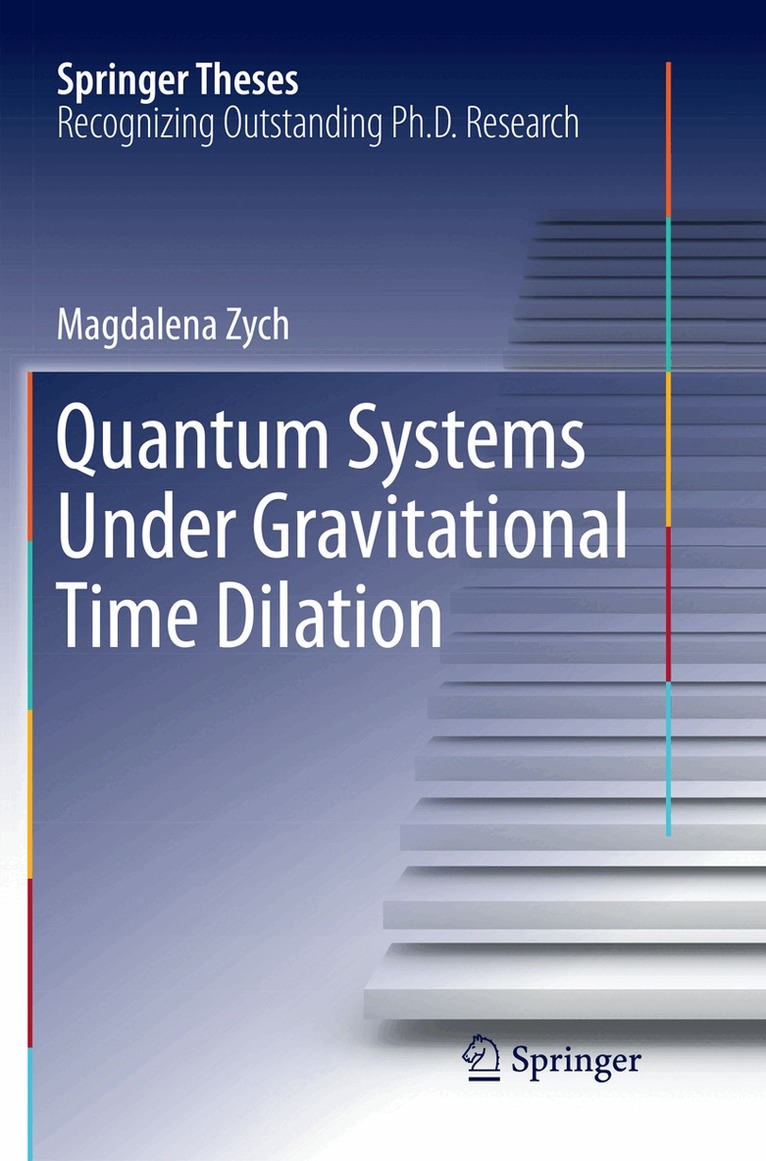
This thesis introduces a new theoretical tool to explore the notion of time and temporal order in quantum mechanics: the relativistic quantum "clock" framework. It proposes novel thought experiments showing that proper time can display quantum features, e.g. when a “clock” runs different proper times in superposition. The resulting new physical effects can be tested in near-future laboratory experiments (with atoms, molecules and photons as "clocks"). The notion of time holds the key to the regime where quantum theory and general relativity overlap, which has not been directly tested yet and remains largely unexplored by the theory. The framework also applies to scenarios in which causal relations between events become non-classical and which were previously considered impossible to address without refuting quantum theory. The relativistic quantum "clock" framework offers new insights into the foundations of quantum theory and general relativity.