Magnus Liebherr – författare
674 kr
Skickas inom 3-6 vardagar
795 kr
Läs direkt efter köp
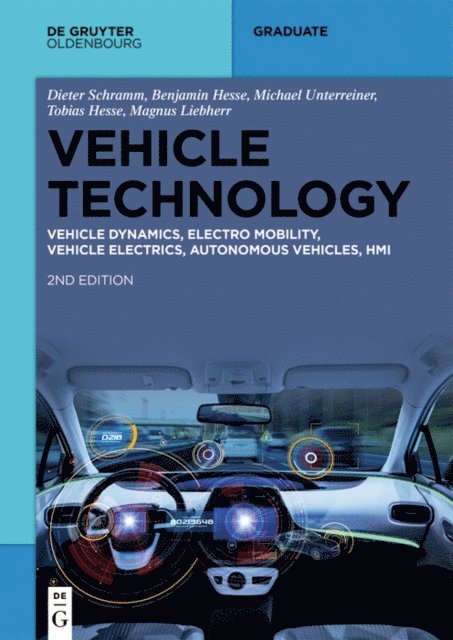
Die im Buch behandelte Kraftfahrzeugtechnik hat sich in den mehr als 125 Jahren ihrer Geschichte zu einem äußerst komplexen und in vielen Bereichen beispielgebenden Fachgebiet entwickelt, das weit über die Ingenieurwissenschaften hinausgeht. Kraftfahrzeuge müssen unter rauen Umweltbedingungen und extremen Dauerbelastungen funktionsfähig bleiben und auch im Fehlerfall von wenig geschulten Bedienern zuverlässig in einen sicheren Zustand gebracht werden können. Zudem handelt es sich um ein Massenprodukt, das in Millionenstückzahlen und zu extrem niedrigen Kosten produziert werden muss. Neben den Grundlagen aktueller Fahrzeugsysteme bietet das Buch auch einen Überblick über aktuelle und zukünftige Entwicklungen, beispielsweise in den Bereichen Elektromobilität, Fahrerassistenzsysteme, neue Fahrzeugarchitekturen und Bedienkonzepte. Grundlage dieses Buches ist eine Vorlesungsreihe zur Kraftfahrzeugtechnik, die von Prof. Schramm seit vielen Jahren an der Universität Duisburg-Essen angeboten wird.
Ausgehend von klassischen Systemen wird dem Leser eine systemische Sicht auf moderne Kraftfahrzeuge vermittelt. Neben der reinen Funktion wird dabei auch auf die Modellierung einzelner (Teil-)Systeme eingegangen. Dies ermöglicht dem Leser ein tiefes Verständnis der zugrundeliegenden Prinzipien. Die zweite Auflage wurde grundlegend überarbeitet und beinhaltet ein neues Kapitel über die Benutzer-Fahrzeug-Schnittstelle.
795 kr
Läs direkt efter köp
Die im Buch behandelte Kraftfahrzeugtechnik hat sich in den mehr als 125 Jahren ihrer Geschichte zu einem äußerst komplexen und in vielen Bereichen beispielgebenden Fachgebiet entwickelt, das weit über die Ingenieurwissenschaften hinausgeht. Kraftfahrzeuge müssen unter rauen Umweltbedingungen und extremen Dauerbelastungen funktionsfähig bleiben und auch im Fehlerfall von wenig geschulten Bedienern zuverlässig in einen sicheren Zustand gebracht werden können. Zudem handelt es sich um ein Massenprodukt, das in Millionenstückzahlen und zu extrem niedrigen Kosten produziert werden muss. Neben den Grundlagen aktueller Fahrzeugsysteme bietet das Buch auch einen Überblick über aktuelle und zukünftige Entwicklungen, beispielsweise in den Bereichen Elektromobilität, Fahrerassistenzsysteme, neue Fahrzeugarchitekturen und Bedienkonzepte. Grundlage dieses Buches ist eine Vorlesungsreihe zur Kraftfahrzeugtechnik, die von Prof. Schramm seit vielen Jahren an der Universität Duisburg-Essen angeboten wird.
Ausgehend von klassischen Systemen wird dem Leser eine systemische Sicht auf moderne Kraftfahrzeuge vermittelt. Neben der reinen Funktion wird dabei auch auf die Modellierung einzelner (Teil-)Systeme eingegangen. Dies ermöglicht dem Leser ein tiefes Verständnis der zugrundeliegenden Prinzipien. Die zweite Auflage wurde grundlegend überarbeitet und beinhaltet ein neues Kapitel über die Benutzer-Fahrzeug-Schnittstelle.
806 kr
Skickas inom 3-6 vardagar
976 kr
Läs direkt efter köp
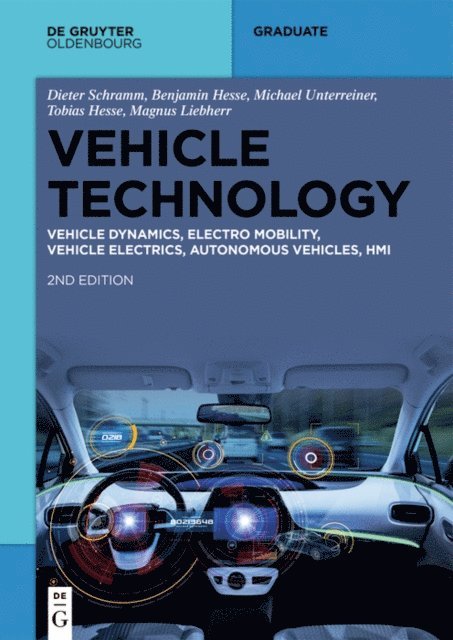
The motor vehicle technology covered in this book has become in the more than 125 years of its history in many aspects an extremely complex and, in many areas of engineering science .Motor vehicles must remain functional under harsh environmental conditions and extreme continuous loads and must also be reliably brought into a safe state even in the event of a failure by a few trained operators.The automobile is at the same time a mass product, which must be produced in millions of pieces and at extremely low cost. In addition to the fundamentals of current vehicle systems, the book also provides an overview of future developments such as, for example, in the areas of electromobility, alternative drives and driver assistance systems. The basis for the book is a series of lectures on automotive engineering, which has been offered by the first-named author at the University of Duisburg-Essen for many years.
Starting from classical systems in the automobile, the reader is given a systemic view of modern motor vehicles. In addition to the pure basic function, the modeling of individual (sub-) systems is also discussed. This gives the reader a deep understanding of the underlying principles. In addition, the book with the given models provides a basis for the practical application in the area of simulation technology and thus achieves a clear added value against books, which merely explain the function of a system without entering into the modeling.On the basis of today''s vehicle systems we will continue to look at current and future systems. In addition to the state-of-the-art, the reader is thus taught which topics are currently dominant in research and which developments can be expected for the future. In particular, a large number of practical examples are provided directly from the vehicle industry. Especially for students of vehicle-oriented study courses and lectures, the book thus enables an optimal preparation for possible future fields of activity.
976 kr
Läs direkt efter köp
The motor vehicle technology covered in this book has become in the more than 125 years of its history in many aspects an extremely complex and, in many areas of engineering science .Motor vehicles must remain functional under harsh environmental conditions and extreme continuous loads and must also be reliably brought into a safe state even in the event of a failure by a few trained operators.The automobile is at the same time a mass product, which must be produced in millions of pieces and at extremely low cost. In addition to the fundamentals of current vehicle systems, the book also provides an overview of future developments such as, for example, in the areas of electromobility, alternative drives and driver assistance systems. The basis for the book is a series of lectures on automotive engineering, which has been offered by the first-named author at the University of Duisburg-Essen for many years.
Starting from classical systems in the automobile, the reader is given a systemic view of modern motor vehicles. In addition to the pure basic function, the modeling of individual (sub-) systems is also discussed. This gives the reader a deep understanding of the underlying principles. In addition, the book with the given models provides a basis for the practical application in the area of simulation technology and thus achieves a clear added value against books, which merely explain the function of a system without entering into the modeling.On the basis of today''s vehicle systems we will continue to look at current and future systems. In addition to the state-of-the-art, the reader is thus taught which topics are currently dominant in research and which developments can be expected for the future. In particular, a large number of practical examples are provided directly from the vehicle industry. Especially for students of vehicle-oriented study courses and lectures, the book thus enables an optimal preparation for possible future fields of activity.