Magnus Marsden – författare
Visar alla böcker från författaren Magnus Marsden. Handla med fri frakt och snabb leverans.
12 produkter
12 produkter
Inbunden, Engelska, 2012
945 kr
Skickas inom 3-6 vardagar
Häftad, Engelska, 2005
565 kr
Skickas inom 7-10 vardagar
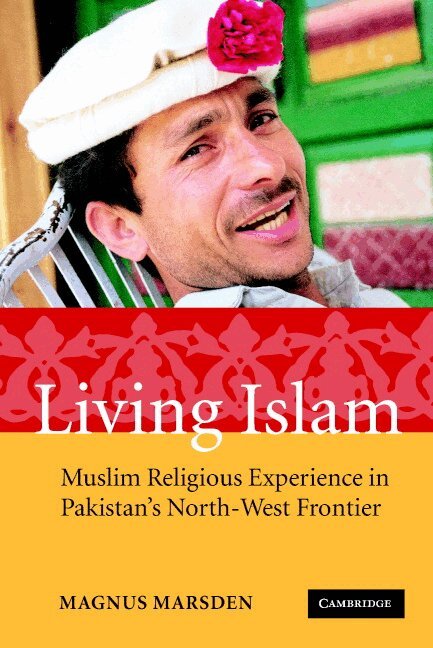
Popular representations of Pakistan's North West Frontier have long featured simplistic images of tribal blood feuds, fanatical religion, and the seclusion of women. The rise to power of the radical Taliban regime in neighbouring Afghanistan enhanced the region's reputation as a place of anti-Western militancy. Magnus Marsden is an anthropologist who has immersed himself in the lives of the Frontier's villagers for more than ten years. His evocative study of the Chitral region challenges all these stereotypes. Through an exploration of the everyday experiences of both men and women, he shows that the life of a good Muslim in Chitral is above all a mindful life, enhanced by the creative force of poetry, dancing and critical debate. Challenging much that has been assumed about the Muslim world, this 2005 study makes a powerful contribution to the understanding of religion and politics both within and beyond the Muslim societies of southern Asia.
Inbunden, Engelska, 2005
1 292 kr
Skickas inom 7-10 vardagar
Popular representations of Pakistan's North West Frontier have long featured simplistic images of tribal blood feuds, fanatical religion, and the seclusion of women. The rise to power of the radical Taliban regime in neighbouring Afghanistan enhanced the region's reputation as a place of anti-Western militancy. Magnus Marsden is an anthropologist who has immersed himself in the lives of the Frontier's villagers for more than ten years. His evocative study of the Chitral region challenges all these stereotypes. Through an exploration of the everyday experiences of both men and women, he shows that the life of a good Muslim in Chitral is above all a mindful life, enhanced by the creative force of poetry, dancing and critical debate. Challenging much that has been assumed about the Muslim world, this 2005 study makes a powerful contribution to the understanding of religion and politics both within and beyond the Muslim societies of southern Asia.
Inbunden, Engelska, 2021
1 237 kr
Skickas inom 7-10 vardagar
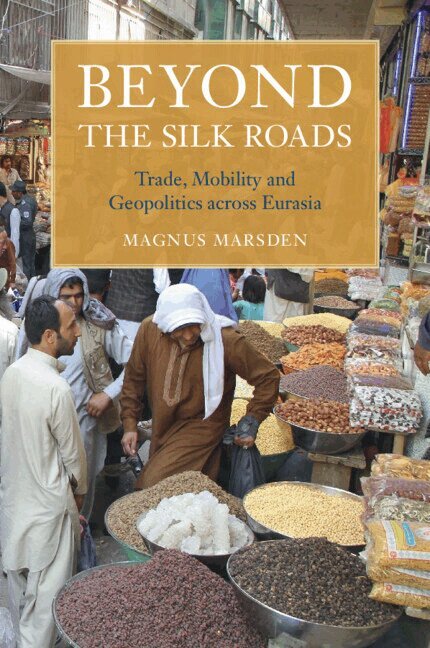
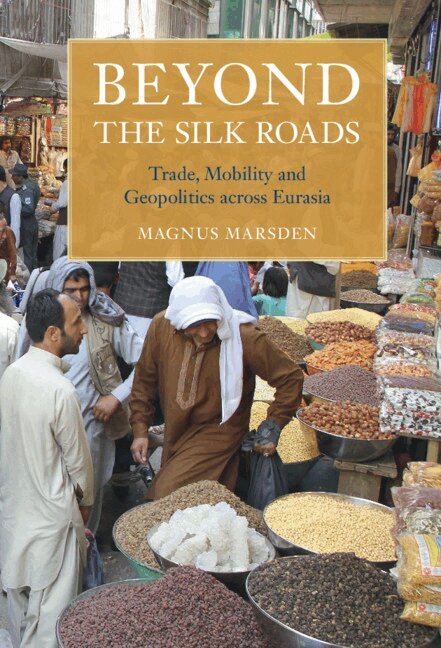
Small-scale traders play a crucial role in forging Asian connectivity, forming networks and informal institutions separate from those driven by nation-states, such as China's Belt and Road Initiative. This ambitious study provides a unique insight into the lives of the mobile traders from Afghanistan who traverse Eurasia. Reflecting on over a decade of intensive ethnographic fieldwork, Magnus Marsden introduces readers to a dynamic yet historically durable universe of commercial and cultural connections. Through an exploration of the traders' networks, cultural and religious identities, as well as the nodes in which they operate, Marsden emphasises their ability to navigate Eurasia's geopolitical tensions and to forge transregional routes that channel significant flows of people, resources, and ideas. Beyond the Silk Roads will interest those seeking to understand contemporary iterations of the Silk Road within the context of geopolitics in the region. This title is also available as Open Access.
E-bok
PDF, Engelska, 2021472 kr
Läs direkt efter köp
Small-scale traders play a crucial role in forging Asian connectivity, forming networks and informal institutions separate from those driven by nation-states, such as China''s Belt and Road Initiative. This ambitious study provides a unique insight into the lives of the mobile traders from Afghanistan who traverse Eurasia. Reflecting on over a decade of intensive ethnographic fieldwork, Magnus Marsden introduces readers to a dynamic yet historically durable universe of commercial and cultural connections. Through an exploration of the traders'' networks, cultural and religious identities, as well as the nodes in which they operate, Marsden emphasises their ability to navigate Eurasia''s geopolitical tensions and to forge transregional routes that channel significant flows of people, resources, and ideas. Beyond the Silk Roads will interest those seeking to understand contemporary iterations of the Silk Road within the context of geopolitics in the region. This title is also available as Open Access.
E-bok
Engelska, 2021472 kr
Läs direkt efter köp
Small-scale traders play a crucial role in forging Asian connectivity, forming networks and informal institutions separate from those driven by nation-states, such as China''s Belt and Road Initiative. This ambitious study provides a unique insight into the lives of the mobile traders from Afghanistan who traverse Eurasia. Reflecting on over a decade of intensive ethnographic fieldwork, Magnus Marsden introduces readers to a dynamic yet historically durable universe of commercial and cultural connections. Through an exploration of the traders'' networks, cultural and religious identities, as well as the nodes in which they operate, Marsden emphasises their ability to navigate Eurasia''s geopolitical tensions and to forge transregional routes that channel significant flows of people, resources, and ideas. Beyond the Silk Roads will interest those seeking to understand contemporary iterations of the Silk Road within the context of geopolitics in the region. This title is also available as Open Access.
Häftad, Engelska, 2025
412 kr
Skickas inom 7-10 vardagar
Small-scale traders play a crucial role in forging Asian connectivity, forming networks and informal institutions separate from those driven by nation-states, such as China's Belt and Road Initiative. This ambitious study provides a unique insight into the lives of the mobile traders from Afghanistan who traverse Eurasia. Reflecting on over a decade of intensive ethnographic fieldwork, Magnus Marsden introduces readers to a dynamic yet historically durable universe of commercial and cultural connections. Through an exploration of the traders' networks, cultural and religious identities, as well as the nodes in which they operate, Marsden emphasises their ability to navigate Eurasia's geopolitical tensions and to forge transregional routes that channel significant flows of people, resources, and ideas. Beyond the Silk Roads will interest those seeking to understand contemporary iterations of the Silk Road within the context of geopolitics in the region. This title is also available as Open Access.
Inbunden, Engelska, 2027
454 kr
Kommande
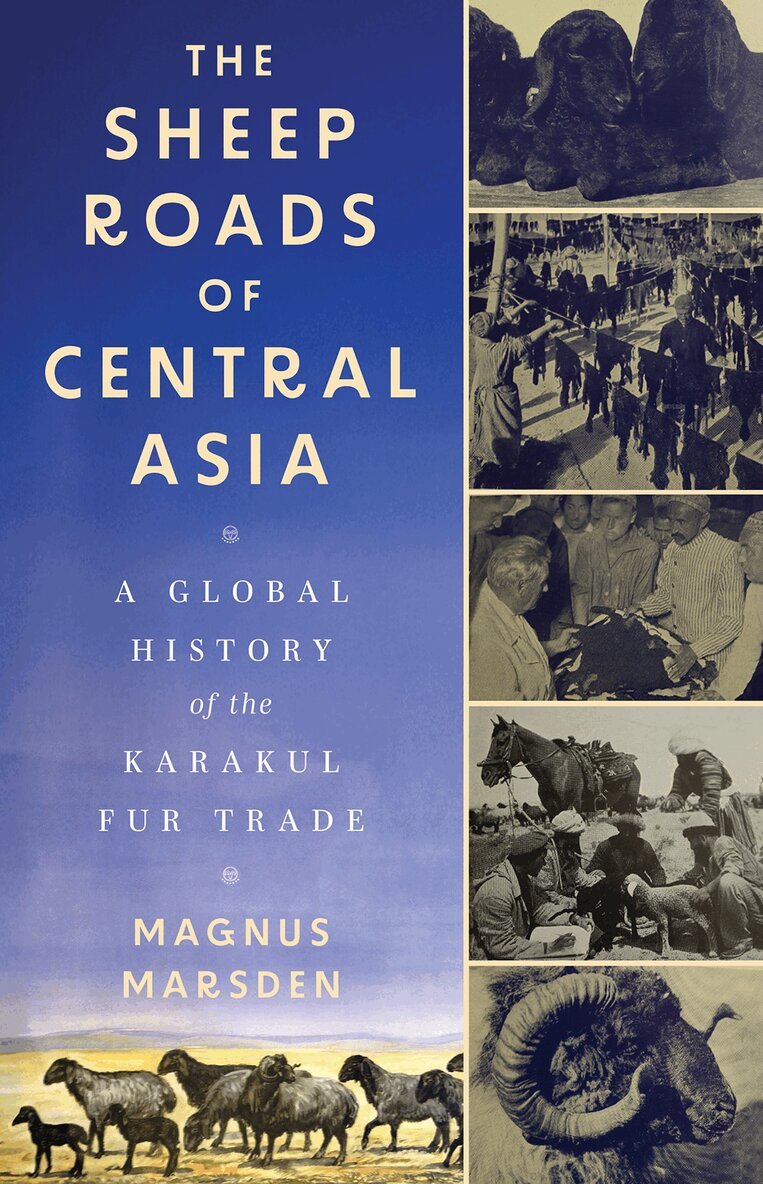
A history of the fur trade originating on the Karakul sheep–raising steppe, and of the merchants who took the pelts to markets worldwide.Indigenous to Central Asia, Karakul sheep can thrive in the region’s arid environment. For centuries, men across Muslim Asia and Russia wore hats made from the sheep’s fur, which often symbolised status and masculine power. In the late nineteenth century, the thirst for furs among fashionable women in Europe and America saw millions of Karakul lambskins change hands annually, in Leipzig, London and New York. In the early twentieth century, the Russian Revolution led shepherds and merchants to flee Central Asia for Afghanistan; over the following decades, the trade in Karakul lambskins—initially referred to in the West as ‘Persian Lamb’ or ‘Astrakhan fur’—became a central element of Afghanistan’s economy. In this unique book, Magnus Marsden illuminates Karakul’s role in the region’s globalisation, drawing on rich archives, three decades of research in Afghanistan, Pakistan and Central Asia, and interviews with fur traders and their families. He discovers that Jewish and Muslim Central Asian merchants played a pivotal role in the trade’s international expansion, demonstrating remarkable resilience in an environment growing ever more hostile to the long-distance commercial networks which they formed.
Häftad, Engelska, 2016
379 kr
Skickas inom 7-10 vardagar
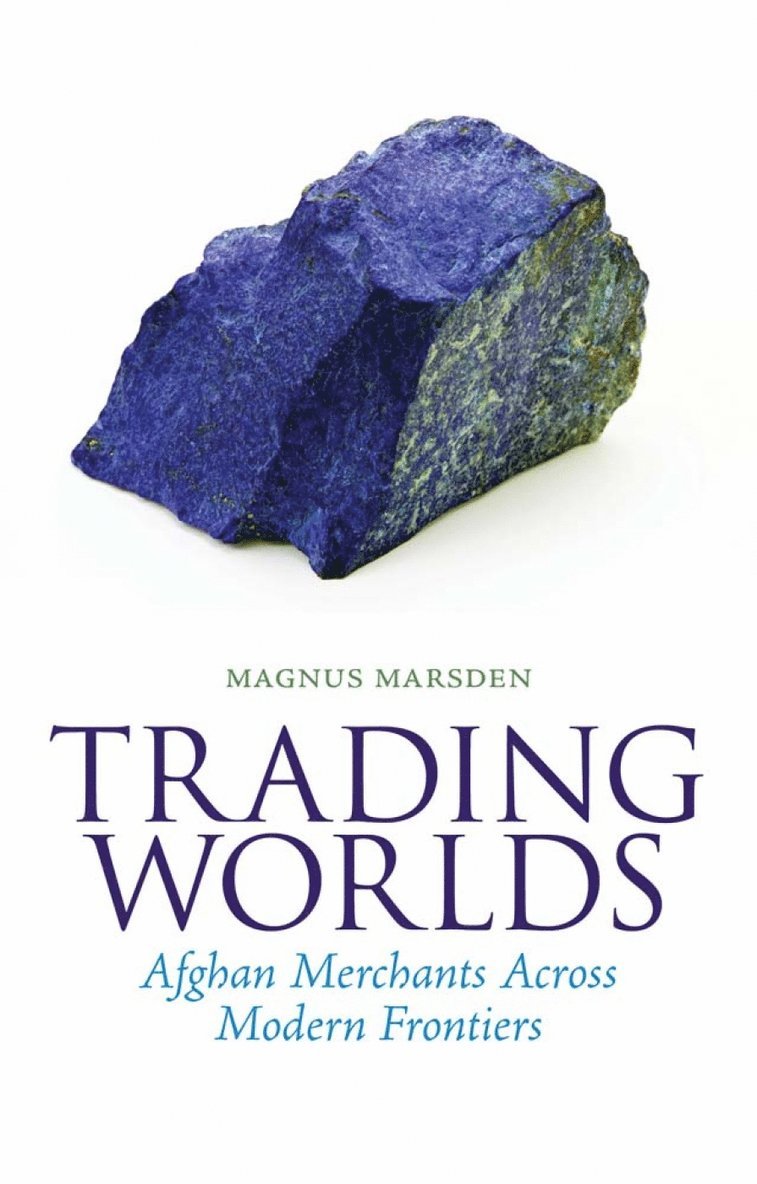
Trading Worlds is an anthropological study of a little understood yet rapidly expanding global trading diaspora, namely the Afghan merchants of Afghanistan, Central Asia and Europe. It contests one-sided images that depict traders from this and other conflict regions as immoral profiteers, the cronies of warlords or international drug smugglers. It shows, rather, the active role these merchants play in an ever-more globalised political economy. Afghan merchants, the author demonstrates, forge and occupy critical eco- nomic niches, both at home and abroad: from the Persian Gulf to Central Asia, to the ports of the Black Sea; and in global cities such as Istanbul, Moscow and London, the traders' activities are shaping the material and cultural lives of the di- verse populations among whom they live. Through an exploration of the life histories, trading activities and everyday experiences of these mobile merchants, Magnus Marsden shows that traders' worlds are informed by complex forms of knowledge, skill, ethical sensibility, and long-lasting human relationships that often cut across and dissolve boundaries of nation, ethnicity, religion and ideology.
Inbunden, Engelska, 2012
1 091 kr
Skickas inom 10-15 vardagar
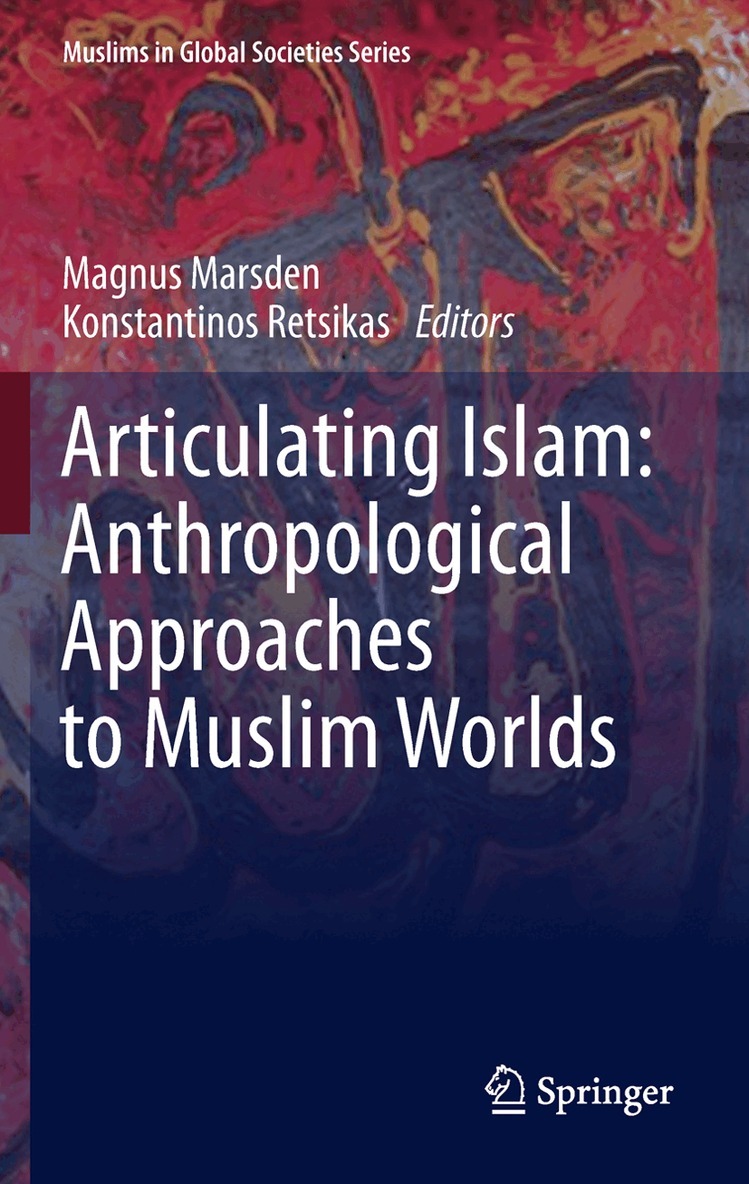
This collection of arresting and innovative chapters applies the techniques of anthropology in analyzing the role played by Islam in the social lives of the world’s Muslims. The volume begins with an introduction that sets out a powerful case for a fresh approach to this kind of research, exhorting anthropologists to pause and reflect on when Islam is, and is not, a central feature of their informants’ life-worlds and identities. The chapters that follow are written by scholars with long-term, specialist research experience in Muslim societies ranging from Kenya to Pakistan and from Yemen to China: thus they explore and compare Islam’s social significance in a variety of settings that are not confined to the Middle East or South Asia alone. The authors assess how helpful current anthropological research is in shedding light on Islam’s relationship to contemporary societies. Collectively, the contributors deploy both theoretical and ethnographic analysis of key developments in the anthropology of Islam over the last 30 years, even as they extrapolate their findings to address wider debates over the anthropology of world religions more generally. Crucially, they also tackle the thorny question of how, in the current political context, anthropologists might continue conducting sensitive and nuanced work with Muslim communities. Finally, an afterword by a scholar of Christianity explores the conceptual parallels between the book’s key themes and the anthropology of world religions in a broader context. This volume has key contemporary relevance: for example, its conclusions on the fluidity of people’s relations with Islam will provide an important counterpoint to many commonly held assumptions about the incontestability of Islam in the public sphere.
E-bok
PDF, Engelska, 20121 367 kr
Läs direkt efter köp
This collection of arresting and innovative chapters applies the techniques of anthropology in analyzing the role played by Islam in the social lives of the world’s Muslims. The volume begins with an introduction that sets out a powerful case for a fresh approach to this kind of research, exhorting anthropologists to pause and reflect on when Islam is, and is not, a central feature of their informants’ life-worlds and identities. The chapters that follow are written by scholars with long-term, specialist research experience in Muslim societies ranging from Kenya to Pakistan and from Yemen to China: thus they explore and compare Islam’s social significance in a variety of settings that are not confined to the Middle East or South Asia alone. The authors assess how helpful current anthropological research is in shedding light on Islam’s relationship to contemporary societies. Collectively, the contributors deploy both theoretical and ethnographic analysis of key developments in the anthropology of Islam over the last 30 years, even as they extrapolate their findings to address wider debates over the anthropology of world religions more generally. Crucially, they also tackle the thorny question of how, in the current political context, anthropologists might continue conducting sensitive and nuanced work with Muslim communities. Finally, an afterword by a scholar of Christianity explores the conceptual parallels between the book’s key themes and the anthropology of world religions in a broader context. This volume has key contemporary relevance: for example, its conclusions on the fluidity of people’s relations with Islam will provide an important counterpoint to many commonly held assumptions about the incontestability of Islam in the public sphere.
Häftad, Engelska, 2014
1 091 kr
Skickas inom 10-15 vardagar
This collection of arresting and innovative chapters applies the techniques of anthropology in analyzing the role played by Islam in the social lives of the world’s Muslims. The volume begins with an introduction that sets out a powerful case for a fresh approach to this kind of research, exhorting anthropologists to pause and reflect on when Islam is, and is not, a central feature of their informants’ life-worlds and identities. The chapters that follow are written by scholars with long-term, specialist research experience in Muslim societies ranging from Kenya to Pakistan and from Yemen to China: thus they explore and compare Islam’s social significance in a variety of settings that are not confined to the Middle East or South Asia alone. The authors assess how helpful current anthropological research is in shedding light on Islam’s relationship to contemporary societies. Collectively, the contributors deploy both theoretical and ethnographic analysis of key developments in the anthropology of Islam over the last 30 years, even as they extrapolate their findings to address wider debates over the anthropology of world religions more generally. Crucially, they also tackle the thorny question of how, in the current political context, anthropologists might continue conducting sensitive and nuanced work with Muslim communities. Finally, an afterword by a scholar of Christianity explores the conceptual parallels between the book’s key themes and the anthropology of world religions in a broader context. This volume has key contemporary relevance: for example, its conclusions on the fluidity of people’s relations with Islam will provide an important counterpoint to many commonly held assumptions about the incontestability of Islam in the public sphere.