Mahzarin R. Banaji – författare
Visar alla böcker från författaren Mahzarin R. Banaji. Handla med fri frakt och snabb leverans.
4 produkter
4 produkter
Häftad, Engelska, 2014
747 kr
Skickas inom 5-8 vardagar
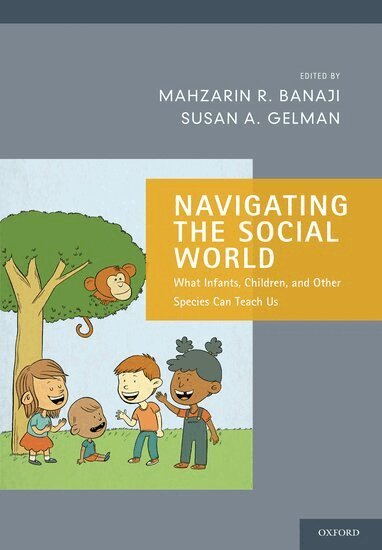
Navigating the social world requires sophisticated cognitive machinery that, although present quite early in crude forms, undergoes significant change across the lifespan. This book will be the first to report on evidence that has accumulated on an unprecedented scale, showing us what capacities for social cognition are present at birth and early in life, and how these capacities develop through learning in the first years of life. The volume will highlight what is known about the discoveries themselves but also what these discoveries imply about the nature of early social cognition and the methods that have allowed these discoveries -- what is known concerning the phylogeny and ontogeny of social cognition. To capture the full depth and breadth of the exciting work that is blossoming on this topic in a manner that is accessible and engaging, the editors invited 70 leading researchers to develop a short report of their work that would be written for a broad audience. The purpose of this format was for each piece to focus on a single core message: are babies aware of what is right and wrong, why do children have the same implicit intergroup preferences that adults do, what does language do to the building of category knowledge, and so on. The unique format and accessible writing style will be appealing to graduate students and researchers in cognitive psychology, developmental psychology, and social psychology.
Inbunden, Engelska, 2013
1 861 kr
Skickas inom 5-8 vardagar
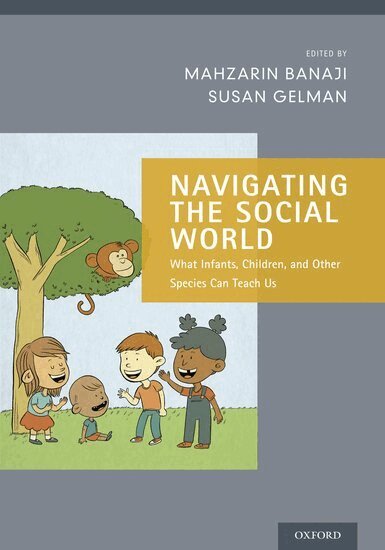
Navigating the social world requires sophisticated cognitive machinery that, although present quite early in crude forms, undergoes significant change across the lifespan. This book will be the first to report on evidence that has accumulated on an unprecedented scale, showing us what capacities for social cognition are present at birth and early in life, and how these capacities develop through learning in the first years of life. The volume will highlight what is known about the discoveries themselves but also what these discoveries imply about the nature of early social cognition and the methods that have allowed these discoveries -- what is known concerning the phylogeny and ontogeny of social cognition. To capture the full depth and breadth of the exciting work that is blossoming on this topic in a manner that is accessible and engaging, the editors invited 70 leading researchers to develop a short report of their work that would be written for a broad audience. The purpose of this format was for each piece to focus on a single core message: are babies aware of what is right and wrong, why do children have the same implicit intergroup preferences that adults do, what does language do to the building of category knowledge, and so on. The unique format and accessible writing style will be appealing to graduate students and researchers in cognitive psychology, developmental psychology, and social psychology.
Häftad, Engelska, 2016
181 kr
Skickas inom 3-6 vardagar
E-bok
Engelska, 2013100 kr
Läs direkt efter köp
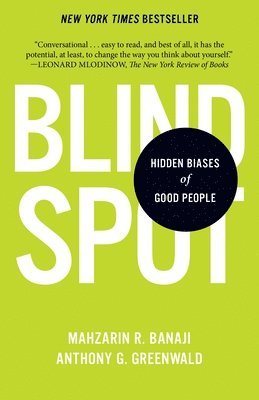
I know my own mind.I am able to assess others in a fair and accurate way.These self-perceptions are challenged by leading psychologists Mahzarin R. Banaji and Anthony G. Greenwald as they explore the hidden biases we all carry from a lifetime of exposure to cultural attitudes about age, gender, race, ethnicity, religion, social class, sexuality, disability status, and nationality.“Blindspot” is the authors’ metaphor for the portion of the mind that houses hidden biases. Writing with simplicity and verve, Banaji and Greenwald question the extent to which our perceptions of social groups—without our awareness or conscious control—shape our likes and dislikes and our judgments about people’s character, abilities, and potential.In Blindspot, the authors reveal hidden biases based on their experience with the Implicit Association Test, a method that has revolutionized the way scientists learn about the human mind and that gives us a glimpse into what lies within the metaphoric blindspot.The title’s “good people” are those of us who strive to align our behavior with our intentions. The aim of Blindspot is to explain the science in plain enough language to help well-intentioned people achieve that alignment. By gaining awareness, we can adapt beliefs and behavior and “outsmart the machine” in our heads so we can be fairer to those around us. Venturing into this book is an invitation to understand our own minds.Brilliant, authoritative, and utterly accessible, Blindspot is a book that will challenge and change readers for years to come.Praise for Blindspot “Conversational . . . easy to read, and best of all, it has the potential, at least, to change the way you think about yourself.”—Leonard Mlodinow, The New York Review of Books “Accessible and authoritative . . . While we may not have much power to eradicate our own prejudices, we can counteract them. The first step is to turn a hidden bias into a visible one. . . . What if we’re not the magnanimous people we think we are?”—The Washington Post “Banaji and Greenwald deserve a major award for writing such a lively and engaging book that conveys an important message: Mental processes that we are not aware of can affect what we think and what we do. Blindspot is one of the most illuminating books ever written on this topic.”—Elizabeth F. Loftus, Ph.D., distinguished professor, University of California, Irvine; past president, Association for Psychological Science; author of Eyewitness Testimony “A wonderfully cogent, socially relevant, and engaging book that helps us think smarter and more humanely. This is psychological science at its best, by two of its shining stars.”—David G. Myers, professor, Hope College, and author of Intuition: Its Powers and Perils “[The authors’] work has revolutionized social psychology, proving that—unconsciously—people are affected by dangerous stereotypes.”—Psychology Today“An accessible and persuasive account of the causes of stereotyping and discrimination . . . Banaji and Greenwald will keep even nonpsychology students engaged with plenty of self-examinations and compelling elucidations of case studies and experiments.”—Publishers Weekly “A stimulating treatment that should help readers deal with irrational biases that they would otherwise consciously reject.”—Kirkus ReviewsFrom the Hardcover edition.