597 kr
Skickas inom 3-6 vardagar
597 kr
Skickas inom 3-6 vardagar
288 kr
Läs direkt efter köp
The economic crisis that began in 2008 has had a significant impact on the well-being of certain segments of the population and its disruptive effects can be expected to last well into the future. The National Institute on Aging (NIA), which is concerned with this issue as it affects the older population in the United States, asked the National Research Council to review existing and ongoing research and to delineate the nature and dimensions of potential scientific inquiry in this area.
The Committee on Population thus established the Steering Committee on the Challenges of Assessing the Impact of Severe Economic Recession the Elderly to convene a meeting of experts to discuss these issues. The primary purpose of the workshop was to help NIA gain insight into the kinds of questions that it should be asking, the research that it should be supporting, and the data that it should be collecting. Attendees included invited experts in the fields of economics, sociology, and epidemiology; staff from NIA and the Social Security Administration (SSA); and staff from the National Academies.
This report highlights the major issues that were raised in the workshop presentations and discussion.
559 kr
Läs direkt efter köp
The economic crisis that began in 2008 has had a significant impact on the well-being of certain segments of the population and its disruptive effects can be expected to last well into the future. The National Institute on Aging (NIA), which is concerned with this issue as it affects the older population in the United States, asked the National Research Council to review existing and ongoing research and to delineate the nature and dimensions of potential scientific inquiry in this area.
The Committee on Population thus established the Steering Committee on the Challenges of Assessing the Impact of Severe Economic Recession the Elderly to convene a meeting of experts to discuss these issues. The primary purpose of the workshop was to help NIA gain insight into the kinds of questions that it should be asking, the research that it should be supporting, and the data that it should be collecting. Attendees included invited experts in the fields of economics, sociology, and epidemiology; staff from NIA and the Social Security Administration (SSA); and staff from the National Academies.
This report highlights the major issues that were raised in the workshop presentations and discussion.
610 kr
Läs direkt efter köp
Immigration enforcement is carried out by a complex legal and administrative system, operating under frequently changing legislative mandates and policy guidance, with authority and funding spread across several agencies in two executive departments and the courts. The U.S. Department of Homeland Security (DHS) is responsible for conducting immigration enforcement both at the border and in the United States; the U.S. Department of Justice (DOJ) is responsible for conducting immigration removal procedures and criminal trials and for prosecuting people charged with immigration-related crimes. DOJ confronts at least five technical challenges to modeling its resource needs for immigration enforcement that are specific to the immigration enforcement system. Despite the inherent limitations, budgeting for immigration enforcement can be improved by changing the method for budgeting.
Budgeting for Immigration Enforcement addresses how to improve budgeting for the federal immigration enforcement system, specifically focusing on the parts of that system that are operated and funded by the U.S. Department of Justice (DOJ). The report recommends that DOJ establish policy-level procedures to plan and coordinate policy planning and implementation to improve performance of the immigration enforcement system. The report also recommends that DOJ and DHS accelerate their design of an integrated capacity to track cases and project immigration enforcement activity. Policy makers and others who are interested in how the nation''s immigration enforcement system is organized and operates also will find it useful.
932 kr
Läs direkt efter köp
The population of Asia is growing both larger and older. Demographically the most important continent on the world, Asia''s population, currently estimated to be 4.2 billion, is expected to increase to about 5.9 billion by 2050. Rapid declines in fertility, together with rising life expectancy, are altering the age structure of the population so that in 2050, for the first time in history, there will be roughly as many people in Asia over the age of 65 as under the age of 15.
It is against this backdrop that the Division of Behavioral and Social Research at the U.S. National Institute on Aging (NIA) asked the National Research Council (NRC), through the Committee on Population, to undertake a project on advancing behavioral and social research on aging in Asia.
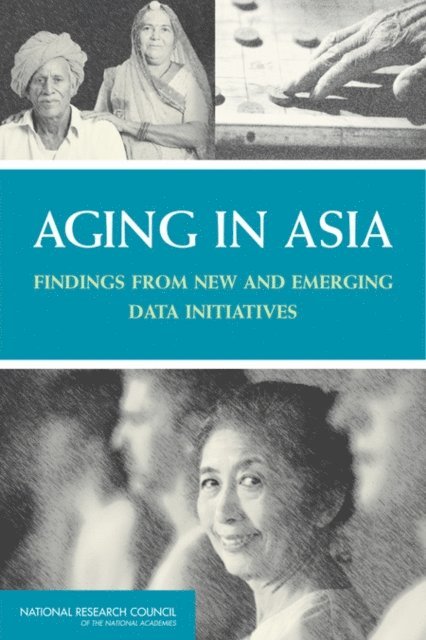
Aging in Asia: Findings from New and Emerging Data Initiatives is a peer-reviewed collection of papers from China, India, Indonesia, Japan, and Thailand that were presented at two conferences organized in conjunction with the Chinese Academy of Sciences, Indian National Science Academy, Indonesian Academy of Sciences, and Science Council of Japan; the first conference was hosted by the Chinese Academy of Social Sciences in Beijing, and the second conference was hosted by the Indian National Science Academy in New Delhi. The papers in the volume highlight the contributions from new and emerging data initiatives in the region and cover subject areas such as economic growth, labor markets, and consumption; family roles and responsibilities; and labor markets and consumption.
663 kr
Skickas inom 3-6 vardagar
610 kr
Läs direkt efter köp
The U.S. Department of Homeland Security (DHS) is responsible for securing and managing the nation''s borders. Over the past decade, DHS has dramatically stepped up its enforcement efforts at the U.S.-Mexico border, increasing the number of U.S. Border patrol (USBP) agents, expanding the deployment of technological assets, and implementing a variety of "consequence programs" intended to deter illegal immigration. During this same period, there has also been a sharp decline in the number of unauthorized migrants apprehended at the border.
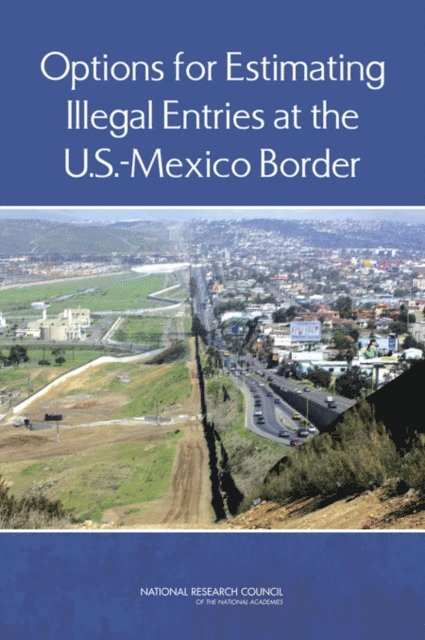
Trends in total apprehensions do not, however, by themselves speak to the effectiveness of DHS''s investments in immigration enforcement. In particular, to evaluate whether heightened enforcement efforts have contributed to reducing the flow of undocumented migrants, it is critical to estimate the number of border-crossing attempts during the same period for which apprehensions data are available. With these issues in mind, DHS charged the National Research Council (NRC) with providing guidance on the use of surveys and other methodologies to estimate the number of unauthorized crossings at the U.S.-Mexico border, preferably by geographic region and on a quarterly basis. Options for Estimating Illegal Entries at the U.S.-Mexico Border focuses on Mexican migrants since Mexican nationals account for the vast majority (around 90 percent) of attempted unauthorized border crossings across the U.S.-Mexico border.
768 kr
Läs direkt efter köp
Tobacco use has declined because of measures such as high taxes on tobacco products and bans on advertising, but worldwide there are still more than one billion people who regularly use tobacco, including many who purchase products illicitly. By contrast to many other commodities, taxes comprise a substantial portion of the retail price of cigarettes in the United States and most other nations. Large tax differentials between jurisdictions increase incentives for participation in existing illicit tobacco markets. In the United States, the illicit tobacco market consists mostly of bootlegging from low-tax states to high-tax states and is less affected by large-scale smuggling or illegal production as in other countries. In the future, nonprice regulation of cigarettes - such as product design, formulation, and packaging - could in principle, contribute to the development of new types of illicit tobacco markets.
Understanding the U.S. Illicit Tobacco Market reviews the nature of illicit tobacco markets, evidence for policy effects, and variations among different countries with a focus on implications for the United States. This report estimates the portion of the total U.S. tobacco market represented by illicit sales has grown in recent years and is now between 8.5 percent and 21 percent. This represents between 1.24 to 2.91 billion packs of cigarettes annually and between $2.95 billion and $6.92 billion in lost gross state and local tax revenues.
Understanding the U.S. Illicit Tobacco Market describes the complex system associated with illicit tobacco use by exploring some of the key features of that market - the cigarette supply chain, illicit procurement schemes, the major actors in the illicit trade, and the characteristics of users of illicit tobacco. This report draws on domestic and international experiences with the illicit tobacco trade to identify a range of possible policy and enforcement interventions by the U.S. federal government and/or states and localities.