Malcolm P. Atkinson – författare
Visar alla böcker från författaren Malcolm P. Atkinson. Handla med fri frakt och snabb leverans.
6 produkter
6 produkter
Inbunden, Engelska, 1988
1 112 kr
Skickas inom 10-15 vardagar
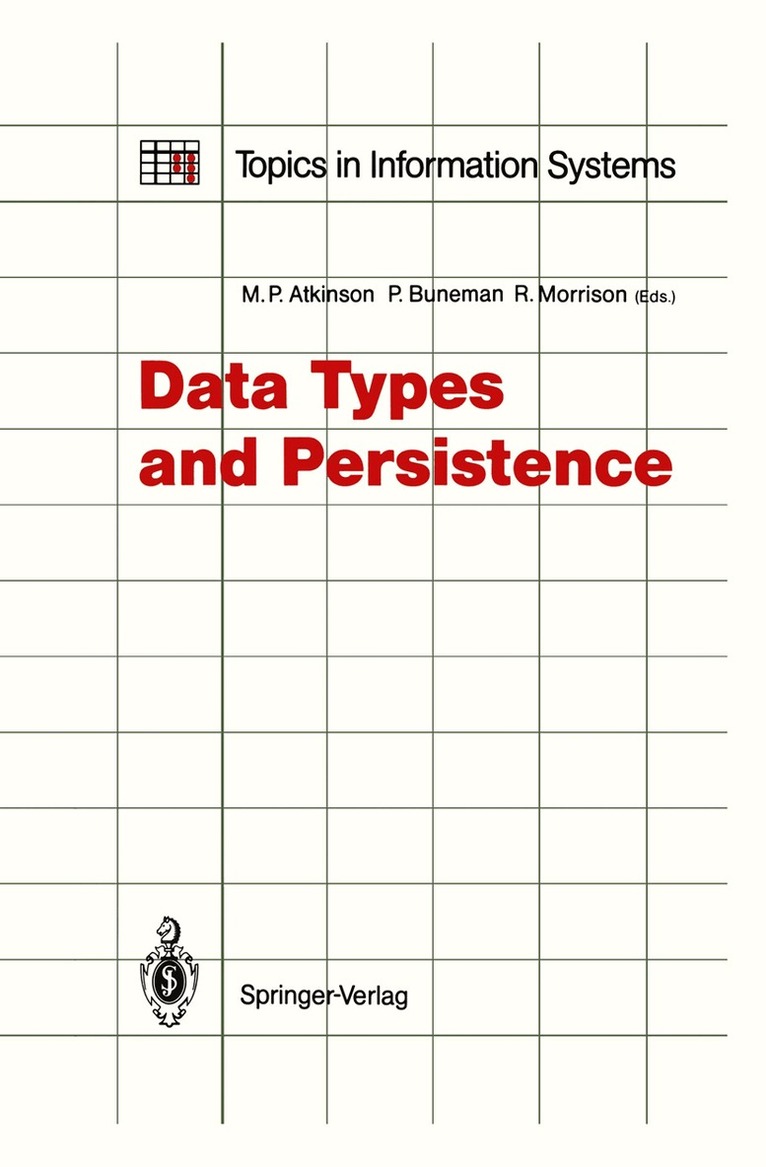
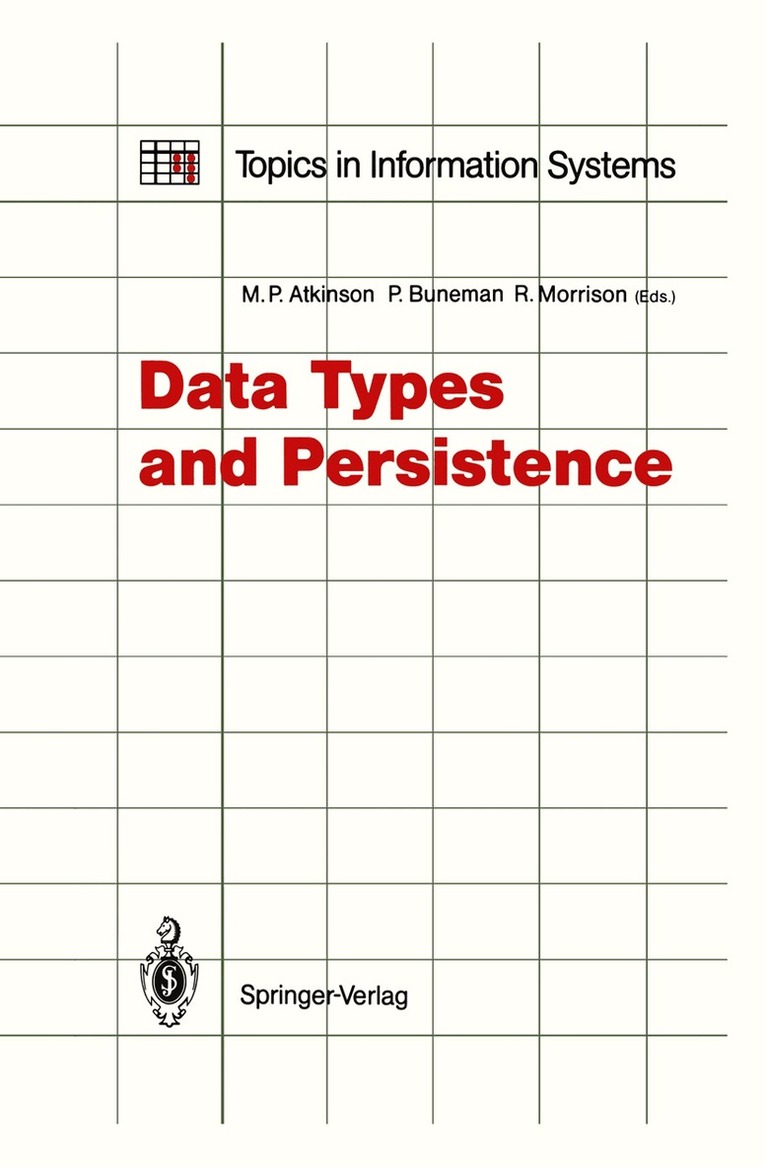
There is an established interest in integrating databases and programming languages. This book on Data Types and Persistence evolved from the proceedings of a workshop held at the Appin in August 1985. The purpose of the Appin workshop was to focus on these two aspects: persistence and data types, and to bring together people from various disciplines who have thought about these problems. Particular topics of"interest include the design of type systems appropriate for database work, the representation of persistent objects such as data types and modules, and the provision of orthogonal persistence and certain aspects of transactions and concurrency. The programme was broken into three sessions: morning, late afternoon and evening to allow the participants to take advantage of two beautiful days in the Scottish Highlands. The financial assistance of the Science and Engineering Research Council, the National Science Foundation and International Computers Ltd. is gratefully acknowledged. We would also like to thank Isabel Graham, Anne Donnelly and Estelle Taylor for their help in organising the workshop. Finally our thanks to Pete Bailey, Ray Carick and Dave Munro for the immense task they undertook in typesetting the book. The convergence of programming languages and databases to a coherent and consistent whole requires ideas from, and adjustment in, both intellectual camps. The first group of chapters in this book present ideas and adjustments coming from the programming language research community. This community frequently discusses types and uses them as a framework for other discussions.
Inbunden, Engelska, 1999
1 112 kr
Skickas inom 10-15 vardagar
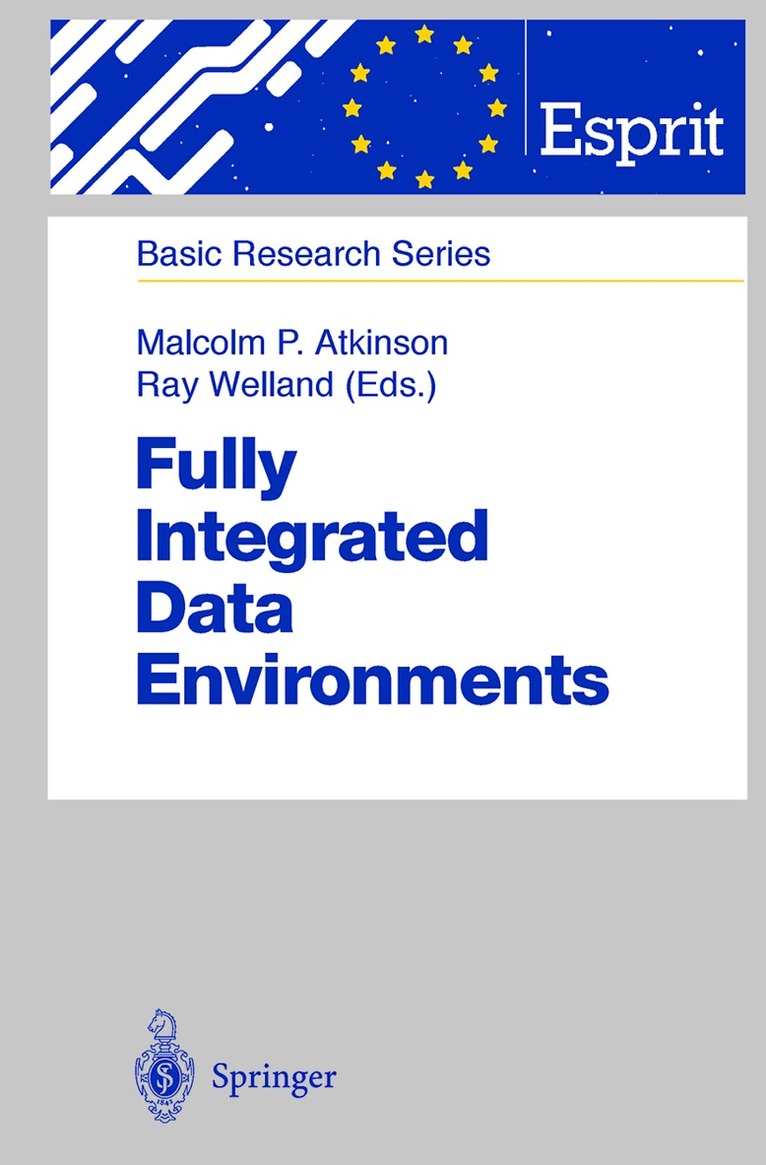
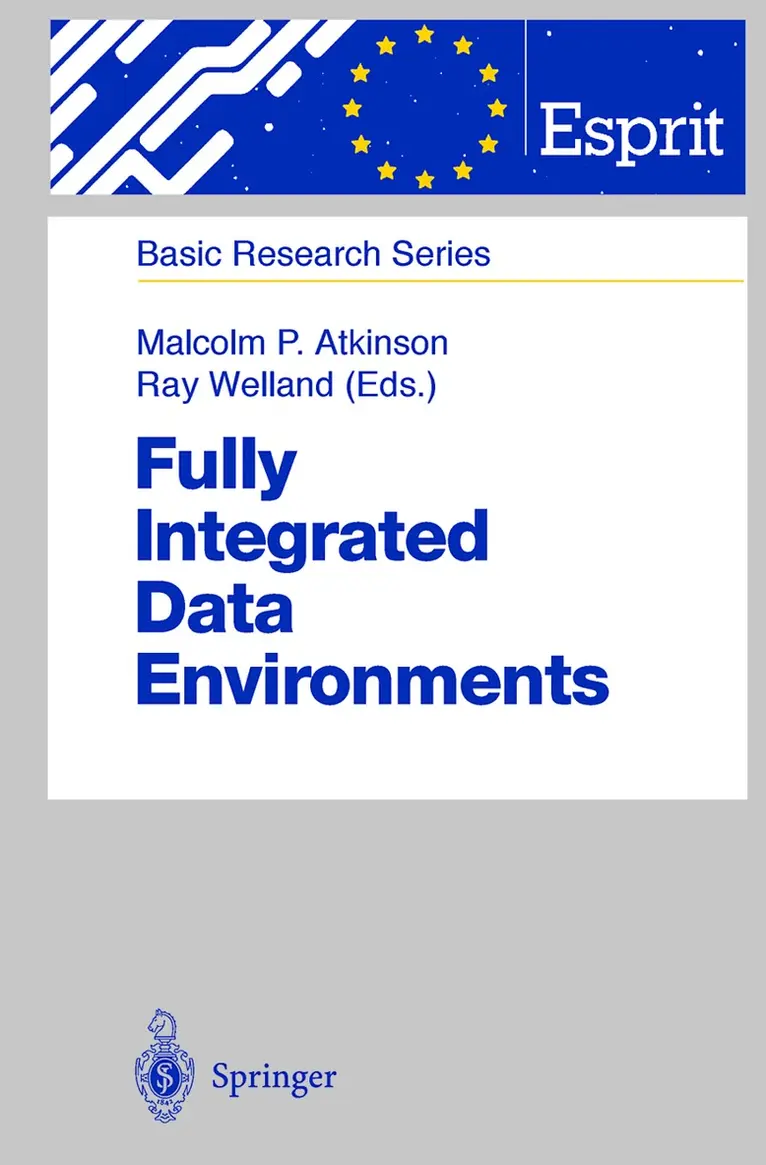
Research into Fully Integrated Data Environments (FIDE) has the goal of substantially improving the quality of application systems while reducing the cost of building and maintaining them. Application systems invariably involve the long-term storage of data over months or years. Much unnecessary complexity obstructs the construction of these systems when conventional databases, file systems, operating systems, communication systems, and programming languages are used. This complexity limits the sophistication of the systems that can be built, generates operational and usability problems, and deleteriously impacts both reliability and performance. This book reports on the work of researchers in the Esprit FIDE projects to design and develop a new integrated environment to support the construction and operation of such persistent application systems. It reports on the principles they employed to design it, the prototypes they built to test it, and their experience using it.
E-bok
PDF, Engelska, 20121 459 kr
Läs direkt efter köp
Research into Fully Integrated Data Environments (FIDE) has the goal of substantially improving the quality of application systems while reducing the cost of building and maintaining them. Application systems invariably involve the long-term storage of data over months or years. Much unnecessary complexity obstructs the construction of these systems when conventional databases, file systems, operating systems, communication systems, and programming languages are used. This complexity limits the sophistication of the systems that can be built, generates operational and usability problems, and deleteriously impacts both reliability and performance. This book reports on the work of researchers in the Esprit FIDE projects to design and develop a new integrated environment to support the construction and operation of such persistent application systems. It reports on the principles they employed to design it, the prototypes they built to test it, and their experience using it.
E-bok
PDF, Engelska, 20121 459 kr
Läs direkt efter köp
There is an established interest in integrating databases and programming languages. This book on Data Types and Persistence evolved from the proceedings of a workshop held at the Appin in August 1985. The purpose of the Appin workshop was to focus on these two aspects: persistence and data types, and to bring together people from various disciplines who have thought about these problems. Particular topics of"interest include the design of type systems appropriate for database work, the representation of persistent objects such as data types and modules, and the provision of orthogonal persistence and certain aspects of transactions and concurrency. The programme was broken into three sessions: morning, late afternoon and evening to allow the participants to take advantage of two beautiful days in the Scottish Highlands. The financial assistance of the Science and Engineering Research Council, the National Science Foundation and International Computers Ltd. is gratefully acknowledged. We would also like to thank Isabel Graham, Anne Donnelly and Estelle Taylor for their help in organising the workshop. Finally our thanks to Pete Bailey, Ray Carick and Dave Munro for the immense task they undertook in typesetting the book. The convergence of programming languages and databases to a coherent and consistent whole requires ideas from, and adjustment in, both intellectual camps. The first group of chapters in this book present ideas and adjustments coming from the programming language research community. This community frequently discusses types and uses them as a framework for other discussions.
Häftad, Engelska, 2011
1 112 kr
Skickas inom 10-15 vardagar
Research into Fully Integrated Data Environments (FIDE) has the goal of substantially improving the quality of application systems while reducing the cost of building and maintaining them. Application systems invariably involve the long-term storage of data over months or years. Much unnecessary complexity obstructs the construction of these systems when conventional databases, file systems, operating systems, communication systems, and programming languages are used. This complexity limits the sophistication of the systems that can be built, generates operational and usability problems, and deleteriously impacts both reliability and performance. This book reports on the work of researchers in the Esprit FIDE projects to design and develop a new integrated environment to support the construction and operation of such persistent application systems. It reports on the principles they employed to design it, the prototypes they built to test it, and their experience using it.
Häftad, Engelska, 2011
1 112 kr
Skickas inom 10-15 vardagar
There is an established interest in integrating databases and programming languages. This book on Data Types and Persistence evolved from the proceedings of a workshop held at the Appin in August 1985. The purpose of the Appin workshop was to focus on these two aspects: persistence and data types, and to bring together people from various disciplines who have thought about these problems. Particular topics of"interest include the design of type systems appropriate for database work, the representation of persistent objects such as data types and modules, and the provision of orthogonal persistence and certain aspects of transactions and concurrency. The programme was broken into three sessions: morning, late afternoon and evening to allow the participants to take advantage of two beautiful days in the Scottish Highlands. The financial assistance of the Science and Engineering Research Council, the National Science Foundation and International Computers Ltd. is gratefully acknowledged. We would also like to thank Isabel Graham, Anne Donnelly and Estelle Taylor for their help in organising the workshop. Finally our thanks to Pete Bailey, Ray Carick and Dave Munro for the immense task they undertook in typesetting the book. The convergence of programming languages and databases to a coherent and consistent whole requires ideas from, and adjustment in, both intellectual camps. The first group of chapters in this book present ideas and adjustments coming from the programming language research community. This community frequently discusses types and uses them as a framework for other discussions.