Małgorzata Pawłowska - Böcker
Visar alla böcker från författaren Małgorzata Pawłowska. Handla med fri frakt och snabb leverans.
9 produkter
9 produkter
1 886 kr
Skickas inom 10-15 vardagar
A side-effect of numerous anthropogenic activities involves unfavourable changes in the natural environment. The acquisition of natural resources, especially fossil fuels, solid waste and wastewater production, as well as emission of gases and particulate matter from industrial plants and means of transport contribute to disturbances in the natural cycles of elements between different parts of the environment. Local changes lead to global effects, changing the composition of atmosphere, its capacity for absorbing the infrared radiation and temperature, which has further repercussions in the form of weather anomalies, melting glaciers, flooding, migration or extinction of species, social problems, etc. These global changes can be mitigated by local remedial actions, simultaneously taken all over the world, including Poland. Only the joint efforts of communities from different countries can be successful in preserving the world as we know it for the future generations. Realisation of this task requires the cooperation of experts across many fields of science, environmental engineering being one of most relevant. It comprises the engineering actions taken to preserve the balance of the natural environment or restore it if degradation has occurred. This monograph presents several key issues related to the actions aimed at mitigating the negative impact on the environment connected with the acquisition and transport of energy, management of municipal and industrial wastes, as well as the impact of the industry on the aquatic and soil environment. This book is dedicated to academics, engineers, and students involved in environmental engineering, who are following the advances in the research on environmental aspects of energy production and waste management.
3 161 kr
Skickas inom 10-15 vardagar
This book gives an overview of recent findings on the mitigation of gas emission from landfills and sludge processing. Special attention is given to methane and the migration of POPs, heavy metal ions, ammonia and nitrate from landfills to the water-soil system and to the atmosphere. Strategies for mitigating the impact of pollution on ecosystems are also discussed. This book contains thirty-one selected papers presented at an International Workshop on Management of Pollutant Emission from Landfills and Sludge, Kazimierz Dolny, Poland,16-19 September 2006.
1 333 kr
Skickas inom 10-15 vardagar
Landfilling has been and still remains an important means of municipal solid waste management but it poses a threat to the purity of the environment, especially air. In the coming years, a radical decline in the share of landfilling in waste disposal practices should not be expected. However, this is not to say that people are powerless in the face of the emission of harmful gases into the atmosphere, the spread of bioaerosols and odors. There are many ways of preventing the negative impact of landfills or protecting the environment against such an impact. Some of these preventive and protective measures are described in Mitigation of Landfill Gas Emissions. Special attention is given to the application of anaerobic, aerobic and semi-aerobic bioreactor landfills for control of landfill gas emission. Different types of biotic systems for the oxidation of methane and trace gases, such as biocovers, biofilters, and biowindows, are also presented.
1 886 kr
Skickas inom 10-15 vardagar
For the power industry, biomass is just a modern name for the ancient material of plant origin that was converted into energy in the simple technology of burning. This book discusses biomass as a raw material for the production of liquid or gaseous biofuels and valuable chemicals. Such biomass processing should be beneficial from both economic and environmental points of view. Classic technologies of biogas production are still being improved, but they always generate waste that differs in terms of chemical parameters, depending on the feedstock digested. These parameters dictate the manner of their final managing. Various biotechnologies allow the use of the biomass of hydrobionts, such as cyanobacteria as a raw substance for obtaining different products, e.g. hyaluronic acid, biopolymers, fertilizers, or even drugs. Animal fats or algae can be used to produce biodiesel which in turn is used in environmentally friendly urban transport. Even municipal solid waste can be a source of useful biomass. The authors show how its volume and composition can be predicted, by which form of processing it can be converted into valuable products, as well as in which ways its negative environmental impact can be limited.
698 kr
Skickas inom 10-15 vardagar
A side-effect of numerous anthropogenic activities involves unfavourable changes in the natural environment. The acquisition of natural resources, especially fossil fuels, solid waste and wastewater production, as well as emission of gases and particulate matter from industrial plants and means of transport contribute to disturbances in the natural cycles of elements between different parts of the environment. Local changes lead to global effects, changing the composition of atmosphere, its capacity for absorbing the infrared radiation and temperature, which has further repercussions in the form of weather anomalies, melting glaciers, flooding, migration or extinction of species, social problems, etc. These global changes can be mitigated by local remedial actions, simultaneously taken all over the world, including Poland. Only the joint efforts of communities from different countries can be successful in preserving the world as we know it for the future generations. Realisation of this task requires the cooperation of experts across many fields of science, environmental engineering being one of most relevant. It comprises the engineering actions taken to preserve the balance of the natural environment or restore it if degradation has occurred. This monograph presents several key issues related to the actions aimed at mitigating the negative impact on the environment connected with the acquisition and transport of energy, management of municipal and industrial wastes, as well as the impact of the industry on the aquatic and soil environment. This book is dedicated to academics, engineers, and students involved in environmental engineering, who are following the advances in the research on environmental aspects of energy production and waste management.
685 kr
Skickas inom 10-15 vardagar
For the power industry, biomass is just a modern name for the ancient material of plant origin that was converted into energy in the simple technology of burning. This book discusses biomass as a raw material for the production of liquid or gaseous biofuels and valuable chemicals. Such biomass processing should be beneficial from both economic and environmental points of view. Classic technologies of biogas production are still being improved, but they always generate waste that differs in terms of chemical parameters, depending on the feedstock digested. These parameters dictate the manner of their final managing. Various biotechnologies allow the use of the biomass of hydrobionts, such as cyanobacteria as a raw substance for obtaining different products, e.g. hyaluronic acid, biopolymers, fertilizers, or even drugs. Animal fats or algae can be used to produce biodiesel which in turn is used in environmentally friendly urban transport. Even municipal solid waste can be a source of useful biomass. The authors show how its volume and composition can be predicted, by which form of processing it can be converted into valuable products, as well as in which ways its negative environmental impact can be limited.
Organic Versus Conventional Farming
Nutritional Value and Health Safety of Food Products
Inbunden, Engelska, 2023
1 362 kr
Skickas inom 10-15 vardagar
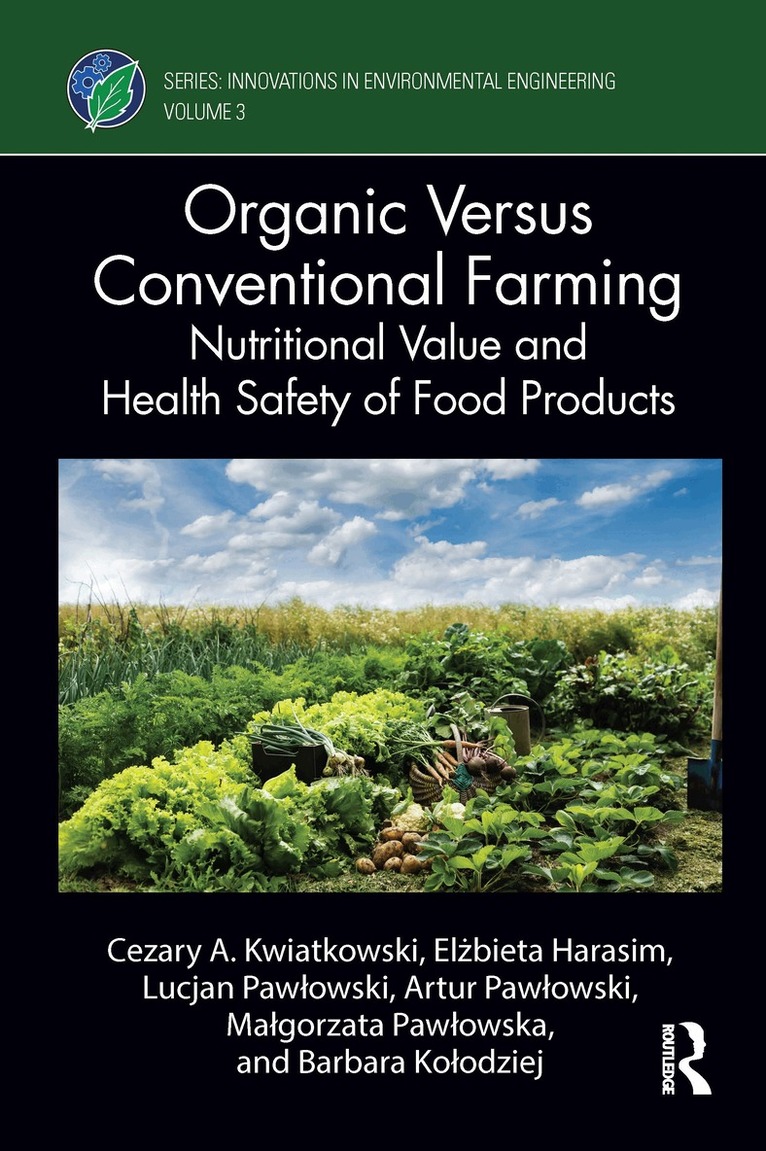
This book presents the results of a comparison of the quality of food products and raw materials, such as vegetables, fruits and honey, produced in organic and conventional farming systems. The comparison, which was based on literature data and the results of our own research, included not only the chemical parameters important for assessing the nutritional and health-promoting values, but also the stability of the ingredients in the fruits, which is important from a food storage perspective. The ecological, social and economic aspects of organic food production, which are crucial from the perspective of sustainable development, are also discussed in the book.Organic Versus Conventional Farming aims at academics and farmers, but also to anyone looking for the answer to the question of whether organic farming ensures high-quality food, the production of which is safe for the environment.
2 557 kr
Skickas inom 10-15 vardagar
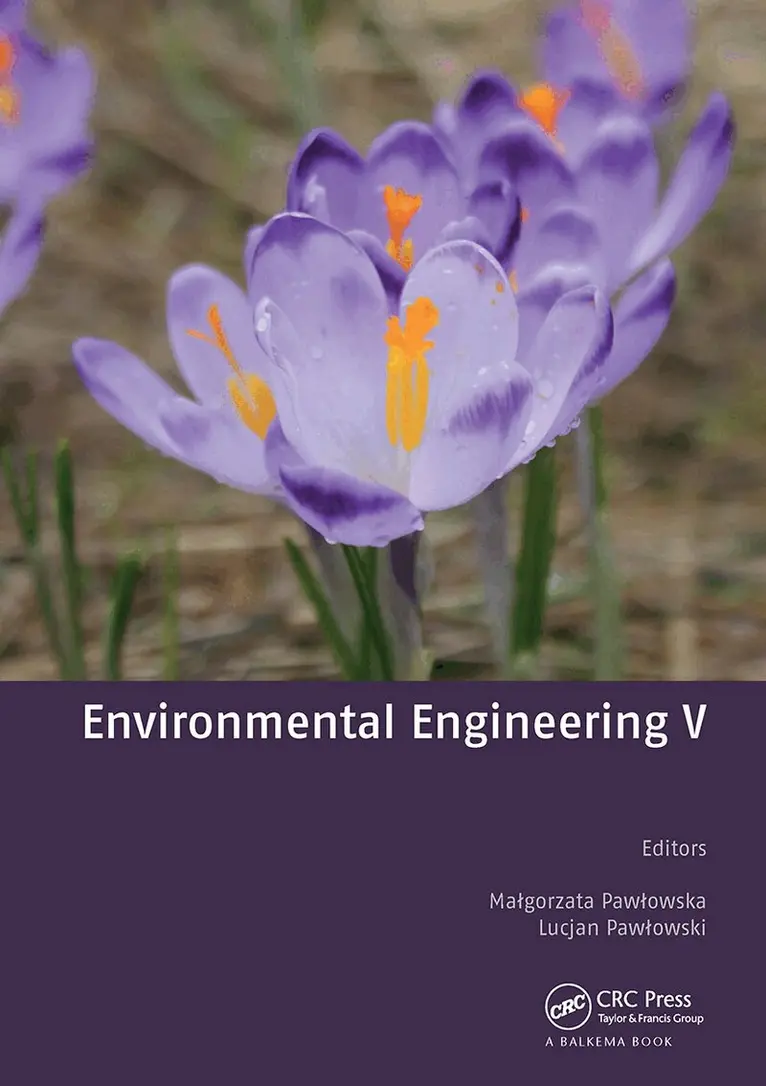
Poland, like other post-communist countries, is undergoing a transformation into a capitalist system. This transformation affects the country in many ways: economic, social, psychological and also ecological. Ecological problems are strongly connected with the political, economic and psychological inheritance of the past, as well as with changes in the post-communist society. In order to understand these problems, it is necessary to consider the following issues:- the geographic situation of Poland - the political transformations that occurred after World War II – forced development of heavy industry combined with neglect of its effects on the environment, and - the economic problemsThe three main goals of Environmental Engineering V are (I) to assess the state of scientific research in various areas of environmental engineering. (II) to evaluate organizational, technical and technological progress in contributing to ecological security, and (III) to determine the place of environmental engineering in sustainable development, taking into account political and economic conditions. Environmental Engineering V is of interest for academics, engineers and professionals involved in environmental engineering, seeking solutions for environmental problems in emerging new democracies, especially those who plan to participate in numerous projects sponsored by the European Union.
1 362 kr
Skickas inom 10-15 vardagar
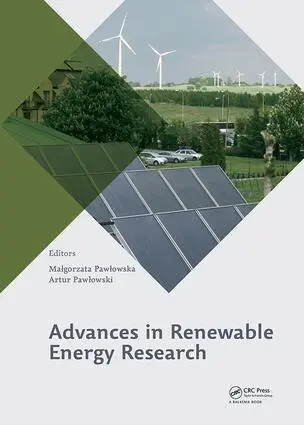
Advances in Renewable Energy Research comprises papers delivered at an international workshop by authors from Poland, Germany, Ukraine, China, Japan and Taiwan. The papers discussed the development of renewable energy technologies in certain countries, with special attention deviated to the conducted scientific research. The greatest attention was paid to the use of biomass, which uses resources that are readily-available in large quantities in all countries. The experience related to the use of biomass for energy generation was presented for certain countries, i.e. Germany and Japan as representatives of the most advanced countries in the field of energy generation from renewable sources, Taiwan and Poland, which have some experience in that area as well, and China and Ukraine, which have just started the introduction of renewable energy technologies. The greatest attention was devoted to the biogas production methods, i.e. chemical, biological, and mechanical pre-treatment methods, as well as enhancement of anaerobic fermentation and purifi cation of the biogas produced. -The development of solar (photovoltaic and thermal) methods and the use of heat pumps in residential buildings are also discussed, mostly with Polish experience asan example. Special attention is paid to research methods to be used for development of renewable energy technologies. Advances in Renewable Energy Research is useful for engineers and researchers working in the renewable energy area.