Manjunath Pendakur – författare
Visar alla böcker från författaren Manjunath Pendakur. Handla med fri frakt och snabb leverans.
7 produkter
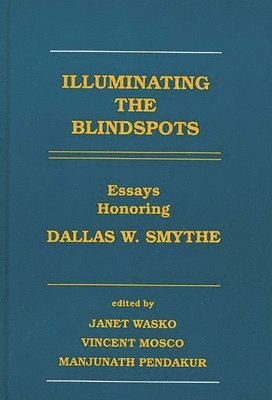
Illuminating the Blindspots
Essays Honoring Dallas W. Smythe
Av Janet Wasko, Vincent Mosco m. fl.
Inbunden, 1993
1070 kr
Lägg i varukorg
Dallas W. Smythe has made important contributions to the study of the political economy of communications, as well as to the critical study of communication and information. His work has probed the neglected corners of the academic study of communication research, challenging and inspiring students …
Illuminating the Blindspots
Essays Honoring Dallas W. Smythe
Av Janet Wasko, Vincent Mosco m. fl.
Häftad, 1993
786 kr
Lägg i varukorg
Dallas W. Smythe has made important contributions to the study of the political economy of communications, as well as to the critical study of communication and information. His work has probed the neglected corners of the academic study of communication research, challenging and inspiring students …
Canadian Dreams and American Control
The Political Economy of the Canadian Film Industry
E-bok, 1990
319 kr
Lägg i varukorg
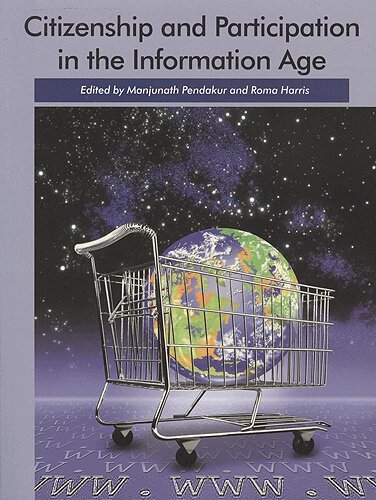
Citizenship and Participation in the Information Age
Av Manjunath Pendakur, Roma Harris
E-bok, 2002
489 kr
Lägg i varukorg
Published Under the Garamond ImprintThe new century promises to be a roller coaster ride fueled by rapidly changing information and communications technologies (ICTs). With the capacity for the almost instant transfer of digital information across and beyond our planet, commonly held notions of …
Indian Popular Cinema
Industry, Ideology and Consciousness
Häftad, 2003
375 kr
Lägg i varukorg
This book is an exploration of the masala film. This popular cinema has dominated mass culture in India ever since its origins and has remarkable popularity with South Asians living outside India as well. To understand the interrelationship between the industrial and the ideological, the political …
Citizenship and Participation in the Information Age
Av Manjunath Pendakur, Roma Harris
Häftad, 2002
456 kr
Tillfälligt slut
Indian Popular Cinema
Industry, Ideology and Consciousness
Inbunden, 2003
596 kr
Tillfälligt slut
This book is an exploration of the masala film. This popular cinema has dominated mass culture in India ever since its origins and has remarkable popularity with South Asians living outside India as well. To understand the interrelationship between the industrial and the ideological, the political …