Manuel Kretzer – författare
Visar alla böcker från författaren Manuel Kretzer. Handla med fri frakt och snabb leverans.
6 produkter
Information Materials
Smart Materials for Adaptive Architecture
Inbunden, 2016
1686 kr
Lägg i varukorg
This book considers the potential of new, smart materials and their use in architecture. It begins with an overview of current global tendencies (technological, demographic, and socio-anthropological) and their relevance for architectural design. Expanding upon approaches for flexible design …
Information Materials
Smart Materials for Adaptive Architecture
E-bok, 2016
1634 kr
Lägg i varukorg
This book considers the potential of new, smart materials and their use in architecture. It begins with an overview of current global tendencies (technological, demographic, and socio-anthropological) and their relevance for architectural design. Expanding upon approaches for flexible design …
Information Materials
Smart Materials for Adaptive Architecture
Häftad, 2018
1240 kr
Lägg i varukorg
This book considers the potential of new, smart materials and their use in architecture. It begins with an overview of current global tendencies (technological, demographic, and socio-anthropological) and their relevance for architectural design. Expanding upon approaches for flexible design …
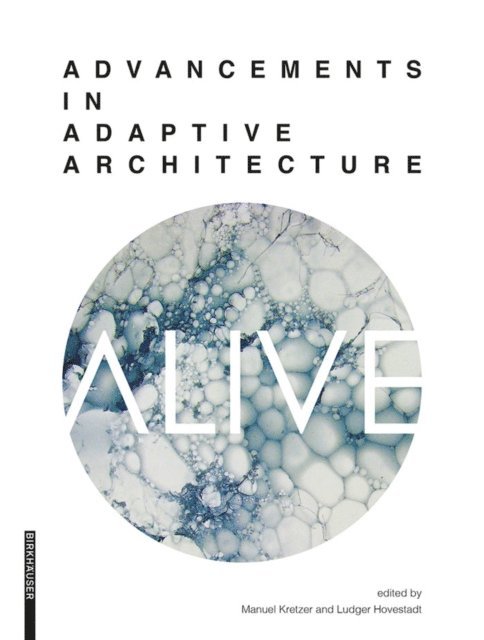
ALIVE
Advancements in adaptive architecture
Av Ludger Hovestadt, Manuel Kretzer
E-bok, 2014
507 kr
Lägg i varukorg
In times where the very concept of ‘nature’ is questioned not only in its philosophical dimension, but in the core of its biological materiality, we need to reconsider the interrelations between architecture and nature. This not only applies to strategies on environmental responsibility but equally …