• Fri frakt över 249 kr
  • •
  • Snabba leveranser
  • •
  • Billiga böcker
Kundservice

Du är på sajten för privatpersoner.

Företag, bibliotek eller offentlig verksamhet?

Du handlar på classic.bokus.com, där alla dina funktioner finns intakta.
Till classic.bokus.com
Bokus logotyp. Gå till startsidan.
  • Erbjudanden
  • Student
  • Topplistor
  • Barn & ungdom
  • Bokus Play
  • Bokus Play
  • E-böcker
  • Ljudböcker
  • Pocketböcker
  • Spel & pussel

10% rabatt på allt med kod NYSTART10 →

Sidfot

Mina sidor

    Hjälp

    • Kundservice
    • Vanliga frågor och svar
    • Frakt och leverans
    • Retur vid ångerrätt
    • Reklamera vara
    • Betalning
    • Köpvillkor
    • Allmänna villkor
    • Information om webbplatsens tillgänglighet

    Om Bokus

    • Om oss
    • Pressrum
    • För studenter
    • För företag
    • För bibliotek och offentlig verksamhet
    • För leverantörer
    • Hållbarhet

    Populärt

    • Aktuella erbjudanden
    • Presentkort
    • Studentlitteratur
    • Nya böcker
    • Topplistor
    • Signerade böcker
    • Engelska böcker

    Inspiration

    • Boktips
    • BookTok
    • Populära bokserier
    • Barnbokskaraktärer
    • Populära författare
    Logotyp för Bokus
    Följ oss på Facebook (extern länk)Följ oss på Instagram (extern länk)Följ oss på YouTube (extern länk)Följ oss på TikTok (extern länk)
    bokus @ CookiesAnpassa cookiesIntegritetspolicyKöpvillkor
    Till Citymail hemsida (extern länk)Till Budbee hemsida (extern länk)Till Postnord hemsida (extern länk)Till Schenker hemsida (extern länk)Till Early Bird hemsida (extern länk)Till Walleys hemsida (extern länk)
    1. Kultur
    2. Arkitektur

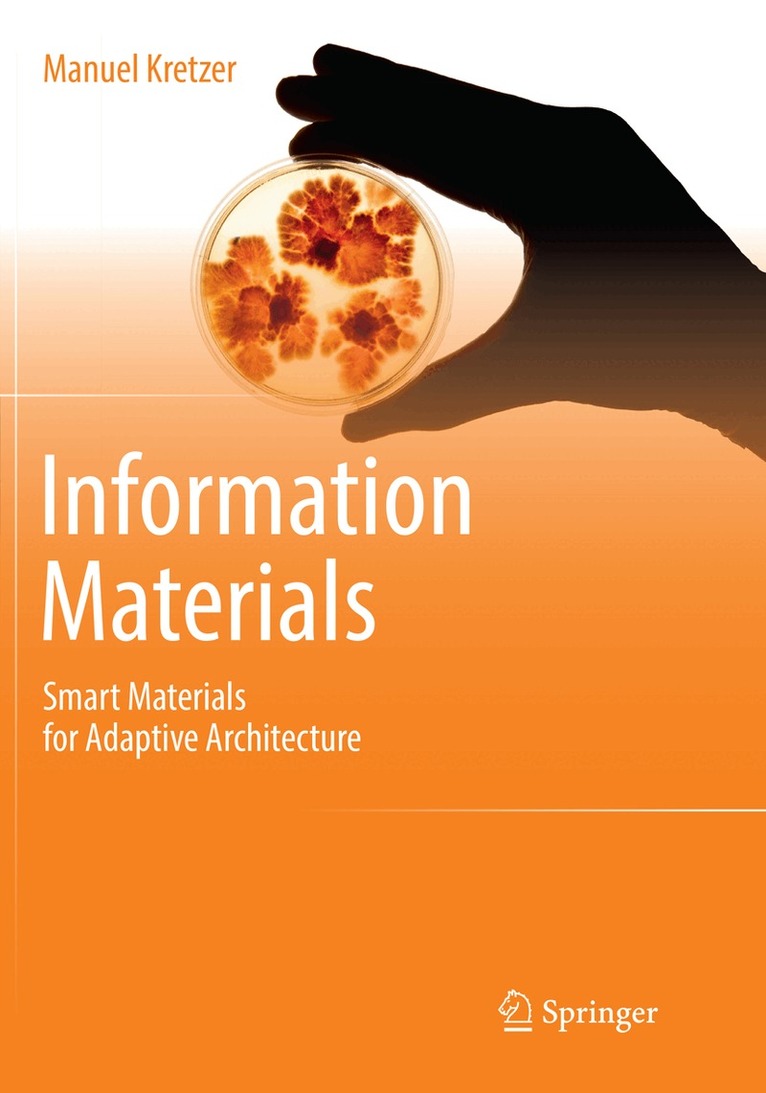
    Information Materials

    Smart Materials for Adaptive Architecture

    AvManuel Kretzer

    Häftad, Engelska, 2018

    1 227 kr

    Beställningsvara. Skickas inom 10-15 vardagar. Fri frakt över 249 kr.

    Fler format och utgåvor

    Inbunden

    1 671 kr

    E-bok

    1 617 kr

    Beskrivning

    This book considers the potential of new, smart materials and their use in architecture. It begins with an overview of current global tendencies (technological, demographic, and socio-anthropological) and their relevance for architectural design. Expanding upon approaches for flexible design solutions to address change and uncertainty, Dr. Kretzer begins by exploring adaptive architecture and proceeds to introduce the topic of “information materials,” which encompasses smart and functional materials, their current usage, and their potential for the creation of future spaces. The second chapter provides a comprehensive overview of architectural materials, past and present, split into the topics: natural, industrial, synthetic, digital, and information materials. Chapter three introduces an educational approach for the mediation of information material usage in design courses and student workshops. The final section provides detailed information on a range of emerging material phenomena, including aerogels, bioluminescence, bio plastics, dye-sensitized solar cells, electroluminescent displays, electroactive polymers, soft robotics, and thermochromics. Each section explains its respective history, working principles, fabrication and (potential) usage in architecture and design, and provides hands-on tutorials on how to self-produce these materials, and displays class-tested experimental installations. The book concludes with an outlook into the domain of synthetic biology and the prospects of a “living” architecture. It is ideal for students of structural materials engineering, architecture, and urban planning; professionals working these in areas, as well as materials science/engineering and architecture educators.

    Produktinformation

    • Utgivningsdatum:2018-06-23
    • Mått:178 x 254 x 11 mm
    • Vikt:447 g
    • Format:Häftad
    • Språk:Engelska
    • Antal sidor:191
    • Förlag:Springer International Publishing AG
    • ISBN:9783319817378

    Utforska kategorier

    • Arkitektur inom Kultur
    • Högskola och universitet inom Psykologi och pedagogik
    • Byggnadsteknik inom Naturvetenskap och teknik

    Mer om författaren

    Manuel Kretzer is responsible for coordinating and leading the postgraduate Master of Advanced Studies class’s digital design and production modules at ETH Zurich. His research aims at the notion of a soft and dynamic architecture with a specific focus on new (smart) material performance. In 2012 he established the materiability research network, a platform that brings together architects, artists, designers, students, scientists and researchers who share a common fascination with smart, programmable materials and their potential integration into architecture. He is also partner and co-founder of responsive design studio, based in Cologne and Zurich.

    Innehållsförteckning

    • Current Global Challenges, the Concept of Adaptive Architecture, and the Possibilities of Information Materials.- The Ever-Changing Nature of Materiality and the Meaning of Materials in Architecture and Construction.- Materiability - An Attempt for the Education of an Information Material Literacy in Respect to Emerging Materials.- A Selection of Emerging Information Materials, their Properties, Fabrication, and Application in Speculative Spatial Installations.- Towards a New Softness.