Manuel Ortega – författare
Visar alla böcker från författaren Manuel Ortega. Handla med fri frakt och snabb leverans.
11 produkter
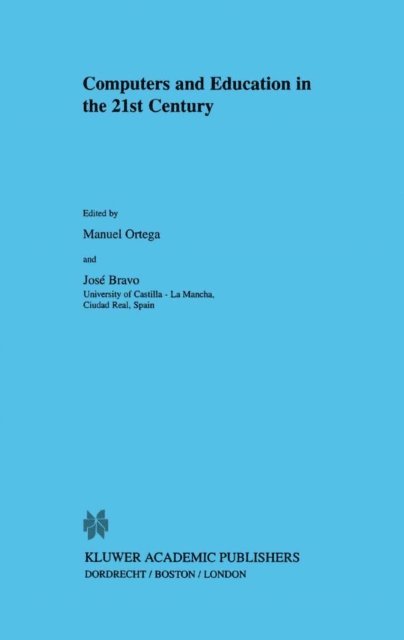
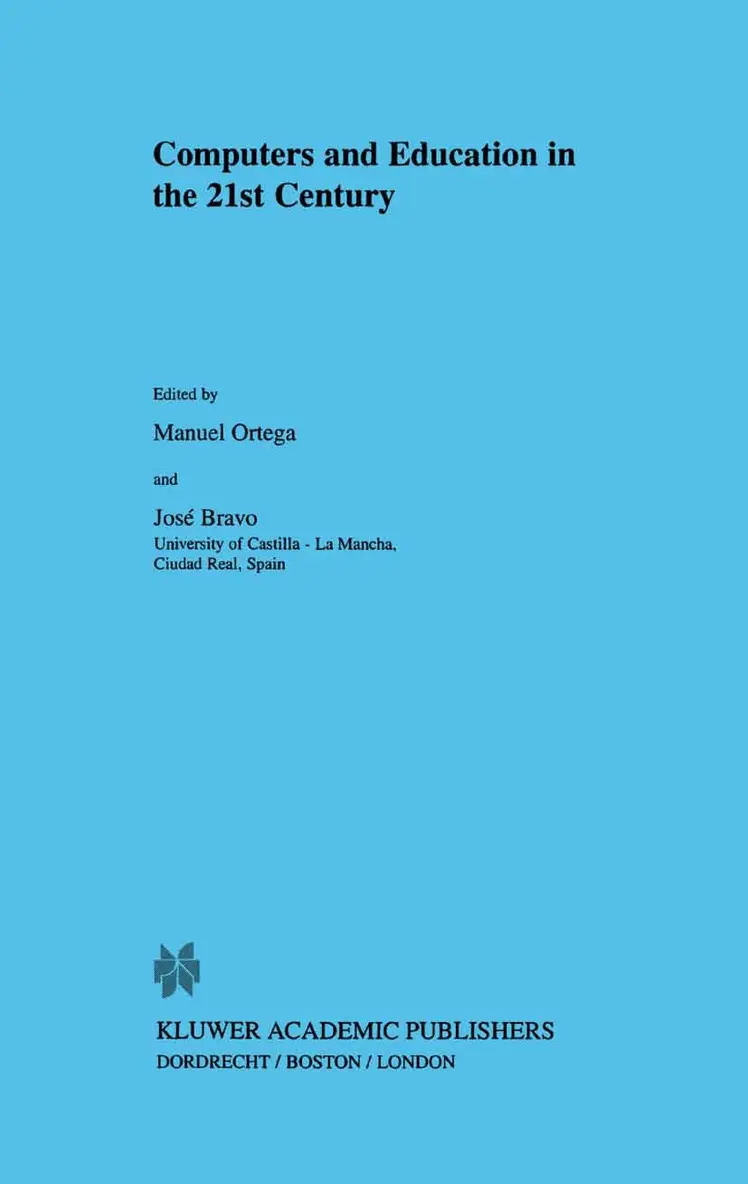
Computers and Education in the 21st Century
E-bok, 2007
1418 kr
Lägg i varukorg
ConieD is the biannual Congress on Computers in Education, organised by the Spanish Association for the Development of Computers in Education (ADIE). The last Congress, held in Puertollano (Ciudad Real), brought together researchers in different areas, ranging from web applications, educational …
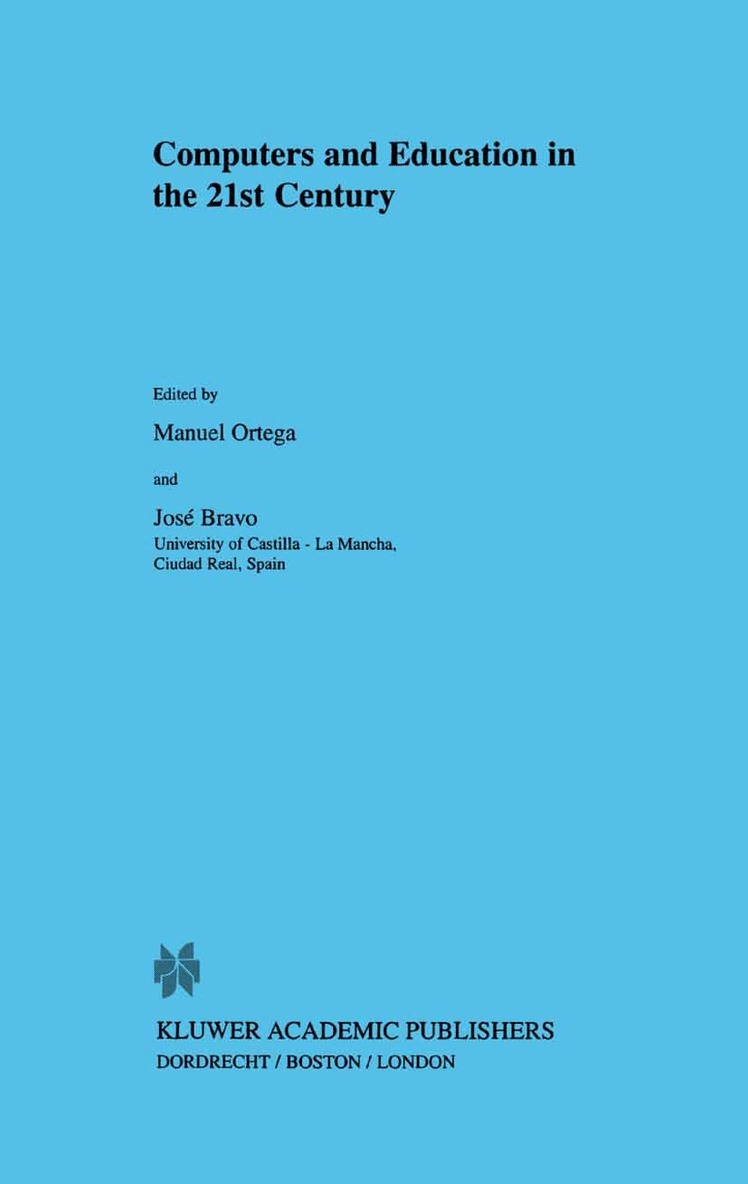
Computers and Education in the 21st Century
Inbunden, 2000
1094 kr
Lägg i varukorg
This volume contains selected papers on the latest research in the implementation of computers in education. The topics covered range from web-based applications to interactive systems for learning. The book should be of interest to teachers, lecturers, researchers, advanced students, and …
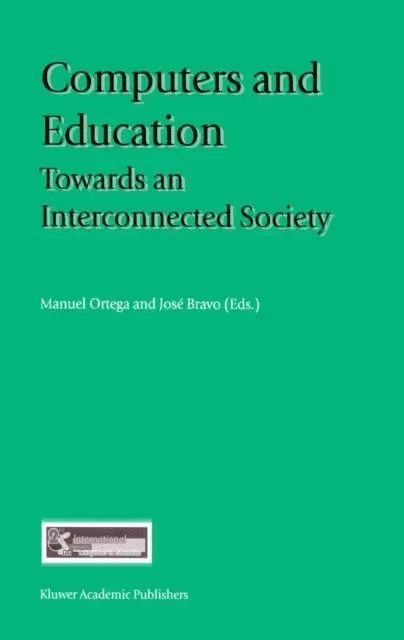
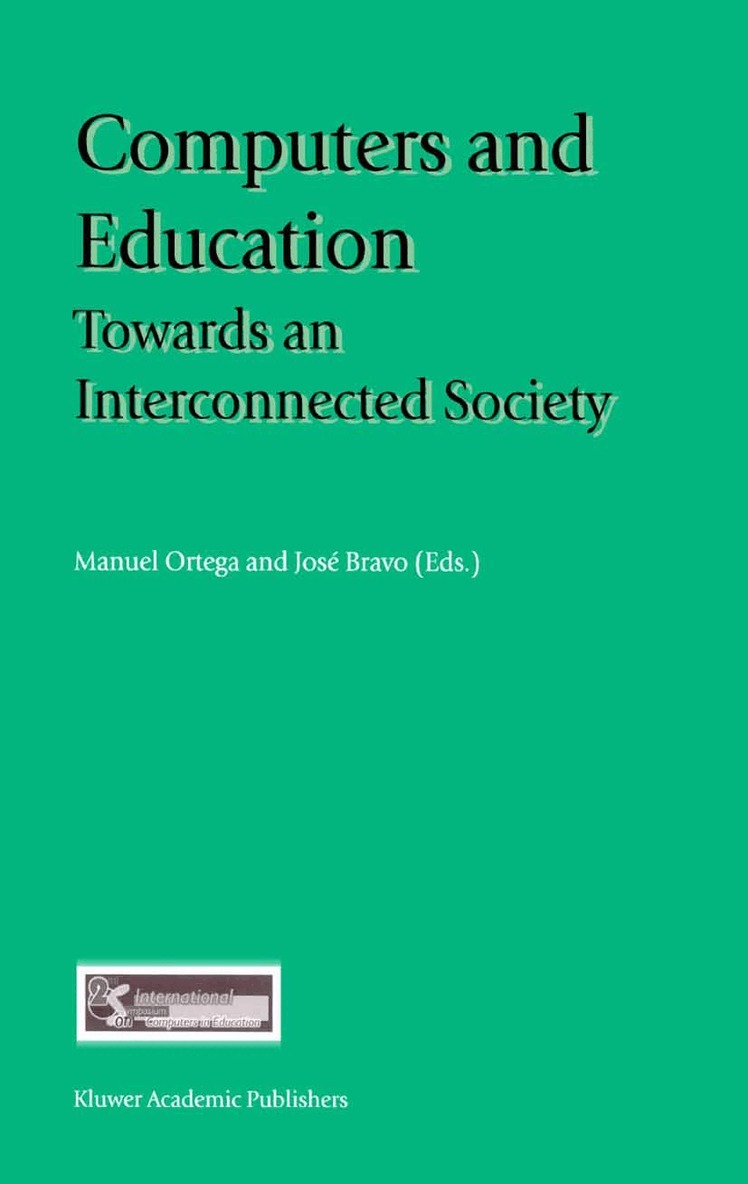
Computers and Education
Towards an Interconnected Society
Inbunden, 2001
1637 kr
Lägg i varukorg
SIIE is an international forum of Spanish-speaking, Portuguese-speaking and English-speaking researchers devoted to investigate and implement the use of computers in education. In 1999 the Symposium was held in Aveiro, Portugal. In the year 2000 it was celebrated in Puertollano, Spain. Other …
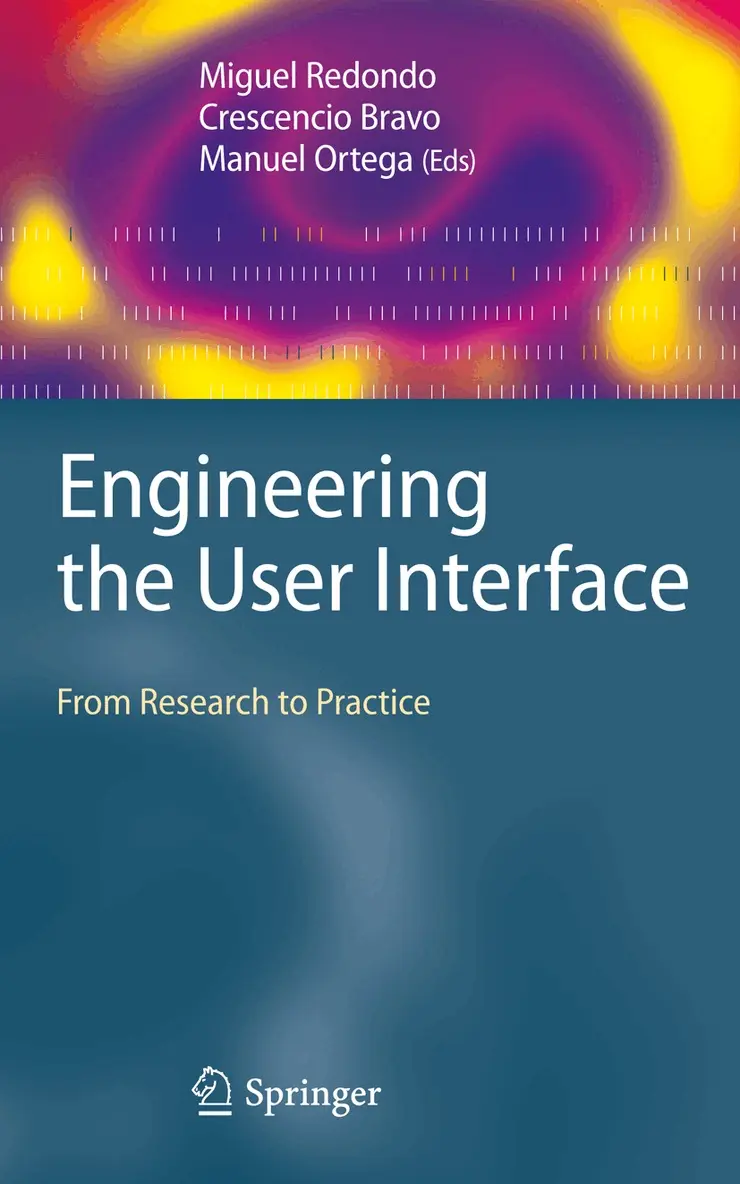
Engineering the User Interface
From Research to Practice
Av Miguel Redondo, Crescencio Bravo m. fl.
Inbunden, 2008
1688 kr
Lägg i varukorg
Digital Divide (DD) is a term that defines the division between people, commu- ties, states, countries, etc. with respect to the access to the new Information and Communication Technologies (ICTs). Nowadays, it is essential to have tech- logical skills to work in a variety of jobs (i. e. …
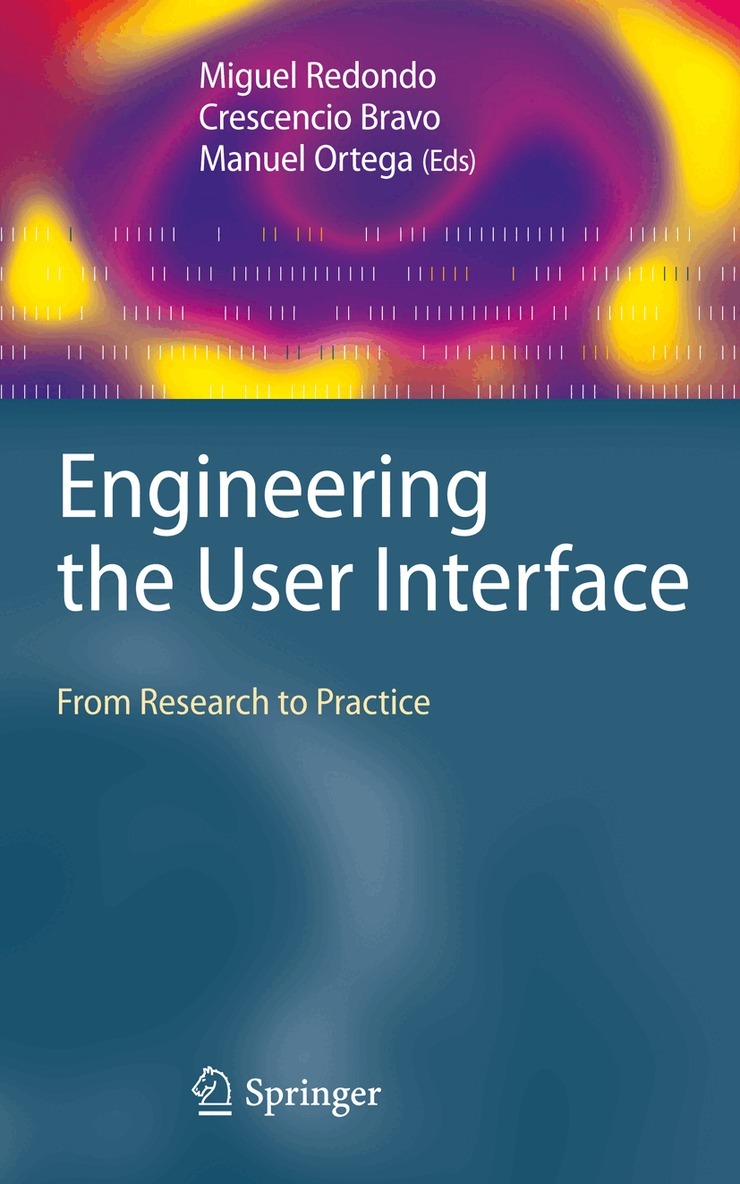
Engineering the User Interface
From Research to Practice
Av Manuel Ortega, Crescencio Bravo m. fl.
E-bok, 2008
2174 kr
Lägg i varukorg
Digital Divide (DD) is a term that defines the division between people, commu- ties, states, countries, etc. with respect to the access to the new Information and Communication Technologies (ICTs). Nowadays, it is essential to have tech- logical skills to work in a variety of jobs (i. e. …
Engineering the User Interface
From Research to Practice
Av Miguel Redondo, Crescencio Bravo m. fl.
Häftad, 2010
1688 kr
Lägg i varukorg
Digital Divide (DD) is a term that defines the division between people, commu- ties, states, countries, etc. with respect to the access to the new Information and Communication Technologies (ICTs). Nowadays, it is essential to have tech- logical skills to work in a variety of jobs (i. e. …
Der Ring des Kardinals
E-bok, 2015
89 kr
Lägg i varukorg
"Er war hier – er nahm den Ring", das sind die letzten Worte, die Kardinal Medina Sidonia zu sagen vermag, bevor er stirbt. Es ist ein unheimlicher Tötungsfall, der sich im September 1914 in Sevilla ereignet und die Aufmerksamkeit vom beginnenden Ersten Weltkrieg ablenkt. Um ihn aufzudecken bedarf …
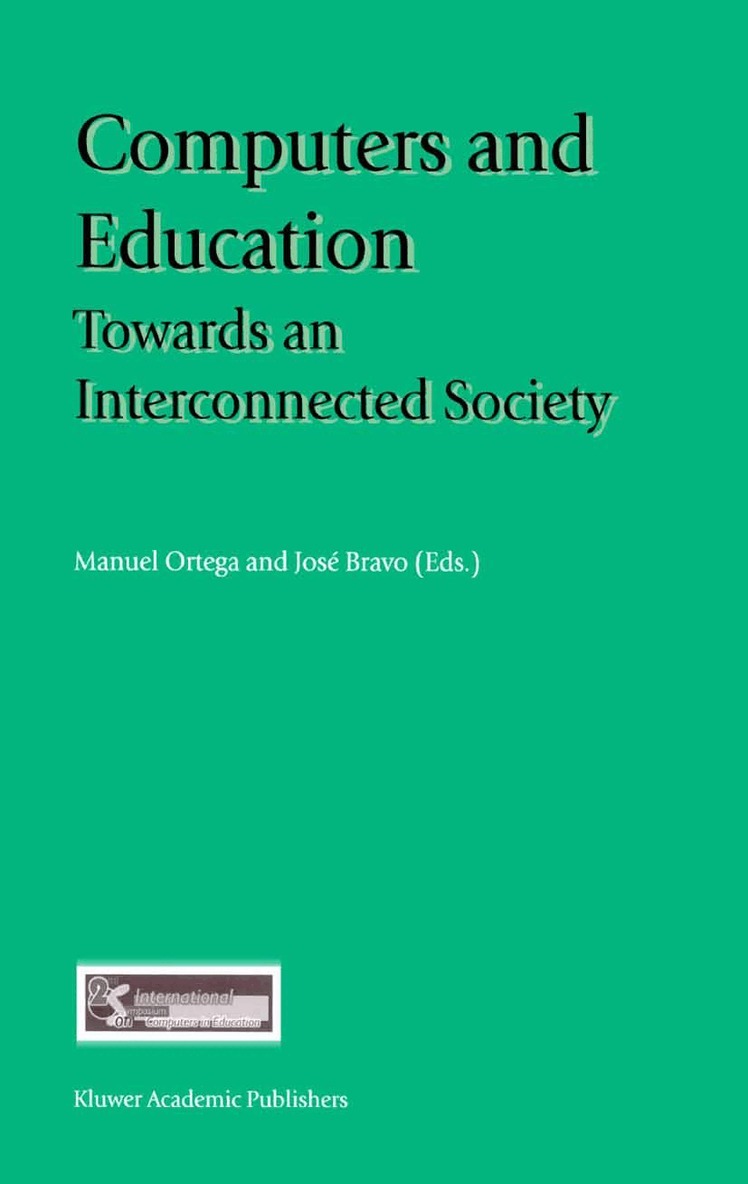
Computers and Education
Towards an Interconnected Society
Häftad, 2011
1593 kr
Lägg i varukorg
SIIE is an international forum of Spanish-speaking, Portuguese-speaking and English-speaking researchers devoted to investigate and implement the use of computers in education. In 1999 the Symposium was held in Aveiro, Portugal. In the year 2000 it was celebrated in Puertollano, Spain. Other …
Computers and Education in the 21st Century
Häftad, 2013
1064 kr
Lägg i varukorg
ConieD is the biannual Congress on Computers in Education, organised by the Spanish Association for the Development of Computers in Education (ADIE). The last Congress, held in Puertollano (Ciudad Real), brought together researchers in different areas, ranging from web applications, educational …