Marc-Etienne Moret – författare
Visar alla böcker från författaren Marc-Etienne Moret. Handla med fri frakt och snabb leverans.
5 produkter
5 produkter
Inbunden, Engelska, 2021
3 583 kr
Skickas inom 10-15 vardagar
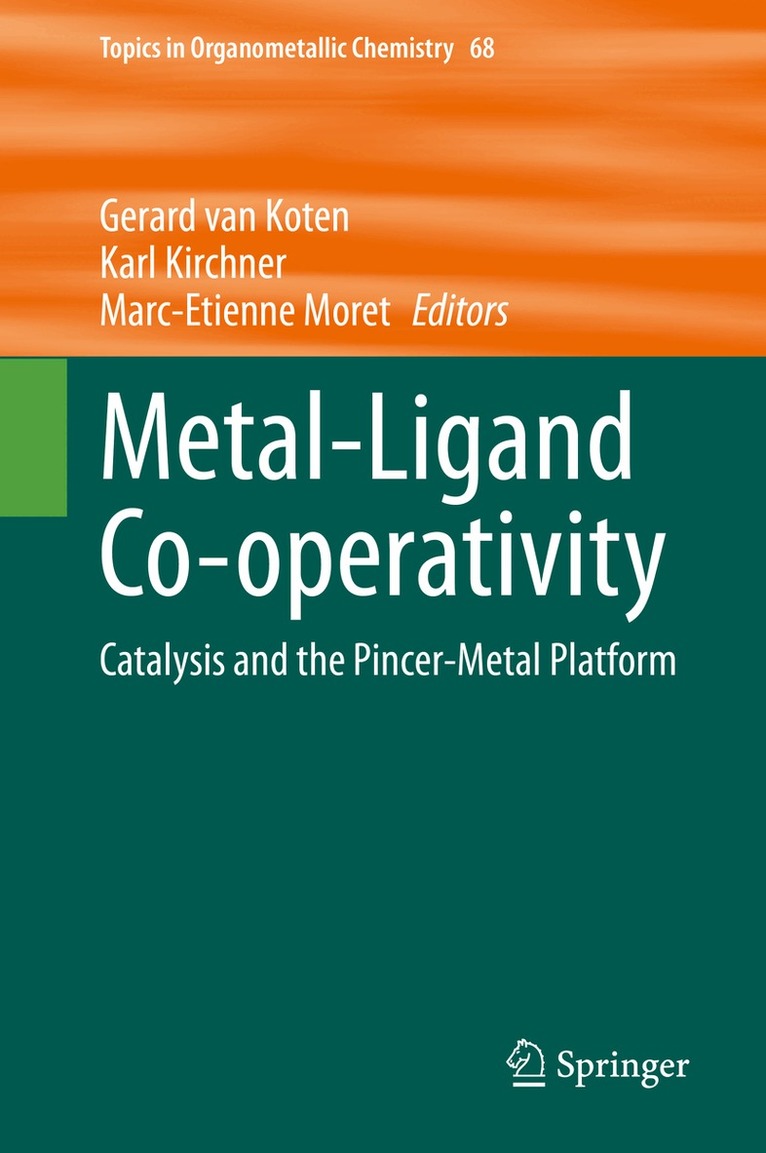
This book provides researchers in the fields of organic chemistry, organometallic chemistry and homogeneous catalysis with an overview of significant recent developments in the area of metal-ligand cooperativity, with a focus on pincer architectures. The various contributions highlight the widespread impact of M–L co-operativity phenomena on modern organometallic chemistry and catalyst development. The development of efficient and selective catalytic transformations relies on the understanding and fine control of the various elementary reactions that constitutes a catalytic cycle. Co-operative ligands, which actively participate in bond making and bond breaking together to the metal they support, open up new avenues in this area. In particular, buttressing a weak or reactive metal-ligand bond by flanking coordinating arms in a pincer ligand design is proving a versatile strategy to access robust metal complexes that exhibit unusual and selective reactivity patterns.
E-bok
Engelska, 20214 267 kr
Läs direkt efter köp
This book provides researchers in the fields of organic chemistry, organometallic chemistry and homogeneous catalysis with an overview of significant recent developments in the area of metal-ligand cooperativity, with a focus on pincer architectures. The various contributions highlight the widespread impact of M–L co-operativity phenomena on modern organometallic chemistry and catalyst development. The development of efficient and selective catalytic transformations relies on the understanding and fine control of the various elementary reactions that constitutes a catalytic cycle. Co-operative ligands, which actively participate in bond making and bond breaking together to the metal they support, open up new avenues in this area. In particular, buttressing a weak or reactive metal-ligand bond by flanking coordinating arms in a pincer ligand design is proving a versatile strategy to access robust metal complexes that exhibit unusual and selective reactivity patterns.
Häftad, Engelska, 2022
3 583 kr
Skickas inom 10-15 vardagar
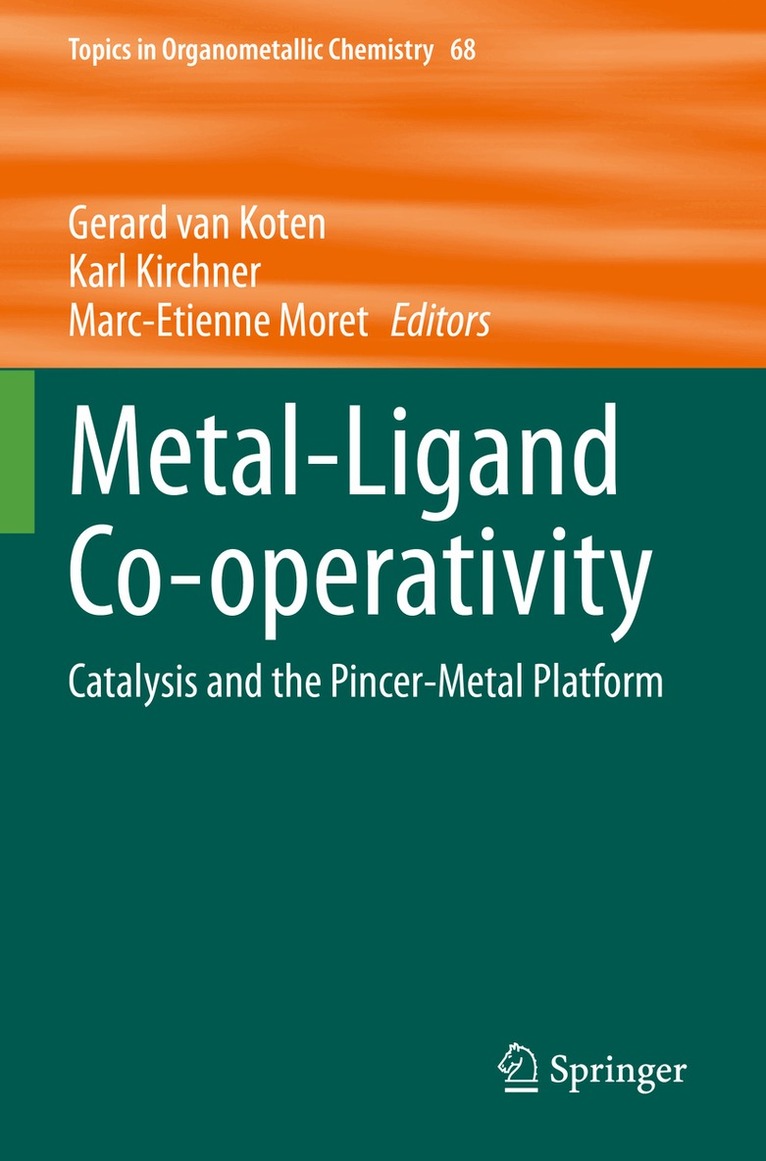
This book provides researchers in the fields of organic chemistry, organometallic chemistry and homogeneous catalysis with an overview of significant recent developments in the area of metal-ligand cooperativity, with a focus on pincer architectures. The various contributions highlight the widespread impact of M–L co-operativity phenomena on modern organometallic chemistry and catalyst development. The development of efficient and selective catalytic transformations relies on the understanding and fine control of the various elementary reactions that constitutes a catalytic cycle. Co-operative ligands, which actively participate in bond making and bond breaking together to the metal they support, open up new avenues in this area. In particular, buttressing a weak or reactive metal-ligand bond by flanking coordinating arms in a pincer ligand design is proving a versatile strategy to access robust metal complexes that exhibit unusual and selective reactivity patterns.
E-bok
Engelska, 20182 311 kr
Läs direkt efter köp
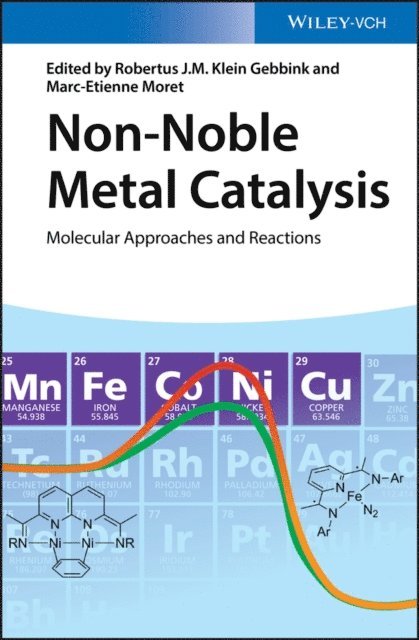
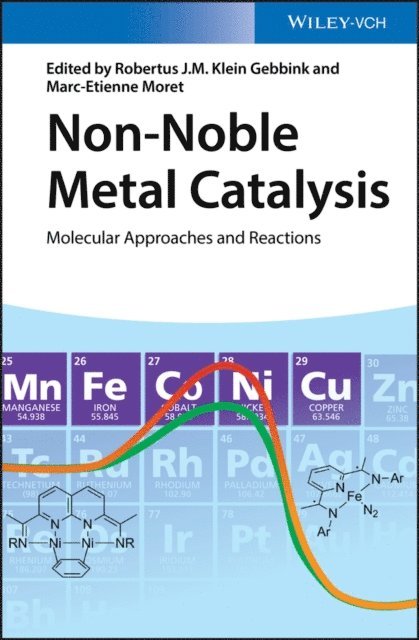
An expert overview of current research, applications, and economic and environmental advantages The study and development of new homogeneous catalysts based on first-row metals (Mn, Fe, Co, Ni, and Cu) has grown significantly due to the economic and environmental advantages that non-noble metals present. Base metals offer reduced cost, greater supply, and lower toxicity levels than noble metals?enabling greater opportunity for scientific investigation and increased development of practical applications. Non-Noble Metal Catalysis provides an authoritative survey of the field, from fundamental concepts and computational methods to industrial applications and reaction classes. Recognized experts in organometallic chemistry and homogeneous catalysis, the authors present a comprehensive overview of the conceptual and practical aspects of non-noble metal catalysts. Examination of topics including non-innocent ligands, proton-coupled electron transfer, and multi-nuclear complexes provide essential background information, while areas such as kinetic lability and lifetimes of intermediates reflect current research and shifting trends in the field. This timely book demonstrates the efficacy of base metal catalysts in the pharmaceutical, fine-chemical, and agrochemical industries, addressing both environmental and economic concerns. Providing essential conceptual and practical exploration, this valuable resource: -Illustrates how unravelling new reactivity patterns can lead to new catalysts and new applications -Highlights the multiple advantages of using non-noble metals in homogenous catalysis -Demonstrates how the availability of non-noble metal catalysis reduces costs and leads to immense savings for the chemical industry -Reveals how non-noble metal catalysis are more sustainable than noble metals such as palladium or platinum Non-Noble Metal Catalysis: Molecular Approaches and Reactions is an indispensable source of up-to-date information for catalytic chemists, organic chemists, industrial chemists, organometallic chemists, and those seeking to broaden their knowledge of catalytic chemistry.
E-bok
PDF, Engelska, 20182 290 kr
Läs direkt efter köp
An expert overview of current research, applications, and economic and environmental advantages The study and development of new homogeneous catalysts based on first-row metals (Mn, Fe, Co, Ni, and Cu) has grown significantly due to the economic and environmental advantages that non-noble metals present. Base metals offer reduced cost, greater supply, and lower toxicity levels than noble metals?enabling greater opportunity for scientific investigation and increased development of practical applications. Non-Noble Metal Catalysis provides an authoritative survey of the field, from fundamental concepts and computational methods to industrial applications and reaction classes. Recognized experts in organometallic chemistry and homogeneous catalysis, the authors present a comprehensive overview of the conceptual and practical aspects of non-noble metal catalysts. Examination of topics including non-innocent ligands, proton-coupled electron transfer, and multi-nuclear complexes provide essential background information, while areas such as kinetic lability and lifetimes of intermediates reflect current research and shifting trends in the field. This timely book demonstrates the efficacy of base metal catalysts in the pharmaceutical, fine-chemical, and agrochemical industries, addressing both environmental and economic concerns. Providing essential conceptual and practical exploration, this valuable resource: -Illustrates how unravelling new reactivity patterns can lead to new catalysts and new applications -Highlights the multiple advantages of using non-noble metals in homogenous catalysis -Demonstrates how the availability of non-noble metal catalysis reduces costs and leads to immense savings for the chemical industry -Reveals how non-noble metal catalysis are more sustainable than noble metals such as palladium or platinum Non-Noble Metal Catalysis: Molecular Approaches and Reactions is an indispensable source of up-to-date information for catalytic chemists, organic chemists, industrial chemists, organometallic chemists, and those seeking to broaden their knowledge of catalytic chemistry.