Marc Garbey – författare
Visar alla böcker från författaren Marc Garbey. Handla med fri frakt och snabb leverans.
12 produkter
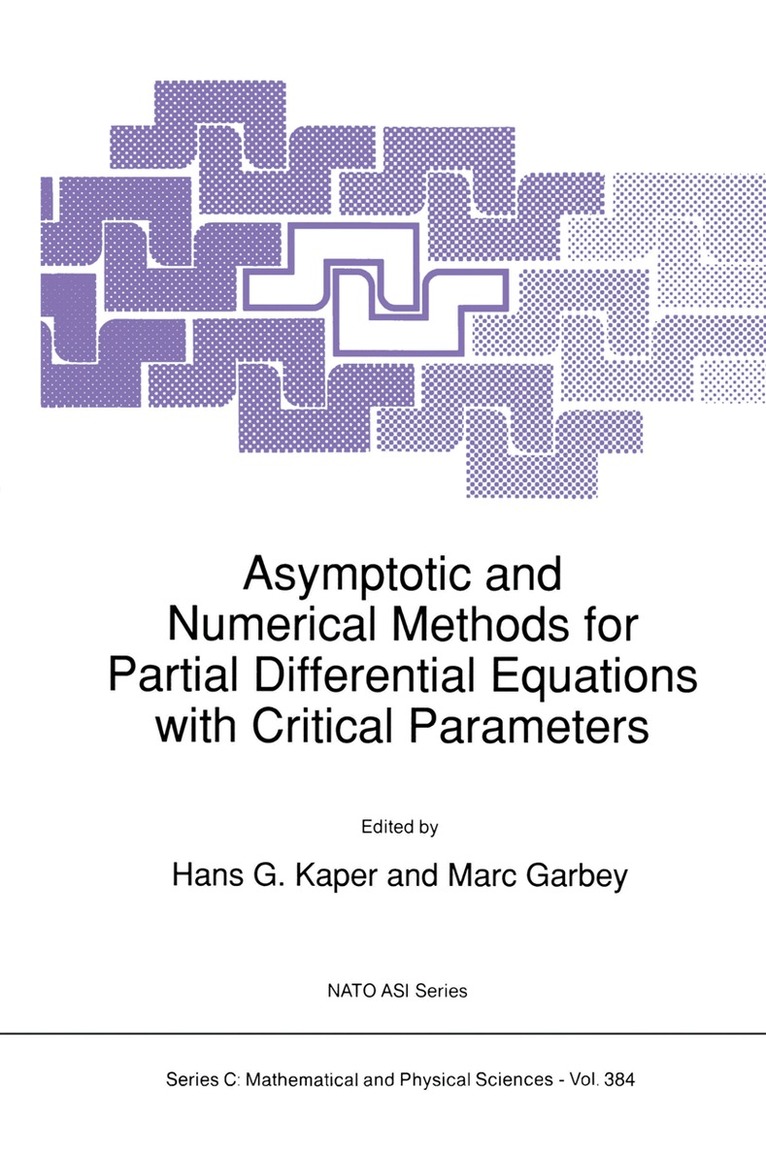
Asymptotic and Numerical Methods for Partial Differential Equations with Critical Parameters
Inbunden, 1992
2187 kr
Lägg i varukorg
This volume provides a record of the workshop on asymptotic-induced numerical methods for partial differential equations, critical parameters and domain decomposition, held at Beaune, France. Discussing new computational methods, recent algorithm developments, and state-of-the-art techniques in …
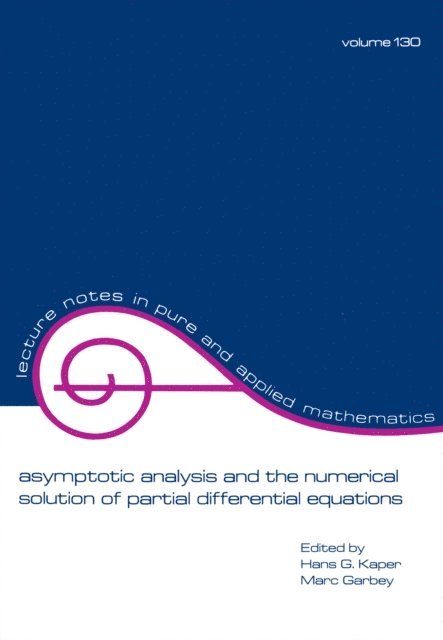
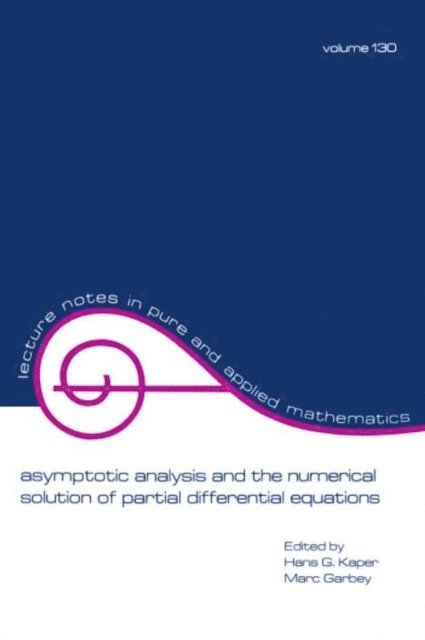
Asymptotic Analysis and the Numerical Solution of Partial Differential Equations
E-bok, 1991
4743 kr
Lägg i varukorg
Integrates two fields generally held to be incompatible, if not downright antithetical, in 16 lectures from a February 1990 workshop at the Argonne National Laboratory, Illinois. The topics, of interest to industrial and applied mathematicians, analysts, and computer scientists, include singular per
Asymptotic Analysis and the Numerical Solution of Partial Differential Equations
Inbunden, 2017
4254 kr
Lägg i varukorg
Integrates two fields generally held to be incompatible, if not downright antithetical, in 16 lectures from a February 1990 workshop at the Argonne National Laboratory, Illinois. The topics, of interest to industrial and applied mathematicians, analysts, and computer scientists, include singular per
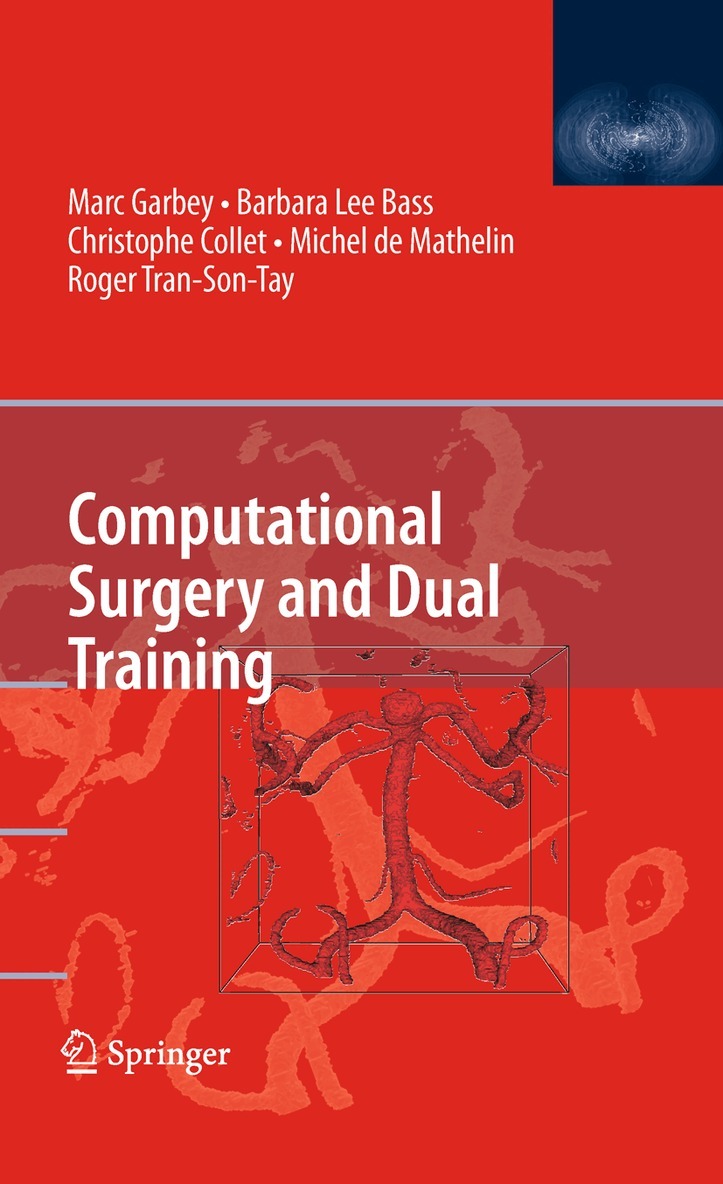
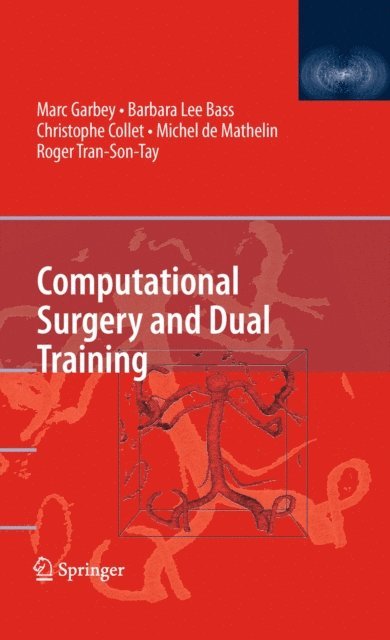
Computational Surgery and Dual Training
Av Marc Garbey, Barbara Lee Bass m. fl.
Inbunden, 2009
1691 kr
Lägg i varukorg
The future of surgery is intrinsically linked to the future of computational sciences: the medical act will be computer assisted at every single step, from planning to post-surgery recovery and through the surgical procedure itself. Looking back at the history of surgery, surgery practice has …
Computational Surgery and Dual Training
Av Roger Tran-Son-Tay, Michel de Mathelin m. fl.
E-bok, 2009
2174 kr
Lägg i varukorg
The future of surgery is intrinsically linked to the future of computational sciences: the medical act will be computer assisted at every single step, from planning to post-surgery recovery and through the surgical procedure itself. Looking back at the history of surgery, surgery practice has …
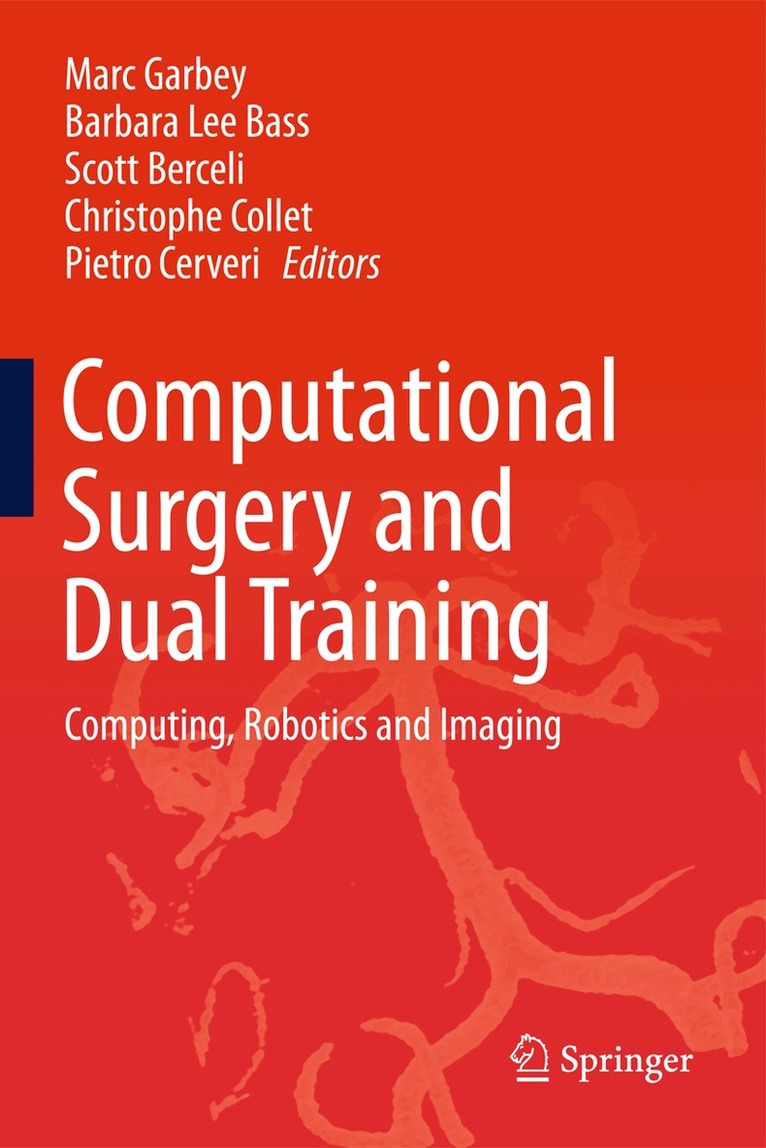
Computational Surgery and Dual Training
Computing, Robotics and Imaging
Av Marc Garbey, Barbara Lee Bass m. fl.
Inbunden, 2013
1691 kr
Lägg i varukorg
This critical volume focuses on the use of medical imaging, medical robotics, simulation, and information technology in surgery. Part I discusses computational surgery and disease management and specifically breast conservative therapy, abdominal surgery for cancer, vascular occlusive disease and …
Computational Surgery and Dual Training
Computing, Robotics and Imaging
Av Pietro Cerveri, Christophe Collet m. fl.
E-bok, 2013
2127 kr
Lägg i varukorg
This critical volume focuses on the use of medical imaging, medical robotics, simulation, and information technology in surgery. Part I discusses computational surgery and disease management and specifically breast conservative therapy, abdominal surgery for cancer, vascular occlusive disease and …
Asymptotic Analysis and the Numerical Solution of Partial Differential Equations
E-bok, 1991
4848 kr
Lägg i varukorg
Integrates two fields generally held to be incompatible, if not downright antithetical, in 16 lectures from a February 1990 workshop at the Argonne National Laboratory, Illinois. The topics, of interest to industrial and applied mathematicians, analysts, and computer scientists, include singular per
Computational Surgery and Dual Training
Av Marc Garbey, Barbara Lee Bass m. fl.
Häftad, 2014
1691 kr
Lägg i varukorg
The future of surgery is intrinsically linked to the future of computational sciences: the medical act will be computer assisted at every single step, from planning to post-surgery recovery and through the surgical procedure itself. Looking back at the history of surgery, surgery practice has …
Asymptotic and Numerical Methods for Partial Differential Equations with Critical Parameters
Häftad, 2012
2187 kr
Lägg i varukorg
This volume contains the proceedings of the NATO Advanced Research Workshop on "Asymptotic-induced Numerical Methods for Partial Differ ential Equations, Critical Parameters, and Domain Decomposition," held at Beaune (France), May 25-28, 1992. The purpose of the workshop was to stimulate the …
Asymptotic and Numerical Methods for Partial Differential Equations with Critical Parameters
E-bok, 2012
2925 kr
Lägg i varukorg
This volume contains the proceedings of the NATO Advanced Research Workshop on "Asymptotic-induced Numerical Methods for Partial Differ ential Equations, Critical Parameters, and Domain Decomposition," held at Beaune (France), May 25-28, 1992. The purpose of the workshop was to stimulate the …
Asymptotic Analysis and the Numerical Solution of Partial Differential Equations
Häftad, 1991
2713 kr
Tillfälligt slut
Integrates two fields generally held to be incompatible, if not downright antithetical, in 16 lectures from a February 1990 workshop at the Argonne National Laboratory, Illinois. The topics, of interest to industrial and applied mathematicians, analysts, and computer scientists, include singular per