Marcel Berni – författare
Visar alla böcker från författaren Marcel Berni. Handla med fri frakt och snabb leverans.
6 produkter
Captivity in War during the Twentieth Century
The Forgotten Diplomatic Role of Transnational Actors
Av Marcel Berni, Tamara Cubito
Inbunden, 2021
1804 kr
Lägg i varukorg
This book offers new international perspectives on captivity in wartime during the twentieth century. It explores how global institutions and practices with regard to captives mattered, how they evolved and most importantly, how they influenced the treatment of captives. From the beginning of the …
Captivity in War during the Twentieth Century
The Forgotten Diplomatic Role of Transnational Actors
Av Tamara Cubito, Marcel Berni
E-bok, 2021
2291 kr
Lägg i varukorg
This book offers new international perspectives on captivity in wartime during the twentieth century. It explores how global institutions and practices with regard to captives mattered, how they evolved and most importantly, how they influenced the treatment of captives. From the beginning of the …
Captivity in War during the Twentieth Century
The Forgotten Diplomatic Role of Transnational Actors
Av Marcel Berni, Tamara Cubito
Häftad, 2022
1804 kr
Lägg i varukorg
This book offers new international perspectives on captivity in wartime during the twentieth century. It explores how global institutions and practices with regard to captives mattered, how they evolved and most importantly, how they influenced the treatment of captives. From the beginning of the …
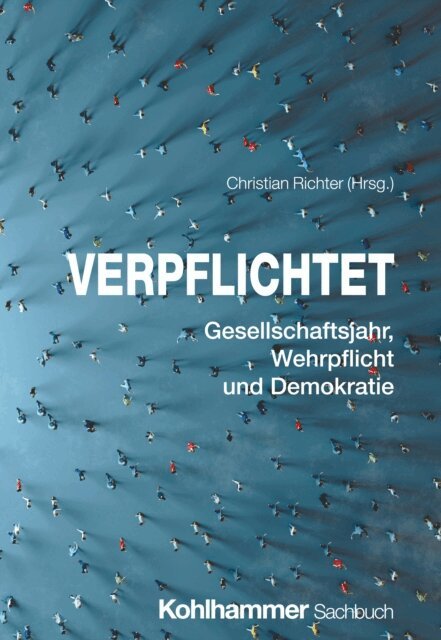
Verpflichtet
Gesellschaftsjahr, Wehrpflicht und Demokratie
Av Marika Ericson, Ferdinand Weber m. fl.
E-bok, 2026
227 kr
Lägg i varukorg
Was bedeutet Dienst an der Gemeinschaft im 21. Jahrhundert?Seit dem russischen Angriffskrieg auf die Ukraine wird in Deutschland leidenschaftlich uber die Pflicht von jungen Menschen zum Dienst an der Gemeinschaft diskutiert - sei es Gesellschaftsjahr oder Wehrpflicht. Doch hinter den politischen …
Verpflichtet
Gesellschaftsjahr, Wehrpflicht und Demokratie
Av Marika Ericson, Ferdinand Weber m. fl.
E-bok, 2026
258 kr
Lägg i varukorg
Was bedeutet Dienst an der Gemeinschaft im 21. Jahrhundert?Seit dem russischen Angriffskrieg auf die Ukraine wird in Deutschland leidenschaftlich uber die Pflicht von jungen Menschen zum Dienst an der Gemeinschaft diskutiert - sei es Gesellschaftsjahr oder Wehrpflicht. Doch hinter den politischen …