Marcela Echeverri – författare
Visar alla böcker från författaren Marcela Echeverri. Handla med fri frakt och snabb leverans.
6 produkter
6 produkter
Del 102 - Cambridge Latin American Studies
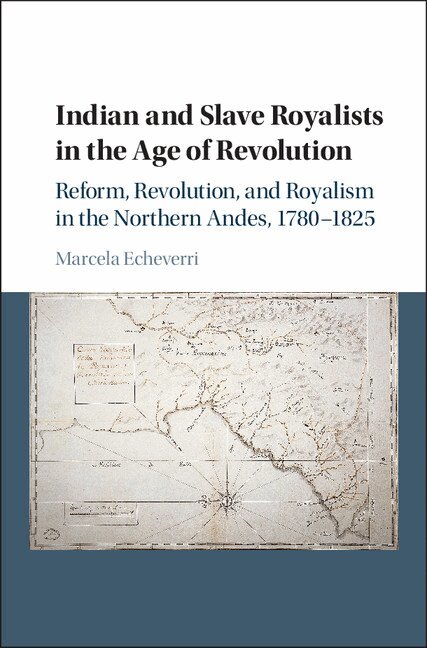
Indian and Slave Royalists in the Age of Revolution
Reform, Revolution, and Royalism in the Northern Andes, 1780-1825
Inbunden, Engelska, 2016
1 330 kr
Skickas inom 7-10 vardagar
Royalist Indians and slaves in the northern Andes engaged with the ideas of the Age of Revolution (1780-1825), such as citizenship and freedom. Although generally ignored in recent revolution-centered versions of the Latin American independence processes, their story is an essential part of the history of the period. In Indian and Slave Royalists in the Age of Revolution, Marcela Echeverri draws a picture of the royalist region of Popayán (modern-day Colombia) that reveals deep chronological layers and multiple social and spatial textures. She uses royalism as a lens to rethink the temporal, spatial, and conceptual boundaries that conventionally structure historical narratives about the Age of Revolution. Looking at royalism and liberal reform in the northern Andes, she suggests that profound changes took place within the royalist territories. These emerged as a result of the negotiation of the rights of local people, Indians and slaves, with the changing monarchical regime.
Del 102 - Cambridge Latin American Studies
Indian and Slave Royalists in the Age of Revolution
Reform, Revolution, and Royalism in the Northern Andes, 1780-1825
Häftad, Engelska, 2017
462 kr
Skickas inom 7-10 vardagar
Royalist Indians and slaves in the northern Andes engaged with the ideas of the Age of Revolution (1780-1825), such as citizenship and freedom. Although generally ignored in recent revolution-centered versions of the Latin American independence processes, their story is an essential part of the history of the period. In Indian and Slave Royalists in the Age of Revolution, Marcela Echeverri draws a picture of the royalist region of Popayán (modern-day Colombia) that reveals deep chronological layers and multiple social and spatial textures. She uses royalism as a lens to rethink the temporal, spatial, and conceptual boundaries that conventionally structure historical narratives about the Age of Revolution. Looking at royalism and liberal reform in the northern Andes, she suggests that profound changes took place within the royalist territories. These emerged as a result of the negotiation of the rights of local people, Indians and slaves, with the changing monarchical regime.
Inbunden, Engelska, 2023
1 119 kr
Skickas inom 7-10 vardagar
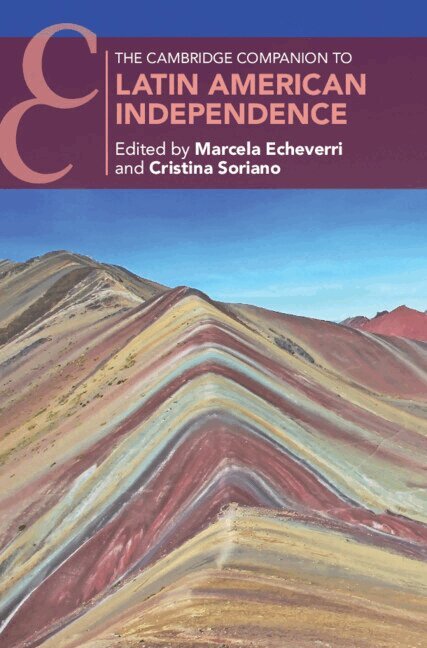
Bringing together experts across Latin America, North America, and Spain, The Cambridge Companion to Latin American Independence innovatively revisits Latin American independence within a larger regional, temporal, and thematic framework to highlight its significance for the Age of Atlantic Revolutions. The volume offers a synthetic yet comprehensive tool for understanding and assessing the most current studies in the field and their analytical contributions to the broader historiography. Organized thematically and across different regions of the Iberian Peninsula and Spanish and Luso America, the essays deepen well-known conclusions and reveal new interpretations. They offer analytical interventions that produce new questions on periodization, the meaning of anti-colonialism, liberalism, and republicanism, as well as the militarization of societies, public opinion, the role of sciences, labor regimes, and gender dynamics. A much-needed addition to the existing scholarship, this volume brings a transnational perspective to a critical period of history in Latin America.
E-bok
PDF, Engelska, 2023456 kr
Läs direkt efter köp
Häftad, Engelska, 2023
378 kr
Skickas inom 7-10 vardagar
Bringing together experts across Latin America, North America, and Spain, The Cambridge Companion to Latin American Independence innovatively revisits Latin American independence within a larger regional, temporal, and thematic framework to highlight its significance for the Age of Atlantic Revolutions. The volume offers a synthetic yet comprehensive tool for understanding and assessing the most current studies in the field and their analytical contributions to the broader historiography. Organized thematically and across different regions of the Iberian Peninsula and Spanish and Luso America, the essays deepen well-known conclusions and reveal new interpretations. They offer analytical interventions that produce new questions on periodization, the meaning of anti-colonialism, liberalism, and republicanism, as well as the militarization of societies, public opinion, the role of sciences, labor regimes, and gender dynamics. A much-needed addition to the existing scholarship, this volume brings a transnational perspective to a critical period of history in Latin America.
E-bok
Spanska, 2018113 kr
Läs direkt efter köp
Ley, imperio y política en la Era de la RevoluciónEN EL AÑO 1810, durante la invasión napoleónica a la península ibérica, en medio de la más profunda crisis de soberanía de la monarquía española, las élites mineras y esclavistas de la provincia de Popayán, en el suroccidente de Nueva Granada (hoy Colombia), formaron las primeras juntas insurgentes, rechazando la soberanía española. Sus esclavos, habitantes de los campamentos mineros de la costa pacífica, se rebelaron contra la intención de sus amos de mantenerlos sometidos a la esclavitud, arguyendo que ellos, por el contrario, estaban a favor de la monarquía. Los esclavos sostenían que hasta entonces habían tolerado la esclavitud debido a que sus amos eran vasallos del rey, quien garantizaba la protección de sus derechos. A diferencia de sus amos, que habían dejado de servir a la Corona española, los esclavos preferían mantenerse como vasallos del rey y disfrutar de la libertad y los derechos que detentaban los demás vasallos de la Corona. A lo largo de la siguiente década, los esclavos se alzaron en rebelión y defendieron las tierras bajas del Pacífico contra las incursiones de las fuerzas que luchaban por la independencia. Al hacerlo, adquirieron una libertad de facto y pudieron vivir en forma autónoma durante todos esos años.Al mismo tiempo se desarrollaban eventos similares en las alturas andinas de Pasto, donde las comunidades indígenas se unieron a las fuerzas españolas para defender al rey y a la monarquía. A medida que la crisis monárquica se convirtió en una larga guerra que comprometía a sus territorios, los indígenas del norte de los Andes, en los alrededores de la ciudad de Pasto, aprovecharon la oportunidad para manifestar su lealtad a la Corona de España. Para muchos de ellos, participar en las milicias realistas se convirtió en una vía de movilidad y ascenso social. Al hacerlo, recibieron concesiones colectivas especiales, a cambio de su servicio militar a la Corona, lo que les permitió acceder a nuevos medios de protección y expansión de los derechos indígenas en un contexto imperial.En una circunstancia notable en la historia de la esclavitud, los representantes de la monarquía española movilizaron a los esclavos contra sus amos, y los esclavos defendieron la monarquía que históricamente había promovido la esclavitud. Al mismo tiempo, los descendientes de la población nativa, que tres siglos atrás habían sido conquistados por la fuerza, defendieron su condición de vasallos y tributarios de la Corona española. En esta coyuntura sin precedentes, las gentes que hasta entonces habían sido objeto de la dominación imperial, se convirtieron en sus acérrimos defensores.En 1822, cuando Simón Bolívar llegó con sus ejércitos al bastión realista de Popayán, después de declarar la independencia en Venezuela y el norte de Nueva Granada, la población indígena de Pasto y los esclavos de la costa del Pacífico se levantaron en guerra para contrarrestar la invasión republicana. Esta rebelión se prolongó hasta 1825. Las milicias realistas no solo representaban una amenaza para la estabilidad del sueño bolivariano de la República independiente de Colombia, sino también pusieron en peligro sus planes de derrotar a España en el corazón del imperio suramericano, el Perú.